

The orange scent is easy to imagine: fresh rind, juicy citrus, and a hint of bitterness. But a familiar scent does not indicate how much oil is needed for a diffuser or whether it can be added to a humidifier. Let's go through home use step by step — from selecting a bottle to your first simple blend.
Where to start? Take sweet orange essential oil and a device whose instructions explicitly allow essential oils. On your first try, use just one fragrance. The amount and mode should be chosen according to the oil and device recommendations, not according to a recipe for another application method.
Ensure this is indeed sweet orange
V on the oil card Karahaal indicated Citrus sinensis: the oil is obtained by cold pressing the outer rind of sweet orange fruit. Its profile is described as fruity and fresh, with a sweet citrus note and a slight bitterness. This is not juice and not a diffuser liquid with sticks.
The terms 'sweet orange', 'bitter orange', 'neroli', and 'petitgrain' should not be considered interchangeable names for the same bottle. When comparing, check the botanical name, plant part, and intended use. For first-time exploration, it is better to select one clearly described product rather than a blend with an unclear composition.
Choose the method of aromatization
What you already have | How to proceed |
|---|---|
Diffuser with water | Check the approved essential oils, fill level, quantity, and order of addition according to the instructions. |
Diffuser without water | Use the oil only if it is suitable for this device. The rules for water-based devices do not apply here. |
A standard humidifier | Check the documentation. Without the manufacturer's permission, oil is not added to the tank. |
Aromastone or a special sachet | Follow the carrier oil instructions; protect furniture and avoid contact of the concentrate with fabrics and skin. |
It's not necessary to buy multiple accessories at once. A familiar device helps compare different scents under the same conditions. If the oil is pleasant in the store but seems too strong at home, first check the mode and size of the space, rather than complicating the mixture.
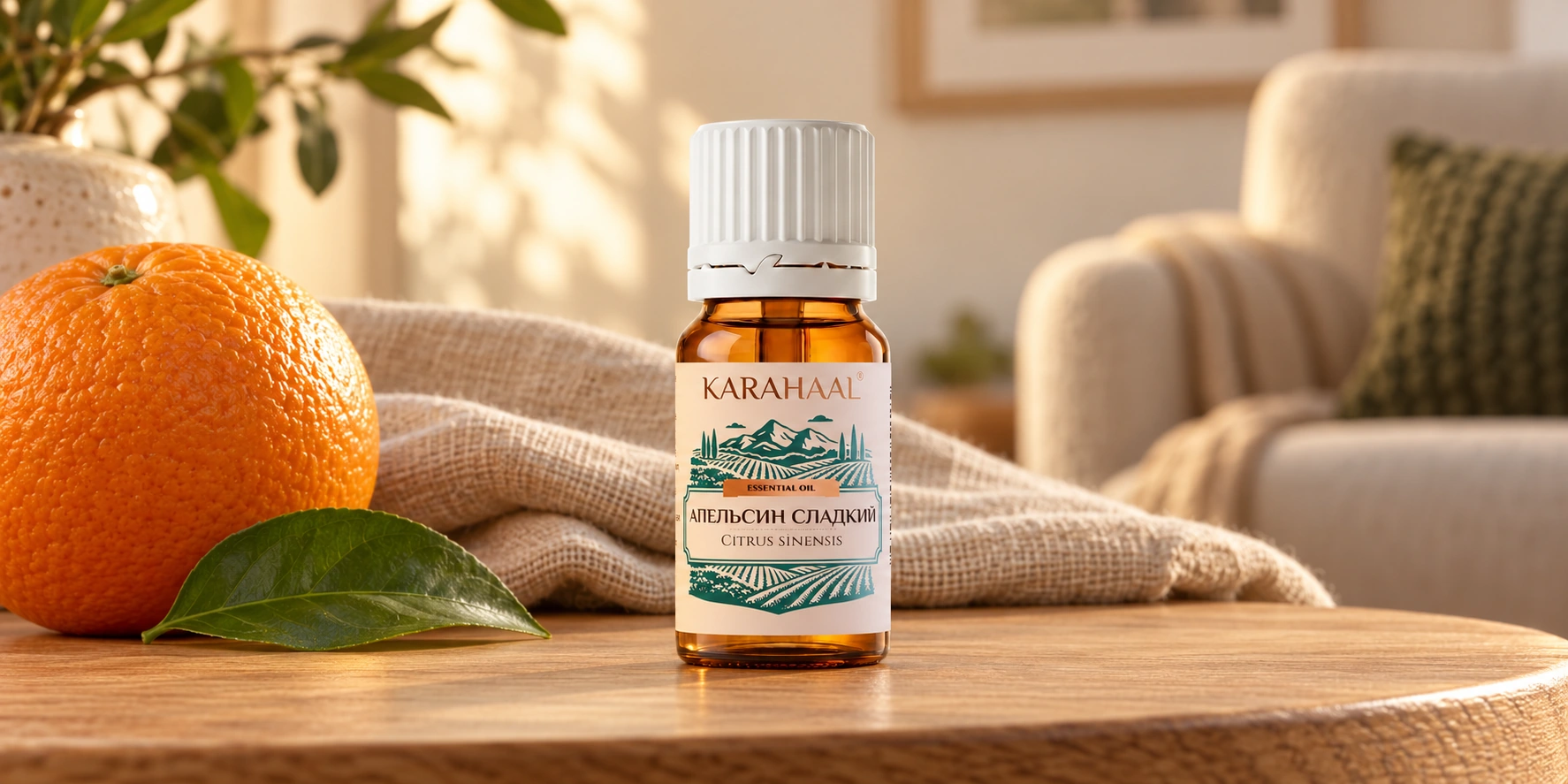
First startup: a simple sequence
Prepare a clean device. Remove previous aroma traces using the method specified by the manufacturer. Otherwise, orange will mix with it before your first experience.
Read two instructions. Recommendations for the oil and the device are needed. If they do not provide a clear method of use, request clarification without randomly selecting the amount.
Start with orange oil without additives. Assess whether its sweet citrus note suits you in this room.
Note the conditions. Record the device, mode, amount used, and your impression. This is a small practical note that will help you repeat a successful setup.
After use, remove the bottle. Seal it tightly and store according to the package instructions.
Constant aromatization throughout the day is not necessary when getting acquainted with the oil. Tisserand Institute recommends breaks and fresh air. If the scent causes discomfort, turn off the device.
Three directions for combinations
Once you understand how the orange scent sounds, you can select one pair. All options below relate to finding a scent suitable for a compatible device. This is not a recipe for skin or bath; the total amount of all components must match the device instructions.
Direction | What to try alongside orange | Why compare |
|---|---|---|
Citrus | Mandarin or bergamot | To select a sweeter or fresher impression. |
Floral | Lavender | To understand whether you like the floral note against the citrus base. |
Wood-like | Cedar or patchouli | To compare light peel with a denser aromatic character. |
These pairings are listed in the description of oil Karahaal. Their perception is individual: there is no universally 'ideal' ratio. Do not start with five components at once—then it will be difficult to determine which one you want to keep.
A gentle citrus direction will suit article on mandarin oil, and for selecting a different freshness character — material on bergamot.
What not to do with orange oil
Drip the concentrate onto a sofa, cushion, or wooden furniture for fragrance: use a carrier specifically designed for this purpose.
Adding oil to a ready-made aromatizer with an unknown composition.
Considering a pleasant fruity scent as an indicator of food use.
Apply pure oil directly to the skin instead of a ready-made cosmetic product.
A special case — a bath. The Tisserand Institute explains, as essential oils do not dissolve uniformly in water. Therefore, adding several drops directly to a bath does not equate to preparing an appropriate cosmetic product.
Selecting a bottle and storage
For first-time exposure, clear naming, botanical name, composition, and instructions are important. Sweet orange essential oil Karahaal is available in a volume of 10 ml. It can be considered if you like sweet citrus rind and want to start with one recognizable scent.
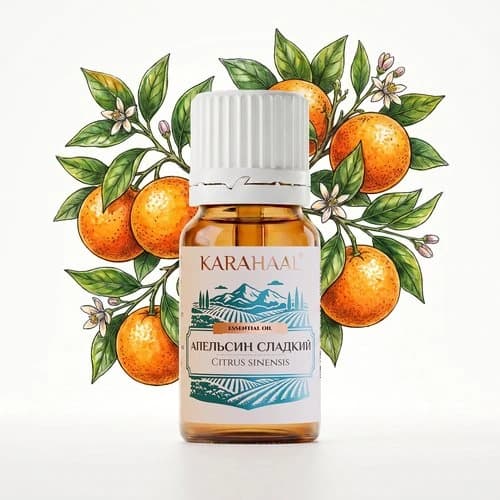
Do not leave the bottle on a sunny windowsill as a permanent decorative item. A sealed lid and protection from heat help store the oil under recommended conditions. Overview of essential oil oxidation links aroma changes to air exposure and storage conditions; the expiration date on the packaging remains your primary guide.
Answers to frequently asked questions
Can orange oil be used every evening?
Refer to the instructions, room conditions, and the comfort of all present. Orange scent can be included in a calm home evening: select an approved mode for the device, take a break, and ventilate the room. Duration of aromatization should be determined according to the device's instructions.
Why does the scent fade quickly?
The perception of the scent changes during use. Don't rush to add oil: make a planned break and assess the conditions. If the device is not working properly, check its instructions and cleaning procedure.
Can it be sprayed on clothing?
It's better to use a dedicated carrier. Residues may remain on fabric, and the oil can transfer onto the skin from it. A favorite scent is easier to carry in a product specifically designed for this purpose.
Can this oil be added to desserts?
An aromatic product does not automatically have a food purpose. For food use, a suitable food ingredient and its instructions are selected. Warnings about swallowing essential oils are provided Poison Control.
The article was prepared by the editorial team Karahaal. Data on the specific oil comes from product cards; additional sources are provided in the text. Checked on October 25, 2026.