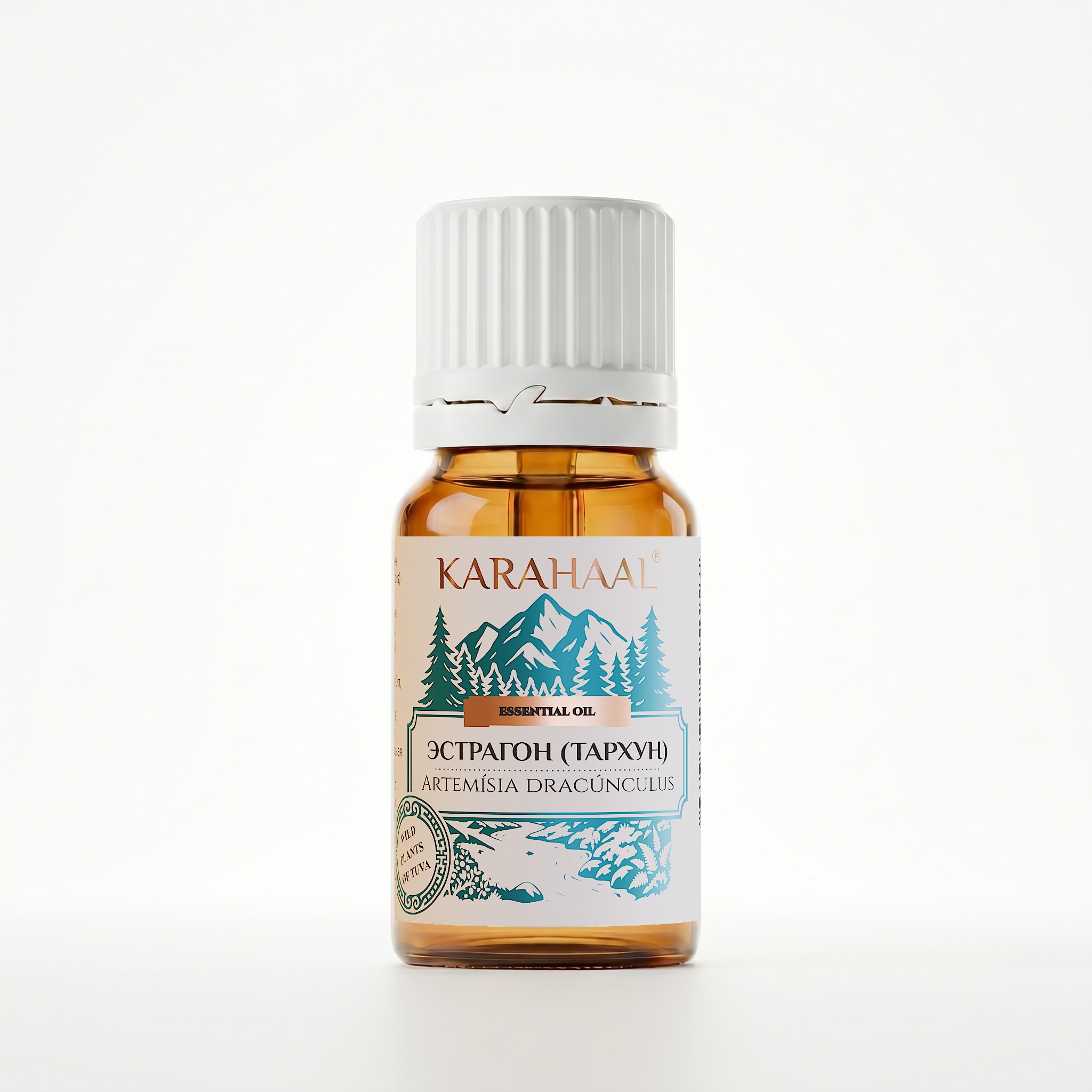
Tarragon: spasms, pain response, and digestive comfort
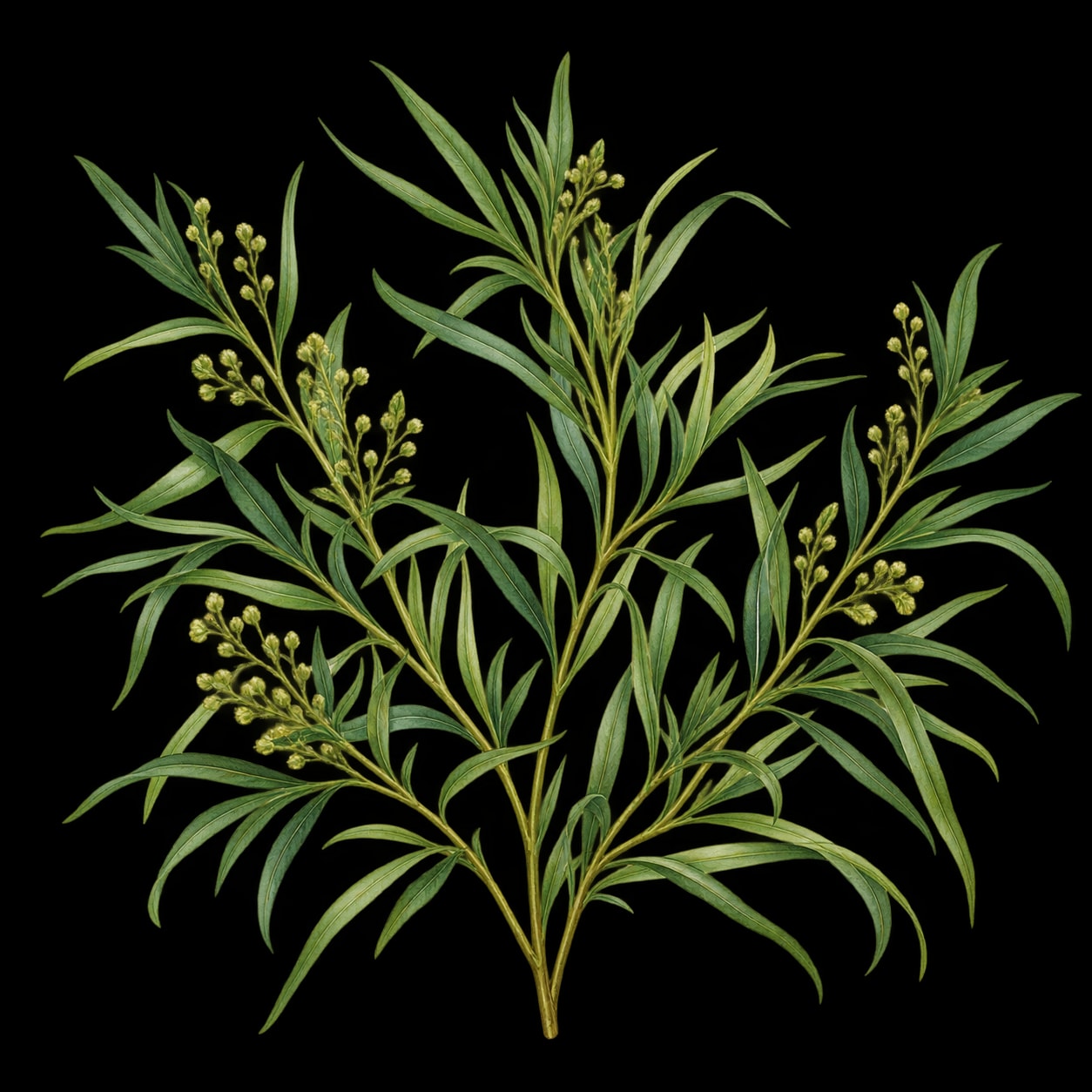
Tarragon has a sweet, anise-like aroma with fresh green notes and spicy sharpness. In aromatherapy tradition, its main use concerns spasms and the discomfort associated with them. This concentrated specialist ingredient is usually used in small proportions within a carefully formulated blend.
Analgesic potential: experimental data
In the experimental study by Maham and co-authors, tarragon oil reduced pain responses in several tests. Researchers examined the involvement of peripheral and central mechanisms. The results help study the analgesic potential of the oil under controlled conditions. [1]
Gastrointestinal and muscular spasms
The KARAHAAL monograph describes tarragon's traditional aromatherapy use as an antispasmodic, carminative and muscle relaxant. These uses relate to tension and cramp-like discomfort. A blend for external use is selected individually; sudden or unexplained abdominal pain should not be treated with an essential oil blend. [2]
Antimicrobial action
In laboratory studies, Artemisia dracunculus showed antibacterial and antifungal activity. The results depended on the sample composition: tarragon contains both estragol and anethole profiles with varying component ratios. [3]
Emotional sphere
A clear, spicy note of tarragon suits compositions for lethargy and mental fog. In small amounts, it brings life to citrus blends, adding a green depth. Lavender softens the sharpness, while woody oils hold the aroma.
Characteristic of estragole
Estragole requires limitation of total exposure: for regular concentrated mixtures and internal use, this material is not recommended for self-selection. Pregnancy, breastfeeding, and childhood are excluded from the proposed home formulations. [4]
Blending suggestions
Citrus notes soften the anise-like sweetness, lavender rounds out the green spiciness, cedar adds a dry base. Proportions are selected based on estragole content.
Research in detail
Antimicrobial profile depends on composition
In a comparative study of several Artemisia species, the composition of essential oils and their effects on microorganisms were analyzed. The studied tarragon sample had an anethole profile. Antimicrobial activity varied between species and samples; for selecting the oil, it is important to know its chemical variant. [3]
How to use
Examples for adults. Quantities are given for the entire bottle; for one application, take a small portion of the mixture. These are aromatic therapy routines, not medicinal dosages.
- Material for individually tailored professional blends. Do not apply concentrate to skin, mucous membranes, or damaged areas; do not ingest. No home therapeutic regimen is recommended with this product.
Precautions
Dilute in a carrier oil before applying to skin. Do not ingest or apply to mucous membranes; stop use if irritation occurs. Estragole requires limits on concentration and duration of use; the formula is selected individually. Home blends are not suggested during pregnancy or breastfeeding, or for children.
What to combine with this care
- “Provence” lavender essential oil — Aromatic combination
Sources
- Maham M. et al. Antinociceptive effect of the essential oil of tarragon (Artemisia dracunculus). 2014.
- Catalog KARAHAAL: Artemisia dracunculus, p. 65–67.
- Determination of the chemical composition and antioxidant activity of the essential oil of Artemisia dracunculus and of the antifungal and antibacterial activities of Turkish Artemisia absinthium, A. dracunculus, Artemisia santonicum, and Artemisia spicigera essential oils.
- EMA: estragole assessment