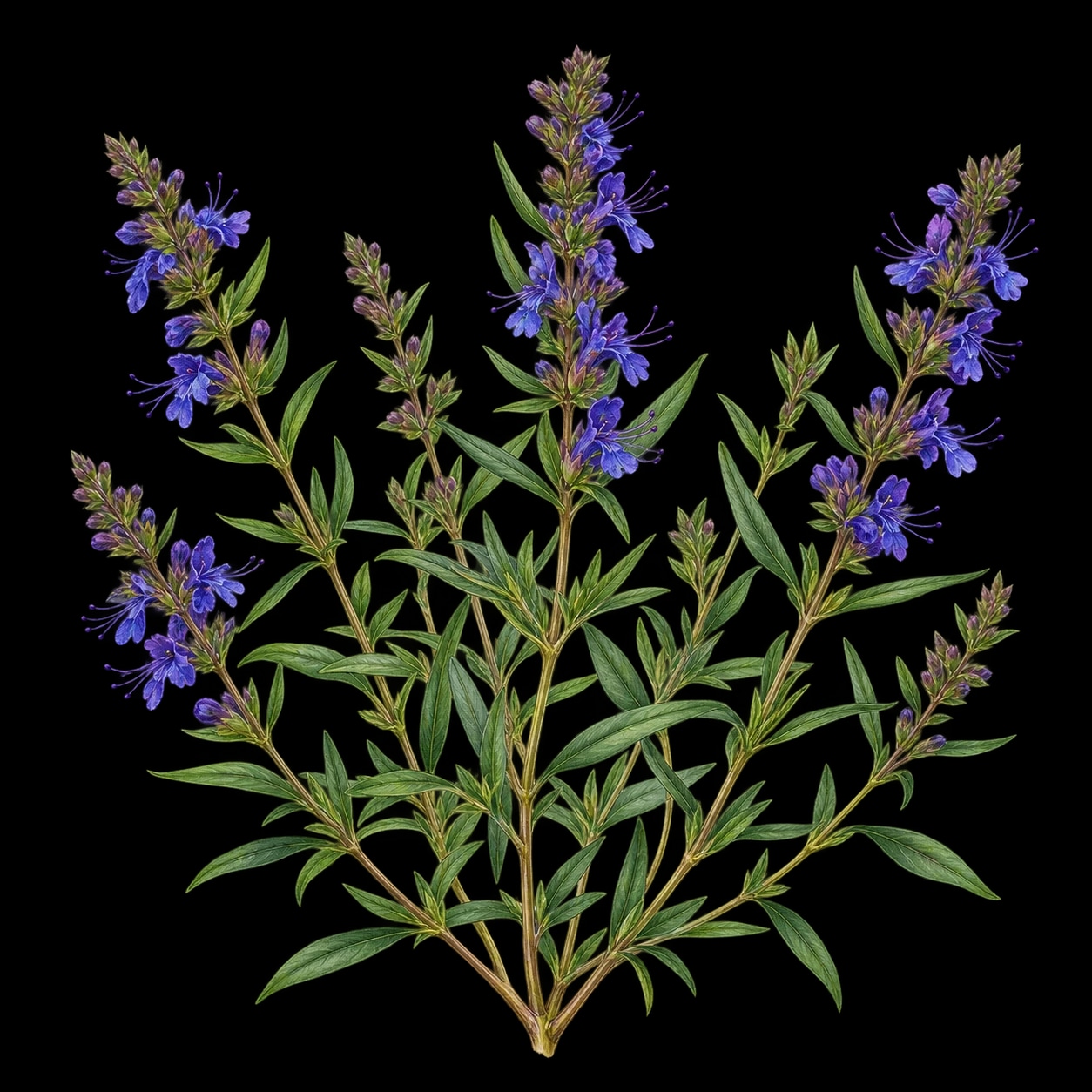
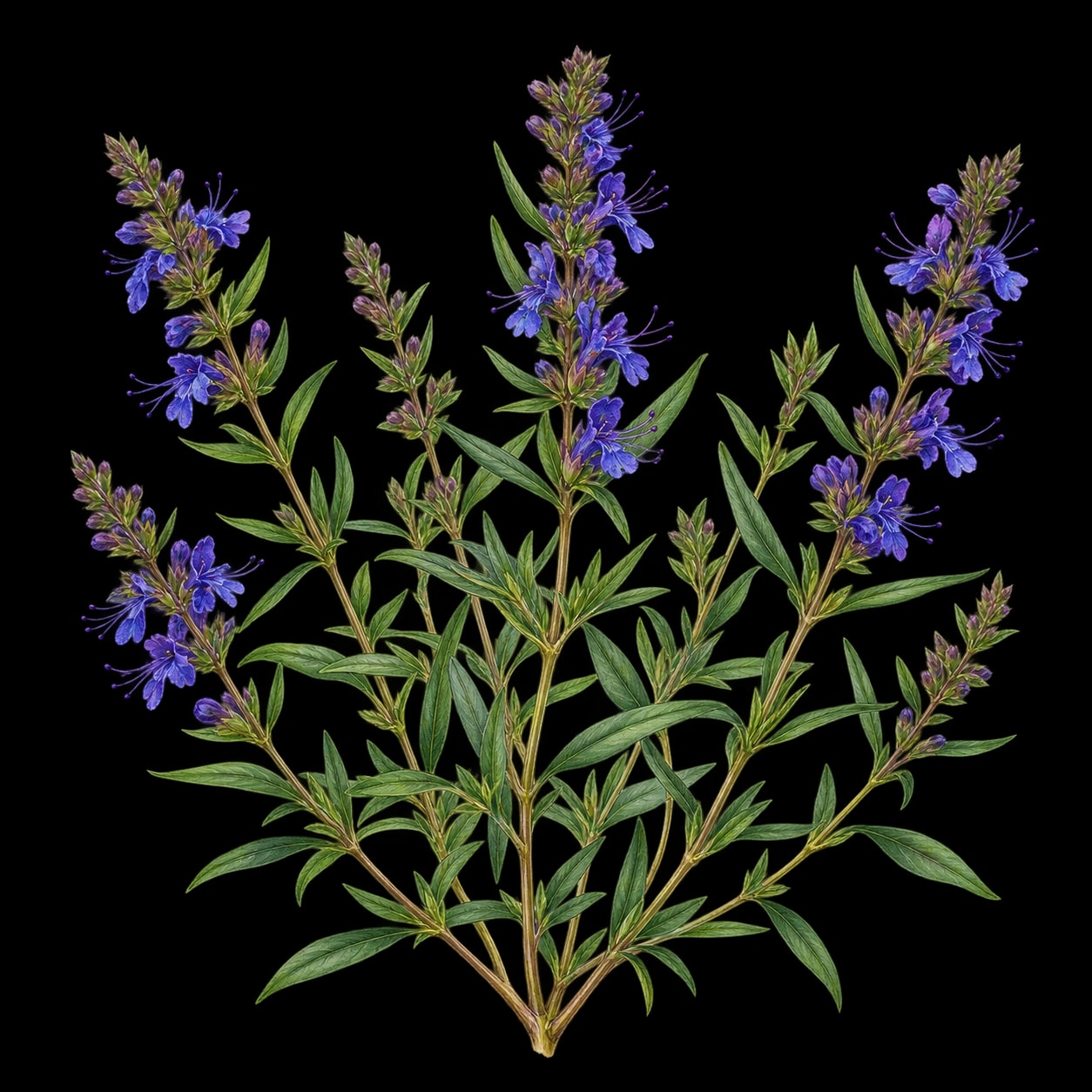
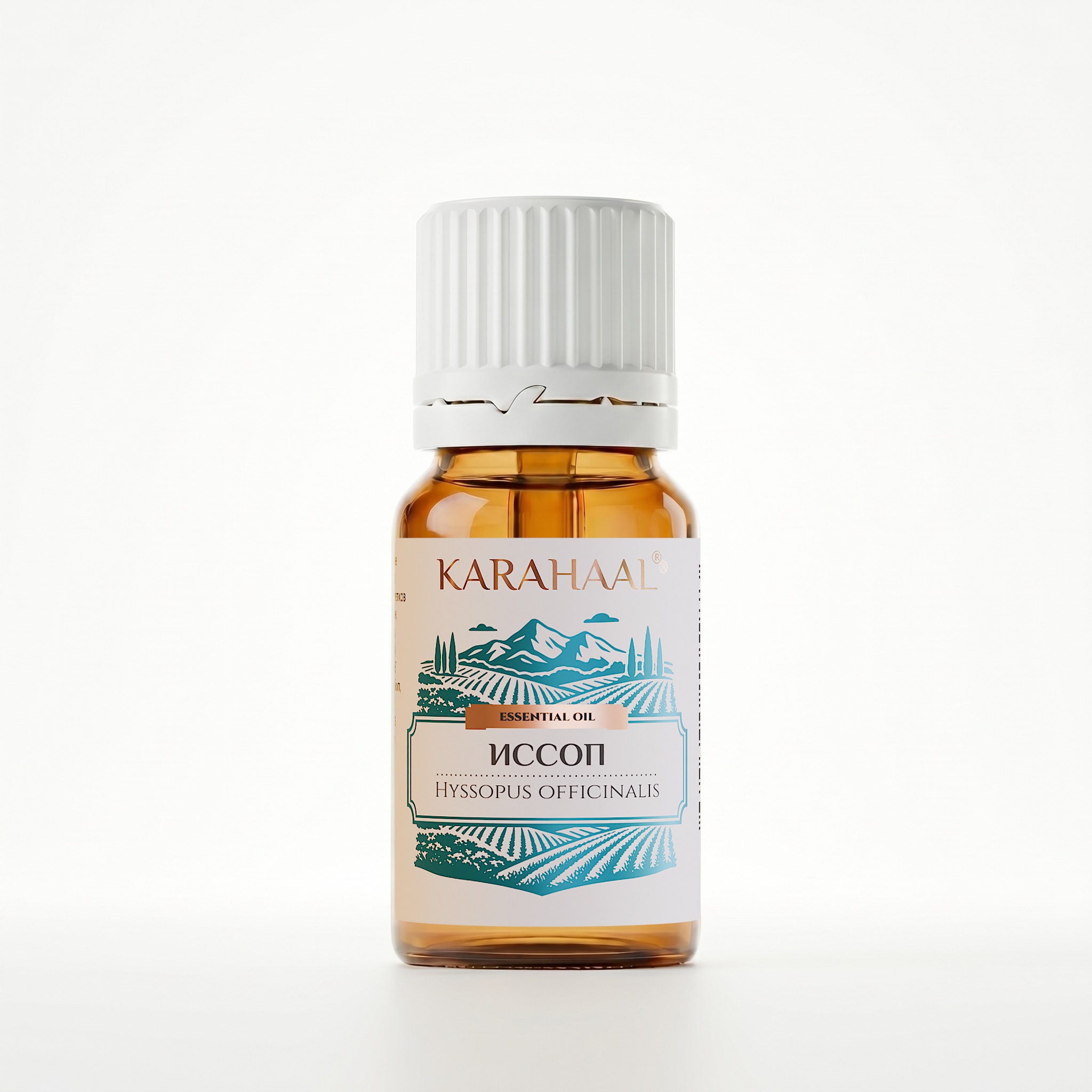
Hyssop: respiratory aromatherapy and active herbaceous profile
Hyssop is traditionally associated with respiratory complaints, viscous secretions, and spasmodic cough discomfort. Its aroma is rich, herbaceous, green-menthol, with a slight sweet note. This is a material for individual professional selection.
Expectorant and spasmolytic properties
In aromatherapy tradition, hyssop is used in expectorant and spasmolytic blends. For selecting the method of application, the content of pinocamphone and isopinocamphone is important: essential oils with a noticeable share of these ketones require especially careful dosing and consideration of contraindications.
Antifungal potential
In the study Aspergillus fumigatus, hyssop essential oil was grown in the presence of hyssop oil. Changes in fungal cell wall composition were observed: alterations in the ratios of sugars, proteins, lipids, and other structural components. This demonstrates an effect on vital cellular structures and explains the scientific interest in the antifungal direction. [1]
This practice is not a basis for treating fungal lung infection by inhaling concentrate. Medical diagnosis and treatment are required for such a condition.
Aromatic composition
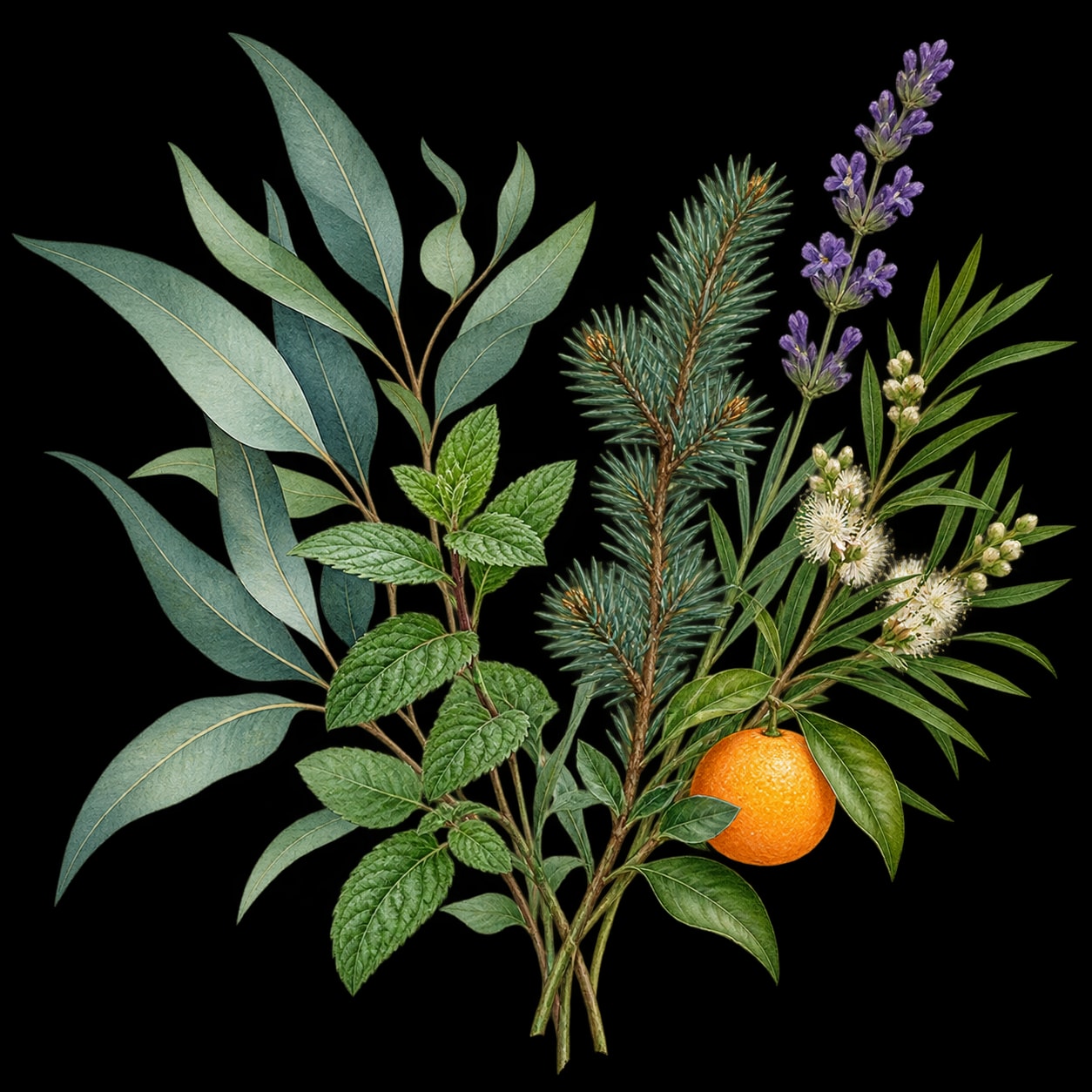
In small amounts, hyssop imparts a clear herbal dryness to the blend. Lavender rounds out the camphor note, citrus opens up a fresh top note, and coniferous oils create a more forest-like profile. Its intensity is best evaluated on a standalone aromatic sample.
Special restrictions
The ketone profile of hyssop matters in epilepsy and other conditions involving a risk of seizures; this concentrate is not suitable for unsupervised use during pregnancy or breastfeeding, or for children. For this reason, no universal home blend for respiratory symptoms is given here: the oil's composition must first be established.
Blending suggestions
Lavender softens the camphoraceous character, citrus notes add lightness, coniferous oils maintain a fresh green theme. The combination and proportions are selected after clarifying the profile.
Research in detail
Changes in fungal cell wall structure
In a laboratory study Hyssopus officinalis, Aspergillus fumigatus was cultivated in the presence of the oil and cell wall composition was compared. Changes in the ratios of sugars, proteins, lipids, and other components were observed. The study reveals the antifungal direction at the cellular structure level. [1]
How to use
Examples for adults. Quantities are given for the entire bottle; for one application, take a small portion of the mixture. These are aromatic therapy routines, not medicinal dosages.
- Material for individually tailored professional blends. Do not apply concentrate to skin, mucous membranes, or damaged areas; do not ingest. No home therapeutic regimen is recommended with this product.
Precautions
Dilute in a carrier oil before applying to skin. Do not ingest or apply to mucous membranes; stop use if irritation occurs. The pinocamphone profile of hyssop calls for particular caution. Do not use in cases of epilepsy, during pregnancy or for children; a specialist selects the concentration and method of use.
What to combine with this care
- “Provence” lavender essential oil — Aromatic combination