

It's worth breaking the lemon peel to reveal the familiar scent before the juice: bright, fresh, slightly bitter. This citrus character is what people look for in lemon essential oil. At home, it can become a standalone fragrance or add a fresh top note to a composition—depending on the chosen method of use.
For what is it intended? Primarily for aromatization through a device designed for essential oils and for creating aromatic blends. Use in cosmetics requires a separate formulation. Lemon oil from a bottle does not replace lemon juice, a ready-made cleaning agent, or a food-grade flavoring agent.
What is inside the bottle: peel oil, not lemon juice
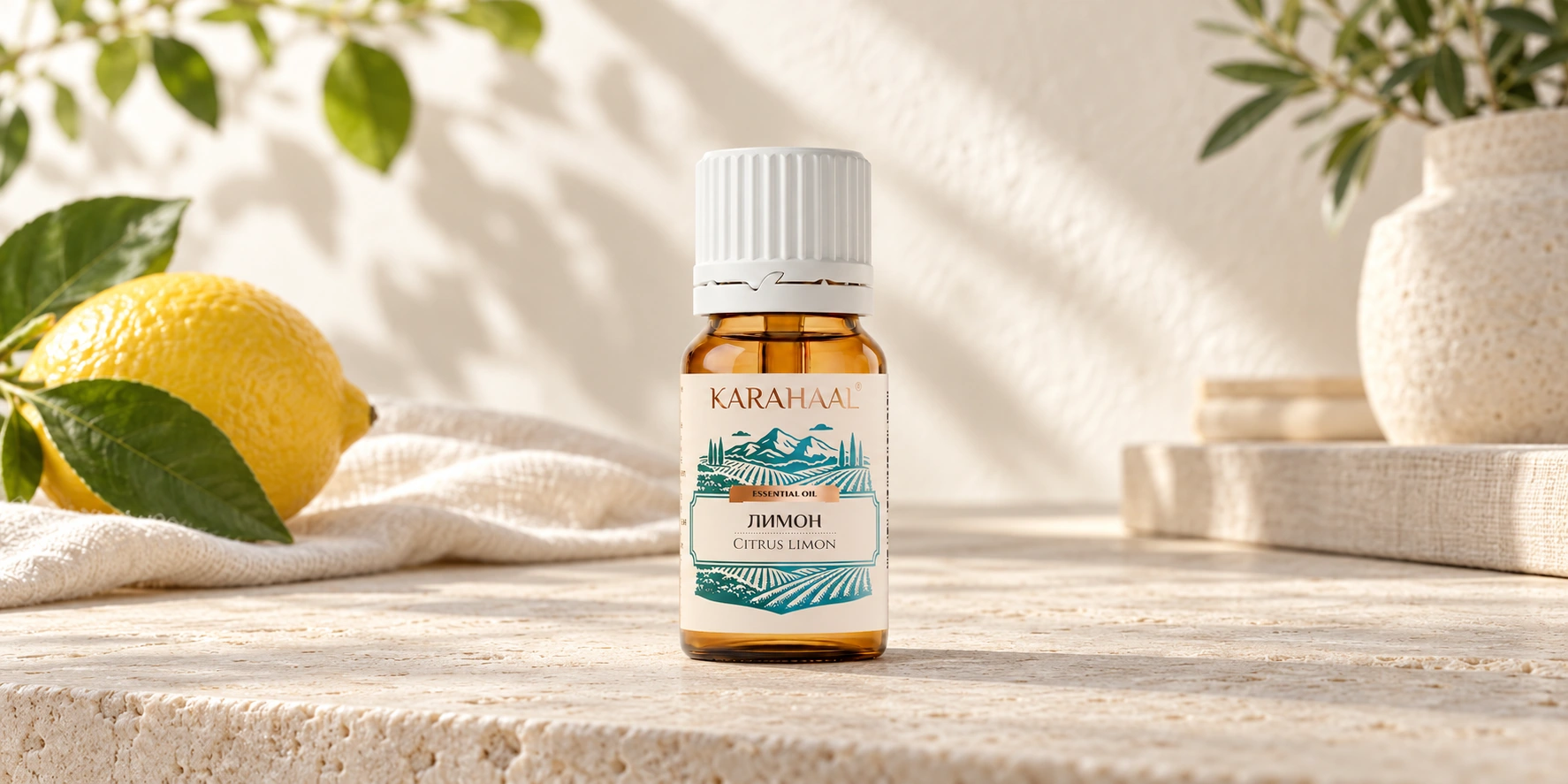
U lemon Karahaal The botanical name Citrus limon, raw material — fresh peel, method of production — cold pressing. These details are more useful than the general term "citrus": they help understand both the aroma and the specific application.
In the description of this oil, a bright fruity freshness is first noted, followed by a drier, citrusy bitterness. This serves as a reference point, not a guarantee of the same impression for everyone. If you prefer a sweeter, rounder citrus, also consider sweet orange oil.
Three home scenarios for lemon fragrance
Task | Appropriate format | What to pay attention to |
|---|---|---|
A light citrus background in the room | A diffuser compatible with essential oils | Amount of oil, operating mode, and care — according to the device's instructions. |
Get acquainted with the scent up close | Aromastone or another oil-specific carrier | Protect the surface beneath the carrier; do not randomly apply oil to furniture and textiles. |
Create your own composition | First, individual exposure to scents, then a blend for the selected device | The total amount of all oils remains within the instructions. |
Choose one scenario for first-time use. For example, start with lemon in a familiar diffuser. This way, you evaluate the new oil rather than simultaneously encountering a new device, different mode, and a complex blend. A strong scent is not always the goal: sometimes a barely noticeable citrus background suits a space better.
How to start using in a diffuser
Check compatibility. Air purifier and aromatherapy diffuser are not the same. Only what the manufacturer allows is added to the device's reservoir.
Prepare the device. Clean it of the previous composition according to instructions. Residuals of another oil may alter your first impression of lemon.
Use the prescribed amount. The lemon card does not contain a universal norm for any volume of water. Refer to product instructions and specific device guidelines; if data are missing, clarify them before use.
Evaluate the aroma separately. Do not add a second oil in the first minutes just because you want a more complex scent. First, decide whether you like the lemon itself.
For room aromatization The Tisserand Institute recommends Take breaks and ensure air circulation. If unpleasant sensations occur, stop using. These are general recommendations; the specific device's mode is defined by its instruction manual.
What to combine with lemon essential oil
In the product card, possible pairs include lavender, rosemary, mint, cedar, and juniper. Start with one pair: this makes it easier to identify what exactly the second aroma adds. Below are directions for selecting a composition, not pre-determined dosages.
If you want… | A pair for getting acquainted | How to choose |
|---|---|---|
More coniferous character | Lemon and juniper | Compare the citrus and forest impressions separately. |
Floral tone | Lemon and lavender | Check whether you personally like lavender on its own. |
A drier wood tone | Lemon and cedar | Clarify the botanical species of cedar oil: the same Russian name does not guarantee the same profile. |
Learn more about coniferous pairs in the article «Siberian juniper: aroma and use». When a selected combination is liked, record the composition and device settings. Next time it will be easier to reproduce the impression rather than searching through several bottles again.
What to know about skin and sunlight
Lemon essential oil obtained by cold pressing has a special characteristic: when applied to the skin, phototoxicity must be considered—possible reaction to ultraviolet light. As explained Tisserand Institute, the method of citrus oil production affects this risk. The diffuser recipe cannot be used as a cosmetic recipe.
If your goal is skincare, choose a ready-made product or a well-tested formula for a specific oil. A simple 'by eye' dilution is not enough. For a basic introduction to the scent, it's easier to start with an aromatization device designed for that purpose.
How to choose and store lemon oil
Verify the name Citrus limon and method of production: lemon and lemongrass are different plants.
Check the composition, expiration date, and storage conditions on the packaging.
Select the volume based on actual usage: a large reserve does not make an aromatic collection more convenient.
After use, close the cap and store the bottle away from light and heat. The Tisserand Institute notes, air, heat, and light accelerate the change of essential oils. The opening date is conveniently recorded on a separate label, preserving the original factory marking.
If you're looking for a recognizable lemon peel aroma, start with our description of the oil. Current price and availability are displayed below in the product card.

Frequently Asked Questions
Can lemon oil be added to water for drinking?
This product is selected for fragrance use and the methods of application specified by the manufacturer. Do not transfer the use of lemon juice or a food additive to this product. Poison Control warns about the risks of ingesting essential oils
Will it be suitable for cleaning?
The lemon scent pleasantly complements the feeling of freshness after cleaning. For cleaning and disinfecting surfaces, use products specifically designed for these tasks and follow their instructions. Essential oil should be used for aromatization through a compatible device.
How many drops to add per 100 ml of water?
You need instructions for a specific diffuser and oil. The same volume of water does not guarantee the same performance across devices, so we do not provide a universal dosage here.
How is lemon different from sweet orange?
According to the descriptions of the oils Karahaal, lemon is drier and citrusy, while orange is sweeter and rounder. Choose based on the desired aroma character, not on the promise of the same effect for everyone.
The article was prepared by the editorial team Karahaal. Data on the specific oil comes from product cards; additional sources are provided in the text. Checked on October 25, 2026.