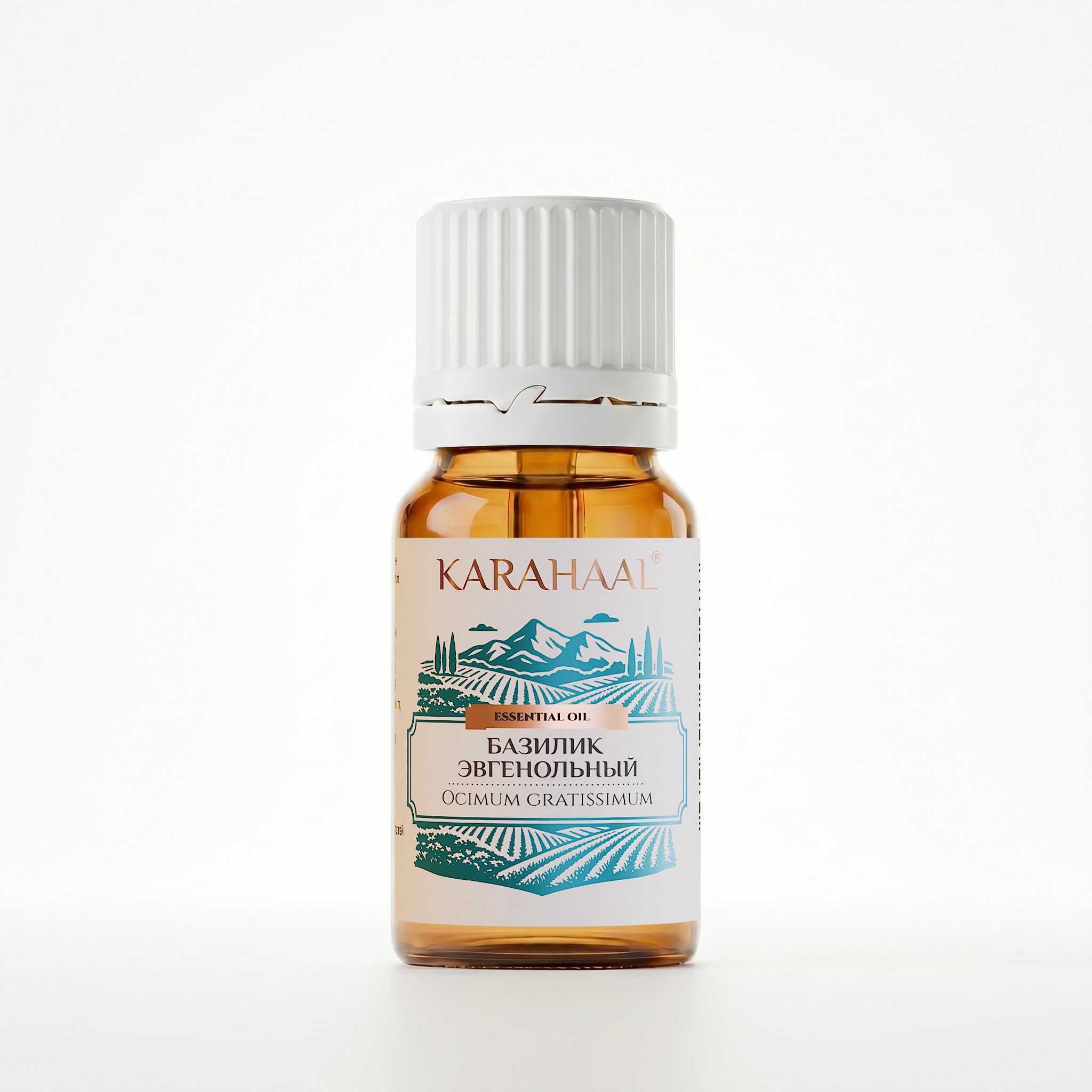
Basil eugenol: pain, inflammatory signals and eugenol activity
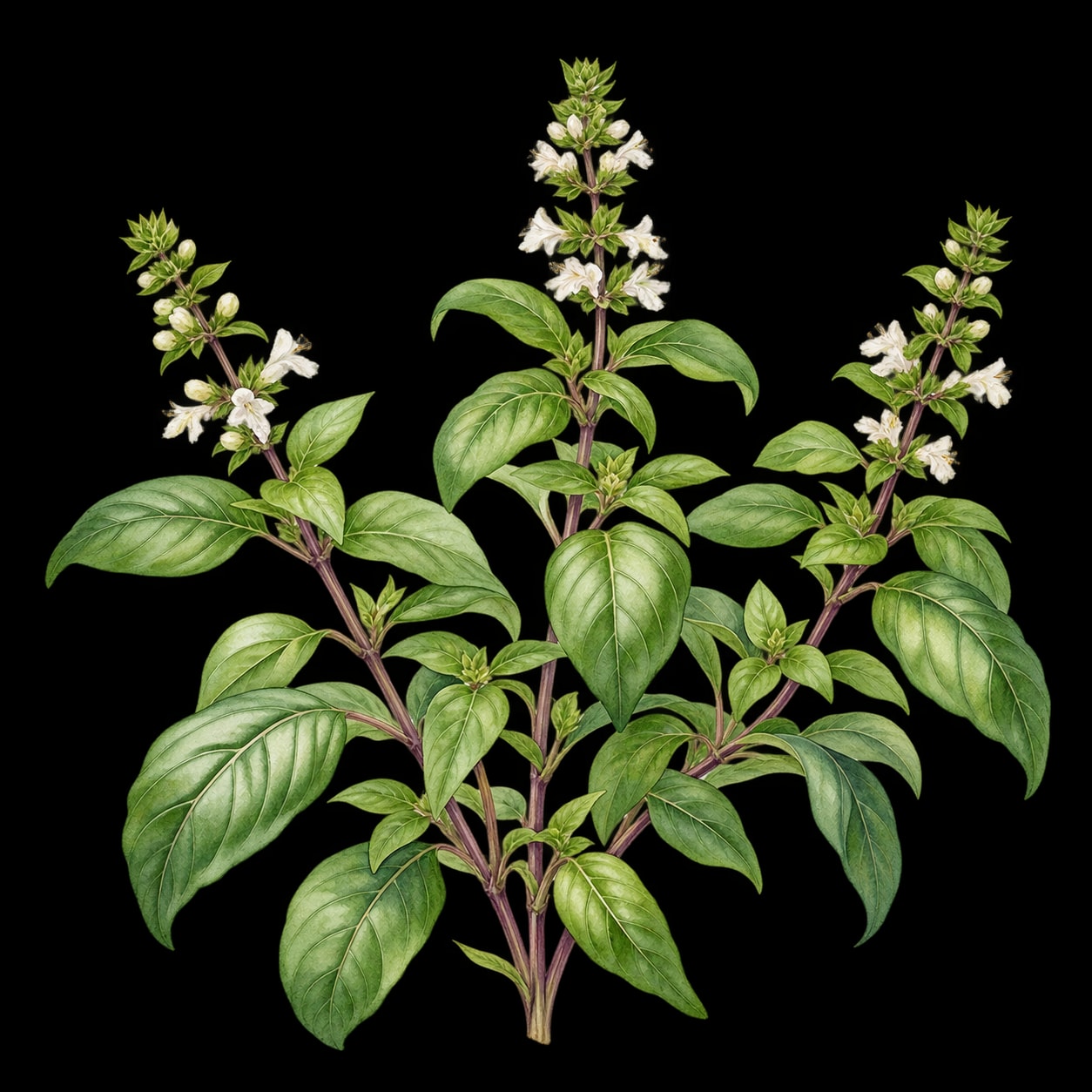
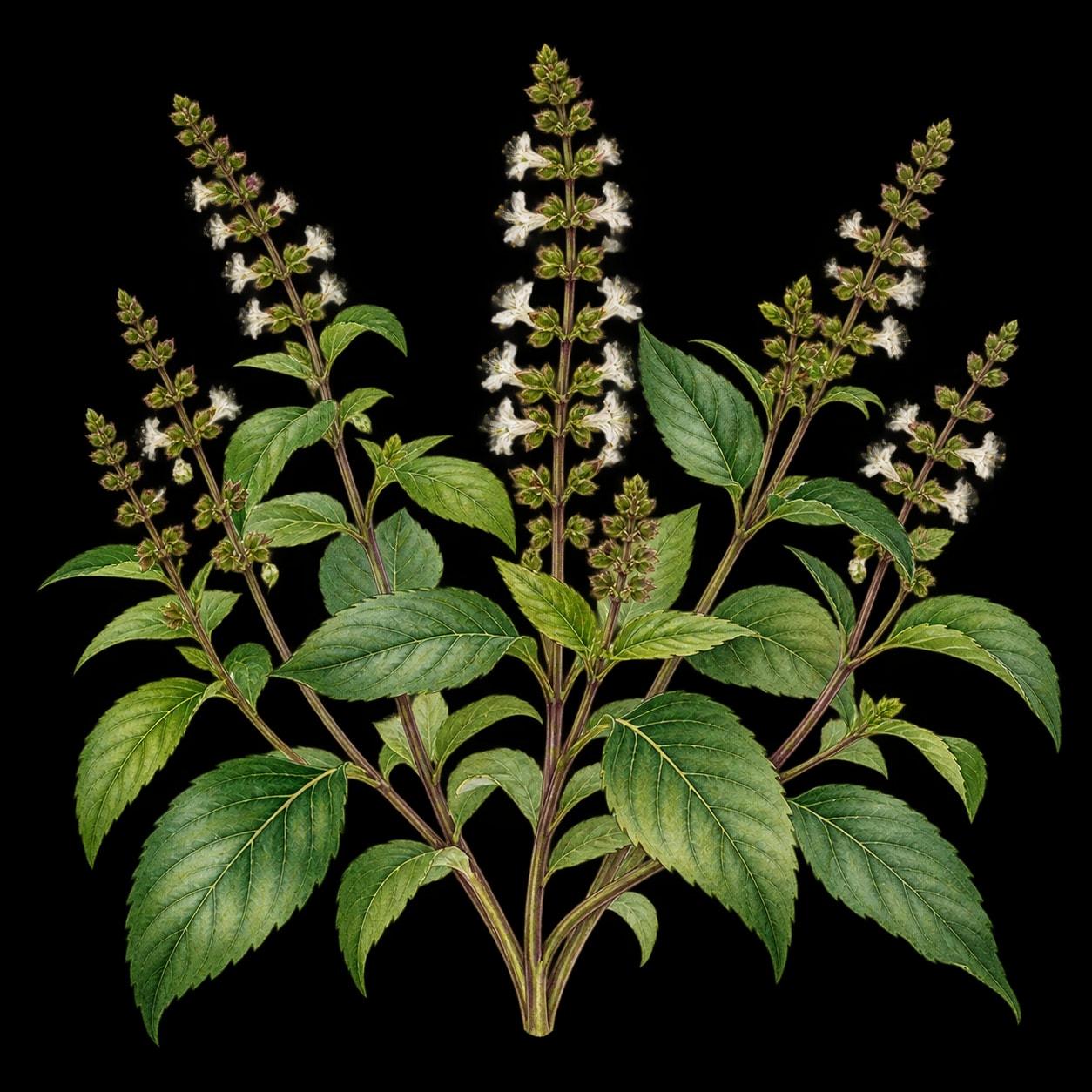
Eugenol basil differs from estragol basil in its warm clove-like aroma. This is a distinct aromatherapeutic material with pronounced biological potential. Particularly interesting are studies on pain sensitivity, inflammatory signals, and antimicrobial actions.
Analgesic potential
In the experimental model of neuropathic pain, the Ocimum gratissimum oil, as well as individual eugenol and myrcene, reduced mechanical and thermal hyperalgesia. The oil and eugenol decreased the levels of pro-inflammatory interleukin-1β. The study links the analgesic potential to effects on inflammatory processes; substances were tested under controlled oral administration. [1]
Antiparasitic action
In a cell study, eugenol-containing oil inhibited the growth of Leishmania amazonensis and affected the parasite's structure. The work explores biologically active substances and adds to our understanding of the eugenol profile. [2]
How to use this information in practice
Basil, eugenol chemotype essential oil is of interest for professionally formulated topical and aromatic blends. The strong pungency is used in small amounts, considering the irritating potential of phenolic components. For ordinary gentle massage without a specialist, it is better to choose an oil with more delicate application conditions.
Emotional sphere
The clove-herbal aroma is perceived as warm, energetic, and concentrated. It can add character to a composition with orange, cedar or sandalwood. Lavender softens the spiciness, and the woody base makes it less sharp. This oil accent: its purpose is to add character while preserving the balance of the entire blend.
Blending suggestions
Sweet orange eases spiciness; cedar emphasizes dryness; sandal softens; lavender unifies herbaceous and floral components. For skin — only in professionally formulated blends.
Research in detail
Oil and eugenol in parasitological model
In the laboratory study, the eugenol-containing oil Ocimum gratissimum and isolated eugenol suppressed the growth of Leishmania amazonensis and altered the parasite's cellular structures. This area of research is focused on new medicinal substances. For household use, basil is selected based on its aromatic properties and used in permissible dilutions. [2]
How to use
Examples for adults. Quantities are given for the entire bottle; for one application, take a small portion of the mixture. These are aromatic therapy routines, not medicinal dosages.
- Material for individually tailored professional blends. Do not apply concentrate to skin, mucous membranes, or damaged areas; do not ingest. No home therapeutic regimen is recommended with this product.
Precautions
Do not ingest or apply the concentrate to skin or mucous membranes. Avoid use without professional guidance during pregnancy, for children or on sensitive skin. For blood-clotting disorders or when taking anticoagulants, a specialist should assess the formula.
What to combine with this care
- “Provence” lavender essential oil — Aromatic combination
- Essential oil of sweet orange — Aromatic combination
- White sandalwood essential oil BIO — Aromatic combination