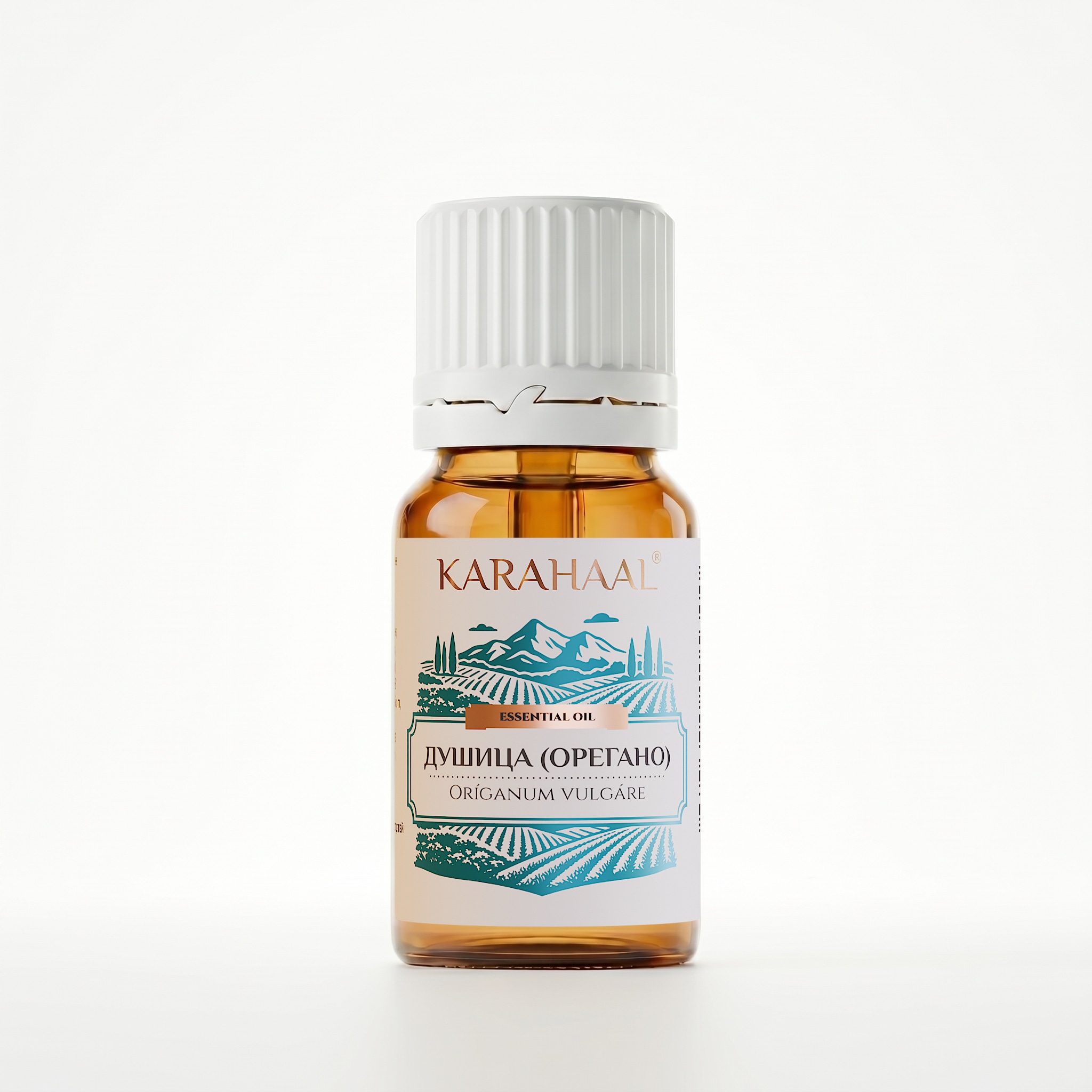
Oregano: antimicrobial activity and phenolic strength
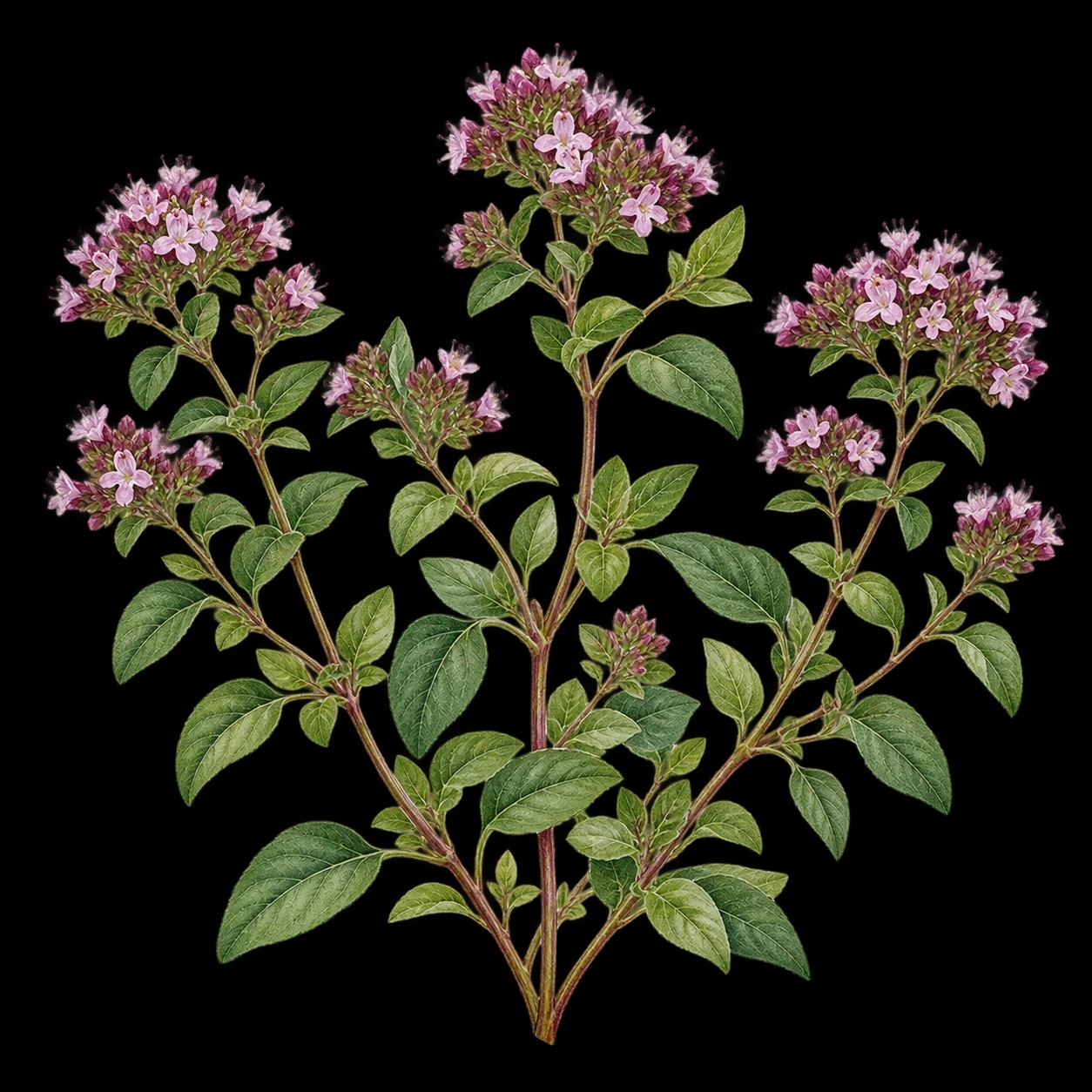
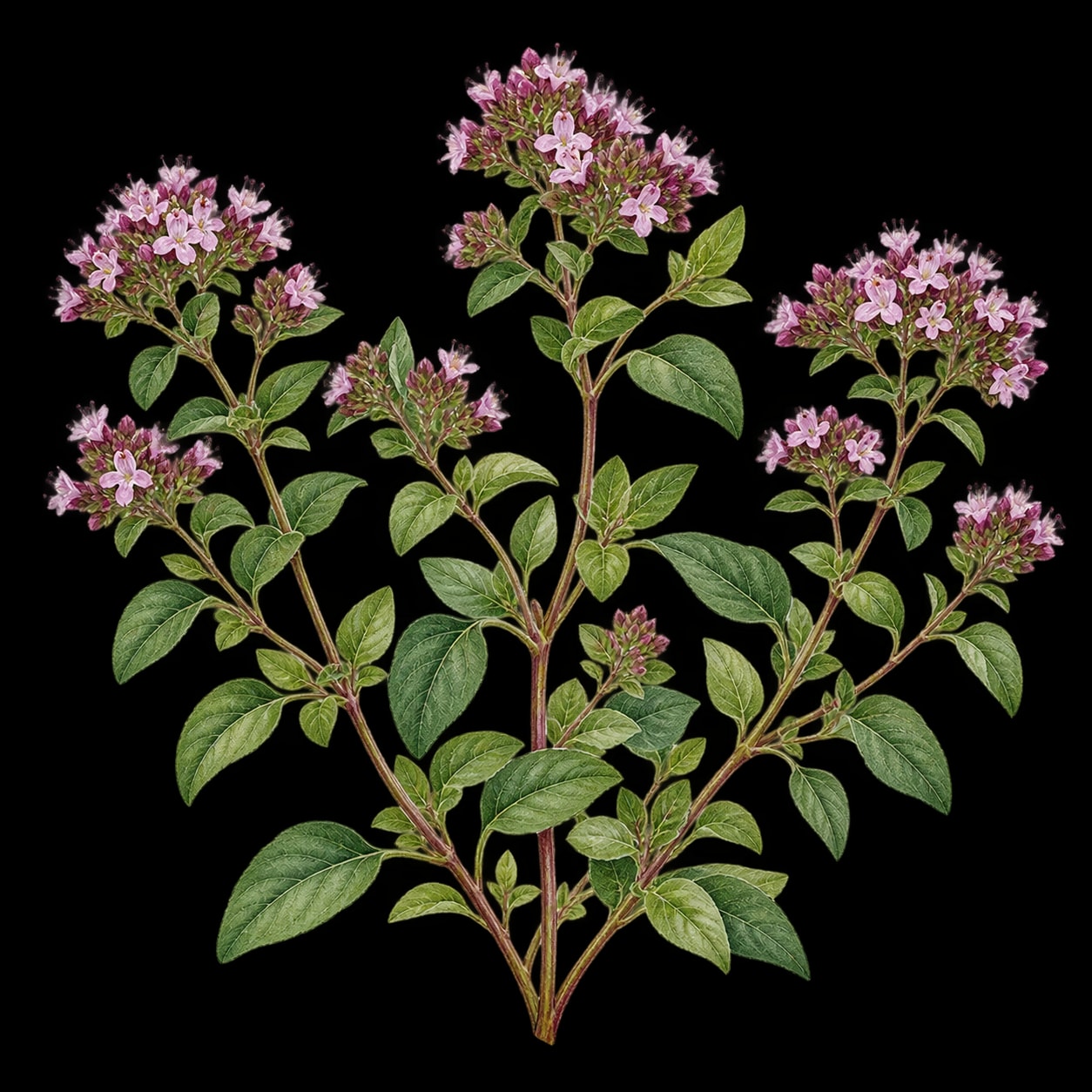
Oregano is best known for its antimicrobial uses. Its oil has a rich herbal-spicy aroma with a warm phenolic sharpness. This is a concentrate for specific purposes, rather than an all-purpose oil for generous massage application.
How it acts on bacteria
In the initial study, oregano oil, thymol, and carvacrol were tested against Staphylococcus aureus and Pseudomonas aeruginosa. The components disrupted membrane integrity, altered acid gradients, and caused leakage of inorganic ions. These processes interfere with the cell's ability to maintain its internal environment. [1]
This mechanism explains the strong scientific interest in oregano for developing antimicrobial formulas. It differs from simple masking of odor: it refers to action on cellular structures in laboratory systems.
The synergistic action of thymol and carvacrol
In the study on component combinations, a cumulative effect was observed. This is a useful example where actual interaction was tested rather than assumed based on a long list of substances. The ratio of phenols influences activity and tolerability. [1]
Practical application
In aromatherapy, oregano is considered for professionally formulated topical mixtures and as a minor spicy component in compositions. Internal consumption of the concentrate, rinsing with undissolved drops, and application to fungal infections without proper preparation can cause tissue damage. The phenolic profile is particularly demanding for sensitive skin.
Blending suggestions
Lavender softens the herbal sharpness, orange adds a warm top note, cedar holds the dry base. Rosemary makes the mixture feel fresher. Even in a blend, oregano should remain a small part: a strong smell is not a measure of therapeutic efficacy.
Blending suggestions
Lavender softens the pungent sharpness, orange adds warmth. Cedar provides a dry base, rosemary enhances the fresh herbal component. Ratios — for a professional formula.
How to use
Examples for adults. Quantities are given for the entire bottle; for one application, take a small portion of the mixture. These are aromatic therapy routines, not medicinal dosages.
- Material for individually tailored professional blends. Do not apply concentrate to skin, mucous membranes, or damaged areas; do not ingest. No home therapeutic regimen is recommended with this product.
Precautions
Dilute in a carrier oil before applying to skin. Do not ingest or apply to mucous membranes; stop use if irritation occurs. Oregano oil is rich in irritating phenolic compounds. Do not use on the face, mucous membranes, inflamed or damaged skin; a professional must select the concentration for therapeutic blends.
What to combine with this care
- “Provence” lavender essential oil — Aromatic combination
- Essential oil of sweet orange — Aromatic combination