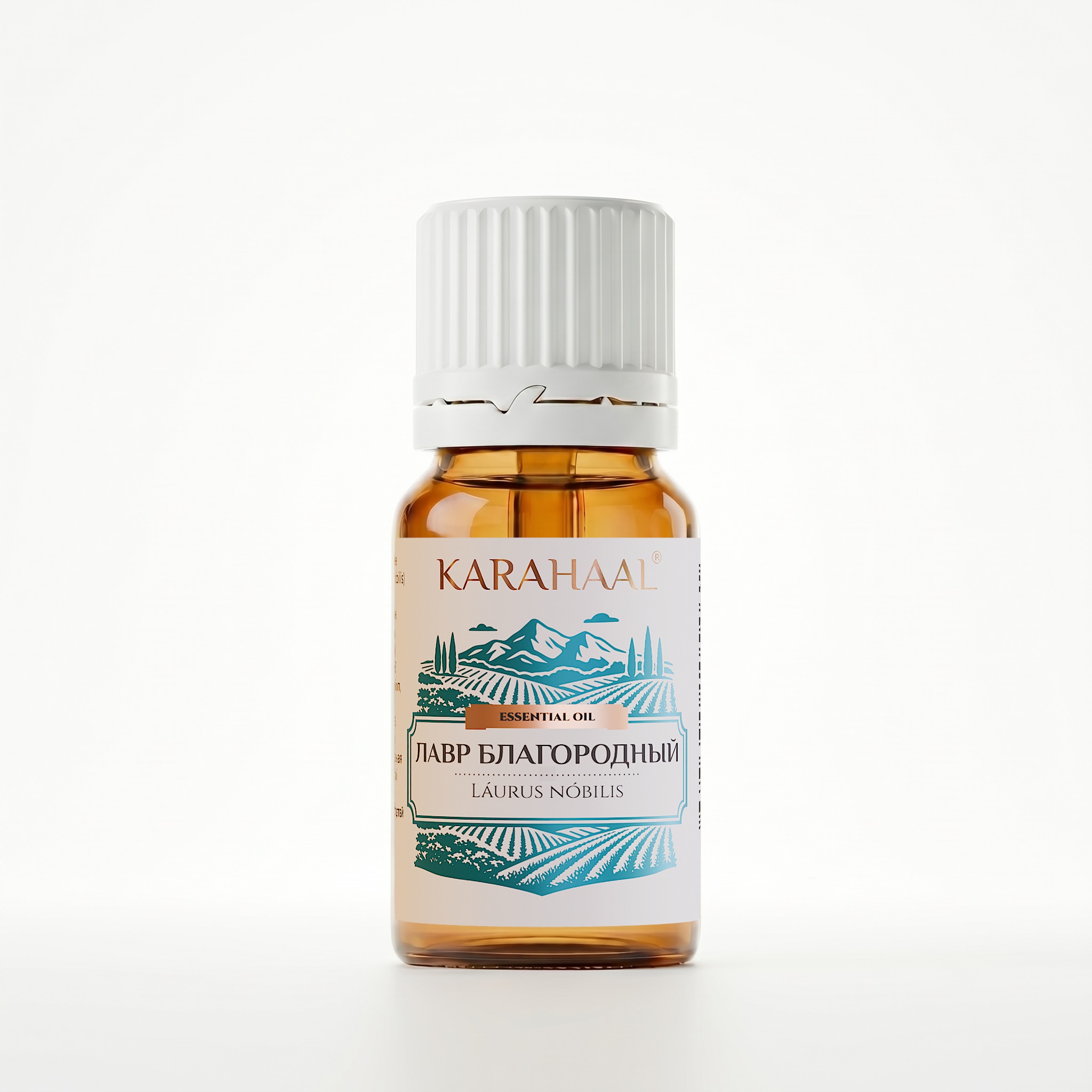
Bay laurel: inflammation, muscle discomfort, and mental focus
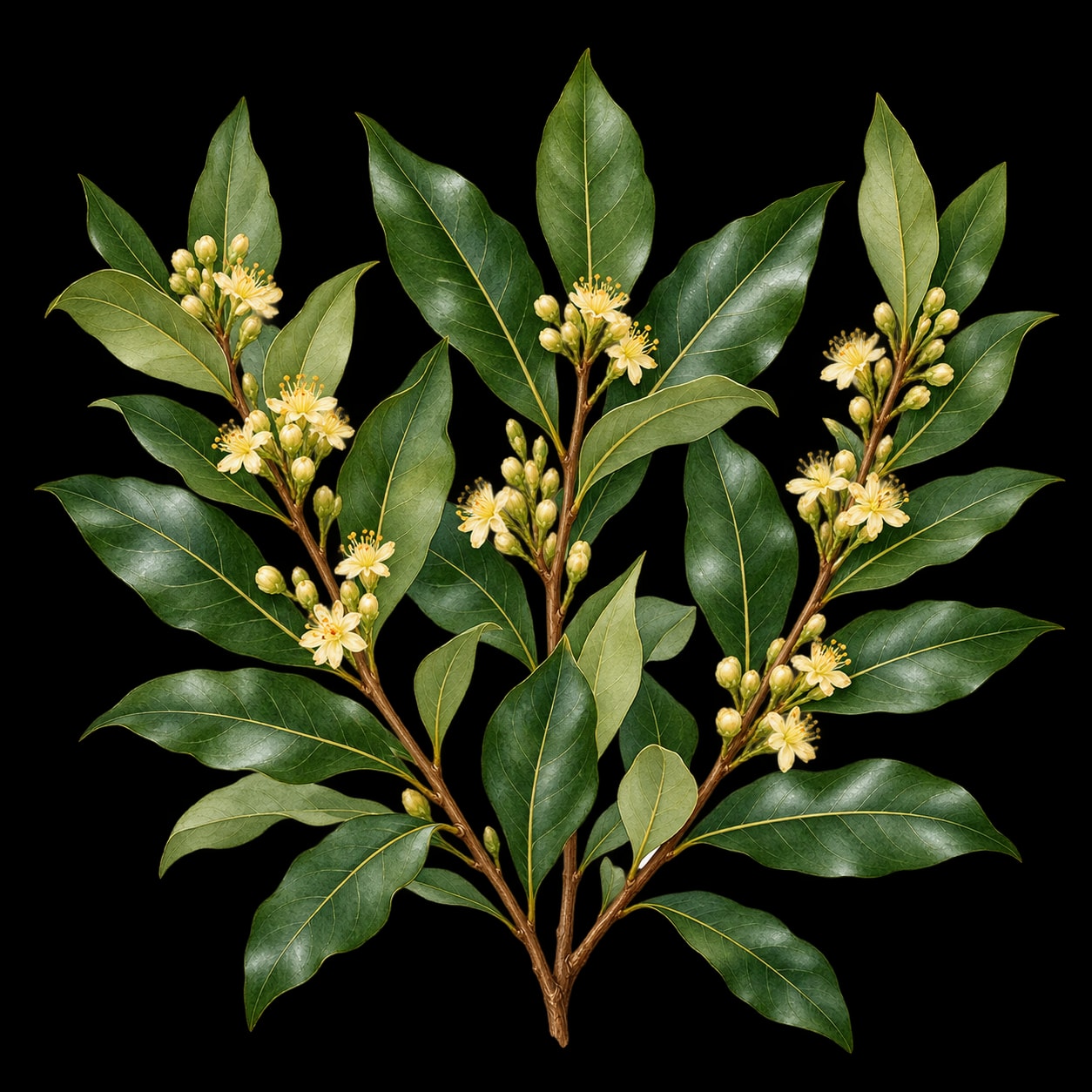
Bay laurel is chosen for local massage and active herbaceous-spicy blends. Its aroma combines the freshness of green leaves, dry spice, and a soft camphor note. It is expressive even in small amounts.
Analgesic and anti-inflammatory actions
In experimental studies, Laurus nobilis leaf essential oil reduced pain responses and inflammatory edema. A moderate sedative effect was observed under certain conditions. The results reveal several directions of biological activity of bay leaf oil. [1]
This specific experimental base for traditional use of laurel in blends for muscle and joint discomfort. Home format — a well-diluted composition for a small area, without the intention to cause strong warming or irritation.
Respiratory aromatherapy
Bay essential oil has traditionally been used in seasonal blends when experiencing stuffiness and respiratory discomfort. Its cineole freshness combines with cypress, fir, and lavender. A weak cold test is sufficient for initial exploration; strong deep inhalations of concentrate are not necessary.
Emotional sphere
Bay laurel gives compositions a collected, confident character. It is selected for transitioning after fatigue and preparing for focused work. Lemon lightens the green spiciness, cedar adds a lasting dry background. In the evening, lavender helps soften the intensity of the scent.
Why moderation is important
Bay laurel contains several biologically active groups of substances. Excess can irritate the skin, so it is not used undiluted and is not added arbitrarily to skincare for sensitive areas. For massage, a simple mixture with a small number of components is more convenient to assess tolerance.
Blending suggestions
Lavender softens the spiciness, lemon reveals the fresh top note. Cypress and cedar make the profile drier, rosemary enhances the active herbaceous component.
Research in detail
Analgesic and anti-inflammatory action
In experimental studies, Laurus nobilis leaf essential oil reduced pain responses and edema; under certain conditions, a moderate sedative effect was observed. In aromatherapy applications, bay leaf is used in calculated diluted mixtures. [1]
How to use
Examples for adults. Quantities are given for the entire bottle; for one application, take a small portion of the mixture. These are aromatic therapy routines, not medicinal dosages.
- Simple blend for local massage: 1 drop of bay laurel oil in 20 ml of jojoba. Mix in a clean bottle. Apply a small amount of the prepared blend to the shoulders or upper back and spread with gentle massage movements.
- Fresh daytime blend: 1 drop of bay laurel oil + 1 drop of true lavender essential oil in 30 ml of jojoba. Mix; use a small amount to gently massage the forearms or shoulders.
- Scenting without a diffuser: 1 drop on a paper towel or aromastone. Hold at a comfortable distance from the face, without touching the skin with the oil; several ordinary breaths are sufficient to assess the scent.
- “Spiced Orange” blend: bay laurel oil — 1 drop; sweet orange oil — 1 drop; jojoba — 30 ml. Combine in a clean, dry bottle and mix. Use a small amount of the prepared blend to gently massage an adult’s shoulders or forearms, away from the face.
Precautions
Dilute in a carrier oil before applying to skin. Do not ingest or apply to mucous membranes; stop use if irritation occurs. Do not apply mint-cineole or camphor blends close to the face or nose; tolerance of the aroma is particularly important for sensitive airways. A particularly low concentration is needed for skin use; the strength of the aroma is not a reason to increase the dose.
What to combine with this care
- “Provence” lavender essential oil — Aromatic combination
- Essential oil of Cypress — Aromatic combination
- Lemon essential oil — Aromatic combination
- Jojoba oil — Base for the oil recipes above
- Essential oil of sweet orange