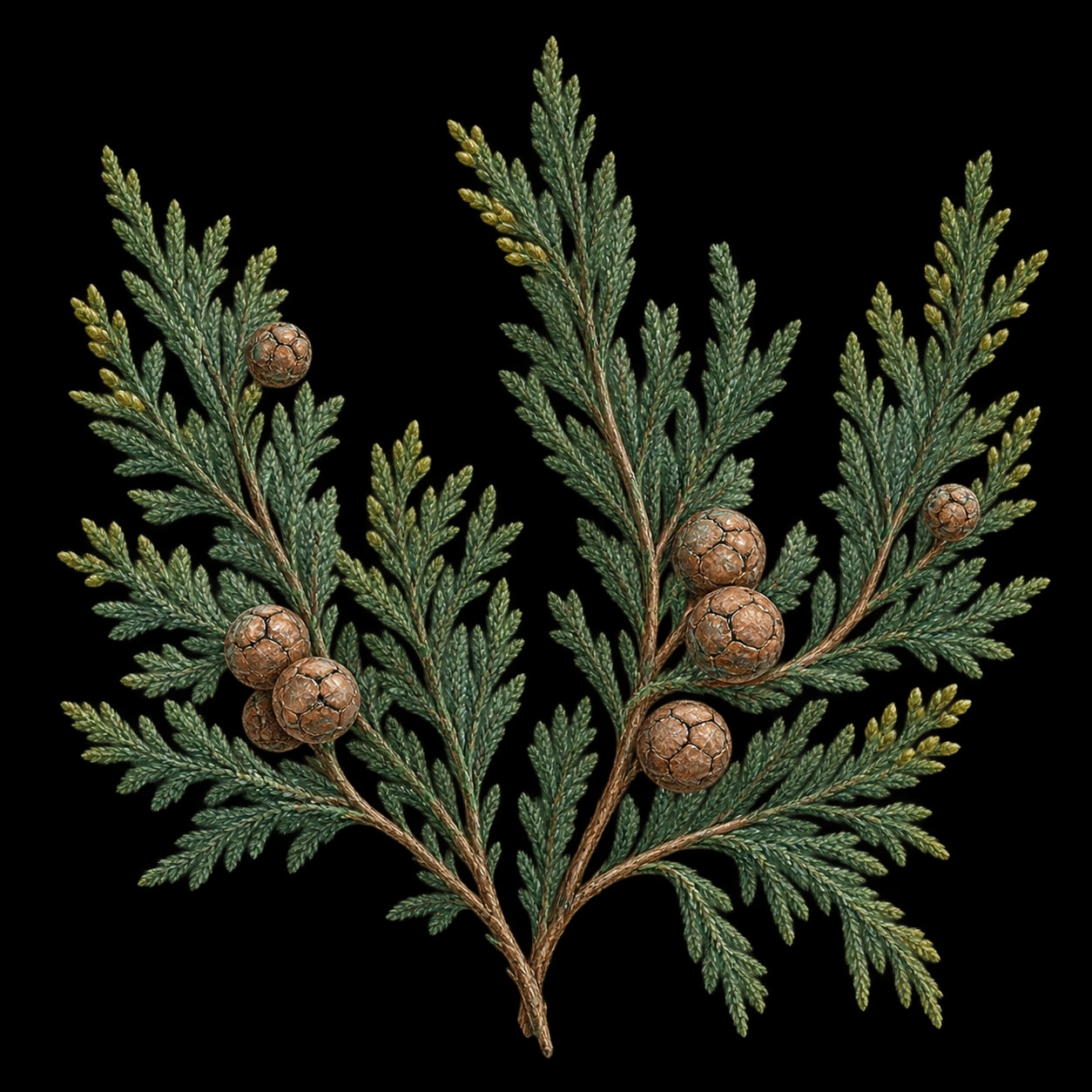
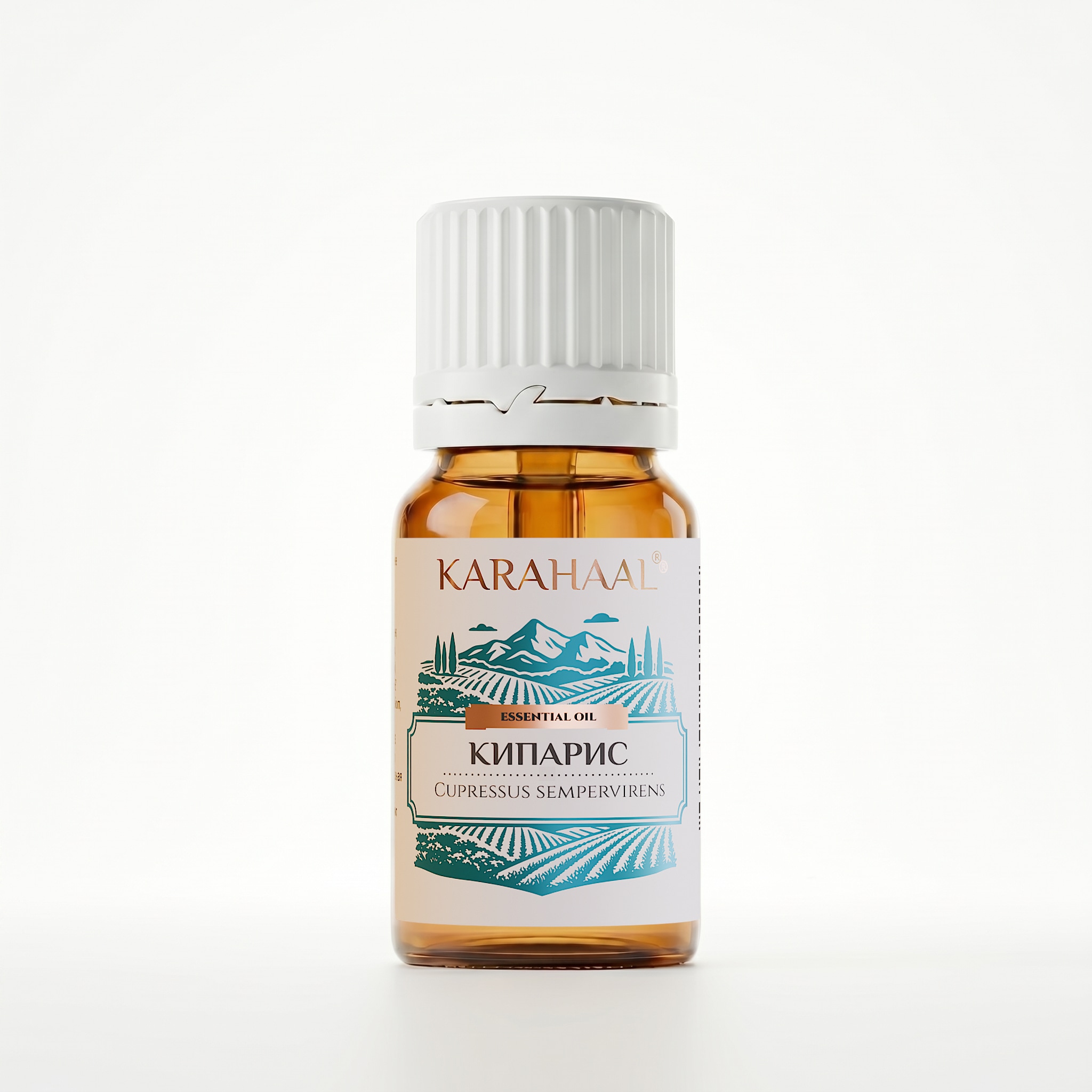
Cypress: heaviness in the legs, localized care, and dry coniferous freshness
Cypress is selected for massage of legs after prolonged standing and for blends requiring a dry coniferous freshness. Its scent is less sweet than fir and more airy than cedarwood oils.
Venous and anti-edematous properties
In aromatherapy tradition, cypress is associated with venous tone, a feeling of heaviness, and stagnant discomfort. Practically, this translates to gentle care for tired legs using a diluted mixture, without strong pressure. Geranium makes the composition more floral, lavender adds a calming effect, and juniper enhances the woodland character.
Such care does not include massage of painful veins or a suddenly swollen leg. In case of unilateral swelling, redness, and pain, the cause must first be determined.
Respiratory aromatherapy
Cypress is traditionally used in blends for cough and respiratory discomfort. Its dry character pairs well with soft coniferous oils and lavender. The scent should remain subtle: the goal is comfortable aromatic support.
Antibacterial potential
In the laboratory study, Cupressus sempervirens essential oil showed moderate antibacterial activity and action on biofilms. No activity against Candida was observed under the same conditions. Researchers evaluated different microorganisms separately. [1]
Emotional sphere
Cypress is suitable for a sense of clarity and inner focus. Lemon lightens the aroma, cedar adds a stable base, and lavender softens its sharpness. It is a good choice when sweet floral blends appear too dense.
Blending suggestions
Lavender softens a dry character, lemon adds a clear freshness. Geranium creates a floral center, cedar and juniper enhance the resinous-coniferous base.
Research in detail
Bacteria and biofilms: different results
In the study of Cupressus sempervirens, essential oil and methanol extract were separately examined. The oil showed moderate antibacterial activity and action in biofilm models, but no activity against Candida was observed under the tested conditions. This result refines the scientific profile of cypress and highlights why the term 'antimicrobial' is useful when accompanied by the specific model. [1]
How to use
Examples for adults. Quantities are given for the entire bottle; for one application, take a small portion of the mixture. These are aromatic therapy routines, not medicinal dosages.
- A simple mixture for local massage: 1 drop of cypress essential oil per 10 ml of jojoba oil. Mix in a clean bottle. Apply a small amount of the prepared mixture to the calves with gentle movements, avoiding painful areas and prominent veins.
- Fresh daytime blend: 1 drop of cypress oil + 1 drop of true lavender essential oil in 20 ml of jojoba. Mix; use a small amount to gently massage the forearms or shoulders.
- Scenting without a diffuser: 1 drop on a paper towel or aromastone. Hold at a comfortable distance from the face, without touching the skin with the oil; several ordinary breaths are sufficient to assess the scent.
- “Dry Forest” blend: cypress oil — 1 drop; Atlas cedarwood oil — 1 drop; jojoba — 20 ml. Combine in a clean, dry bottle and mix. Use a small amount of the prepared blend to gently massage an adult’s shoulders or forearms, away from the face.
Precautions
Dilute in a carrier oil before applying to skin. Do not ingest or apply to mucous membranes; stop use if irritation occurs. Store tightly closed, away from heat and light: oxidised oil is more likely to cause skin reactions.
What to combine with this care
- “Provence” lavender essential oil — Aromatic combination
- Rose geranium essential oil — Aromatic combination
- Lemon essential oil — Aromatic combination
- Jojoba oil — Base for the oil recipes above
- Atlas cedar essential oil