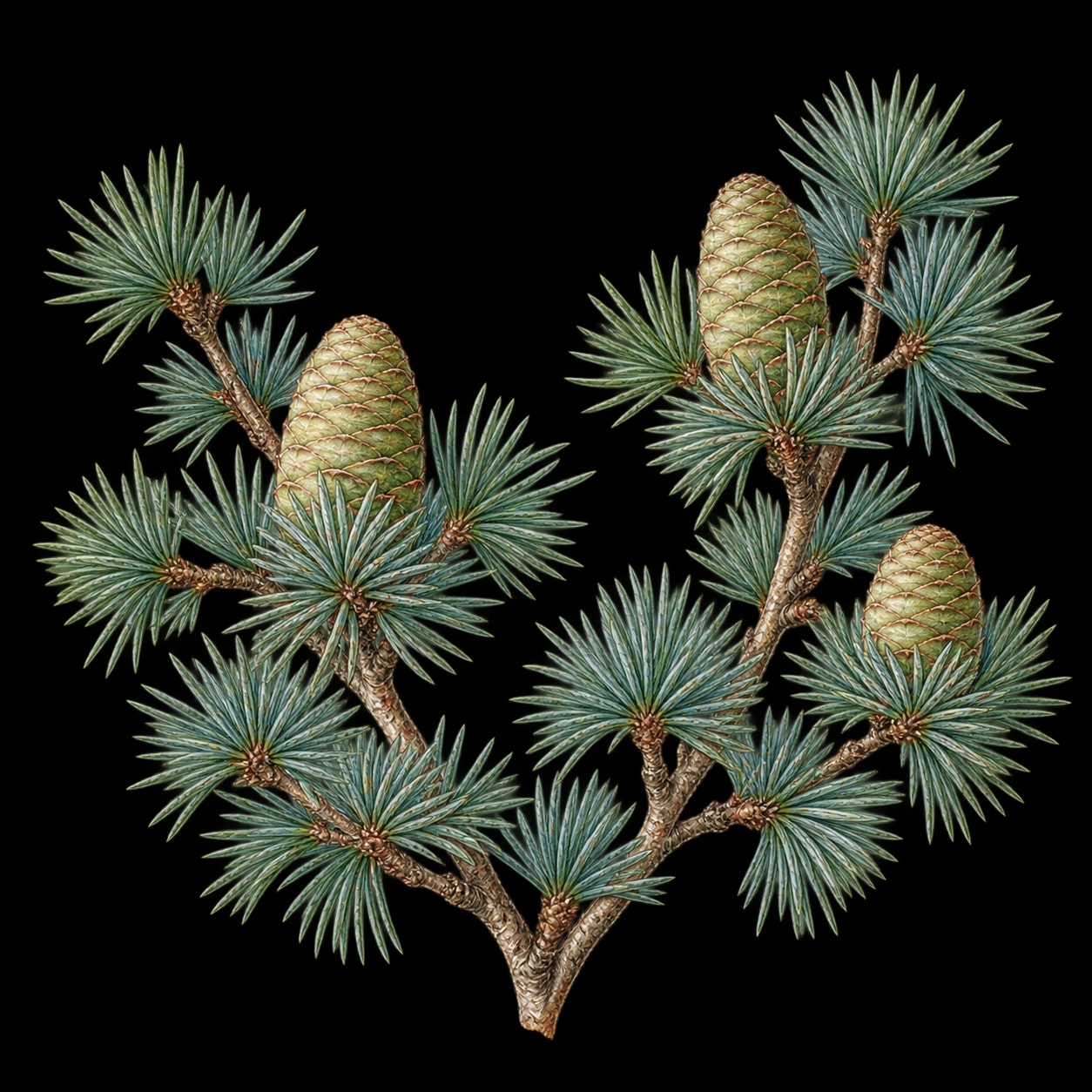
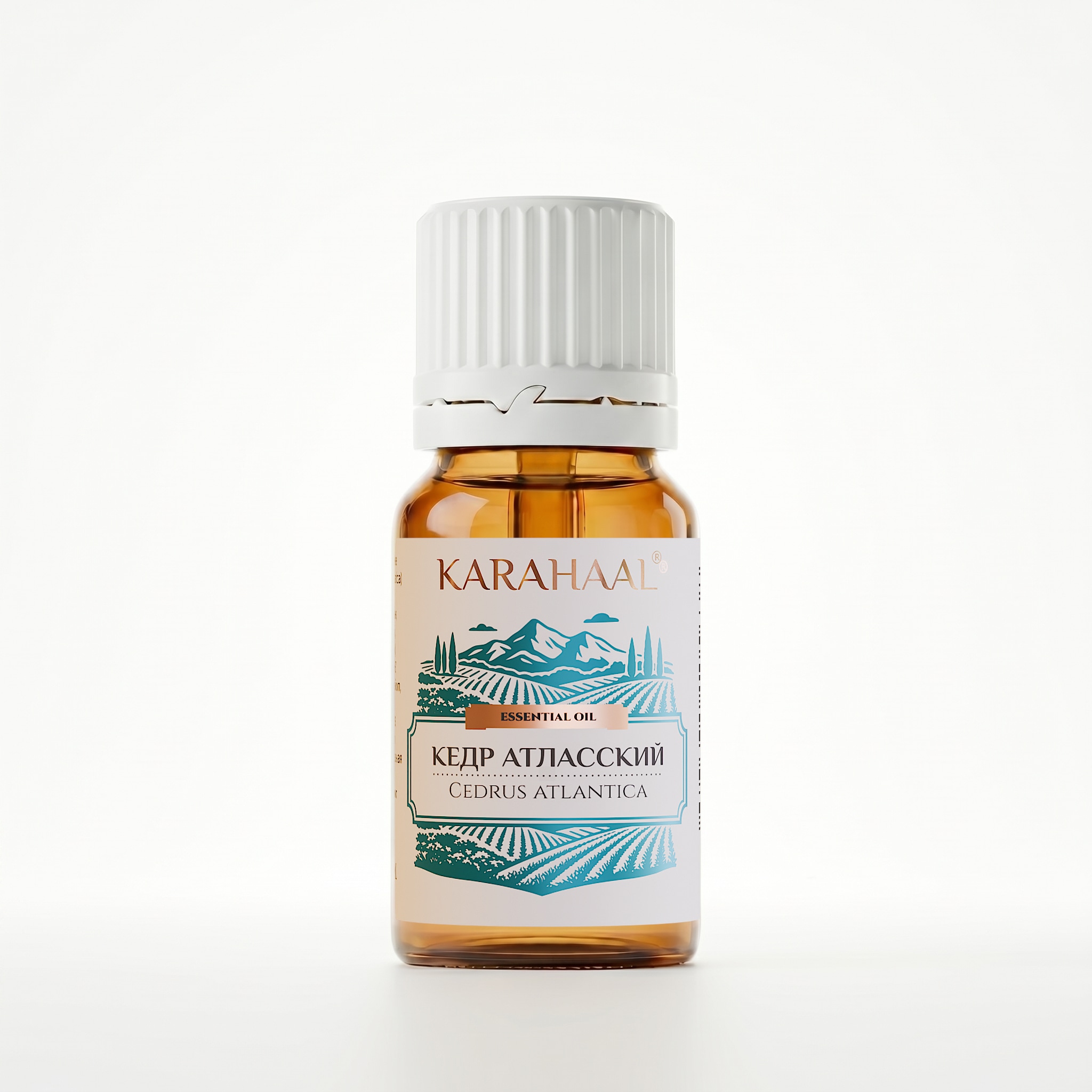
Atlas cedar: skin, inflammation, and wood stability
Atlas cedar is suitable for dry warm blends and slow massage. The wood oil has a slightly smoky resinous-balsamic character and helps retain lighter aromas in the mixture.
Anti-inflammatory direction
In a 2023 study, Cedrus atlantica suppressed the activity of 5-lipoxygenase — an enzyme involved in the formation of inflammatory mediators. This specific laboratory target explains the interest in cedar for restorative topical formulations. [1]
In aromatherapy practice, this approach is combined with massage for muscle stiffness and skin care requiring comfort. A small amount of oil adds depth without a strong sensation of coolness.
Antimicrobial potential
In a laboratory study, Atlas cedar essential oil demonstrated activity against most tested bacterial and fungal cultures. Sensitivity among different strains varied. This area is interesting for the development of cosmetic and topical products. [1]
Cosmetic direction
Atlas cedar is also studied in cosmetology: in a laboratory study, its effect on tyrosinase — an enzyme involved in pigment formation — was evaluated. For at-home skincare, it is chosen as a woody aromatic component in diluted moisturizing body formulations.
Emotional sphere
A dry woody scent is ideal for a sense of stability after overexertion. Orange adds a bright opening, lavender provides a calm herbal heart, geranium brings floral roundness. Patchouli and vetiver deepen the base; introduce them gradually to prevent the composition from becoming heavy.
Blending suggestions
Lavender softens the woody dryness, and orange adds a bright top note. Geranium brings floral fullness, patchouli adds balsamic depth, and vetiver provides a rooty base.
Research in detail
Enzymes and microbial models
In a 2023 study, Cedrus atlantica essential oil was chromatographically analyzed and tested in several laboratory systems. In addition to antimicrobial and antioxidant tests, the authors studied the inhibition of 5-lipoxygenase and tyrosinase. These targets are important for inflammatory and pigmentation-focused cosmetic research. Computational modeling supplemented the experiments, but clinical reduction of inflammation or pigmentation in people was not evaluated. [1]
How to use
Examples for adults. Quantities are given for the entire bottle; for one application, take a small portion of the mixture. These are aromatic therapy routines, not medicinal dosages.
- Simple blend for local massage: 1 drop of Atlas cedarwood oil in 10 ml of jojoba. Mix in a clean bottle. Apply a small amount of the prepared blend to the shoulders or upper back and spread with gentle massage movements.
- Gentle evening blend: 1 drop of Atlas cedarwood oil + 1 drop of true lavender essential oil in 20 ml of jojoba. Mix; use a small amount to gently massage the forearms or shoulders.
- Scenting without a diffuser: 1 drop on a paper towel or aromastone. Hold at a comfortable distance from the face, without touching the skin with the oil; several ordinary breaths are sufficient to assess the scent.
- “Deep Woody Base” blend: Atlas cedarwood oil — 1 drop; patchouli oil — 1 drop; jojoba — 20 ml. Combine in a clean, dry bottle and mix. Use a small amount of the prepared blend to gently massage an adult’s shoulders or forearms, away from the face.
Precautions
Dilute in a carrier oil before applying to skin. Do not ingest or apply to mucous membranes; stop use if irritation occurs.
What to combine with this care
- “Provence” lavender essential oil — Aromatic combination
- Essential oil of sweet orange — Aromatic combination
- Vetiver essential oil — Aromatic combination
- Jojoba oil — Base for the oil recipes above
- Patchouli essential oil