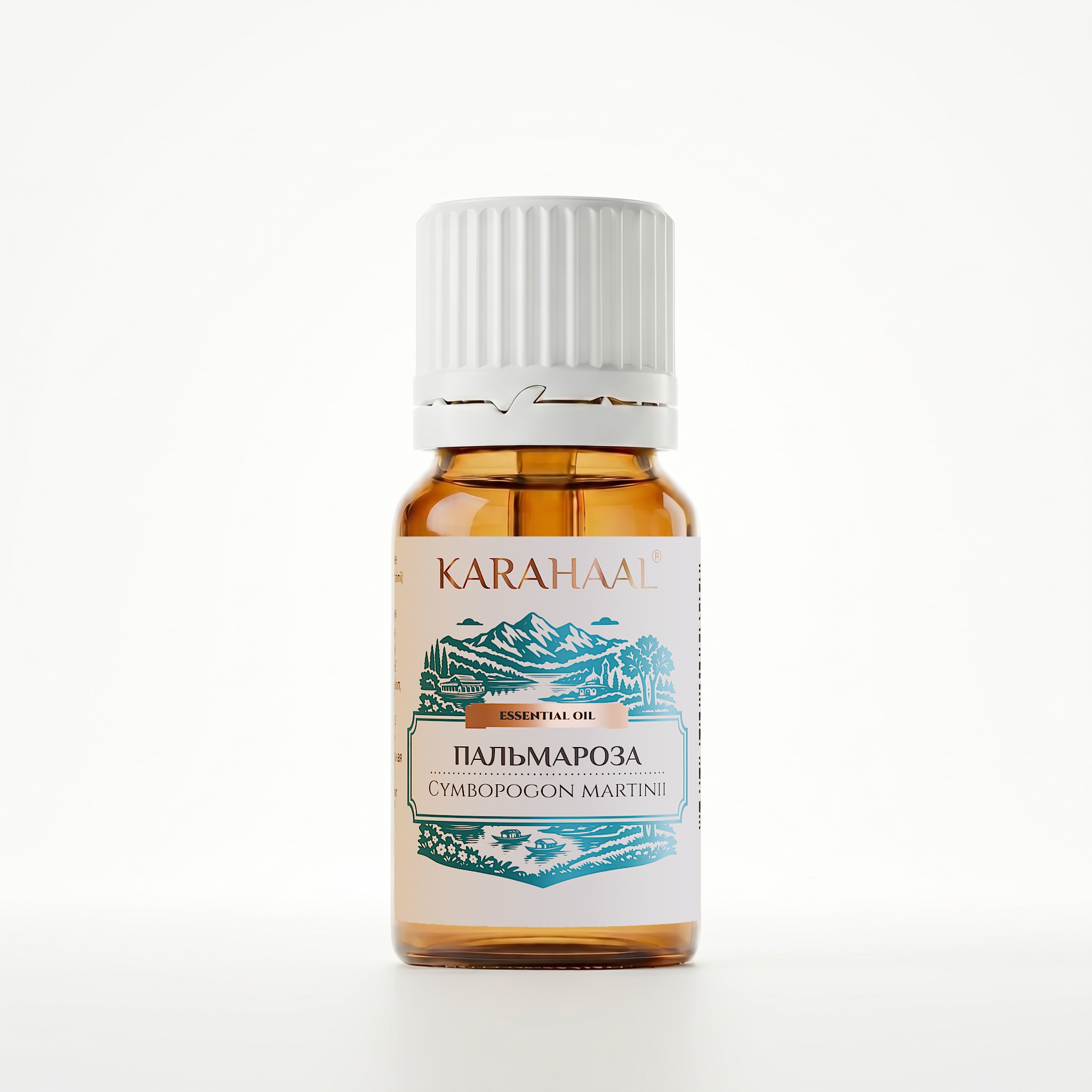
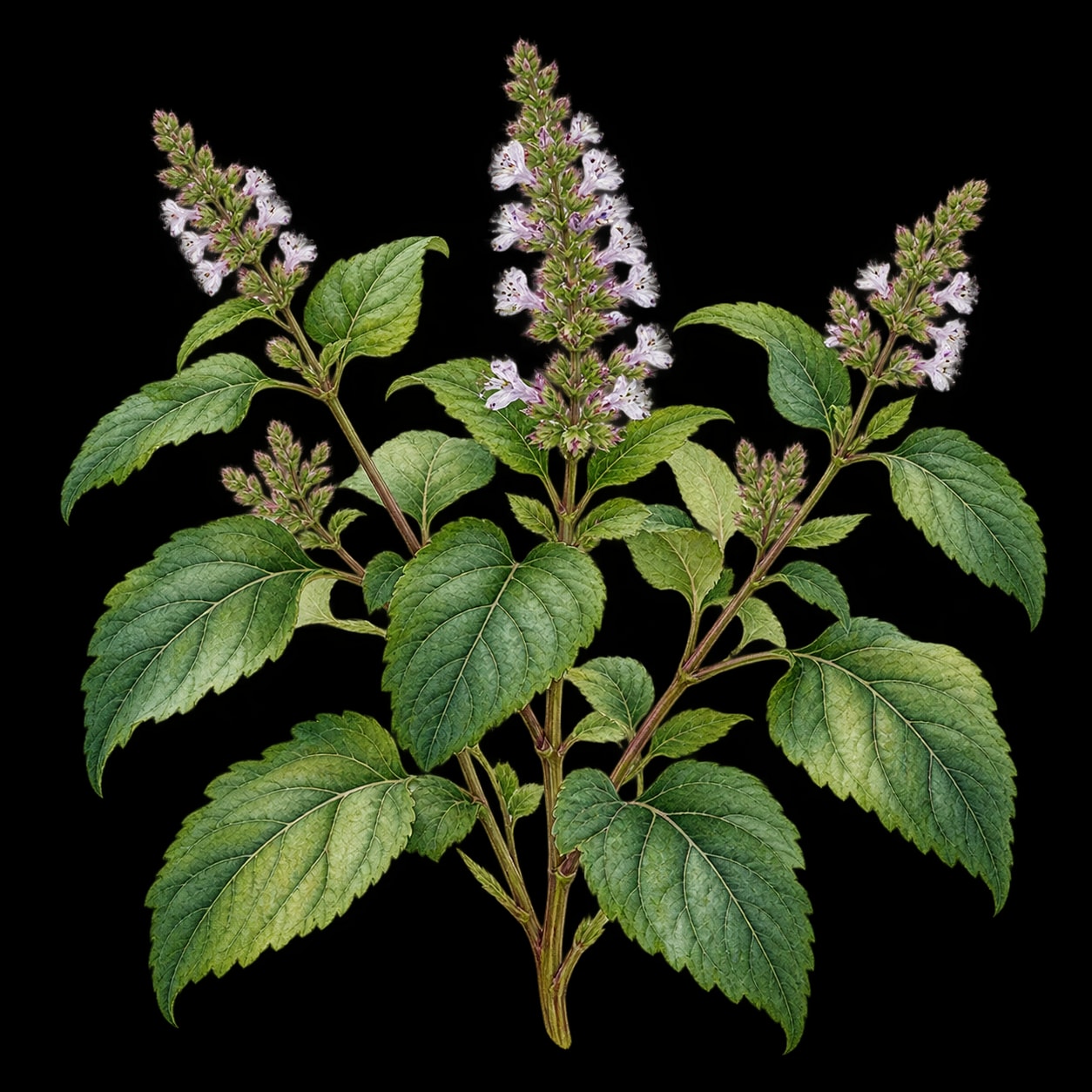
Patchouli: skin inflammation, restorative care, and sustained calmness
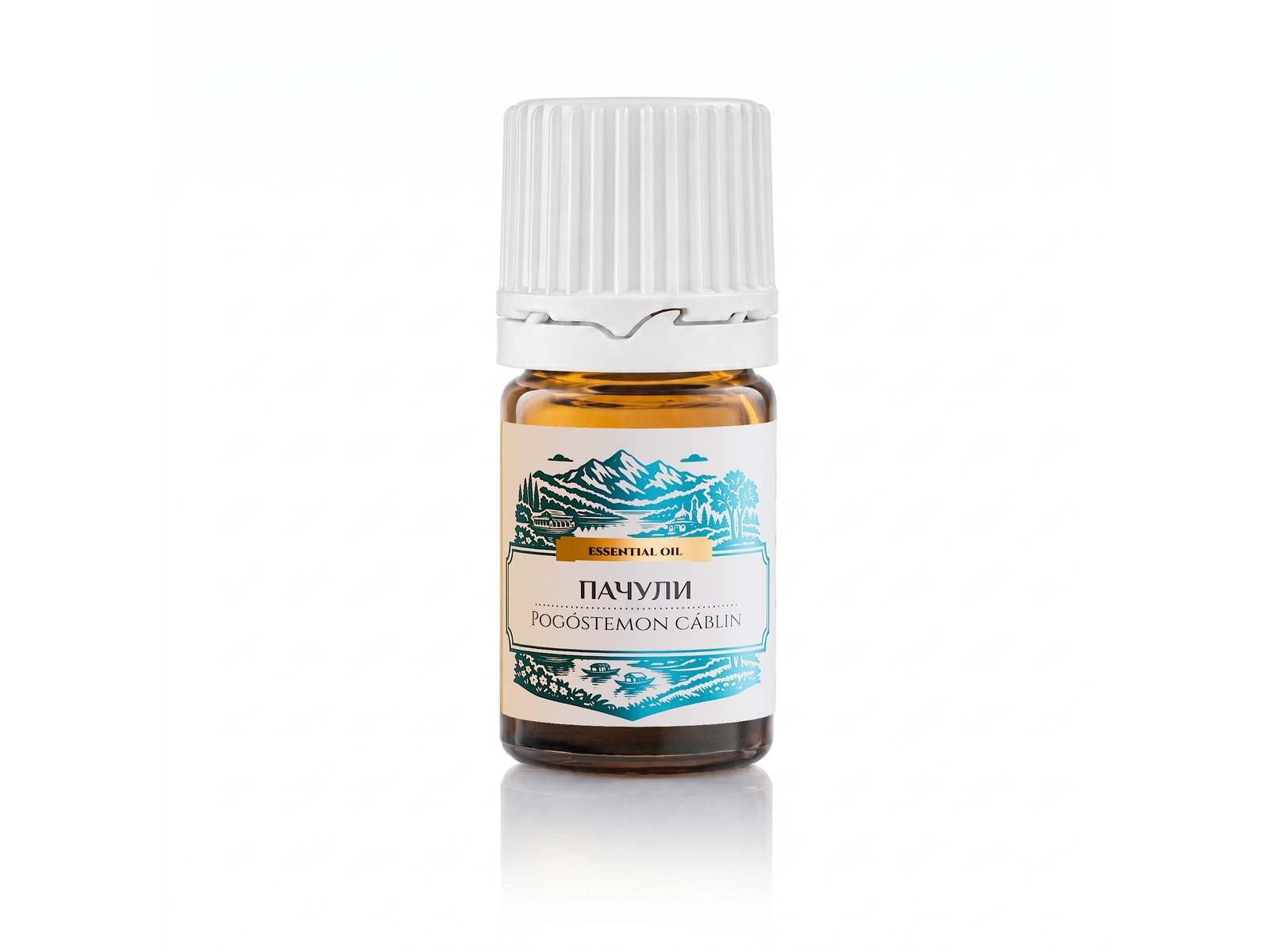
Patchouli is chosen for dense, calm compositions and body skin care. Its aroma is earthy, woody, balsamic; it unfolds slowly and well retains light floral and citrus notes.
Anti-inflammatory potential of patchoulol
Patchoulol, or patchouli spirit, is one of the characteristic molecules of the oil. In a study on stimulated macrophages, it reduced the production of TNF-α, IL-1β, IL-6, nitric oxide, and prostaglandin E2. These substances participate in inflammatory reactions. At the same time, the expression of iNOS and COX-2 enzymes was also reduced. [1]
This mechanism explains the interest in patchouli in restorative skin formulations. The isolated molecule was studied in cell culture; the concentration in the massage blend and the results of skincare are determined by the entire formula.
Dry skin and gentle care
In aromatherapy, patchouli is used in blends for dry, coarse body skin and areas requiring softening. A lighter or more nourishing base can be selected, and the essential oil should be added in small amounts. Essential oil concentrates are not used on damaged or actively inflamed skin.
Patchouli is also traditionally included in formulations for oily skin. This is not a contradiction: the aromatic component itself does not replace the base, cleansing, or addressing the root cause of the skin issue.
Emotional stability
Patchouli's rich aroma is suitable for slow massage after a stressful day. It has less fresh volatility and more stable, warm undertones. Orange makes the blend lighter, geranium and rose open up the floral heart, sandalwood extends the softness. Vetiver enhances the earthy character; this combination should be introduced sparingly.
Blending suggestions
Orange lightens density, rose and geranium add floral volume. Sandalwood softens the earthy tone, vetiver makes the woody base drier and deeper.
Research in detail
Patchoulol in inflammation-activated cells
In RAW264.7 macrophage cells stimulated with lipopolysaccharide, isolated patchoulol reduced the production of several inflammatory mediators: TNF-α, IL-1β, IL-6, nitric oxide, and prostaglandin E2. Expression of associated genes was also altered. The study reveals the anti-inflammatory potential of the molecule; the clinical effect of a cosmetic product also depends on the composition, concentration, and delivery of the substance. [1]
How to use
Examples for adults. Quantities are given for the entire bottle; for one application, take a small portion of the mixture. These are aromatic therapy routines, not medicinal dosages.
- Simple blend for local massage: 1 drop of patchouli oil in 10 ml of jojoba. Mix in a clean bottle. Apply a small amount of the prepared blend to the shoulders or upper back and spread with gentle massage movements.
- Gentle evening blend: 1 drop of patchouli oil + 1 drop of true lavender essential oil in 20 ml of jojoba. Mix; use a small amount to gently massage the forearms or shoulders.
- Scenting without a diffuser: 1 drop on a paper towel or aromastone. Hold at a comfortable distance from the face, without touching the skin with the oil; several ordinary breaths are sufficient to assess the scent.
- “Earth and Flowers” blend: patchouli oil — 1 drop; rose geranium oil — 1 drop; jojoba — 20 ml. Combine in a clean, dry bottle and mix. Use a small amount of the prepared blend to gently massage an adult’s shoulders or forearms, away from the face.
Precautions
Dilute in a carrier oil before applying to skin. Do not ingest or apply to mucous membranes; stop use if irritation occurs.
What to combine with this care
- Essential oil of sweet orange — Aromatic combination
- White sandalwood essential oil BIO — Aromatic combination
- Vetiver essential oil — Aromatic combination
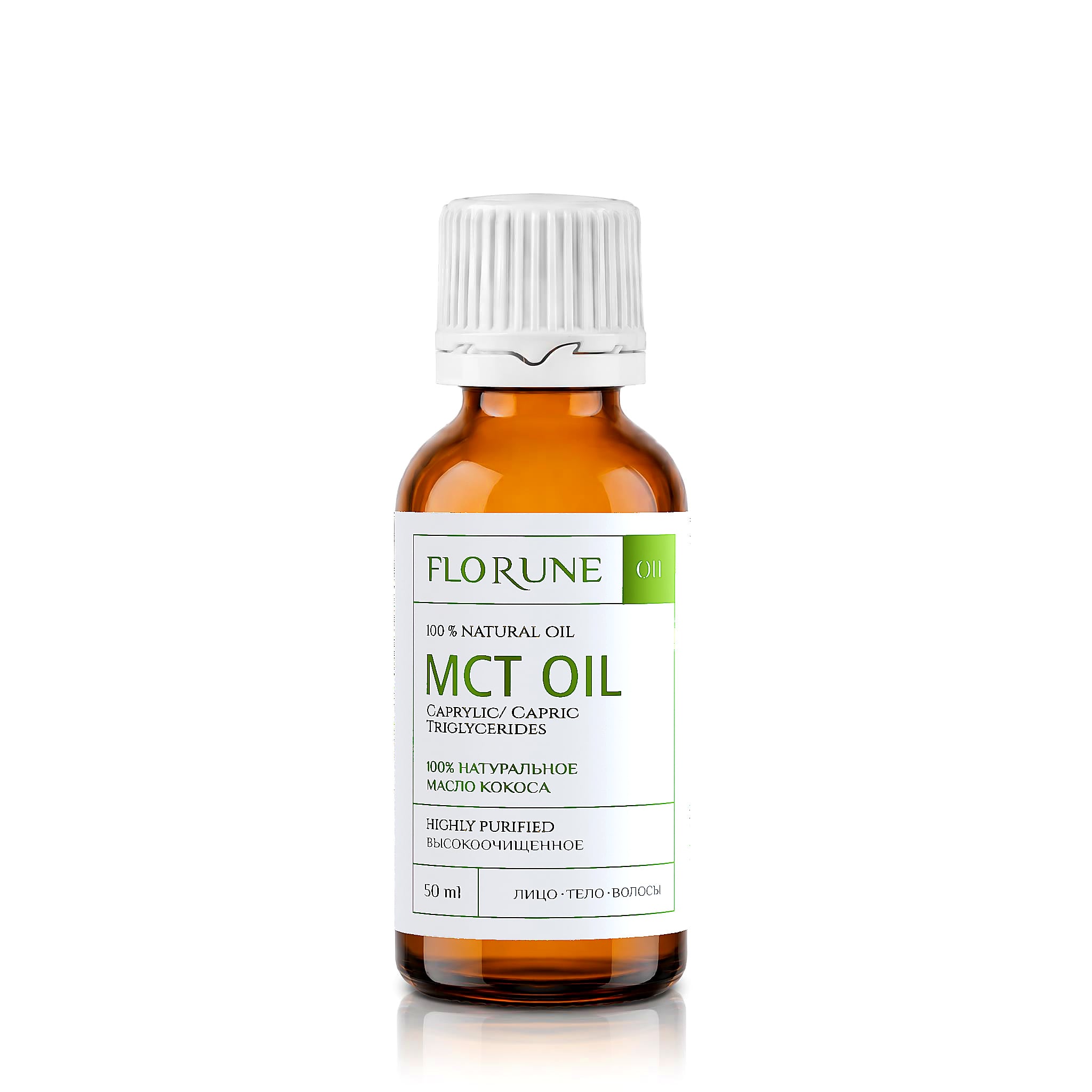
- Jojoba oil — Base for the oil recipes above
- Rose geranium essential oil