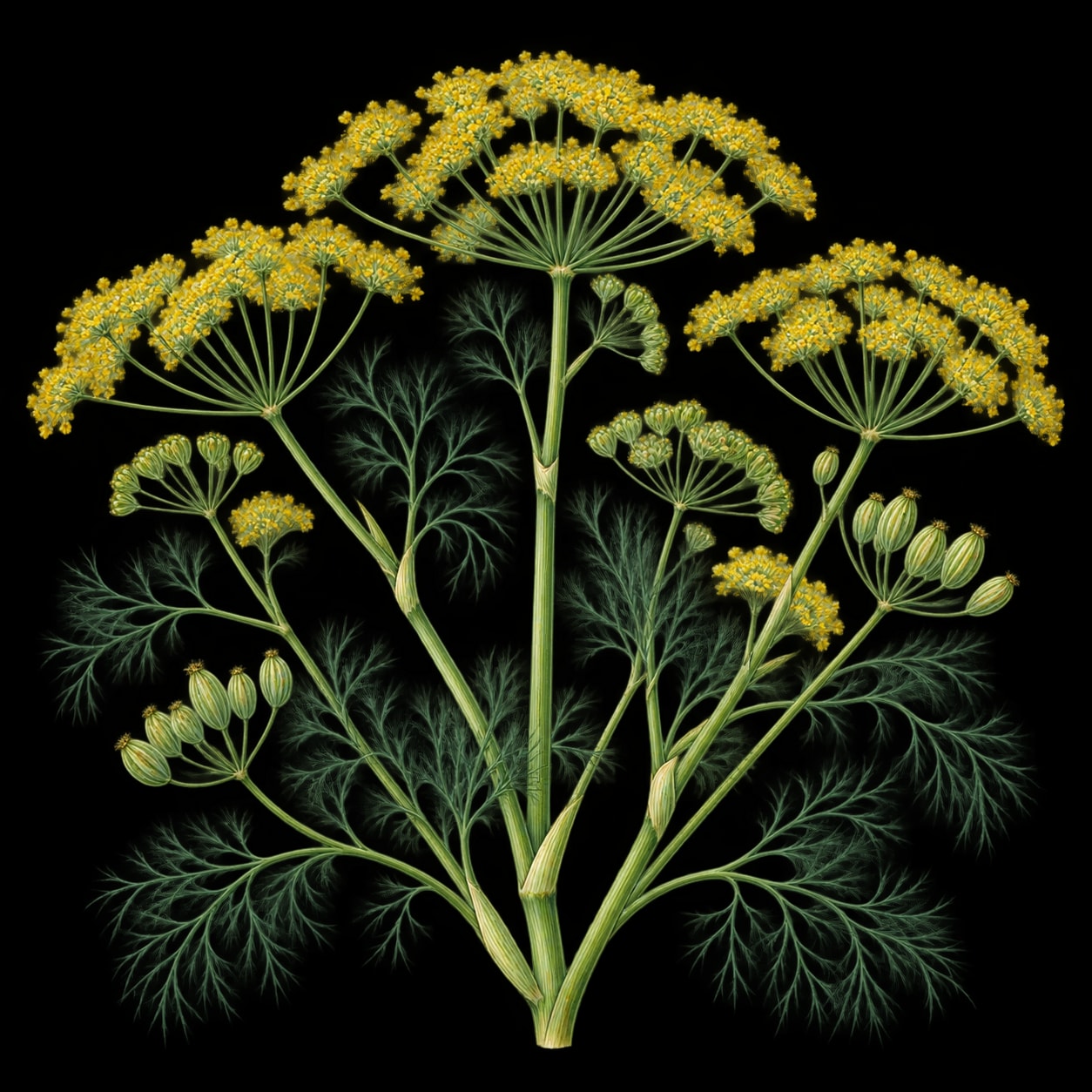
Fennel: digestive spasms and warm anise composition
Fennel is one of the classic plants in digestive aromatherapy. Its essential oil is selected for use in cases of bloating, a sensation of distension, and spasm-related discomfort. The aroma is sweet, warm, anise-like, with a dry herbaceous note and sometimes a camphoraceous undertone.
Antispasmodic and carminative uses
Traditional use of fennel is associated with relaxation of smooth muscle and reduction of discomfort from gas formation. In a placebo-controlled study with 125 infants, a specially formulated fennel essential oil emulsion reduced the occurrence of colic. This study specifically addresses this form. For children, any use of essential oils requires a pediatrician's prescription; retail concentrated oils are not given internally. [1]
For adult aromatherapy care, fennel is considered a component of a personally selected external blend. Gentle abdominal massage is appropriate only for familiar, mild discomfort; increasing pain, fever, or unusual symptoms require evaluation of the cause.
Warm aroma and emotional relief
Fennel can make a composition warmer and rounder. Lavender softens its anise-like intensity, orange adds a fruity lightness, sandalwood brings a calm woody depth. For someone who dislikes anise, a strong concentration will not improve the effect: it is better to choose a different spicy profile.
Why individual selection is necessary
Fennel essential oils differ in the ratio of anethole, fenchone, and estragole. These differences affect both the aroma and limitations. Due to the presence of biologically active phenylpropanoids, the oil is not included without selection in long-term home regimens, child care, pregnancy, and breastfeeding. Use during hormone-dependent conditions should be discussed with a specialist. [2]
Fennel is valued for its specific aromatherapeutic specialization; it does not need to be described as a remedy for all digestive and hormonal issues.
Blending suggestions
Orange softens anise notes, lavender mellows spiciness, geranium adds a floral center. Sandalwood holds the warm base.
Research in detail
Clinical work with a special emulsion
In a placebo-controlled study from 2003, 125 infants with colic were included. A fennel oil emulsion was prepared and evaluated for duration of crying; the authors reported a benefit of the studied formulation over placebo. This work confirms that gastrointestinal applications are not limited to folk tradition. It does not serve as a recipe for preparing a children's remedy from retail concentrate: formulation, quality control, and medical conditions are here fundamentally important. [1]
How to use
Examples for adults. Quantities are given for the entire bottle; for one application, take a small portion of the mixture. These are aromatic therapy routines, not medicinal dosages.
- Material for individually tailored professional blends. Do not apply concentrate to skin, mucous membranes, or damaged areas; do not ingest. No home therapeutic regimen is recommended with this product.
Precautions
Dilute in a carrier oil before applying to skin. Do not ingest or apply to mucous membranes; stop use if irritation occurs. Sweet fennel requires caution because of its anethole content and possible estragole content. Self-directed therapeutic use is unsuitable for hormone-dependent conditions, during pregnancy or breastfeeding, or for children.
What to combine with this care
- “Provence” lavender essential oil — Aromatic combination
- Essential oil of sweet orange — Aromatic combination
- White sandalwood essential oil BIO — Aromatic combination