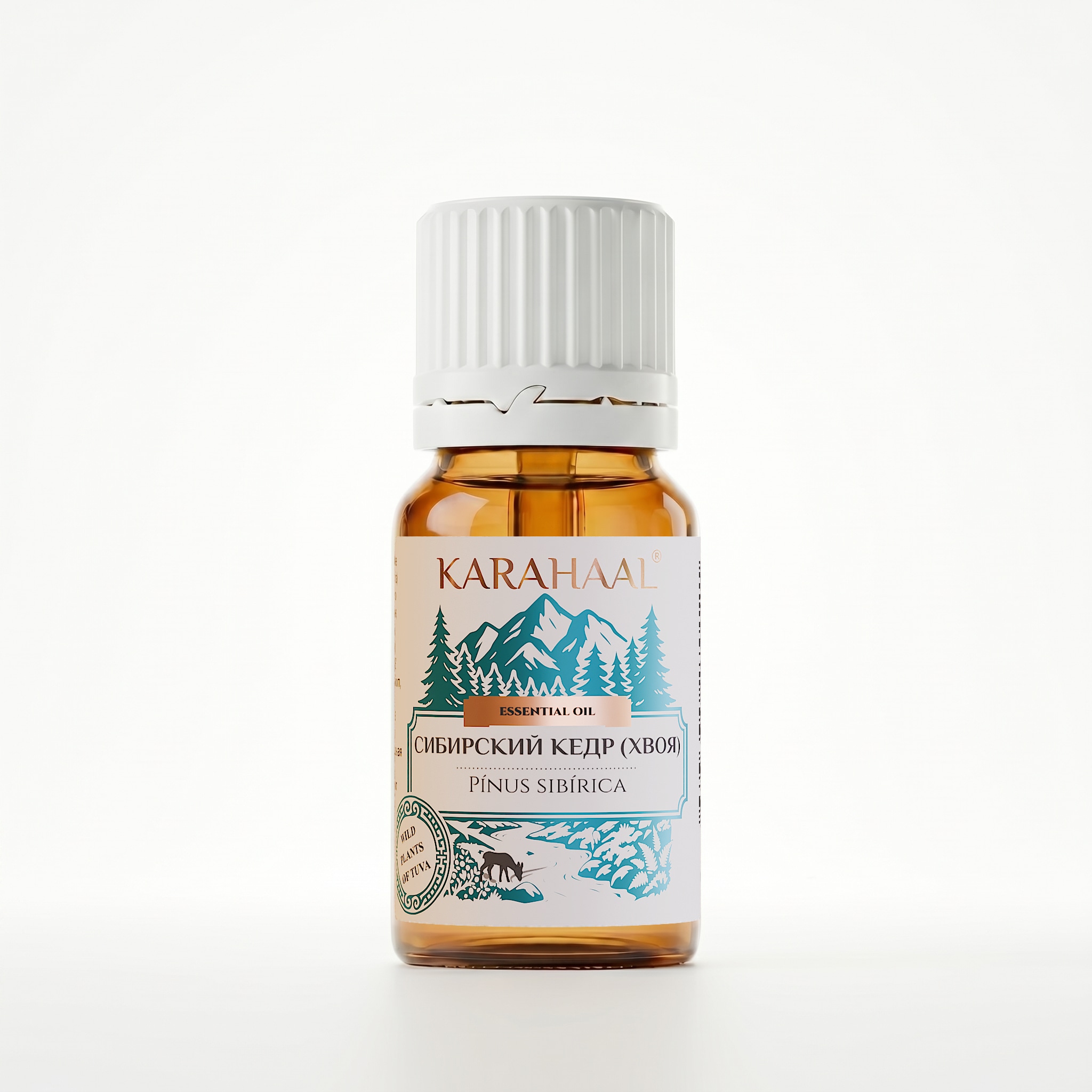
Siberian cedar pine needles: breathing, muscle tension, and forest vitality
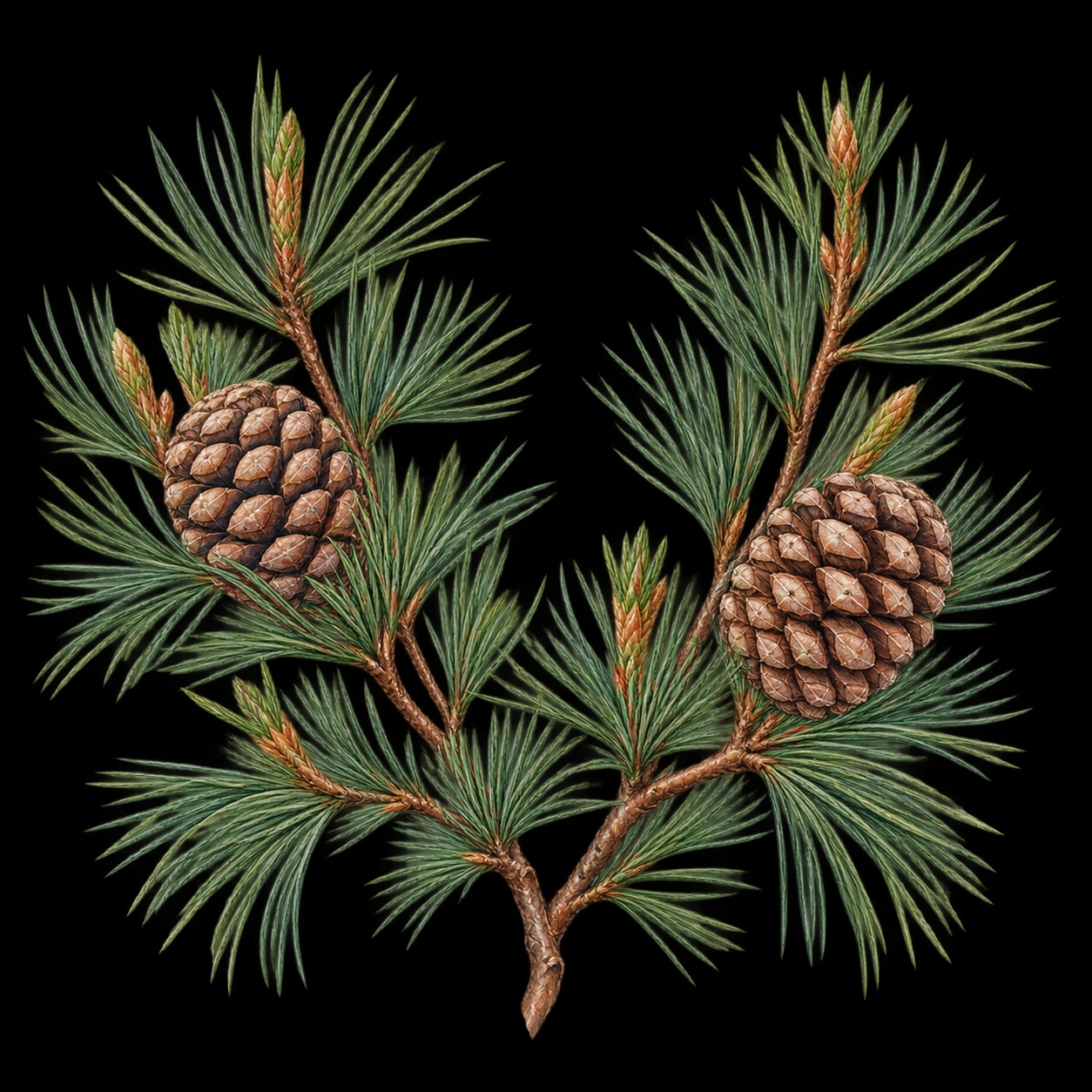
Siberian pine needle essential oil suits fresh seasonal blends and restorative massage. Its profile is greener and airier than the cone oil, with resinous depth that unfolds gradually.
Expectorant and mucolytic properties
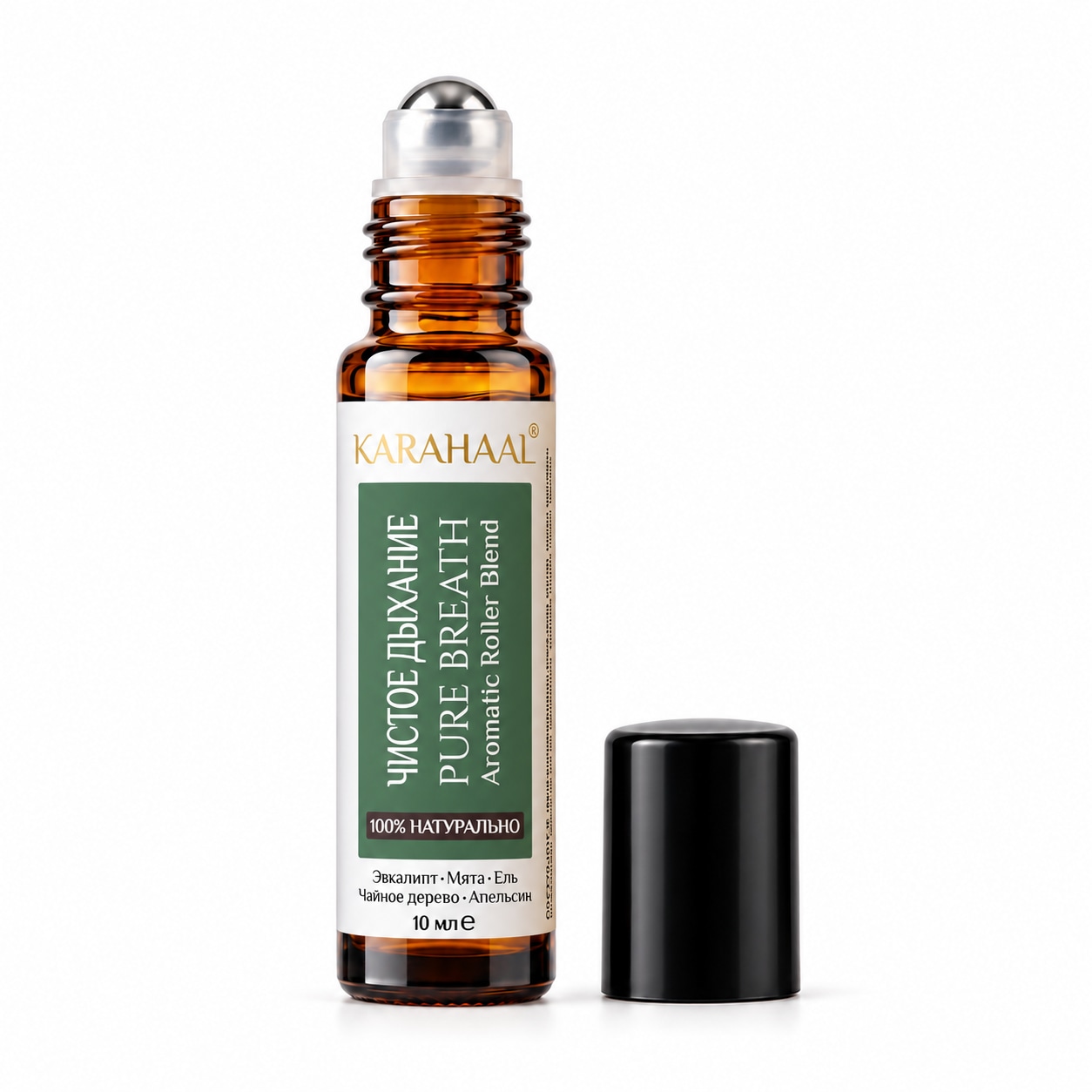
In the monograph KARAHAAL Siberian cedar pine needle essential oil is described as a material for respiratory aromatherapy in cases of viscous secretion and cough discomfort. Traditional uses include expectorant, mucolytic, and balsamic applications. For adults, a mild aroma intensity and diluted external mixtures for the back are preferred. [1]
Anti-inflammatory massage
The monograph also considers analgesic, spasmolytic, and anti-edematous applications. This makes the oil suitable for blends intended for shoulders, back, and tired legs after exertion. Massage should be performed gently on intact skin; intense rubbing of painful areas is not a necessary part of aromatherapy.
What explains the chemical analysis of pine essential oils
In a comparative study involving 50 samples of Siberian conifer essential oils, Pinus sibirica was among those examined. The study revealed natural variability in profiles depending on the plant and origin. It helps understand differences in aroma and raw material quality; the study did not include evaluation of treatment efficacy in humans. [2]
Emotional tone
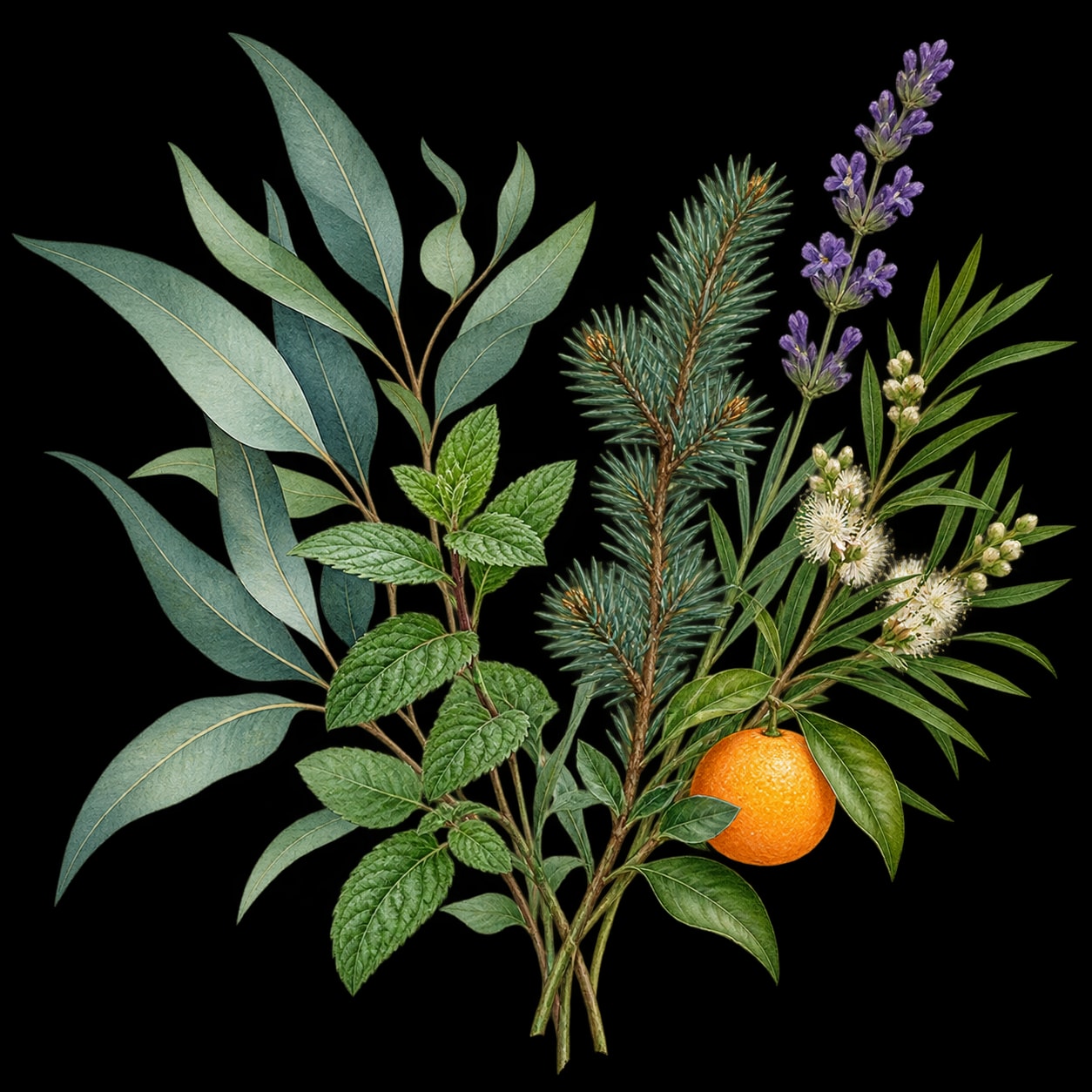
Siberian cedar pine needles essential oil suits the feeling of space and freshness after mental fatigue. Orange adds warmth, lavender shifts the composition toward a calmer tone. Vetiver deepens and stabilizes it, while Cypress emphasizes the dry woody note.
For evening massage, pine needles can remain the main accent, with the addition of one gentle partner. A small formulation helps better distinguish the aroma and assess tolerance.
Blending suggestions
Lavender softens the green needle notes, orange adds a gentle sweetness. Fir creates a rounded forest accord, cypress adds a dry, vetiver brings a deep woody-rooted character.
Research in detail
Pine essential oils: the importance of accurate botany
In a comparative analytical study, 50 samples of Siberian conifer essential oils, including Pinus sibirica, were examined. The authors compared the volatile profiles of different plants and samples. The study demonstrates why origin and plant variety affect the character of the coniferous aroma. This is a study of chemical diversity, not a clinical trial of the therapeutic effects of pine needle oil. [2]
How to use
Examples for adults. Quantities are given for the entire bottle; for one application, take a small portion of the mixture. These are aromatic therapy routines, not medicinal dosages.
- Material for individually tailored professional blends. Do not apply concentrate to skin, mucous membranes, or damaged areas; do not ingest. No home therapeutic regimen is recommended with this product.
Precautions
Dilute in a carrier oil before applying to skin. Do not ingest or apply to mucous membranes; stop use if irritation occurs. Store tightly closed, away from heat and light: oxidised oil is more likely to cause skin reactions.
What to combine with this care
- “Provence” lavender essential oil — Aromatic combination
- Essential oil of sweet orange — Aromatic combination
- Vetiver essential oil — Aromatic combination
Sources
- Catalog KARAHAAL: Siberian cedar, pine needle essential oil.
- Variations in Essential Oils from South Siberian Conifers of the Pinaceae Family: New Data towards Identification and Quality Control.