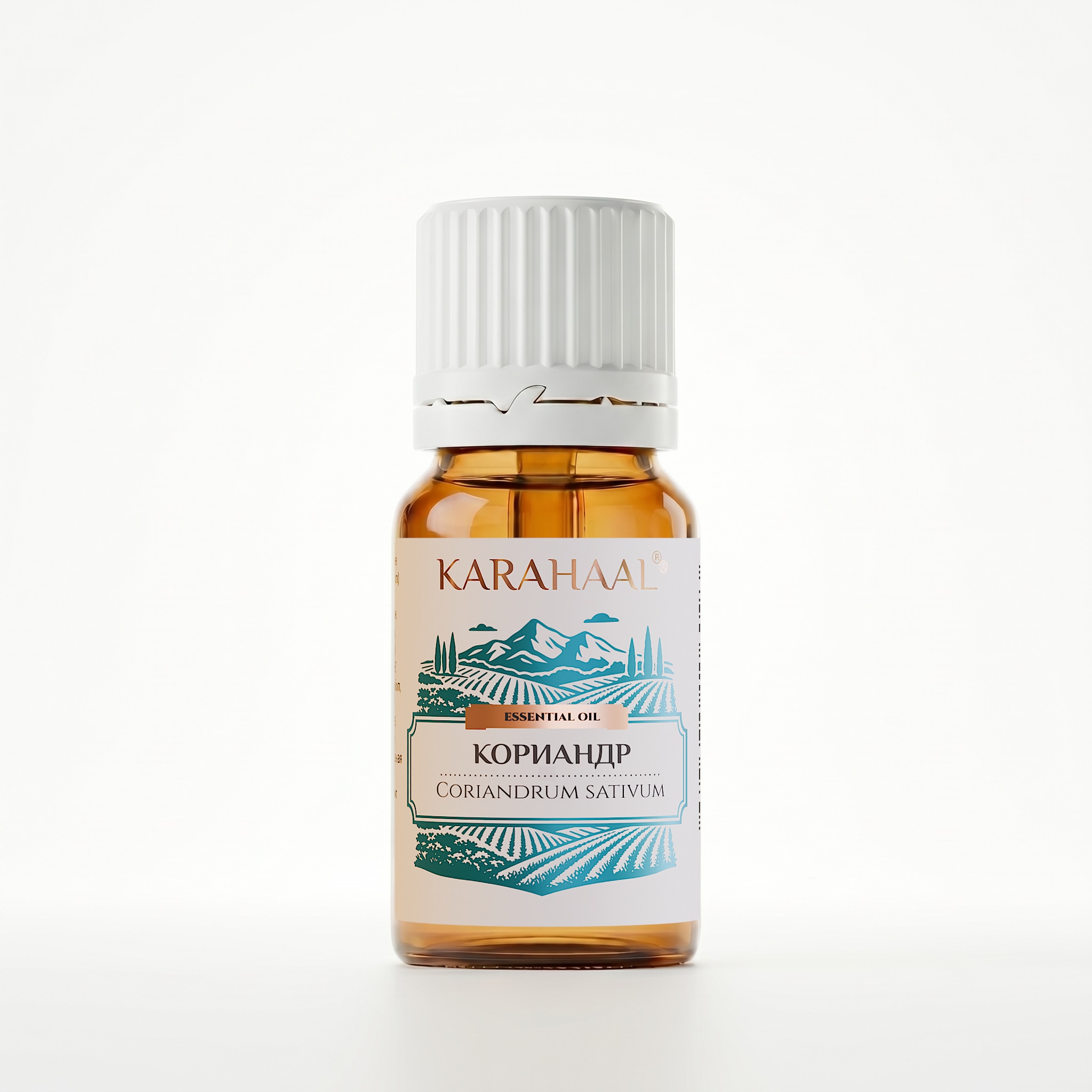
Coriander: spasms, relaxation, and antibacterial potential
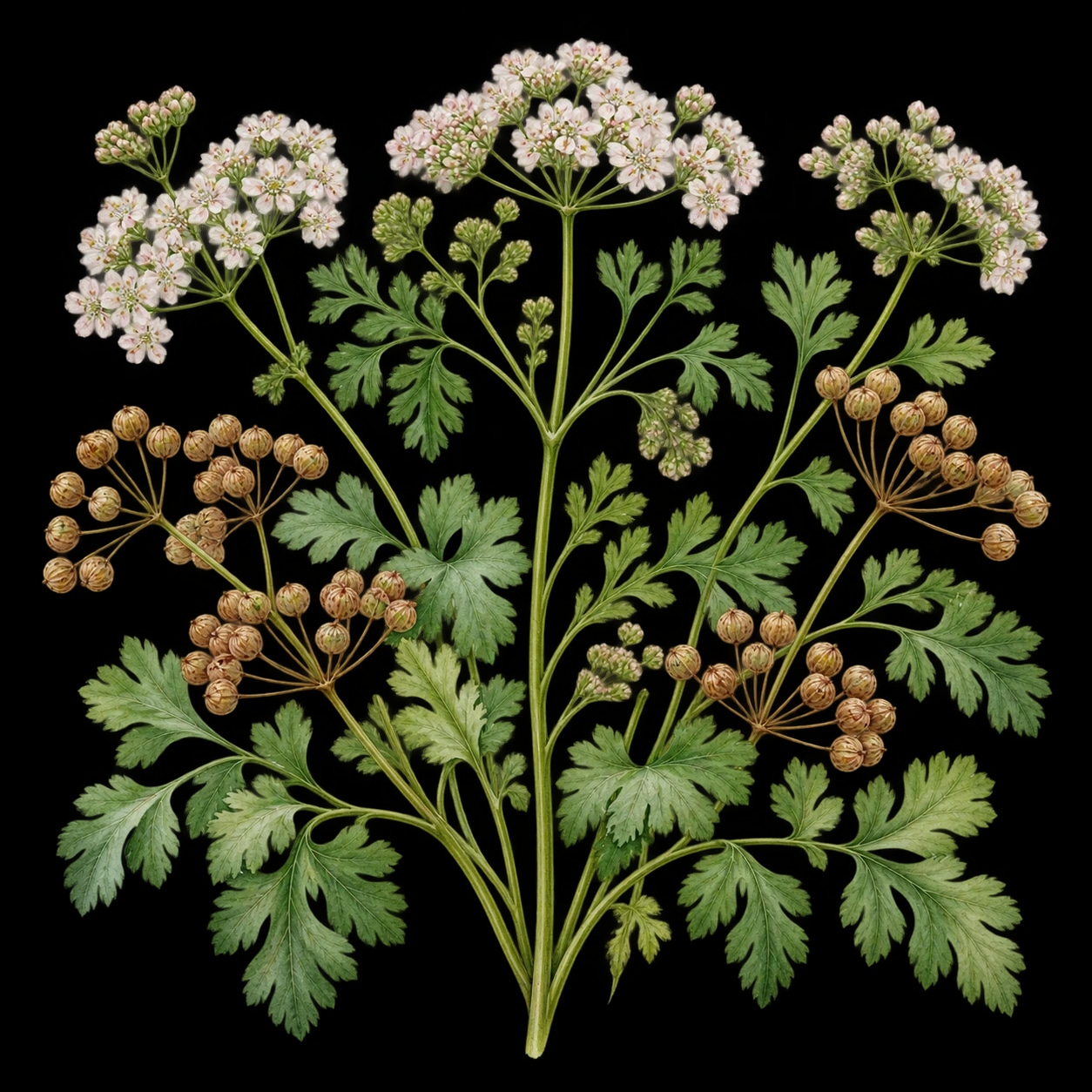
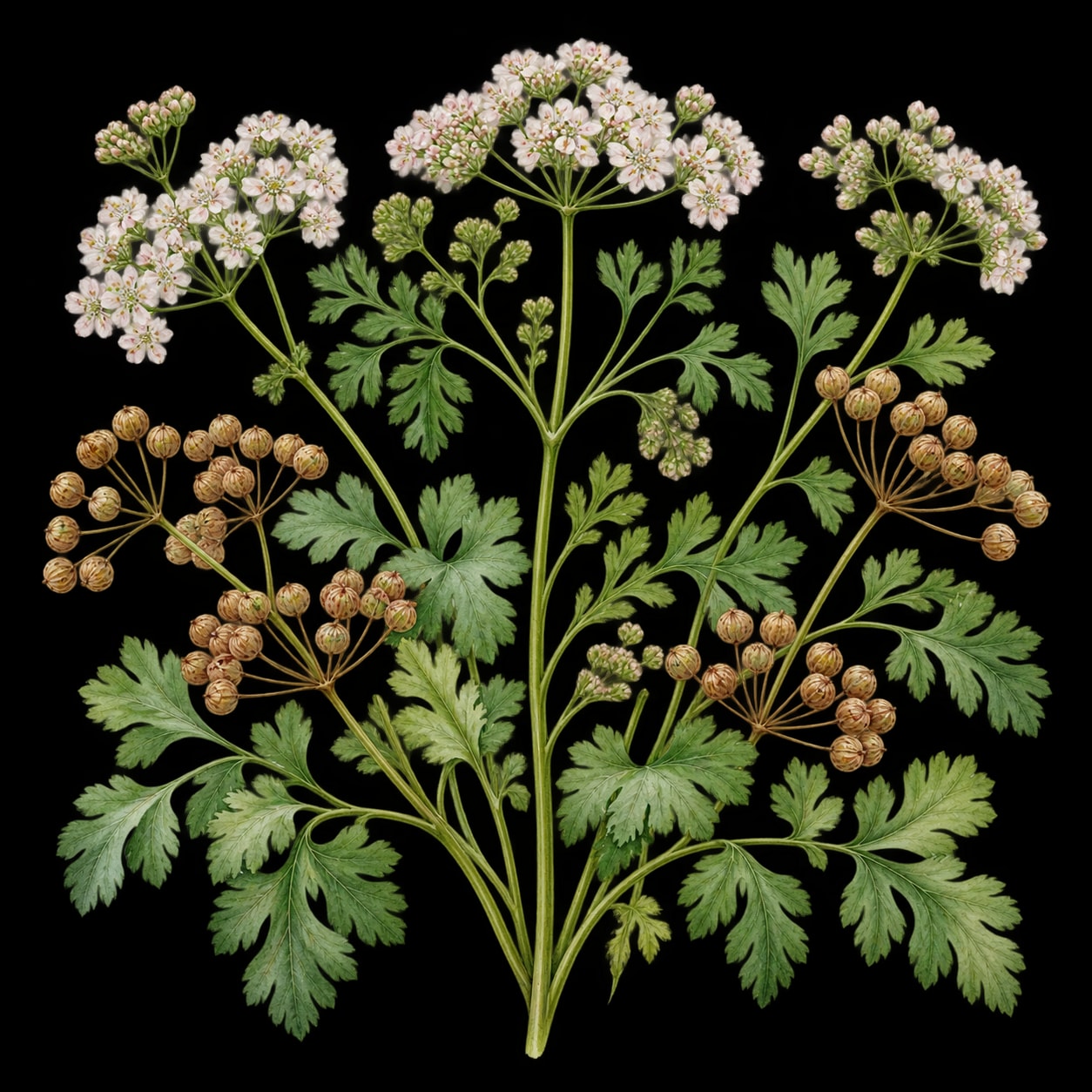
Coriander seed oil is selected for a warm, spicy massage without sharpness. Its aroma is noticeably different from cilantro's greenness: it is soft, floral-spicy, slightly woody. This provides a smooth transition between floral and spicy essential oils.
Digestive and spasmolytic properties
In aromatherapy, coriander is traditionally used for feelings of bloating and spastic tension. Topical application — a gentle massage of the abdomen with a well-diluted mixture — is recommended for adults experiencing mild discomfort. Lavender makes the blend calmer, cardamom adds a fresh spiciness.
Muscle relaxation and emotional unloading
Coriander is suitable for massaging the shoulders and back after repetitive activity. Its linalool character lends itself to gentle blends that do not overwhelm the senses. Experimental studies of isolated linalool examined the anti-anxiety response to its scent and the involvement of olfactory pathways. [1]
Antibacterial mechanism
In the study on coriander oil, authors used not only bacterial growth tests but also flow cytometry. They observed membrane disruption, respiratory activity, and membrane potential changes. Bactericidal effects were noted for most tested bacteria, although results varied between species. [2]
The antimicrobial properties of coriander are studied in the development of specific topical formulations. In daily care, it is used in diluted form; in cases of infection, treatment should be sought from a doctor.
How to reveal the mild spiciness
Orange makes coriander warmer and lighter, sandalwood adds floral-wood depth, cedar reduces sweetness. For evening blends, coriander can be used as a spicy complement to lavender, preserving its gentle character.
Blending suggestions
Lavender emphasizes floral softness, orange adds a bright note. Cardamom enhances fresh spiciness, sandalwood rounds out the base, cedar makes it drier.
Research in detail
How the oil affected bacterial cells
In the initial study using flow cytometry, coriander oil was tested against gram-positive and gram-negative bacteria. Membrane permeability, respiratory activity, and membrane potential were altered. The authors hypothesized that membrane damage is one of the primary mechanisms. A bactericidal effect was observed for most, but not all, of the tested bacteria. This provides a content-based foundation for formulating blends, not a claim of universal action against all microorganisms. [2]
How to use
Original formulations for adults with a small amount of aromatic component. Mix in a dry, clean bottle; the listed composition refers to the entire bottle, and a small portion is taken per use. Drop amounts are approximate.
- For gastrointestinal tension: coriander from seeds — 1 drop, jojoba — 10 ml. A small amount of the mixture should be gently distributed over the body without deep pressure. Massage should be excluded in cases of acute, unusual, or worsening pain.
- Warm blend for shoulders: coriander — 1 drop, sweet orange — 1 drop, jojoba — 20 ml. Mix and use a small portion after a workday. The combination is less sharp and more fruity than coriander alone.
Precautions
Dilute in a carrier oil before applying to skin. Do not ingest or apply to mucous membranes; stop use if irritation occurs. Store tightly closed, away from heat and light: oxidised oil is more likely to cause skin reactions.
What to combine with this care
- “Provence” lavender essential oil — Aromatic combination
- Essential oil of sweet orange — Aromatic combination
- White sandalwood essential oil BIO — Aromatic combination
Sources
- Harada and co-authors. The calming effect of linalool and the anti-anxiety response: experimental study, 2018.
- Coriander (Coriandrum sativum L.) essential oil: its antibacterial activity and mode of action evaluated by flow cytometry.
- Robert Tisserand. Dilution for essential oils: principles and concentration ranges.
- Plant Therapy. Coriander Seed Essential Oil Spotlight. 2018.