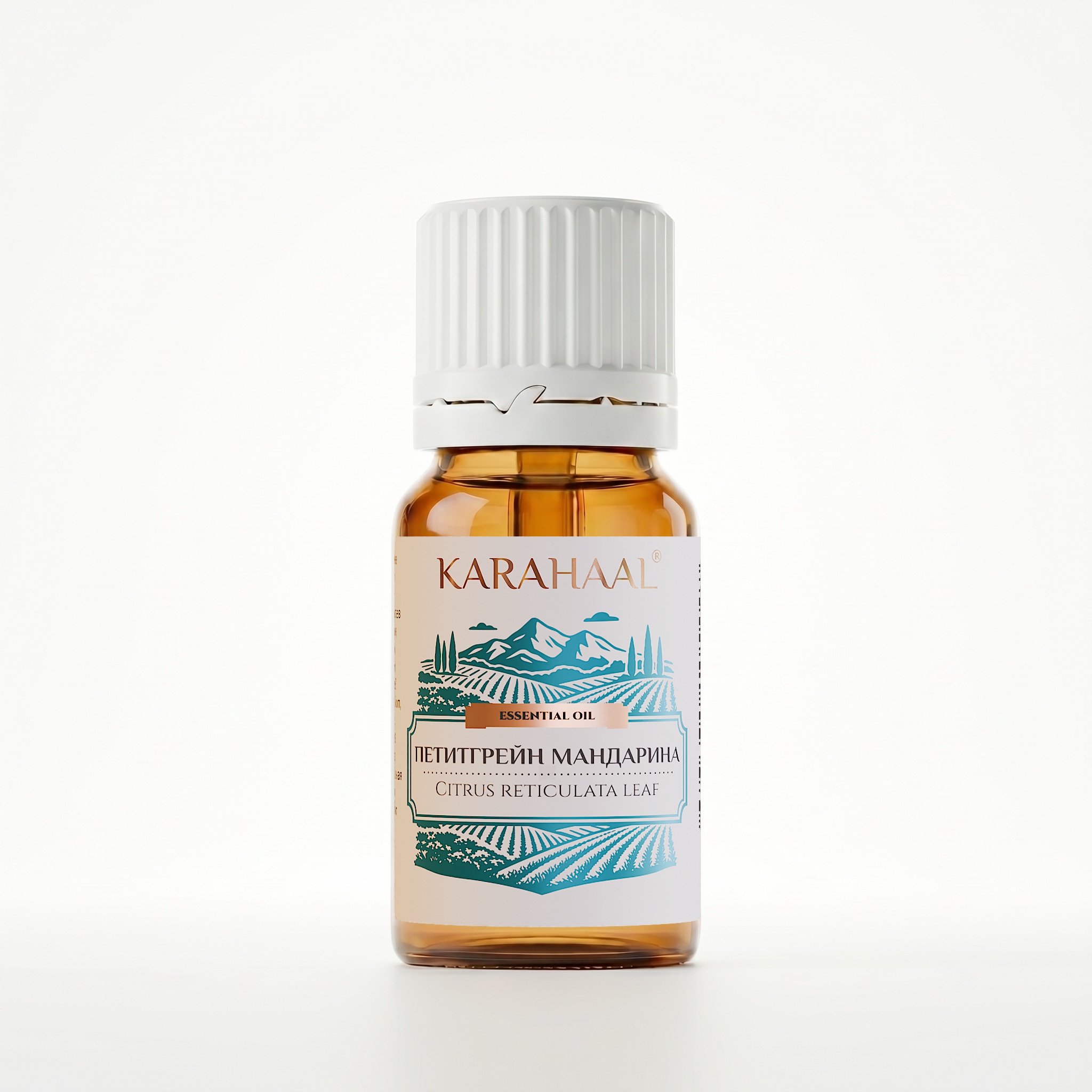
Mandarin petitgrain: green aroma and prospects for skin care
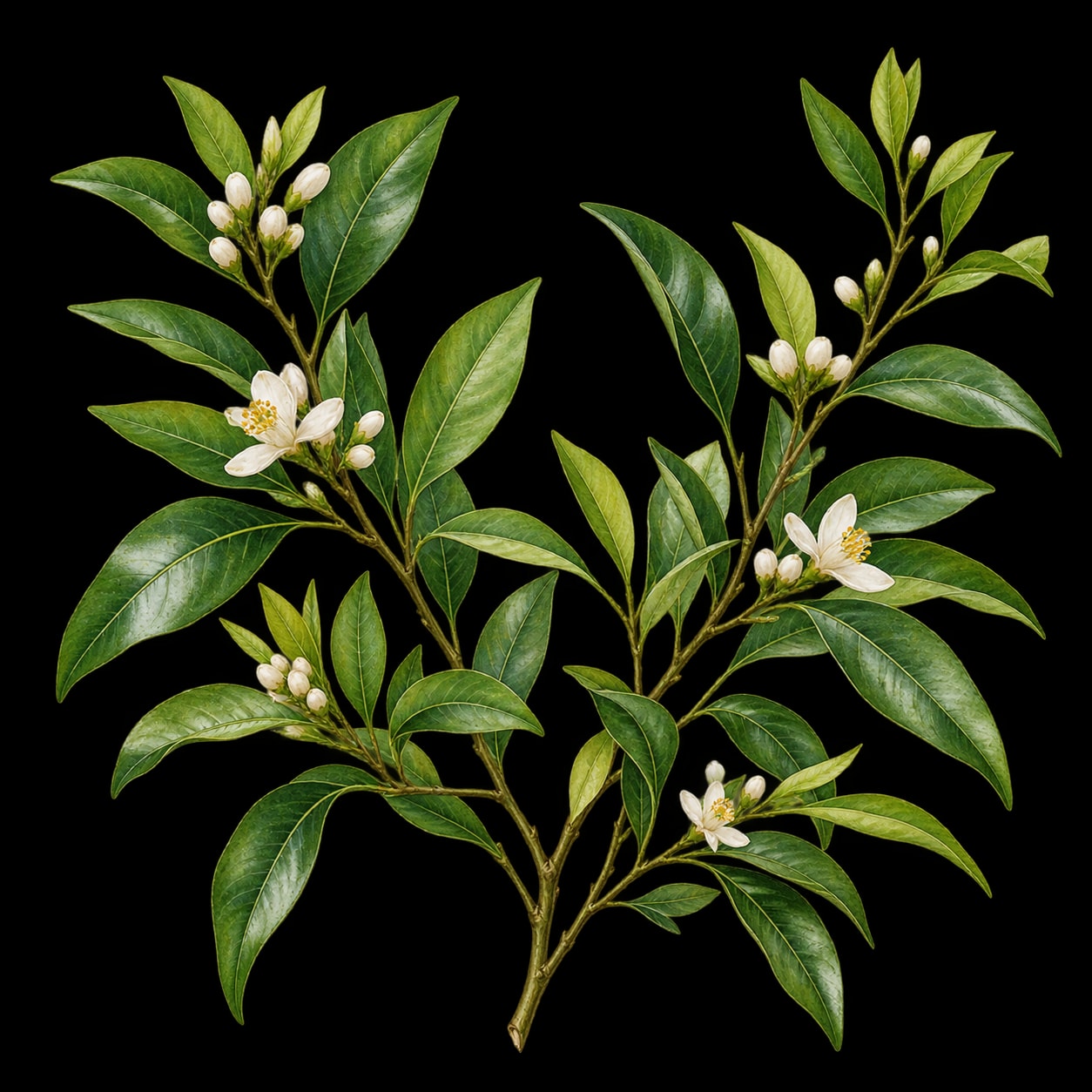
Mandarin tree leaves give a completely different aroma compared to the juicy rind. In petitgrain, the herbaceousness, bitterness, and calm floral depth are more prominent. This material is selected for less sweet citrus compositions and individual aromatherapeutic formulas.
Cosmetic potential
In a study of six varieties of Citrus reticulata leaf essential oil, inhibition of collagenase and hyaluronidase was evaluated. These enzymes are involved in the breakdown of collagen and hyaluronic acid—substances essential for skin structure and hydration. Some samples showed significant inhibition of their activity, with results clearly depending on the variety. This specific direction of development is relevant to cosmetic formulations aimed at preserving skin elasticity. [1]
The effect of leaf essential oil on enzymes was studied in laboratory systems. This is a research direction in cosmetic ingredients. For application on the face, a tested formulation with a calculated proportion of essential oil is required.
Molecule role
Leaf profile may include dimethylanthranilate, linalool, limonene, γ-terpinene, and pinenes. Their balance determines the combination of greenness, floral softness, and citrus freshness. Scientific research shows why variety-specific characteristics are more important than a uniform 'mandarin composition'. [1]
Emotional sphere and compositions
Mandarin petitgrain adds a calm green accent to a composition. It makes the floral bouquet less cloying and the woody note more fresh. With mandarin rind oil, a multi-layered aroma of one tree is achieved; with neroli — a floral-herbaceous combination; with sandalwood — a soft evening composition.
Blending suggestions
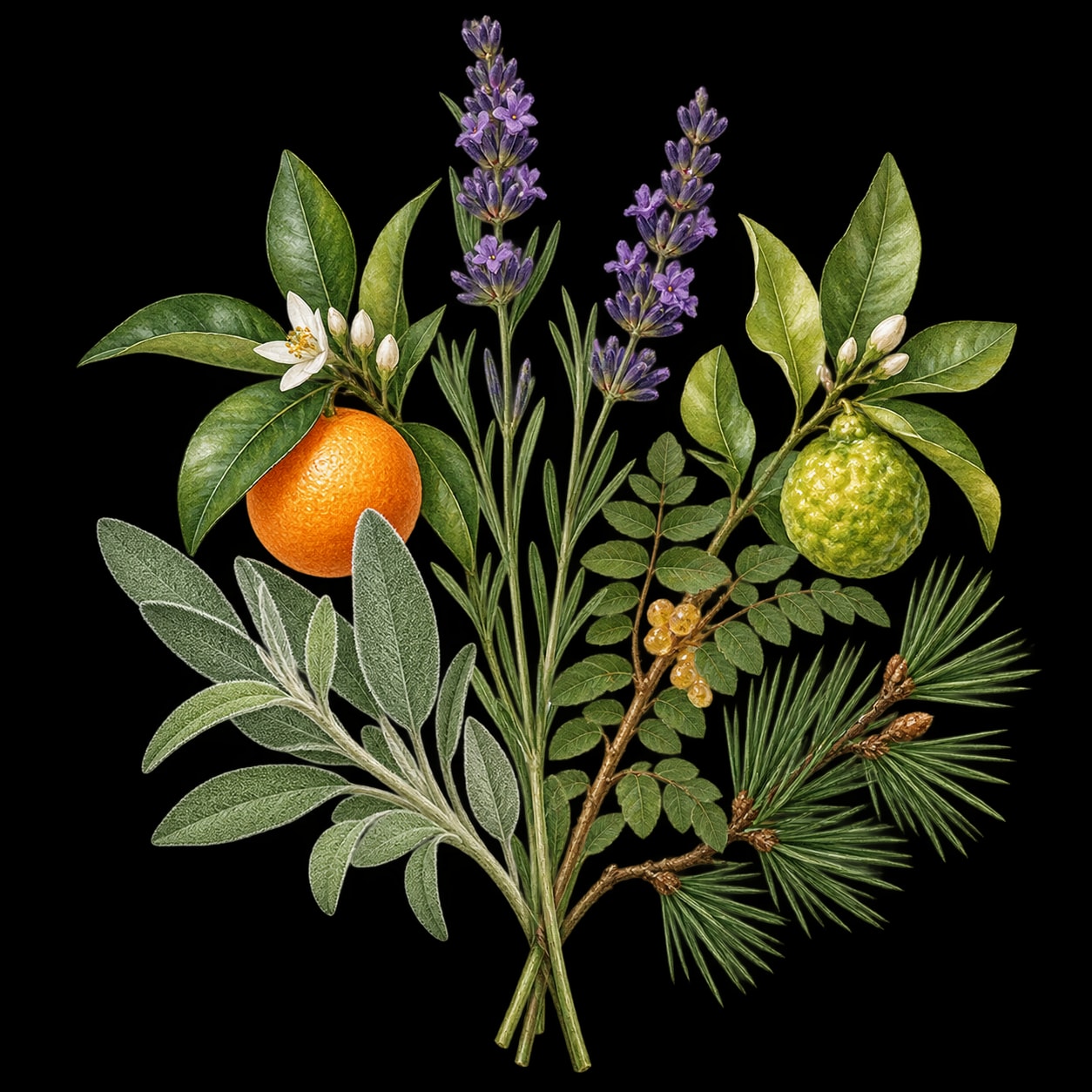
The rind of mandarin adds juiciness; neroli reveals the floral aspect; lavender softens the herbaceous character; sandalwood makes the aroma calmer and more lasting.
Research in detail
Mandarin leaves and cosmetic enzyme targets
In a laboratory study, essential oils from the leaves of six varieties of Citrus reticulata were compared. Profiles differed in content of pinene, limonene, γ-terpinene, linalool, and dimethylanthranilate components. Separate evaluation was conducted for the inhibition of hyaluronidase and collagenase—enzymes associated with changes in extracellular matrix. This study reveals the cosmetic potential of leaf essential oil, which depends on the variety and composition. [1]
How to use
Examples for adults. Quantities are given for the entire bottle; for one application, take a small portion of the mixture. These are aromatic therapy routines, not medicinal dosages.
- Material for individually tailored professional blends. Do not apply concentrate to skin, mucous membranes, or damaged areas; do not ingest. No home therapeutic regimen is recommended with this product.
Precautions
Do not ingest. Skin applications require a formula specifically designed for mandarin petitgrain and its composition; take particular care with facial products and sun exposure. Do not spray onto the face or apply to mucous membranes.
What to combine with this care
- “Provence” lavender essential oil — Aromatic combination
- KARAHAAL neroli essential oil — Aromatic combination