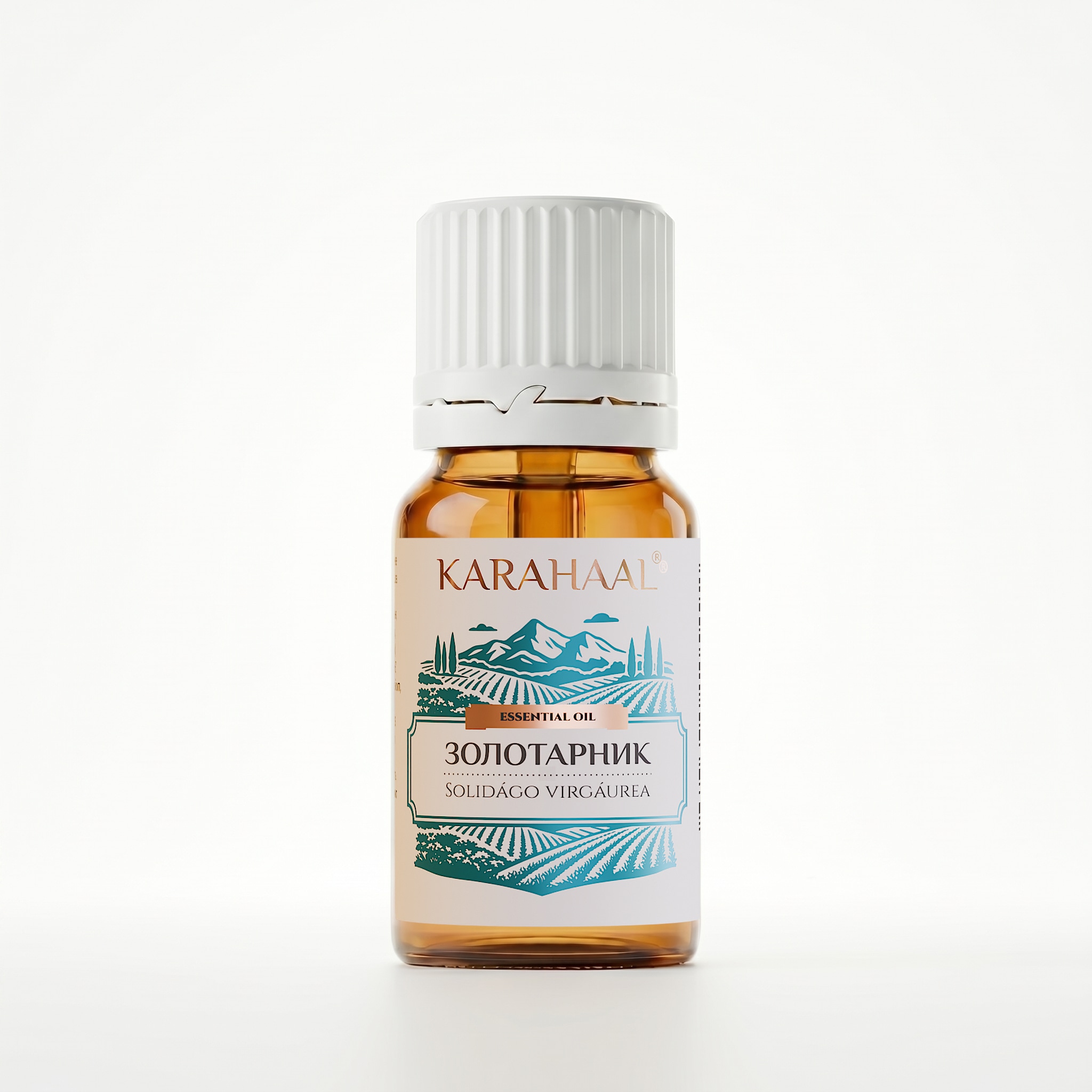
Common goldenrod: antimicrobial potential and green aroma
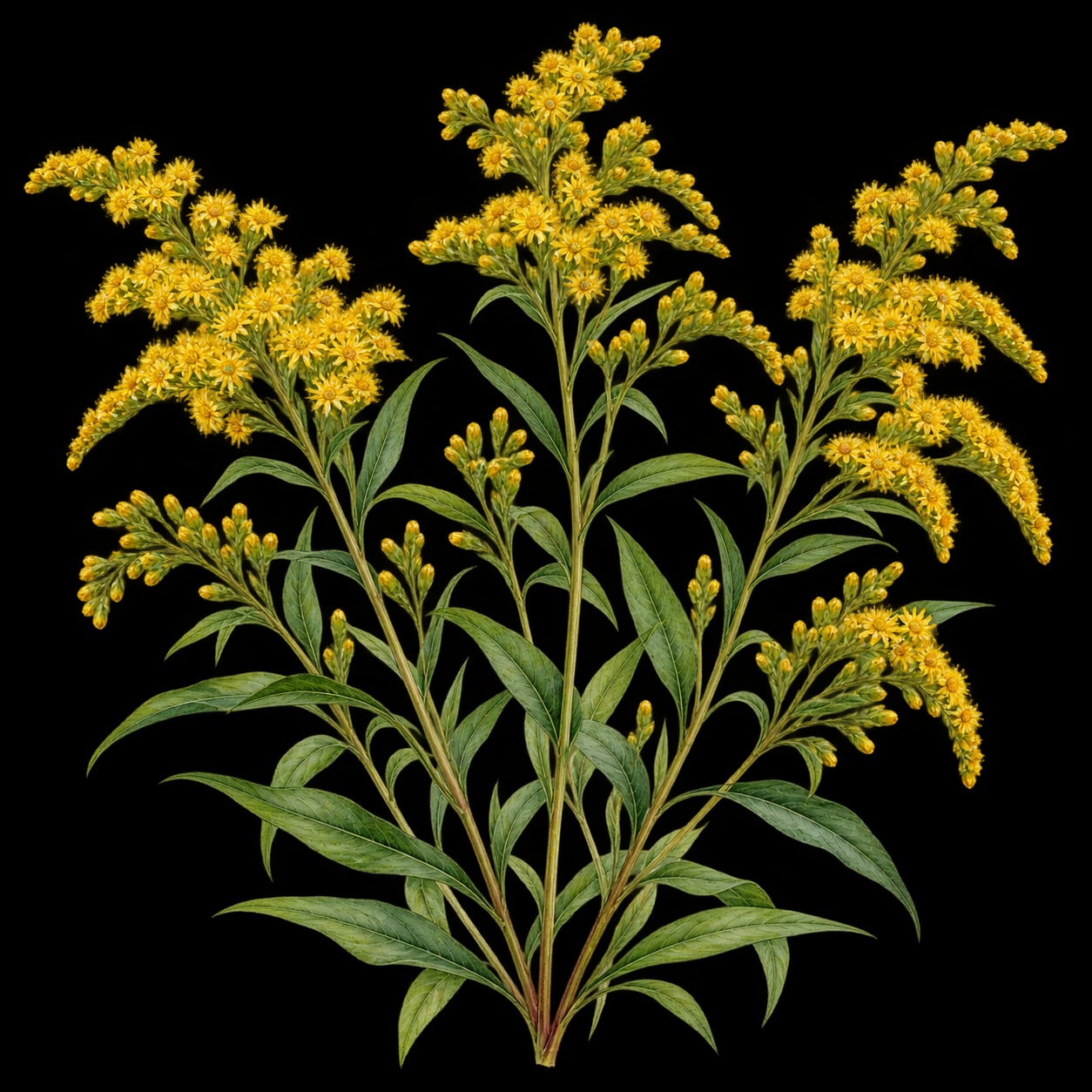
Essential oil of common goldenrod Solidago virgaurea reveals a rich herbaceous freshness with dry woody notes. In the aromatic collection, it occupies a place between meadow herbs and bitter forest notes. This profile is suitable for green compositions where one wishes to preserve the natural depth of the plant.
Antimicrobial action
In a laboratory study from 2024, oils Solidago virgaurea demonstrated antimicrobial activity. Gram-positive microorganisms were generally more sensitive than gram-negative ones. Authors compared several methods of oil production and evaluated the relationship between technology and biological activity. [1]
This area is interesting for the development of cosmetic and topical formulations. In aromatherapy care, goldenrod is used in individually tailored diluted compositions, taking into account skin sensitivity and the intensity of the scent.
Antioxidant potential
In a 2026 study, essential oils from different parts Solidago virgaurea were compared. Chemical tests evaluated interaction with free radicals; results varied between samples. Particularly pronounced antioxidant activity was observed in the leaf oil in this study. The study reveals the relationship between plant material, composition, and properties of the volatile fraction. [2]
Chemical profile
Different combinations of monoterpenes and sesquiterpenes have been described in Solidago virgaurea. In a 2024 study, cyclocolorenone, germacrene D and spathulenol were among the main constituents. In the flower oil studied in 2026, α-pinene, limonene, germacrene D and sabinene played a notable role. These findings illustrate the diversity of chemical profiles within one species. [1] [2]
Practical application and emotional sphere
Goldenrod is suitable for a calm, green composition with a woody base. Citrus tones lighten the aroma, lavender softens the herbaceous character, cedar enhances dry forest notes. This fragrance can be chosen to evoke a sense of focus and a brief pause after a full day.
Blending suggestions
Lavender softens the meadow herbaceousness; lemon adds brightness; cedar supports the woody depth. For a professional green composition, cypress and petitgrain are recommended. Begin by familiarizing yourself with each note separately to assess the desired balance of freshness and bitterness.
How to use
Material for individually tailored aromatherapeutic blends for adults. To get acquainted with the scent, use the aromatic strip according to product instructions; for the skin, use a compatible base and the properly diluted formulation.
- Do not apply the concentrate to skin, mucous membranes, or damaged areas; do not ingest. For external use, select a formula taking into account the oil's composition and individual tolerance.
Precautions
Do not ingest or use to self-treat kidney or urinary tract conditions. Use caution if allergic to plants in the daisy family. Stop use if irritation occurs. Store tightly closed, away from light and heat.
What to combine with this care
- “Provence” lavender essential oil — for a softer herbaceous composition.
- Essential oil of Cypress — for a dry forest accord.