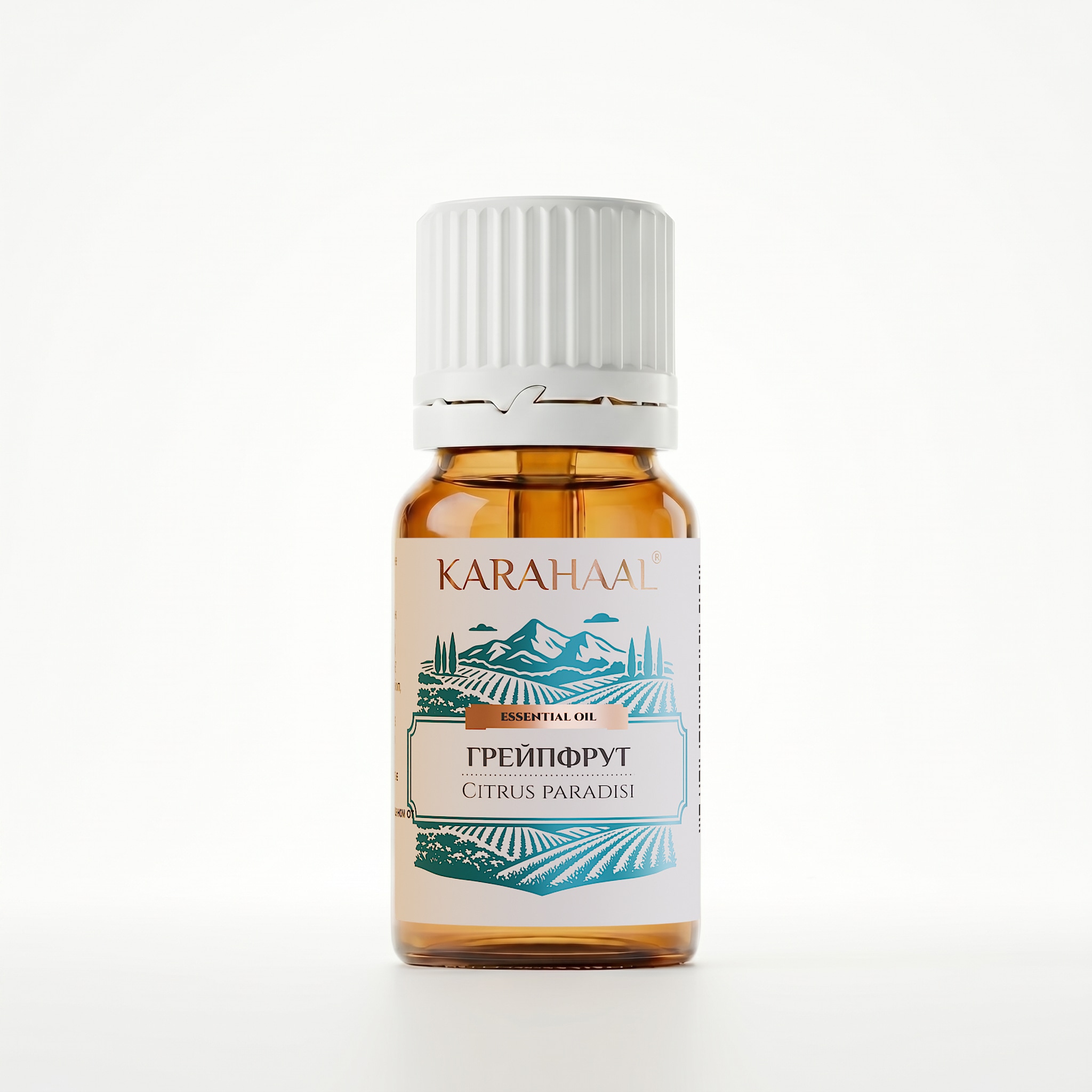
Grapefruit: energy, vegetative response, and aromatic massage
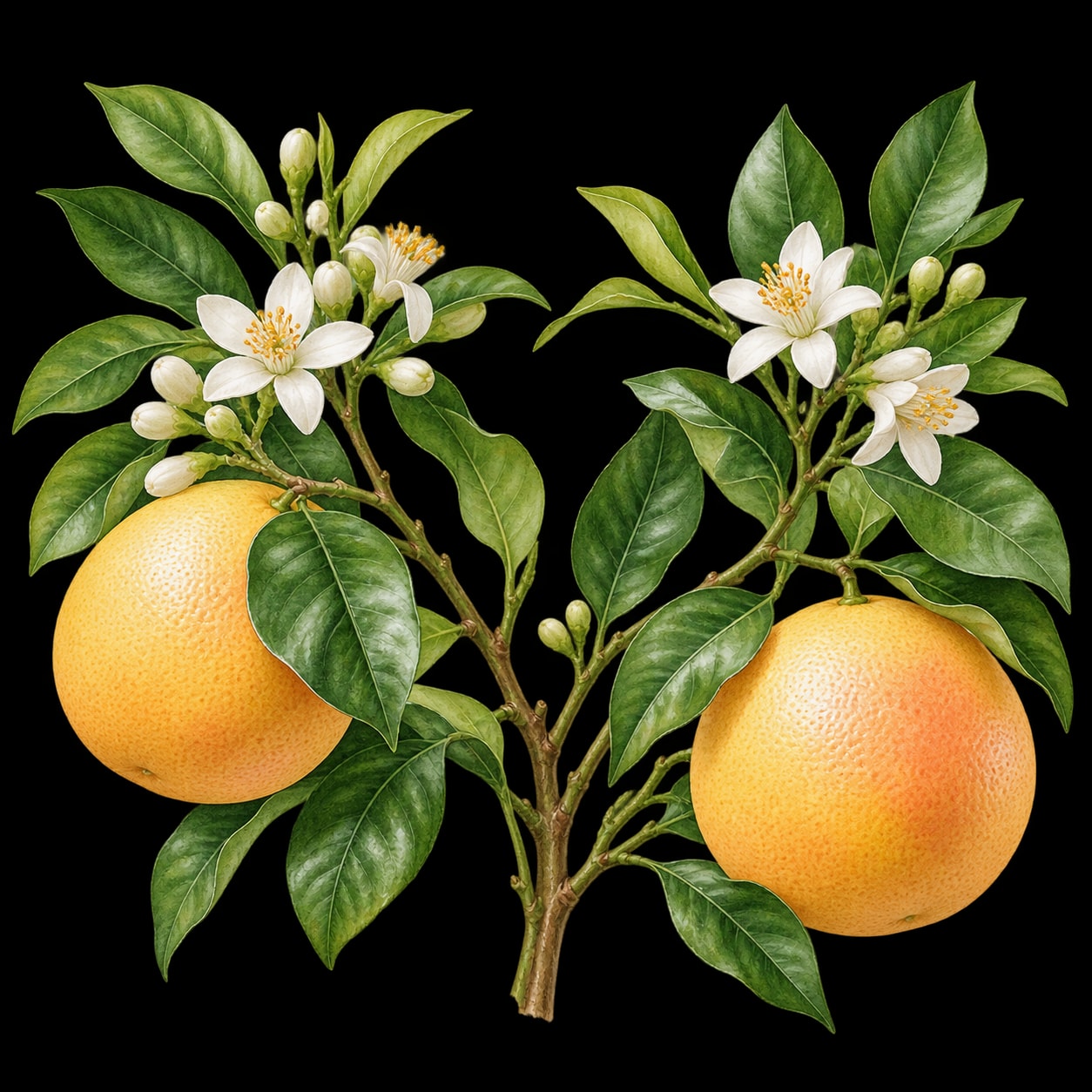
Grapefruit combines juicy freshness with its characteristic citrus bitterness. In aromatherapy, it is chosen when feeling sluggish, to refresh after monotonous work, and in daytime body blends. Its bitterness makes it an excellent partner for floral and woody oils, which benefit from a touch of lightness.
What happens upon inhalation
In a 2020 study, two small groups of healthy men inhaled grapefruit essential oil. Researchers recorded an increase in diastolic blood pressure and a correlation between its change and sympathetic activity; in another part of the experiment, cortisol levels decreased. This shows that the invigorating perception of the scent can be accompanied by measurable physiological reactions. [1]
In this study, the scent of grapefruit was associated with increased blood pressure, while an enhancement of the hormonal stress response was not observed. When blood pressure is unstable, stimulating scents should be used cautiously and the individual's well-being should be monitored. [1]
Body care
In a massage blend, grapefruit refreshes dense woody and herbaceous notes. It is traditionally included in body care when a feeling of tone and lightness is desired. A gentle massage helps distribute the carrier oil and soften the skin.
Emotional sphere and chemistry
Limonene forms the citrus volume, while small amounts of characteristic aromatic compounds, including nootkatone, contribute to the recognizable bitterness. For an early morning blend, cypress and cedar are ideal; for a softer daytime mood, lavender and geranium work well. Due to the phototoxicity of the pressed oil, external use requires special attention to sun exposure.
Blending suggestions
Cypress — for dry freshness in massage; geranium — for floral body care; cedar — for a collected daytime aroma; lavender — for softness; black pepper — for a subtle spicy accent.
Research in detail
Smell and vegetative response
In the experimental study, the scent of grapefruit essential oil and limonene influenced vegetative nervous reactions, including blood pressure indicators. The response depended on preserved olfactory perception. Researchers considered the involvement of histaminergic mechanisms in the brain in the perception of scent. [2]
How to use
Examples for adults. Quantities are given for the entire bottle; for one application, take a small portion of the mixture. These are aromatic therapy routines, not medicinal dosages.
- Aromatic pause: 1 drop on a paper towel or a suitable aromastone. Place at a comfortable distance, without direct contact of the oil with the skin; stop if the scent is unpleasant.
- A pairing without skin application: put 1 drop each of grapefruit oil and narrow-leaved lavender oil on two separate scent strips. Hold them side by side at a comfortable distance and assess the balance. This is a blend test, not a method of continuous inhalation. For skin application, separately consider the extraction method and restrictions on ultraviolet exposure.
Precautions
Do not ingest. Do not apply undiluted; account for phototoxicity and do not use on skin exposed to sunlight. If blood pressure is unstable, avoid intensive aromatherapy sessions. Store away from heat and air.
What to combine with this care
- “Provence” lavender essential oil — Aromatic combination
- Rose geranium essential oil — Aromatic combination
- Essential oil of Cypress — Aromatic combination