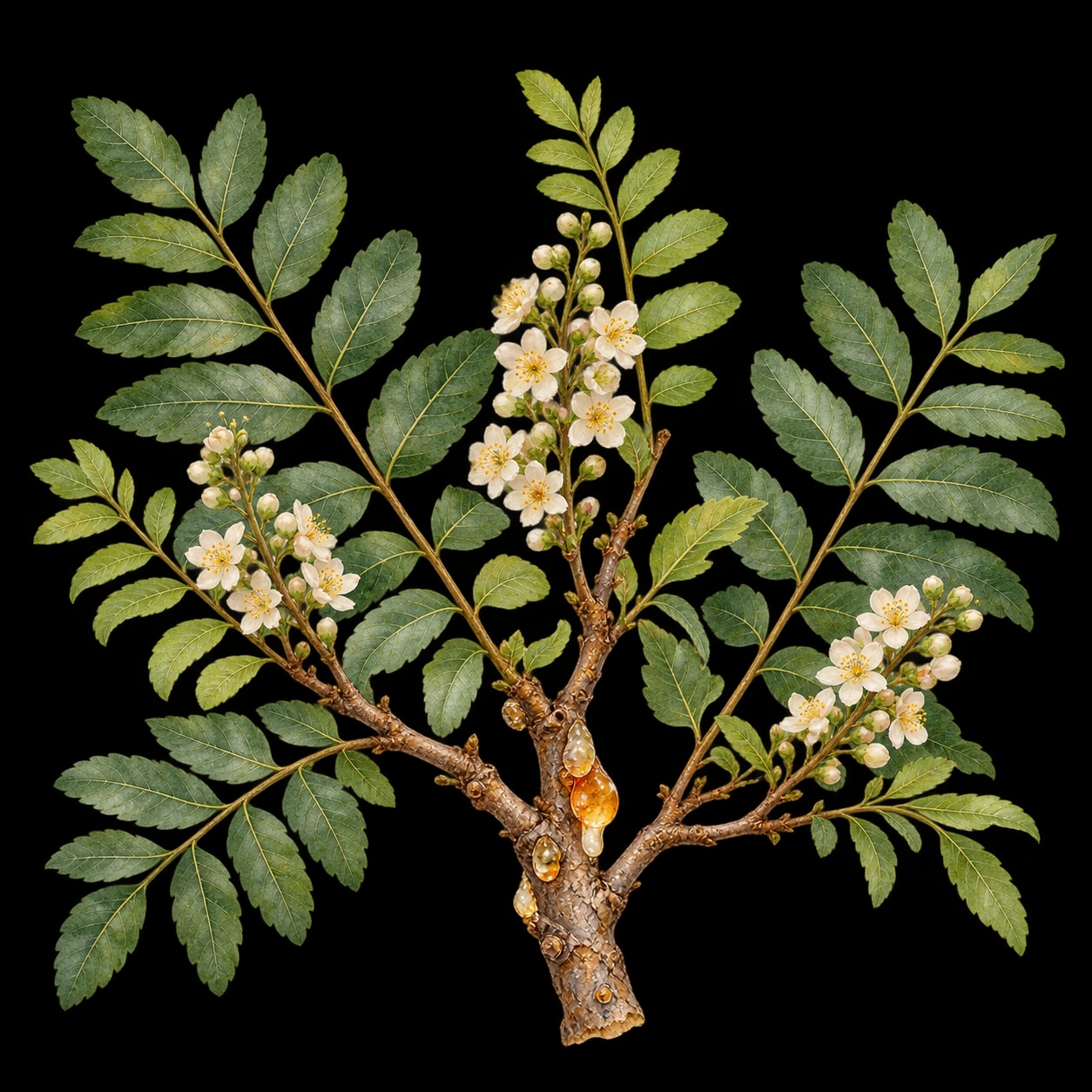
Indian frankincense: skin, antimicrobial potential, and calm breathing
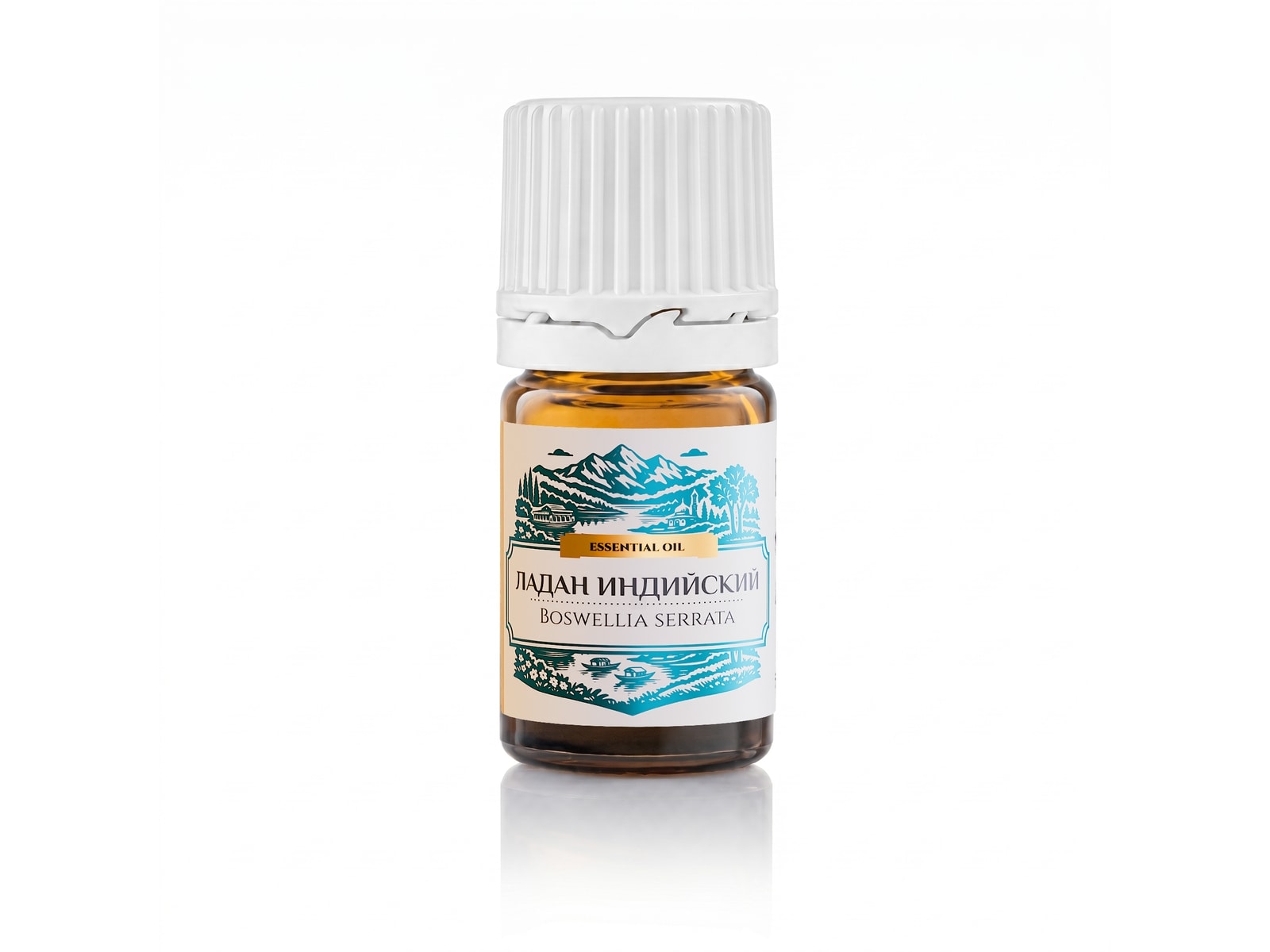
Indian frankincense Boswellia serrata is selected for slow restorative procedures and dry resinous compositions. Its aroma is lighter than myrrh: a fresh top note gradually transitions into a woody depth. In aromatherapy, it is associated with skin care and emotional restoration.
Antimicrobial activity of essential oil specifically
In a comparative study of nine oils Boswellia serrata showed activity against microorganisms associated with skin, scalp, and nails. Particularly notable was the response to certain Trichophyton. The authors also found inhibition of biofilms Staphylococcus epidermidis and interaction with antifungal compounds under laboratory conditions. [1]
This provides a strong basis for studying frankincense in topical formulations. Homemade mixing of oil with medicine does not reproduce experimental results; appropriate treatment is required when a mycosis is present.
Skin and restorative care
In aromatherapy tradition, frankincense is used in blends for dry and mature skin when a gentle aroma and comfort after cleansing are needed. The carrier oil provides softening, while frankincense contributes a fresh resinous note. A small amount helps maintain the composition's clarity and reduces aromatic intensity.
Frankincense and inflammation: an important chemical detail
Frankincense essential oil and its resin extract differ in composition. Volatile aromatic substances are obtained through steam distillation; non-volatile boswellic acids are characteristic of resin extracts. Therefore, for aromatic massage and other care methods, the formulation of essential oil is preferred.
Emotional sphere
Frankincense pairs well with a calm massage and breathing pause without forced inhalations. Orange warms the aroma, lavender softens it, sandalwood extends the even woody base. Myrrh adds dry depth, rose reveals a warmer floral aspect.
Blending suggestions
Lavender softens the resin, orange adds a warm, bright accent. Sandalwood holds the woody base, myrrh enhances the dry depth, rose adds floral roundness.
Research in detail
Frankincense: microorganisms and biofilms
Compared to nine essential oils Boswellia serrata, Indian frankincense essential oil [Latin: Boswellia serrata] Staphylococcus epidermidis demonstrated pronounced activity against a range of skin, hair, and nail-related cultures. Researchers specifically noted Trichophyton, inhibition of biofilms Staphylococcus epidermidis, and interaction with azole antifungal agents. This is a laboratory study on essential oil specifically. It supports the development of topical formulations, while mixing medication with oil at home does not reproduce experimental conditions. [1]
How to use
Examples for adults. Quantities are given for the entire bottle; for one application, take a small portion of the mixture. These are aromatic therapy routines, not medicinal dosages.
- Material for individually tailored professional blends. Do not apply concentrate to skin, mucous membranes, or damaged areas; do not ingest. No home therapeutic regimen is recommended with this product.
Precautions
Dilute in a carrier oil before applying to skin. Do not ingest or apply to mucous membranes; stop use if irritation occurs.
What to combine with this care
- “Provence” lavender essential oil — Aromatic combination
- Essential oil of sweet orange — Aromatic combination
- White sandalwood essential oil BIO — Aromatic combination