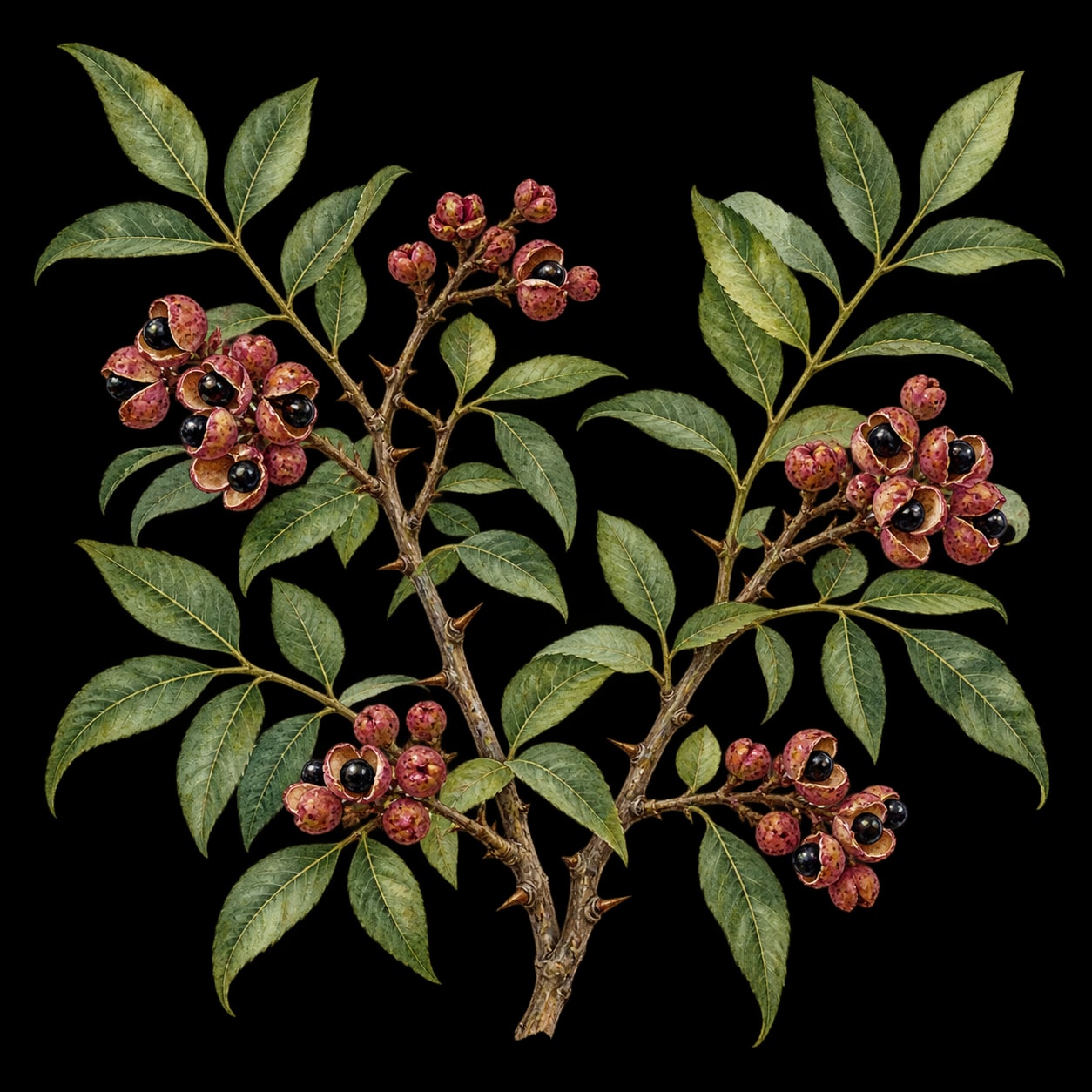
Timut: citrus brightness and anti-inflammatory potential
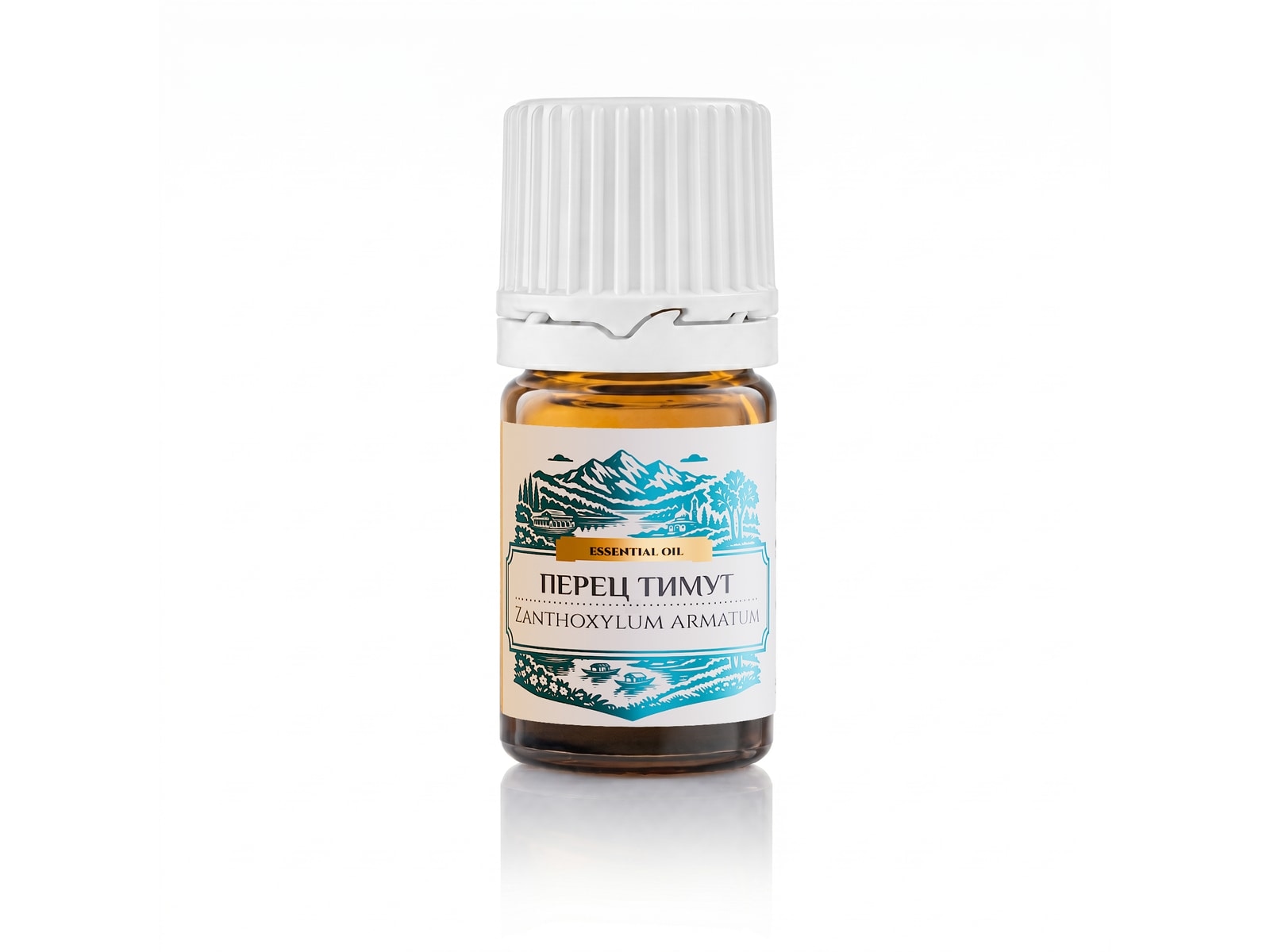
Timut is unusual for a spicy oil: instead of a heavy spiciness, it unfolds with the freshness of citrus peel, greenery, and floral softness. It is chosen when a lively aroma is needed for daytime recovery, post-exertion massage, or a composition that helps shift emotional tone.
What is known about anti-inflammatory action
In a 2025 study, essential oils from timut fruits Zanthoxylum armatum reduced nitric oxide production in macrophages stimulated with bacterial lipopolysaccharide. Excessive production of this mediator is involved in inflammatory responses. The authors also obtained antioxidant results in chemical tests. Thus, timut has a specific experimental anti-inflammatory direction. [1]
Massage and emotional unloading
In a small portion of timut, it revitalizes a neutral massage base without making the scent heavy. It can be included in a blend for shoulders or forearms after a long day. Lavender shifts the composition toward relaxation, cedar adds a stable dry base, and mandarin emphasizes a fruity lightness.
Aromapsychologically, this oil is associated with a vibrant shift: it helps create a sense of movement and freshness where sweet, balsamic aromas seem too dense. The effect depends on the individual's personal relationship with the scent; it's advisable to first evaluate a single drop on a blotter.
Why the scent varies from origin to origin
A study of 24 samples showed the contribution of climate and growing location to the aromatic profile. Linalool, limonene, and decanal were identified as key aromatic components. Therefore, timut can be more floral, citrusy, or green, while retaining its recognizable spicy individuality. [2]
Blending suggestions
Grapefruit enhances the bitter citrus note, mandarin softens it. Lavender supports the floral tone; Atlas cedar and vetiver provide a dry base.
Research in detail
Aroma and growing conditions
In a 2024 study, 24 samples of peel Zanthoxylum armatum from different regions were compared. The composition was analyzed in relation to climatic factors and the contribution of substances to the scent. Among key aromatic components, linalool, decanal, and limonene were identified. The study demonstrates how botany, place of cultivation, and chemistry together form a recognizable spicy-floral freshness. [2]
The whole mixture and a single molecule
In a laboratory study, timut seed oil was tested against larvae of three mosquito species. The whole oil showed activity, while isolated linalool did not produce the same result in the same model. The study focused on larvae in a laboratory environment; for human protection against bites, registered repellents are selected. [3]
How to use
Examples for adults. Quantities are given for the entire bottle; for one application, take a small portion of the mixture. These are aromatic therapy routines, not medicinal dosages.
- Getting acquainted with the scent: apply a sample to a perfumery blotter according to the product instructions. Evaluate the aroma at a comfortable distance, without touching the oil to your skin. For comparison of combinations, use a separate strip with a partner's fragrance; remove both samples if discomfort occurs.
Precautions
Dilute in a carrier oil before applying to skin. Do not ingest or apply to mucous membranes; stop use if irritation occurs. Store tightly closed, away from heat and light: oxidised oil is more likely to cause skin reactions.
What to combine with this care
- “Provence” lavender essential oil — Aromatic combination
- Mandarin essential oil — Aromatic combination
- Vetiver essential oil — Aromatic combination
Sources
- Essential oils from fruits of Zanthoxylum armatum exhibit antioxidant, anti-inflammatory, and anticancer properties by inhibiting p38-MAPK pathway. 2025.
- Chemical Composition Variation in Essential Oil and Their Correlation with Climate Factors in Chinese Prickly Ash Peels (Zanthoxylum armatum DC.) from Different Habitats.
- Chemical composition and larvicidal activities of the essential oil of Zanthoxylum armatum DC (Rutaceae) against three mosquito vectors.