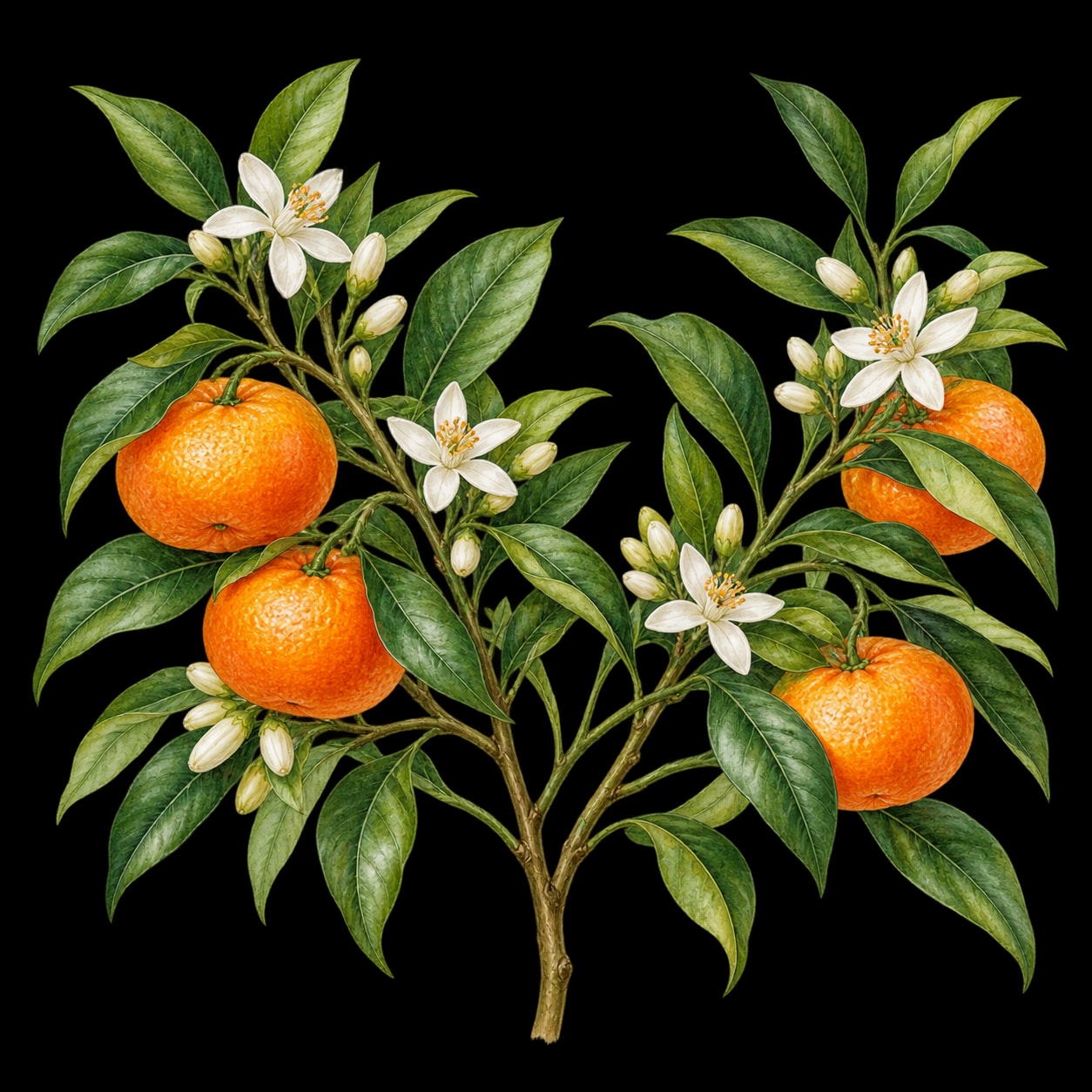
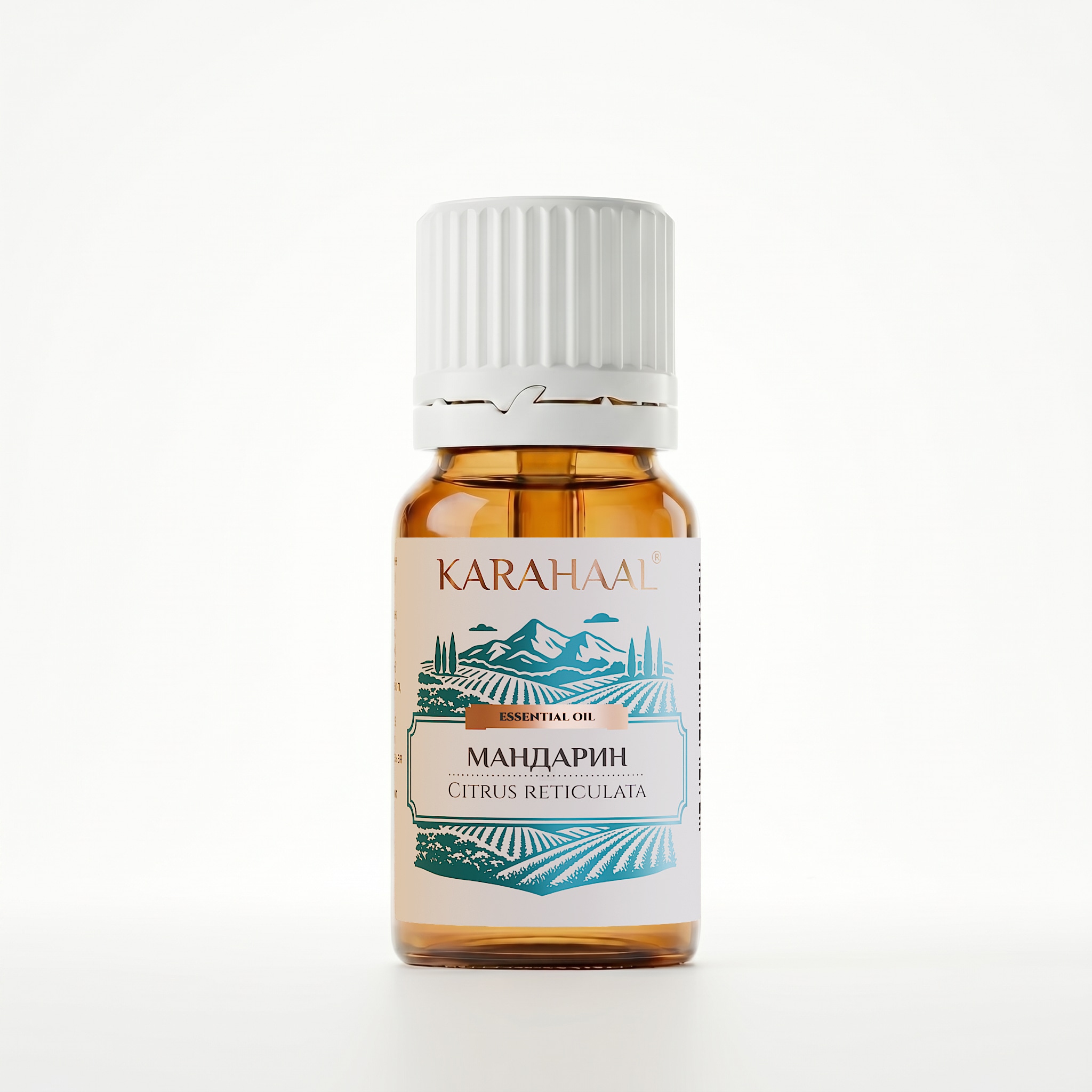
Mandarin: emotional restoration and gentle relaxation
Mandarin is suitable for days when one wishes to reduce internal tension without a heavy sedative impression. Its juicy, warm aroma blends easily with floral and woody oils and is well received at low intensity.
Emotional sphere
In aromatherapy, mandarin is traditionally used for irritability, anxiety, and difficulty switching to sleep. It helps make evening blends softer and brighter. For hand massage, a small amount of diluted mixture with lavender or Roman chamomile is sufficient; sandalwood and vetiver add a longer-lasting background.
What researchers are studying
In the 2024 experimental study, essential oil derived from dried mature rind Citrus reticulata was investigated in cellular and behavioral models. Controlled intranasal administration of the whole oil showed an antidepressant-like response, while a separately formulated mixture of components demonstrated an anxiolytic effect. The natural mixture and the combination of isolated molecules exhibited different properties. [1]
The study reveals the neurobiological potential of mandarin, but intranasal administration in the experiment is not equivalent to everyday inhalation. Drops of oil should not be applied to the nose.
Antimicrobial potential
In another study, Citrus reticulata oil damaged the membranes of fungi causing citrus spoilage: the shape of hyphae, permeability, and cellular content release changed. This is an interesting antifungal direction in food models; treatment of human mycoses was not investigated there. [2]
A practical blend choice
Mandarin works well as a gentle opening in the blend, making richer aromas of vetiver and sandalwood more accessible. Geranium adds floral warmth, lavender provides a calm herbal background. If sweetness seems excessive, simply reduce the amount of mandarin while preserving its bright accent.
Blending suggestions
Lavender and Roman chamomile enhance a gentle evening note. Geranium adds a rose-like center, sandal rounds out the background, and vetiver provides a dry root depth.
Research in detail
Citrus profile and fungal membrane
In a laboratory study, Citrus reticulata oil was tested against Penicillium italicum and P. digitatum — fungi causing citrus spoilage. Changes in hyphal shape, cellular content release, and membrane integrity were observed. The study reveals the antimicrobial activity of the oil in food and agricultural models. [2]
How to use
Examples for adults. Quantities are given for the entire bottle; for one application, take a small portion of the mixture. These are aromatic therapy routines, not medicinal dosages.
- Simple blend for local massage: 1 drop of mandarin oil in 10 ml of jojoba. Mix in a clean bottle. Apply a small amount of the prepared blend to the shoulders or upper back and spread with gentle massage movements.
- Gentle evening blend: 1 drop of mandarin oil + 1 drop of true lavender essential oil in 20 ml of jojoba. Mix; use a small amount to gently massage the forearms or shoulders.
- Scenting without a diffuser: 1 drop on a paper towel or aromastone. Hold at a comfortable distance from the face, without touching the skin with the oil; several ordinary breaths are sufficient to assess the scent.
Precautions
Dilute in a carrier oil before applying to skin. Do not ingest or apply to mucous membranes; stop use if irritation occurs. Store tightly closed, away from heat and light: oxidised oil is more likely to cause skin reactions.
What to combine with this care
- “Provence” lavender essential oil — Aromatic combination
- Essential oil of Roman chamomile — Aromatic combination
- White sandalwood essential oil BIO — Aromatic combination
- Jojoba oil — Base for the oil recipes above