Roman chamomile: relaxation of the nervous system and spasmolytic action
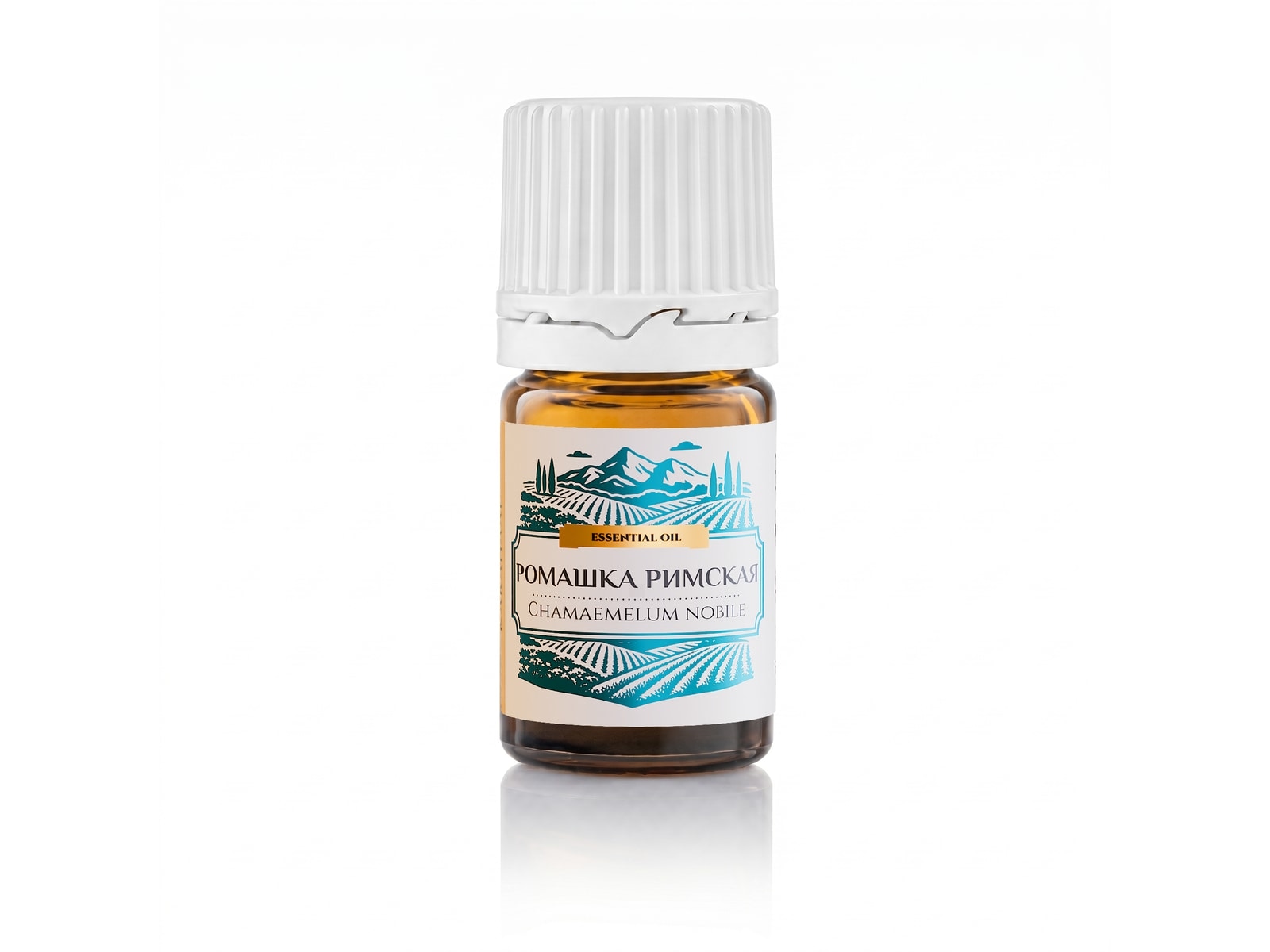
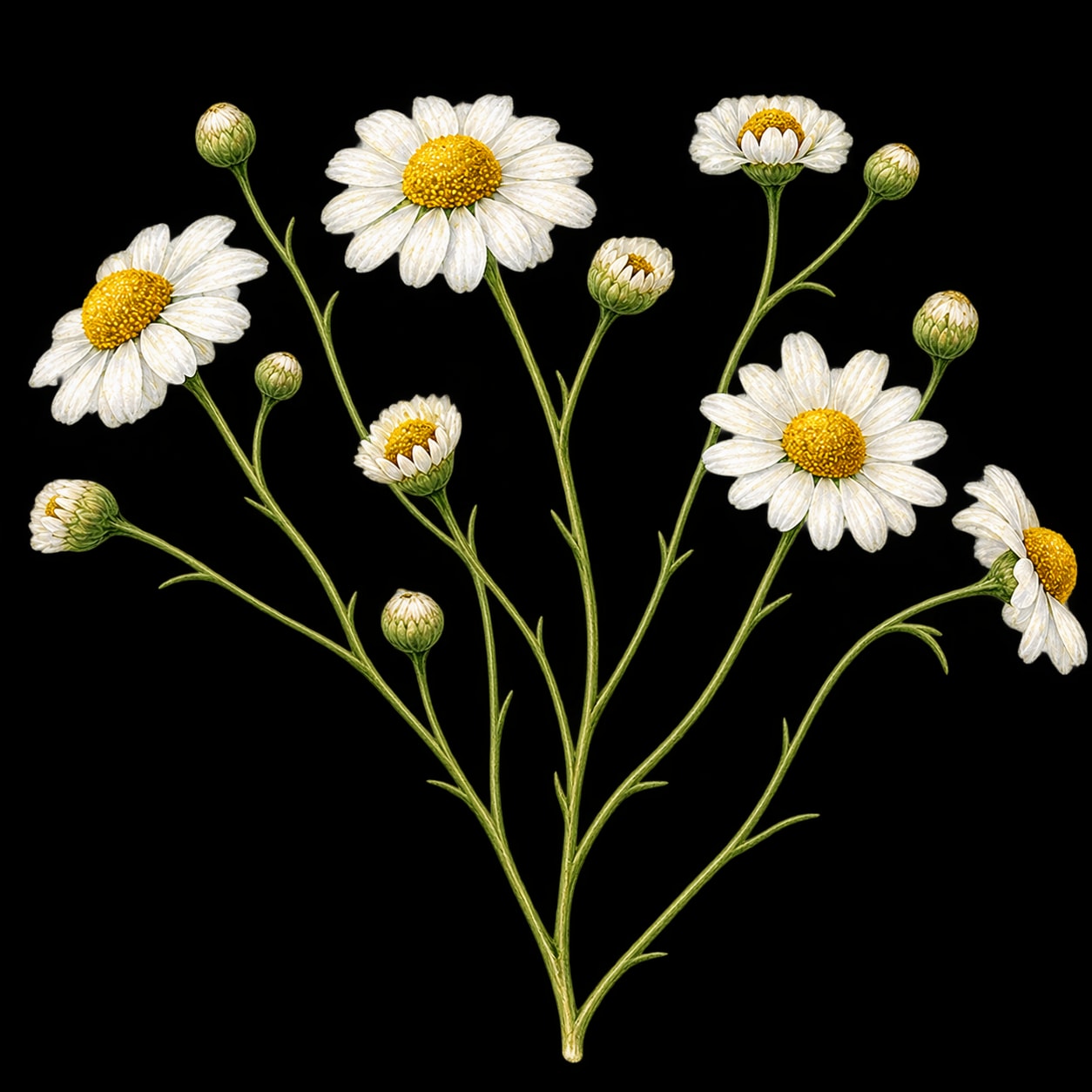
Chamaemelum nobile, or Anthemis nobilis, differs from pharmacy-grade chamomile in both aroma and composition. In its essential oil, complex esters are especially significant. The aroma is soft, herbaceous, slightly fruity, with a characteristic apple note. In aromatherapy, this oil is selected for calm compositions, massage, and care, where a sharp camphor or menthol note is undesirable.
Therapeutic properties
Reduction of tension in supportive care
Roman chamomile is used for emotional stress, anxiety, and difficulty relaxing. One clinical study focused on massage in palliative care: 103 patients received procedures with chamomile essential oil or a single carrier oil. The authors noted reduced anxiety after massage and a range of positive changes in well-being in the aromatherapy group. [1]
Roman chamomile is included in supportive aromatherapeutic care for stress. For home use, gentle massage of hands, forearms, or shoulders and evening blends with lavender are suitable. The apple-herb note should remain pleasant and comfortable.
Spasmolytic action
The relaxing effect of Roman chamomile on smooth muscle was studied in a laboratory experiment using isolated tissues. The essential oil caused relaxation of smooth muscle preparations; the plant extract produced a different, biphasic response. [2]
Roman chamomile essential oil, tea, and extract contain different groups of compounds. The spasmolytic properties of the oil are studied in relation to its volatile fraction. In traditional aromatherapy care, it is included in relaxing massage blends, including for the abdomen during ordinary discomfort.
Evening relaxation and physical unwinding
Roman chamomile is suitable for situations when a person feels tired but still internally holds tension. It can be combined with lavender for a gentle herbal blend, with mandarin for a lighter and warmer aroma, and with sandalwood for a balanced woody base.
In emotional descriptions, chamomile is often associated with softness, patience, and reduced irritability. This is a clear image that complements scientific findings. The oil does not have to please everyone: its fruity sweetness is noticeable even in dilute form, so it's best to start with a small amount.
Blending suggestions
The mandarin lightens the slightly sweet herbal note, lavender makes the composition more airy. Sandalwood extends the soft sound. A small amount of valerian enhances the root-like depth of the evening blend, but quickly changes the character of the entire mixture.
Research in detail
Aromatic massage in palliative care: 103 participants
In a clinical study by Wilkinson and colleagues, massage with Roman chamomile essential oil was compared to massage with a base oil alone. After sessions, anxiety decreased; in the aromatic massage group, authors also described improvements in specific psychological indicators and quality of life. The study examines a comprehensive massage procedure with oil as a supportive care approach. [1]
Relaxation of smooth muscles: oil and extract were tested separately
In a laboratory study from 2018, Roman chamomile essential oil and a plant extract were compared on isolated tissues. The extract produced a biphasic response, while the oil induced relaxation without an initial contractile phase. The composition of both fractions was analyzed separately using analytical methods. [2]
How to use
Examples for adults. Quantities are given for the entire bottle; for one application, take a small portion of the mixture. These are aromatic therapy routines, not medicinal dosages.
- Simple blend for local massage: 1 drop of Roman chamomile oil in 10 ml of jojoba. Mix in a clean bottle. Apply a small amount of the prepared blend to the shoulders or upper back and spread with gentle massage movements.
- Gentle evening blend: 1 drop of Roman chamomile oil + 1 drop of true lavender essential oil in 20 ml of jojoba. Mix; use a small amount to gently massage the forearms or shoulders.
- Scenting without a diffuser: 1 drop on a paper towel or aromastone. Hold at a comfortable distance from the face, without touching the skin with the oil; several ordinary breaths are sufficient to assess the scent.
- “Quiet Rest” blend: Roman chamomile oil — 1 drop; mandarin oil — 1 drop; jojoba — 20 ml. Combine in a clean, dry bottle and mix. Use a small amount of the prepared blend to gently massage an adult’s shoulders or forearms, away from the face.
Precautions
Do not use if you have a known allergy to chamomile or reactions to plants in the Asteraceae family. Apply to skin only after dilution; do not swallow or put drops in the eyes or nose. The suggested blends are for adults. Unusual, acute or worsening abdominal pain requires more than massage.
What to combine with this care
- “Provence” lavender essential oil — Aromatic combination
- Mandarin essential oil — Aromatic combination
- White sandalwood essential oil BIO — Aromatic combination
- Jojoba oil — Base for the oil recipes above