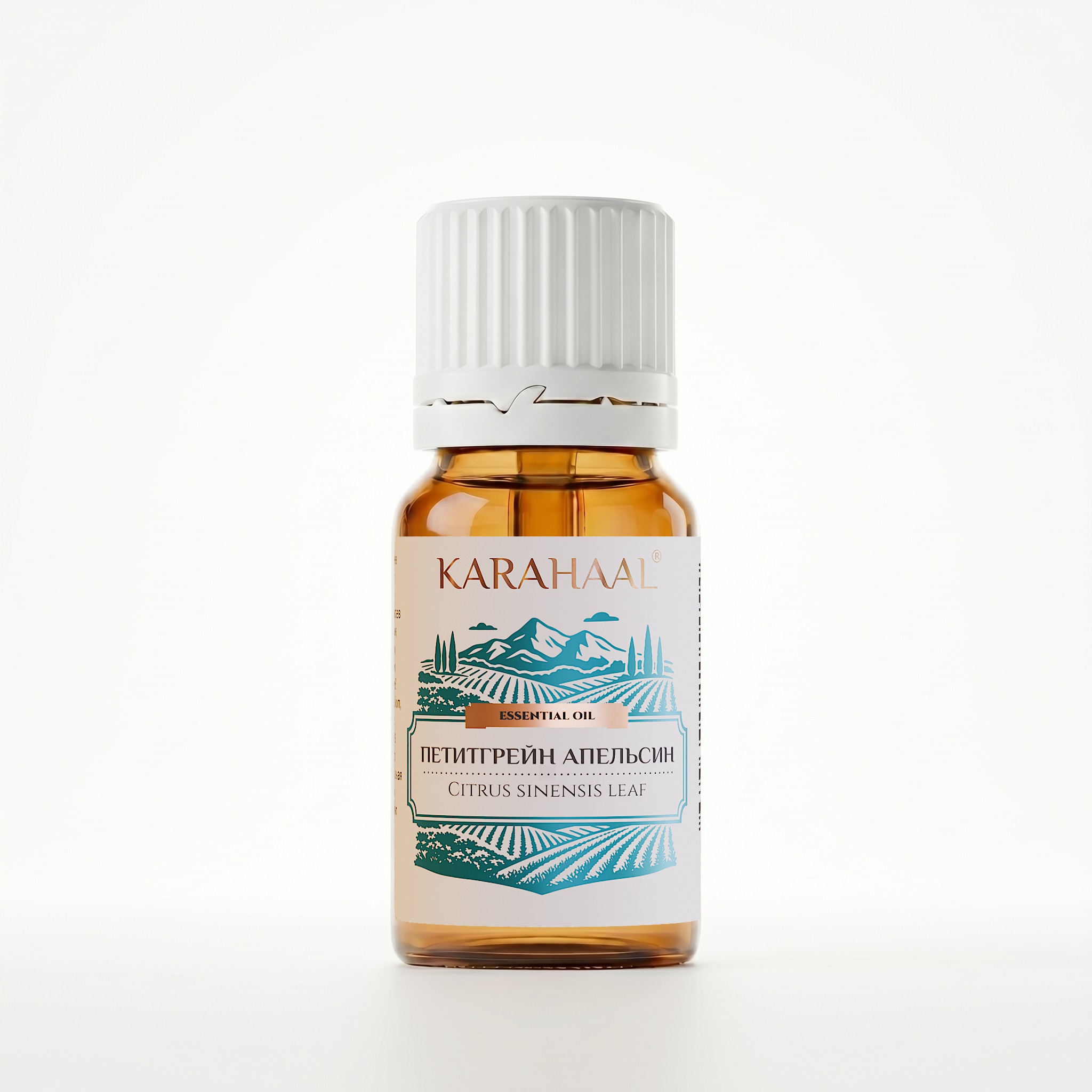
Orange petitgrain: calm focus and biological potential of leaf essential oil
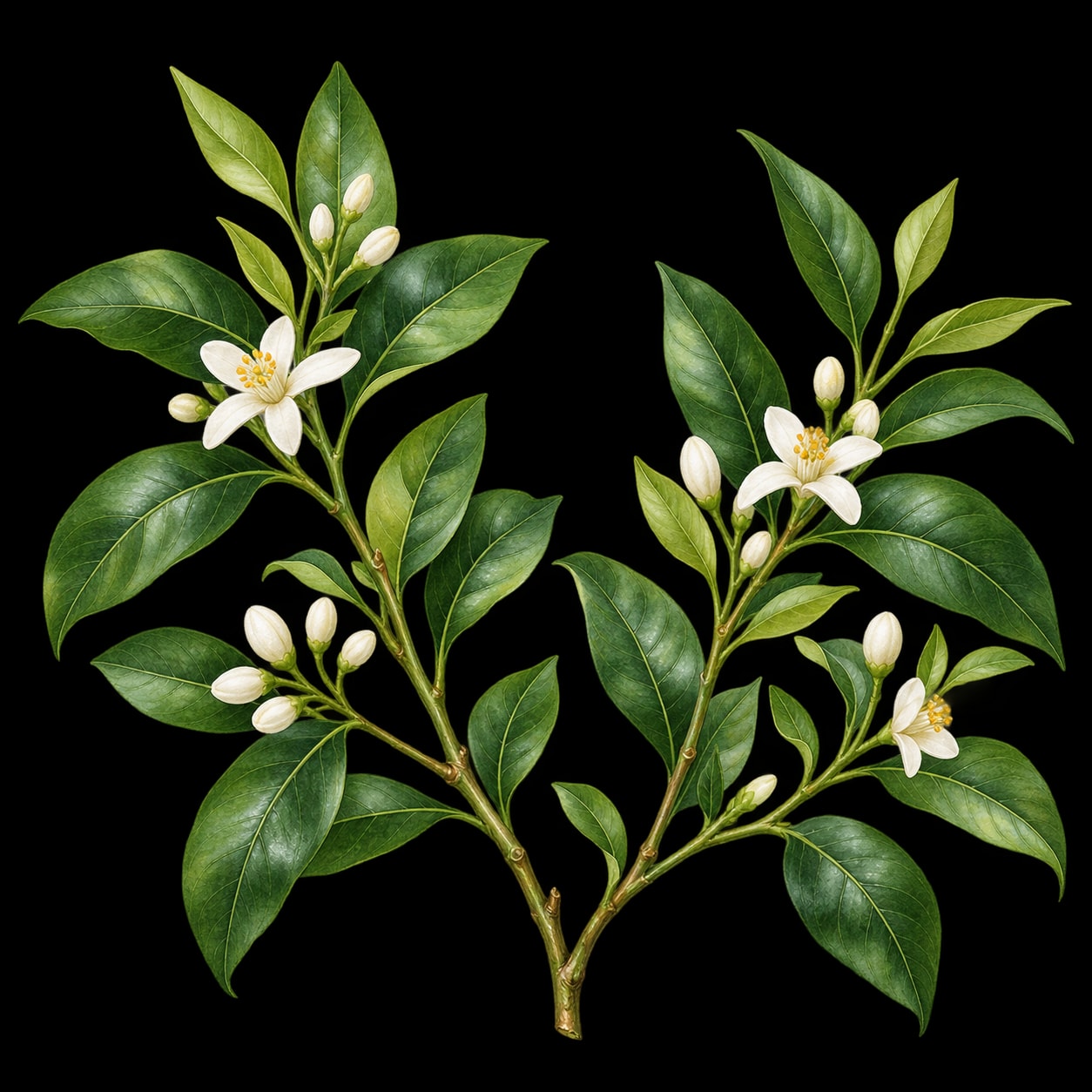
Orange petitgrain combines green sharpness, light floral notes, and a dry woody background. In aromatherapeutic blends, leaf citrus oils are used for relaxation after mental exertion and to foster a sense of calm focus. They are ideal for those who find conventional peel citrus oils too sweet and fleeting.
What does the leaf component provide
A study of eight sweet-orange varieties, Citrus sinensis, identified sabinene, δ-3-carene, β-ocimene, linalool and terpinen-4-ol among the main compounds shared by the samples. The authors distinguished several chemical variants. This range explains the combination of green freshness and softer floral notes. [1]
Molecules and therapeutic perspectives
In experimental studies, the scent of linalool demonstrated an anxiolytic potential linked to olfactory pathways. The study focuses on a specific component involved in forming the aroma of orange petitgrain essential oil. [2]
Terpinen-4-ol contributes a herbal facet and is studied separately for antimicrobial and anti-inflammatory activity, particularly in tea tree oil. In orange leaf oil, it combines with other volatile compounds to form a distinct green-floral aroma.
Emotional sphere
Petitgrain helps build an aroma without heavy sweetness: with lavender it becomes soft, with mandarin it becomes more open, with cedar it becomes dry and structured. This balance is suitable for a pause between work and rest. Begin with an independent assessment of the leaf note, then add one suitable partner.
Blending suggestions
Lavender supports a calming direction; mandarin adds warmth; neroli enhances the floral note; cedar and sandal provide a more stable woody base.
Research in detail
Sweet orange petitgrain: its own chemistry
An analysis of Citrus sinensis leaf oil identified sabinene, δ-3-carene, β-ocimene, linalool and terpinen-4-ol among the main compounds shared across different samples. This confirms that the leaf profile differs from limonene-rich peel oil and need not resemble bitter-orange petitgrain. The study characterised the volatile composition; it did not separately assess the emotional effects or therapeutic use of a finished product. [1]
How to use
Examples for adults. Quantities are given for the entire bottle; for one application, take a small portion of the mixture. These are aromatic therapy routines, not medicinal dosages.
- Material for individually tailored professional blends. Do not apply concentrate to skin, mucous membranes, or damaged areas; do not ingest. No home therapeutic regimen is recommended with this product.
Precautions
Dilute in a carrier oil before applying to skin. Do not ingest or apply to mucous membranes; stop use if irritation occurs. Store tightly closed, away from heat and light: oxidised oil is more likely to cause skin reactions.
What to combine with this care
- “Provence” lavender essential oil — Aromatic combination
- Mandarin essential oil — Aromatic combination
- White sandalwood essential oil BIO — Aromatic combination