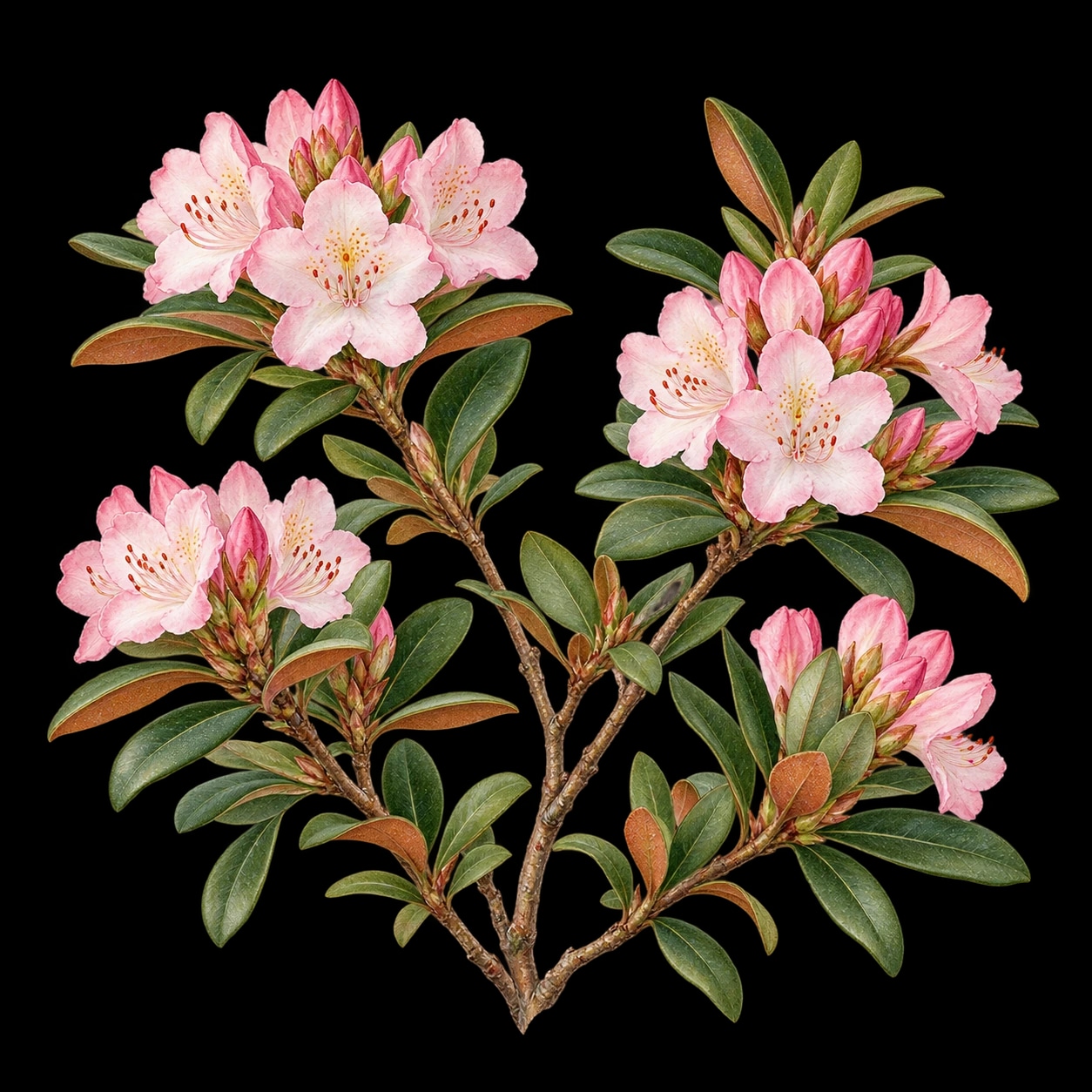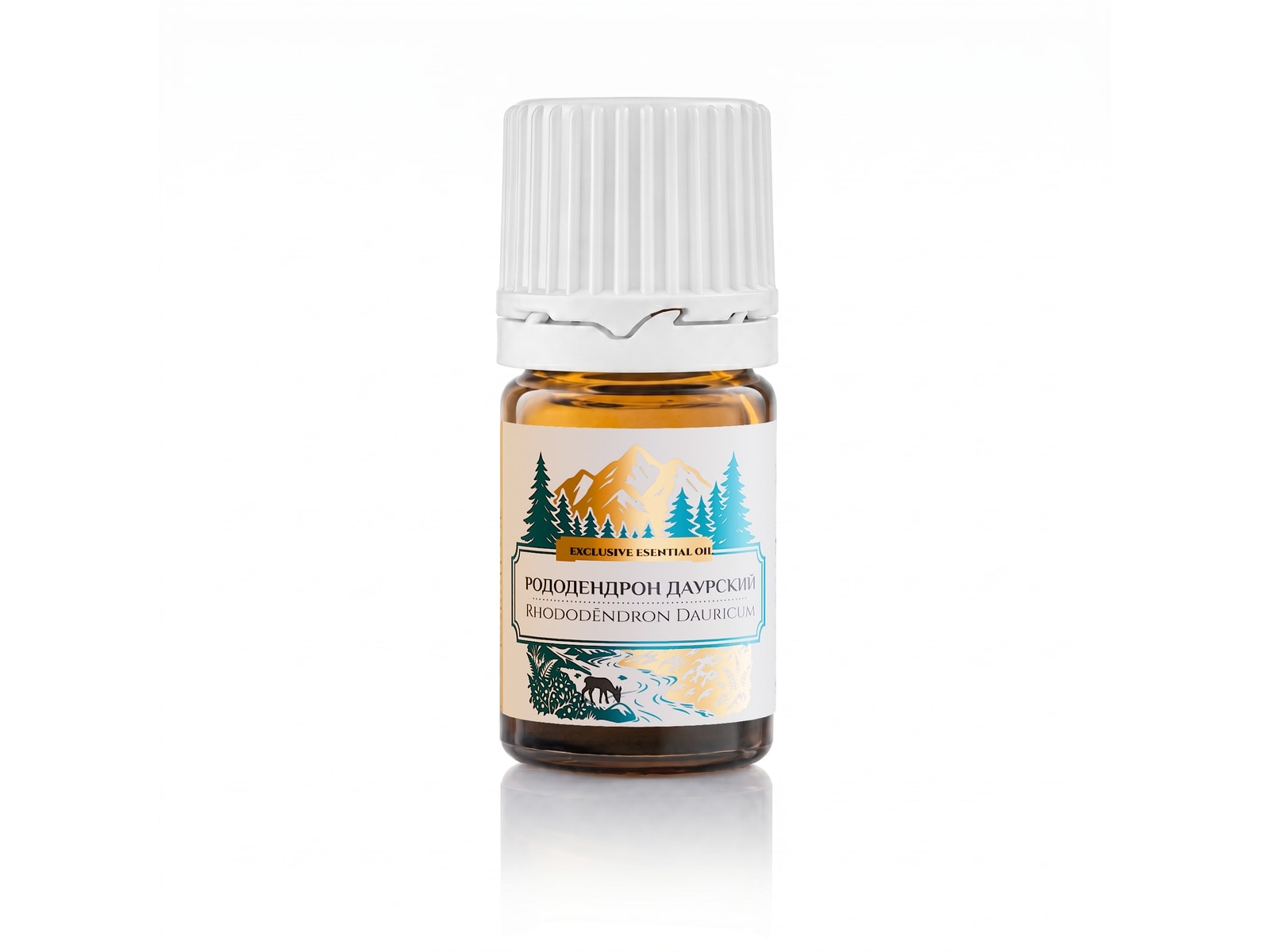
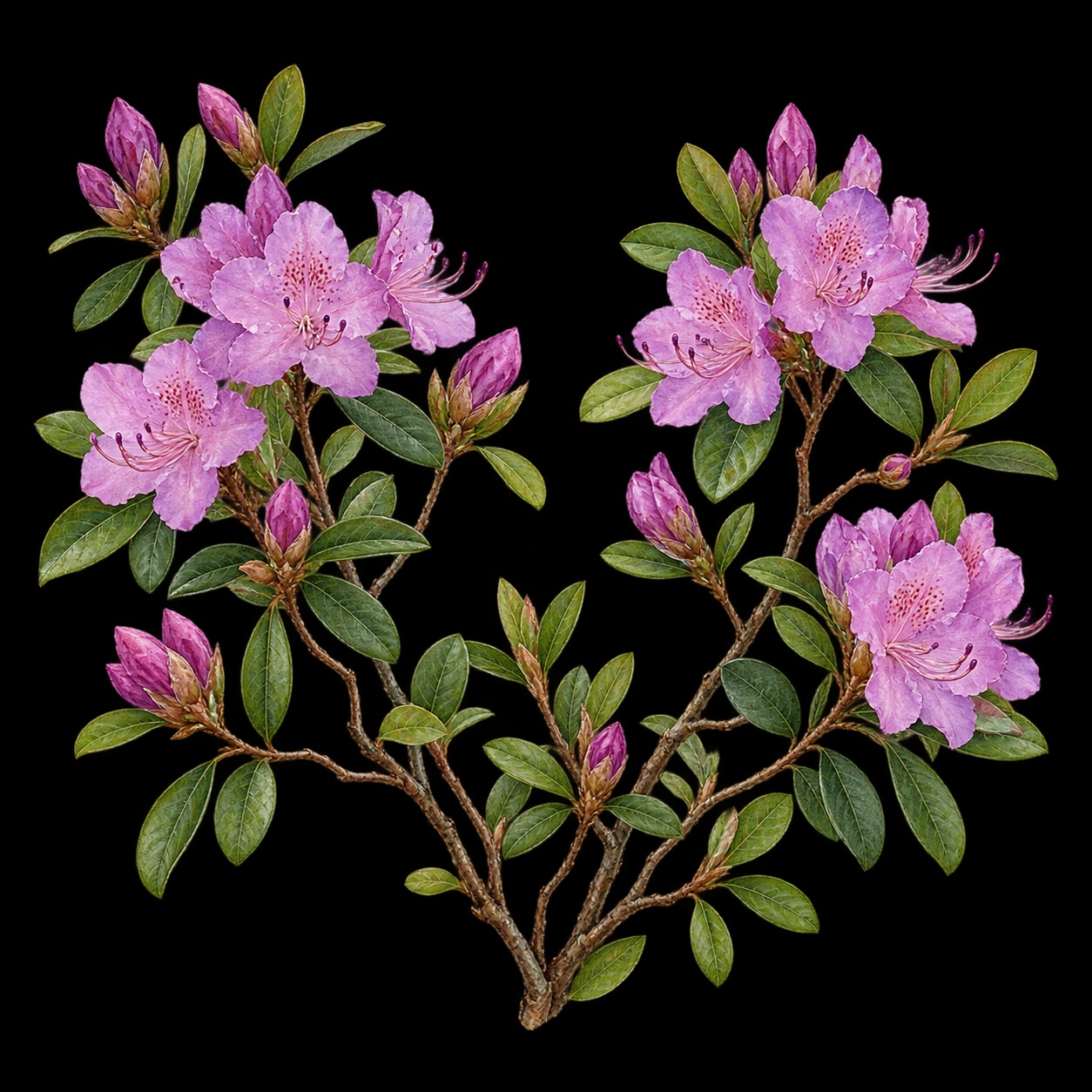
Daurian rhododendron: breathing, muscles, and forest freshness
Daurian rhododendron is selected for an active coniferous-herbal profile. Its aroma is fresh, green, with balsamic and soft floral notes. In the monograph KARAHAAL, it is primarily associated with respiratory aromatherapy and post-exercise massage.
Expectorant and mucolytic properties
Traditional description includes support for viscous secretion and the sensation of blockage. For adults, a mild cold test is sufficient for aromatic introduction; in topical mixtures, the oil can be used for gentle massage of the upper back area. [1]
During asthma and a tendency to bronchospasm, strong coniferous aromas require special caution. Rhododendron should not be selected for self-treatment of episodes of difficult breathing.
Inflammation and muscle discomfort
The monograph describes anti-inflammatory and analgesic properties, as well as applications related to local circulation. Practically, this is a restorative blend for tired shoulders, back, or legs, with a small amount of oil and gentle movements. [1]
Chemical diversity
In the study of leaf oil Rhododendron dauricum, 54 volatile compounds were identified, including eudesmanolides, guaienols, and germacrone derivatives. The study shows that the profile can be significantly more complex than the typical association of coniferous freshness with pinene. This work focuses on composition, not clinical efficacy. [2]
Emotional tone
A fresh forest aroma is suitable for daytime transitions during subjective fatigue. Lemon adds clarity, fir brings balsamic softness, cedar adds woody stability. For an evening composition, lavender helps reduce sharpness and makes the aroma calmer.
Essential oil does not replace herbal decoctions and is not used internally according to folk remedies.
Blending suggestions
Lavender softens fresh greenness, lemon makes the beginning brighter. Fir adds a balsamic roundness, Cypress brings dryness, cedar adds a long-lasting woody base.
Research in detail
Daurian rhododendron: diversity of volatile substances
In the study of leaf oil Rhododendron dauricum after steam distillation, chromatographic analysis identified 54 compounds. Among the major components, eudesmanolide, β-guaiene, germacrone, and other sesquiterpenes were described. Such a profile differs from the simple notion of oil as a single source of pinene. The work is devoted to the chemical characteristics of the plant; therapeutic efficacy and safety of topical mixtures in humans were not evaluated. [2]
How to use
Examples for adults. Quantities are given for the entire bottle; for one application, take a small portion of the mixture. These are aromatic therapy routines, not medicinal dosages.
- Getting acquainted with the scent: apply a sample to a perfumery blotter according to the product instructions. Evaluate the aroma at a comfortable distance, without touching the oil to your skin. For comparison of combinations, use a separate strip with a partner's fragrance; remove both samples if discomfort occurs.
Precautions
Dilute in a carrier oil before applying to skin. Do not ingest or apply to mucous membranes; stop use if irritation occurs. Store tightly closed, away from heat and light: oxidised oil is more likely to cause skin reactions.
What to combine with this care
- “Provence” lavender essential oil — Aromatic combination
- Essential oil of Cypress — Aromatic combination
- Lemon essential oil — Aromatic combination
Sources
- Catalog KARAHAAL: Rhododendron dauricum
- Hui and Sun. Volatile components of leaf oil Rhododendron dauricum. 2012.