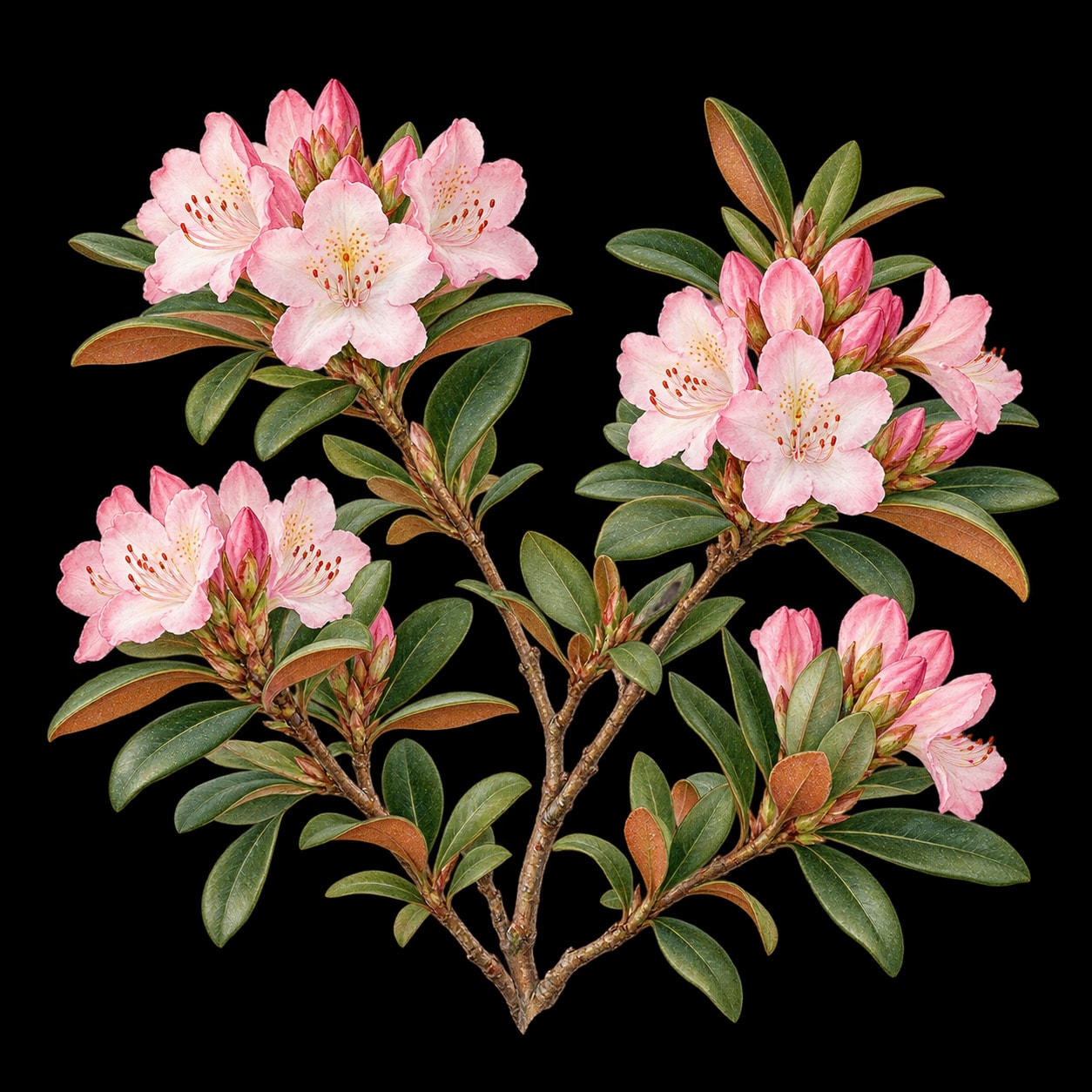
Rhododendron Adams: tension, recovery, and antimicrobial potential
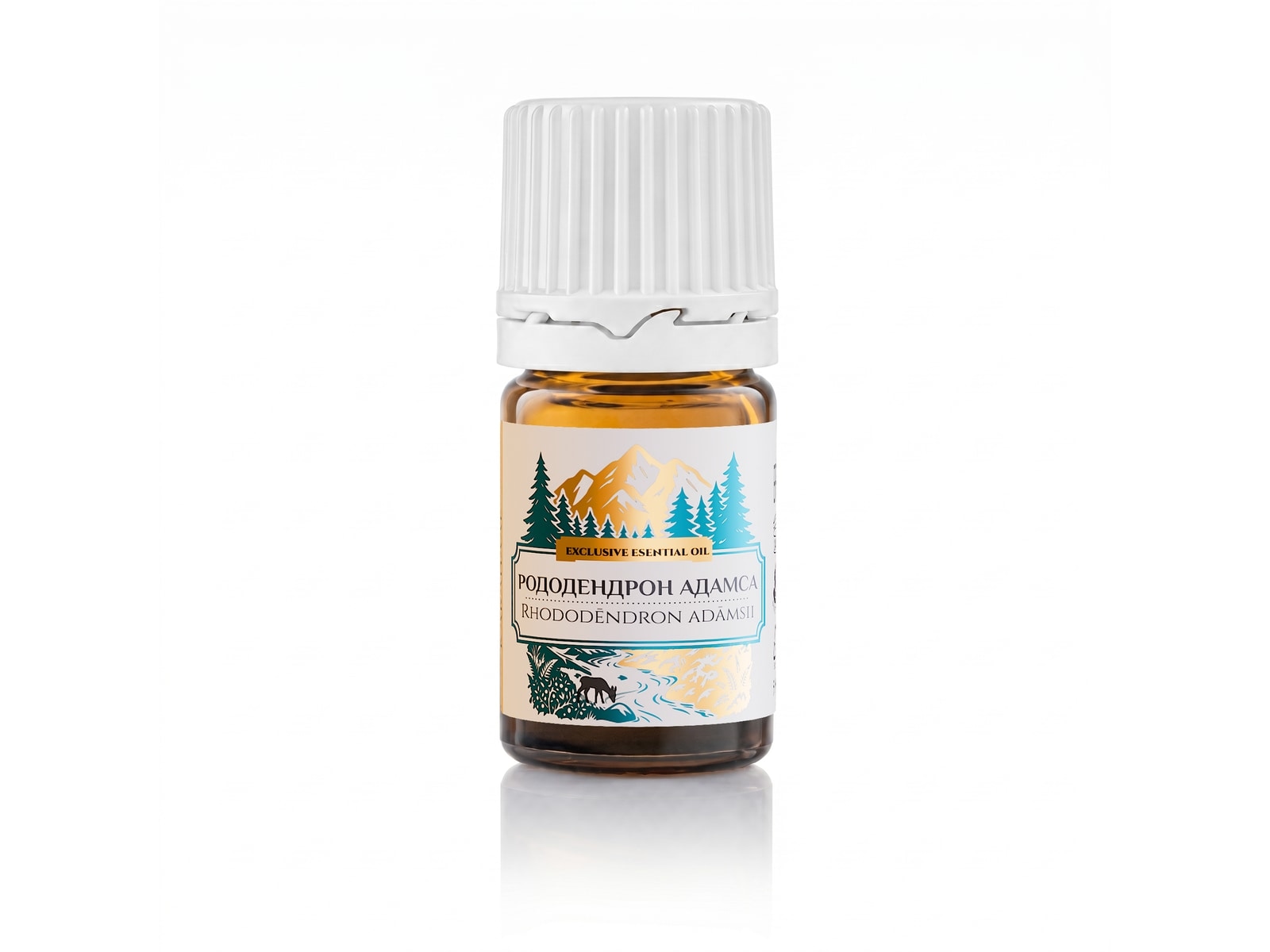
Sagandayla is primarily known as a plant of traditional culture, but its essential oil is a distinct material. Our oil reveals a bright, sweet floral aroma. The oil is selected for calm massage and emotional recovery.
Anti-inflammatory and spasmolytic properties
In the monograph KARAHAAL Rhododendron Adamsii is described in relation to inflammation, muscle tension, edema, and skin recovery. These aromatherapeutic applications can be conveniently implemented through a small amount of oil in a simple massage base for adults. [1]
Calming and emotional relief
The monograph also highlights sedative and calming applications. The aroma is suitable for transitioning from an active day to rest, especially if one desires a vibrant floral profile instead of the usual lavender. Mandarin adds a light sweetness, sandalwood maintains the calm base, and vetiver enhances depth.
Study specifically on essential oil
In the 2026 laboratory study, Rhododendron adamsii leaf oil from Buryatia demonstrated activity against certain gram-positive bacteria and a milder effect against Candida. Researchers specifically examined the essential oil, which differs in composition from the sagandai leaf infusion. [2]
Composition and method of preparation
The sesquiterpene fraction gives the aroma a deep and long-lasting character. Nerolidol, germacrone, and farnesenes are of interest for further investigation of their activity; their ratio depends on the raw material and distillation conditions.
The oil is not used as a substitute for infusions and is not taken internally in analogy with tea tradition. In cases of low blood pressure, pregnancy, and neurological disorders, independent use is excluded.
Blending suggestions
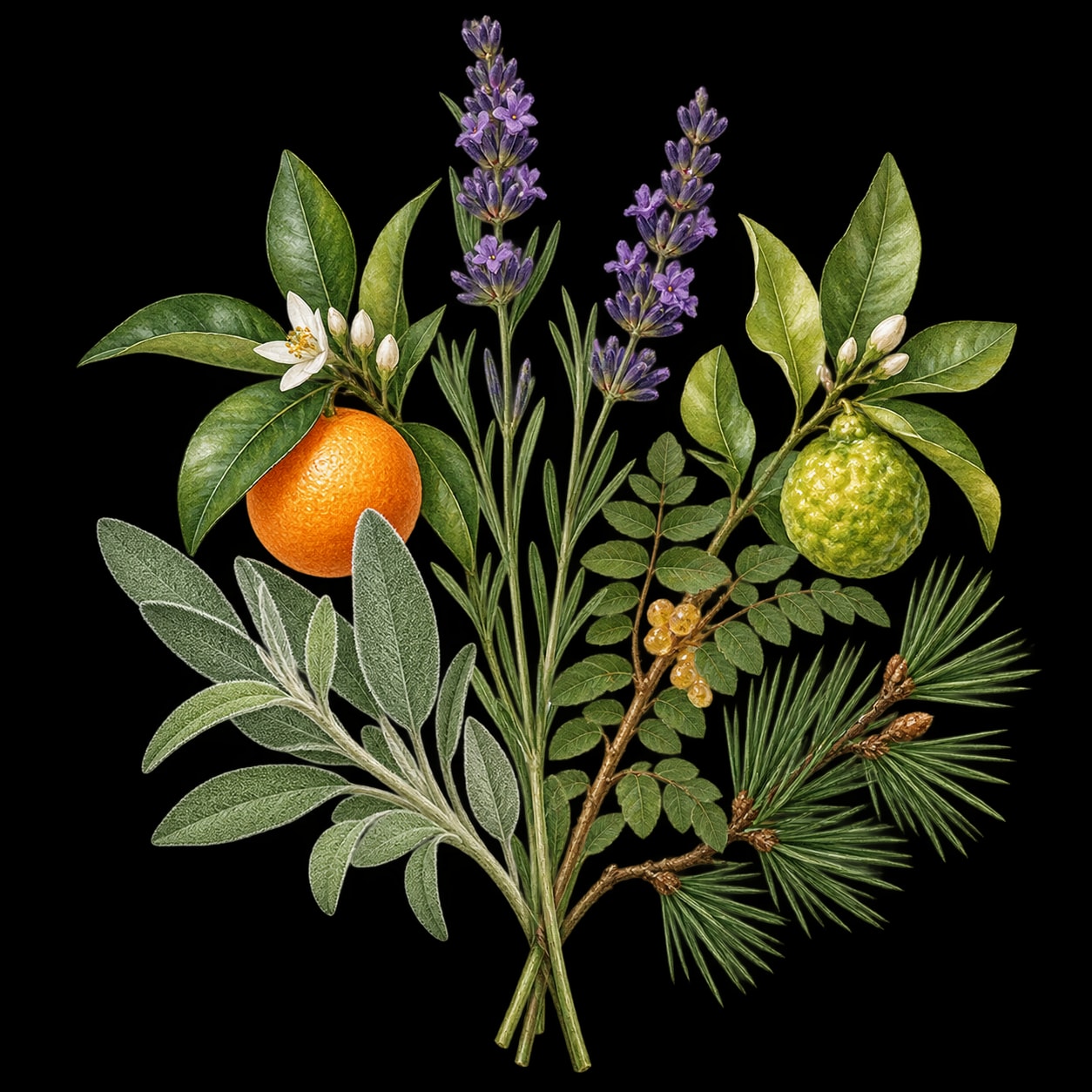
Lavender softens the forest depth, mandarin adds a fruity-fruitiness lightness. Fir makes the profile fresher, sandalwood and vetiver extend the calm base.
Research in detail
Sagandayla: study of the essential oil specifically
In the 2026 study, Adams' rhododendron essential oil Rhododendron adamsii from the Okiinsky district of Buryatia was examined. The degree of grinding and duration of hydrodistillation were varied, and the composition and biological activity were analyzed. The profile was dominated by sesquiterpenes; among notable components — β-farnesene, germacrone, and trans-nerolidol. The oil demonstrated strong activity against certain gram-positive bacteria, moderate activity against Candida, and low activity in the DPPH test. These are independent data on the volatile fraction of sagan-dai-li, without transferring tea properties to the concentrate. [2]
How to use
Examples for adults. Quantities are given for the entire bottle; for one application, take a small portion of the mixture. These are aromatic therapy routines, not medicinal dosages.
- Getting acquainted with the scent: apply a sample to a perfumery blotter according to the product instructions. Evaluate the aroma at a comfortable distance, without touching the oil to your skin. For comparison of combinations, use a separate strip with a partner's fragrance; remove both samples if discomfort occurs.
Precautions
Dilute in a carrier oil before applying to skin. Do not ingest or apply to mucous membranes; stop use if irritation occurs. Store tightly closed, away from heat and light: oxidised oil is more likely to cause skin reactions.
What to combine with this care
- “Provence” lavender essential oil — Aromatic combination
- Mandarin essential oil — Aromatic combination
- White sandalwood essential oil BIO — Aromatic combination
Sources
- Catalog KARAHAAL: Rhododendron adamsii.
- Tyhkeev and co-authors. Essential oils Rhododendron adamsii: preparation and biological activity. 2026.