Bitter orange: a calming citrus composition
Bitter orange has a scent of fresh rind with a dry, slightly bitter aftertaste. In aromatherapy, it is chosen for emotional relaxation and gentle transition after a stressful day. It is especially effective in blends that require citrus clarity without pronounced sweetness.
Anti-anxiety research potential
In the experimental study, the rind oil Citrus aurantium demonstrated an anxiolytic potential. The results depended on the experimental conditions and the frequency of administration; motor coordination was preserved in effective regimens. The study focuses on the neurobiological properties of the oil under controlled oral administration. For self-care, aromatic application methods are selected. [1]
What material are they studying
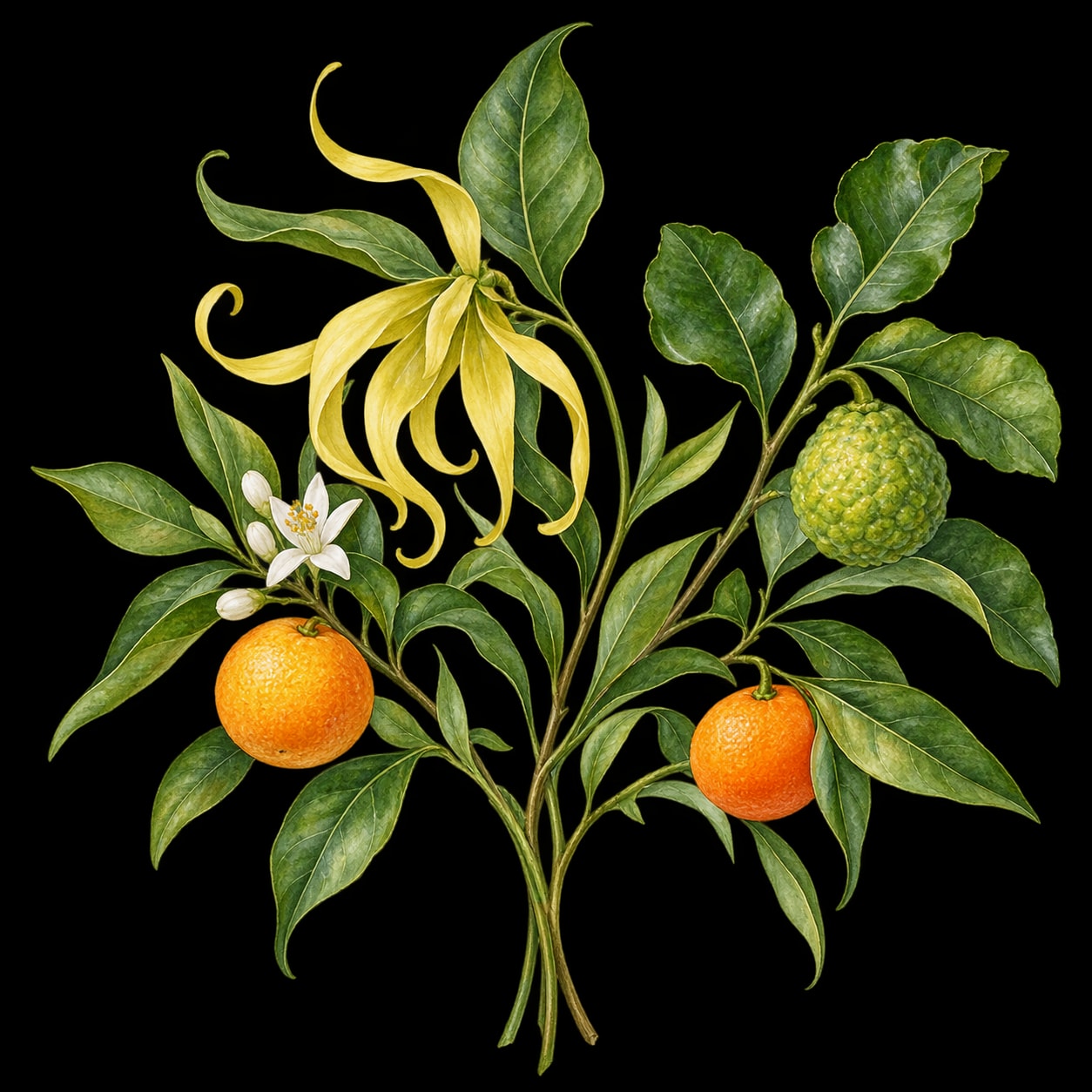
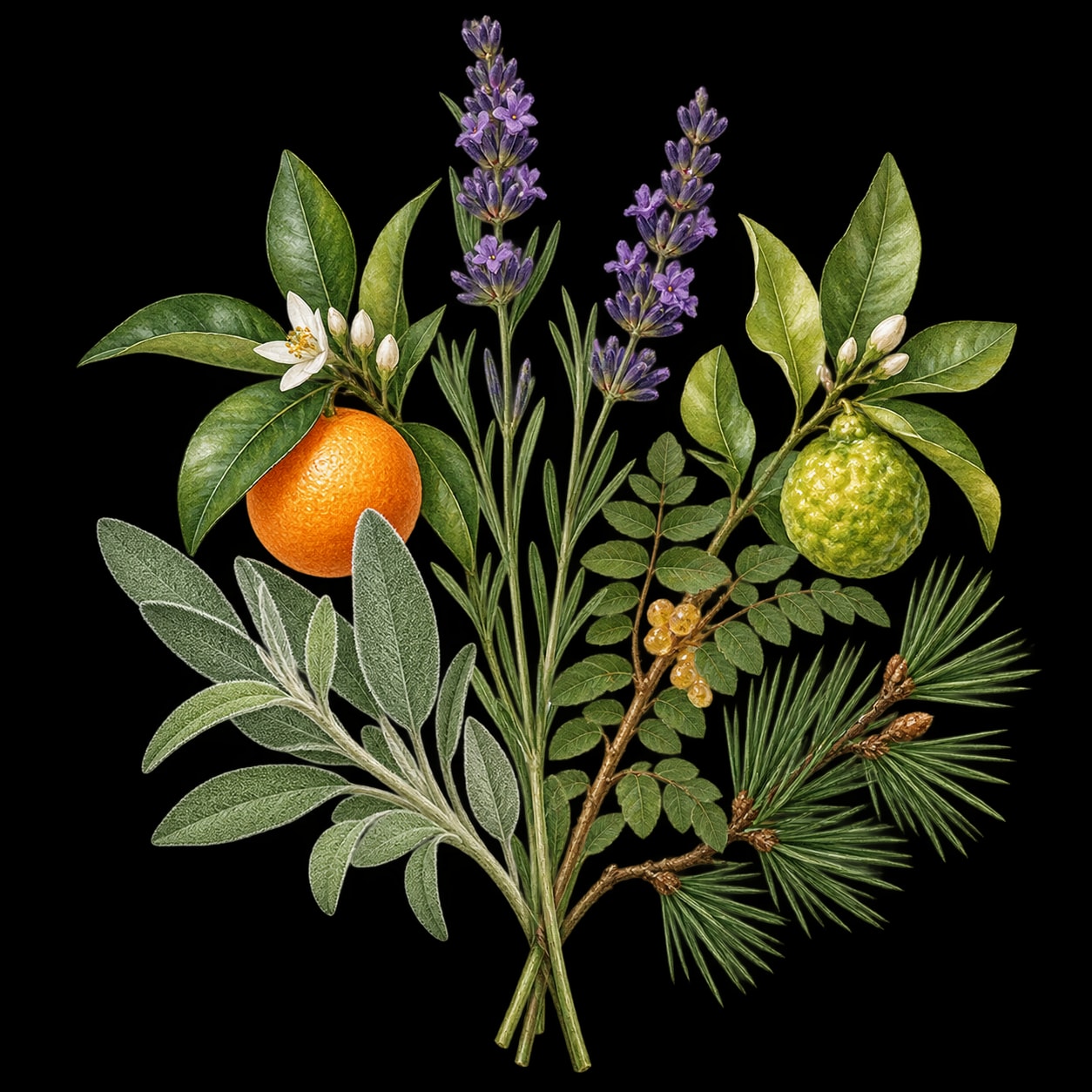
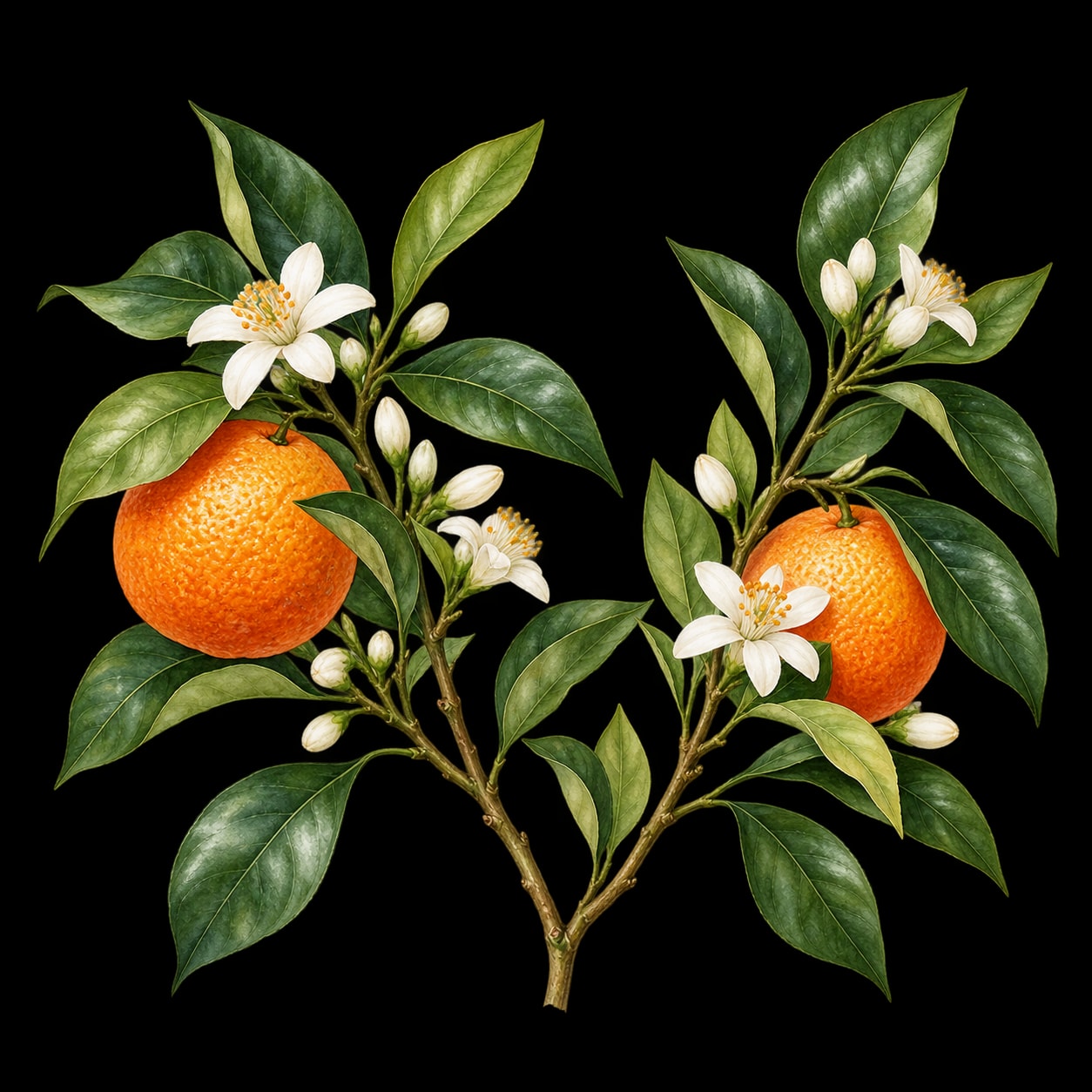
The bitter orange tree yields peel oil, floral neroli, and leaf petitgrain. Here, the peel aroma is presented: its fresh base is primarily formed by limonene, while small amounts of other volatile compounds create a characteristic bitterness.
Practical application
Bitter orange is suitable for a calm aroma on the desk, for an evening blend with woody notes, and for diluted body care, with sun exposure restrictions. Lavender softens the composition, geranium adds floral volume, and sandalwood holds freshness on a warm base.
Emotional sphere
This citrus can be selected when sweet scents seem overwhelming. Its dryness helps the composition remain clear and light, while its gentle citrus opening provides a pleasant relaxation. Patchouli adds a deeper evening character; Siberian cedar pine is suitable for daytime focus.
Blending suggestions
Lavender — for evening relaxation; geranium — for floral volume; cedar — for a dry daytime accord; sandalwood and patchouli — for a deep warm base.
Research in detail
Behavioral models with peel oil
In the experimental study, the oil Citrus aurantium was examined in several models of anxiety. The response depended on the experimental conditions and the frequency of administration. The study reveals the neurobiological potential of the rind oil. Self-administration of the essential oil orally is not recommended. [1]
How to use
Examples for adults. Quantities are given for the entire bottle; for one application, take a small portion of the mixture. These are aromatic therapy routines, not medicinal dosages.
- Aromatic pause: 1 drop on a paper towel or a suitable aromastone. Place at a comfortable distance, without direct contact of the oil with the skin; stop if the scent is unpleasant.
- Combination without skin application: 1 drop of bitter orange essential oil and spike lavender essential oil on two separate blotter pads. Hold them close at a comfortable distance and evaluate the balance; this is a test of the composition, not a method for continuous inhalation. For application on the skin, separate considerations are made regarding the method of extraction and limitations on ultraviolet exposure.
Precautions
Do not ingest or apply undiluted. Account for phototoxicity: do not apply to skin before sun exposure or using a tanning bed. Stop use if irritation occurs.
What to combine with this care
- “Provence” lavender essential oil — Aromatic combination
- White sandalwood essential oil BIO — Aromatic combination
- Rose geranium essential oil — Aromatic combination