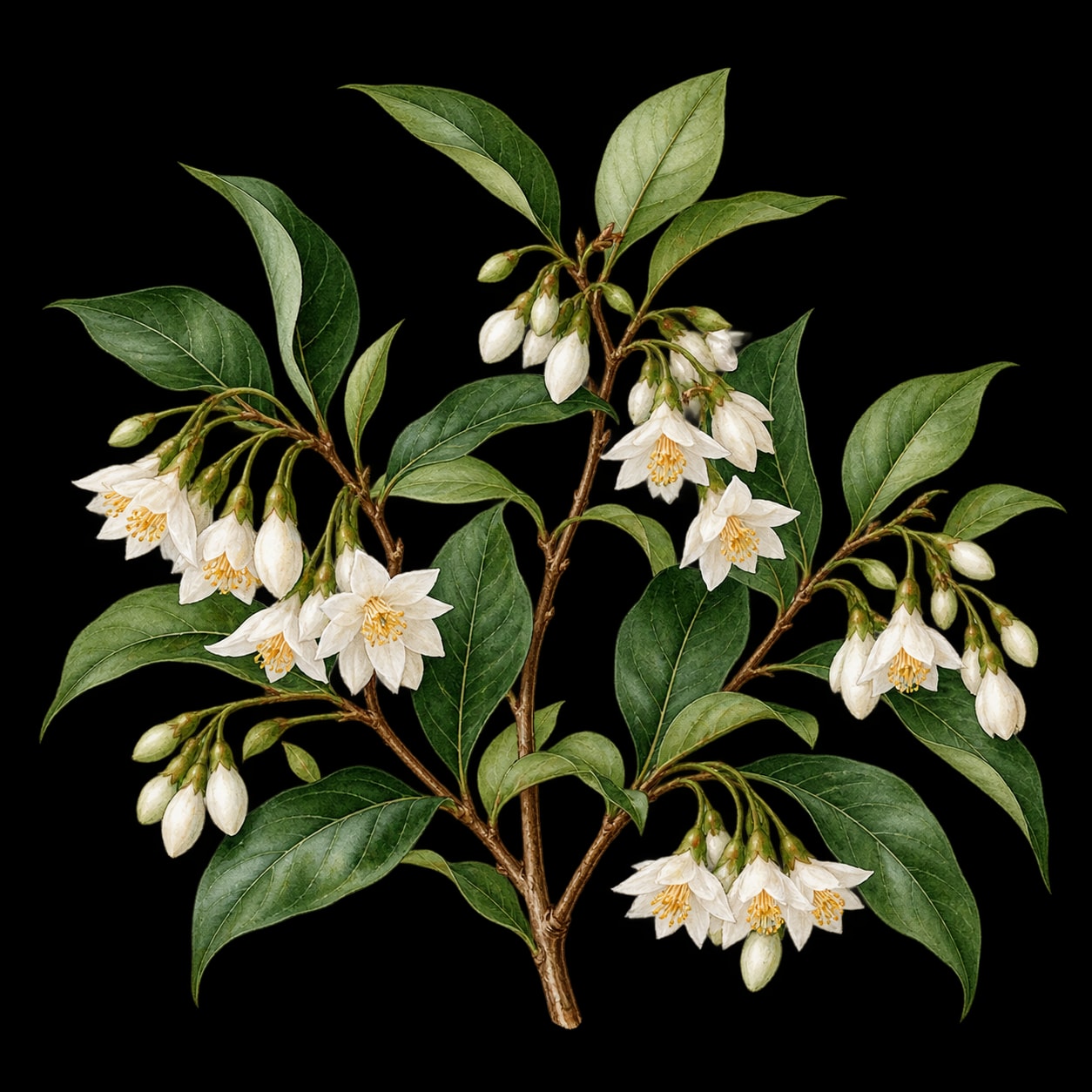
Benzoin: a warm balsamic fragrance for calm compositions
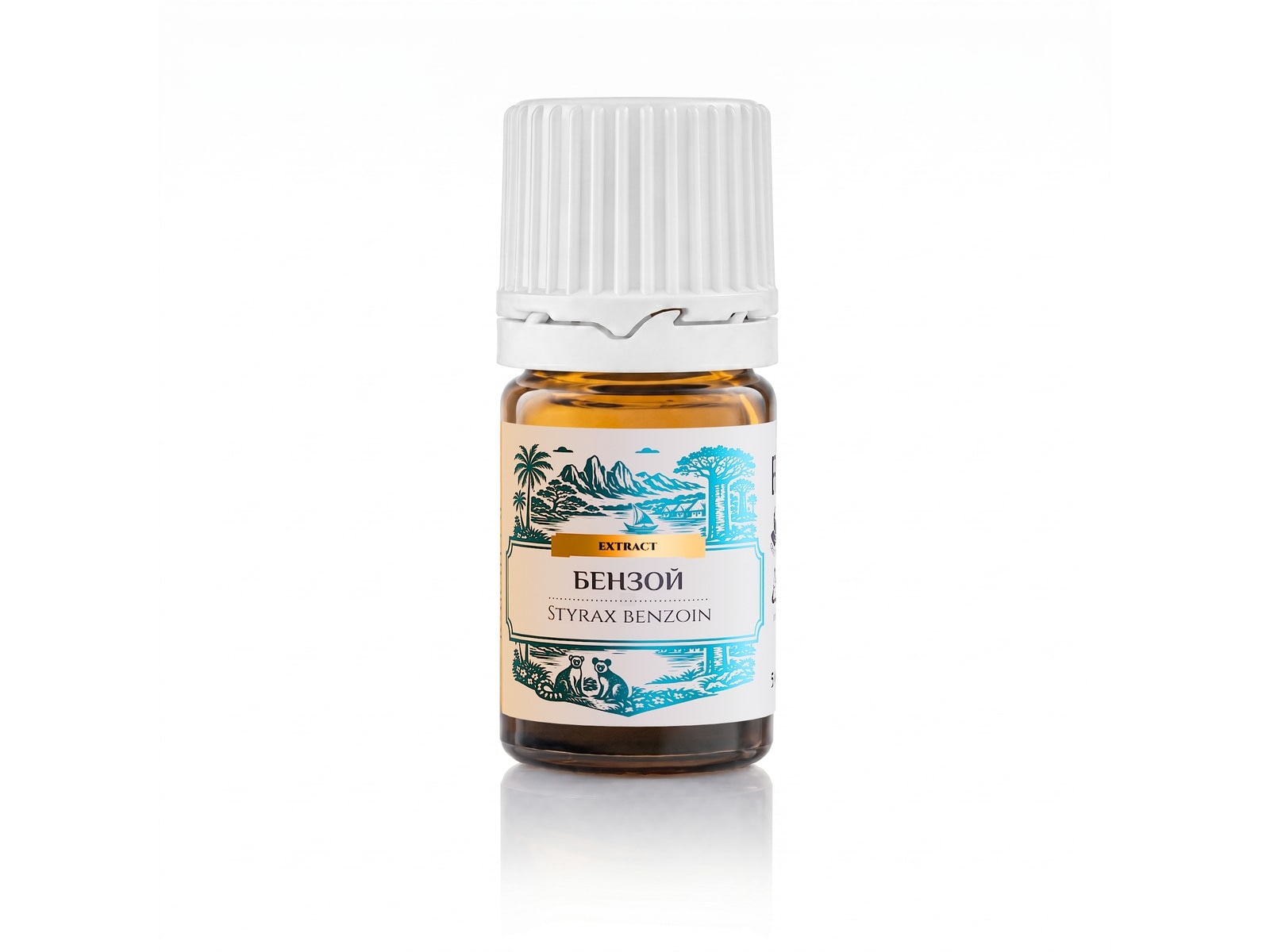
Benzoin is selected for its enveloping scent with vanilla and woody notes. It gives the aroma a rounder character, softens the sharpness of spices, and creates a stable, slightly sweet base. In personal fragrance collections, this material is ideal for warm evening and perfumery blends.
Emotional sphere
In aromatherapy tradition, benzoin is associated with comfort, calmness, and recovery after emotional exhaustion. Its rich aroma may be especially pleasant during cold months when one desires a soft, warm background. This choice is based both on the scent properties and personal associations with balsamic materials.
To keep the mixture comfortable, benzoin is introduced gradually. Excessive sweetness may be fatiguing; orange or dry woody notes help make the composition lighter.
Traditional properties of the resin and its specific form
Benzoin resin has traditionally been used in balsamic formulations. Here it is presented as an aromatic extract on dipropylene glycol (DPG). For cosmetic use, the concentration of the extract and the manufacturer's specified dosage are important; it should not be applied to damaged or inflamed skin.
For cosmetic use, a compatible base and the dosage specified by the manufacturer are required. Application of aromatic raw material to cracks, mucous membranes, or inflamed areas should be avoided. A perfumery sample allows you to evaluate the scent before mixture development.
How to reveal the aroma
Sandalwood enhances woody softness, rose makes benzoin more floral, patchouli adds earthy depth. Orange creates a warm citrus-balsamic accord. Vanilla intensifies the sweet note; this combination is especially important to balance with dry or fresh notes.
Benzoin is convenient when compositions lack duration and a soft finish: it helps connect a bright opening with a stable base.
Blending suggestions
Orange adds a bright opening, sandalwood provides a soft woody base, rose brings floral warmth. Patchouli reduces the confectionary impression; vanilla, on the contrary, enhances sweetness.
How to use
Examples for adults. Quantities are given for the entire bottle; for one application, take a small portion of the mixture. These are aromatic therapy routines, not medicinal dosages.
- Perfume test: use a blotter and the application method specified for this extract or absolute. For oily perfumes, a compatible base is required; start with a small test amount. Do not add the material arbitrarily to water, bath, or a pure essential oil apparatus.
Precautions
Dilute in a carrier oil before applying to skin. Do not ingest or apply to mucous membranes; stop use if irritation occurs.
What to combine with this care
- Essential oil of sweet orange — Aromatic combination
- White sandalwood essential oil BIO — Aromatic combination
- Patchouli essential oil — Aromatic combination