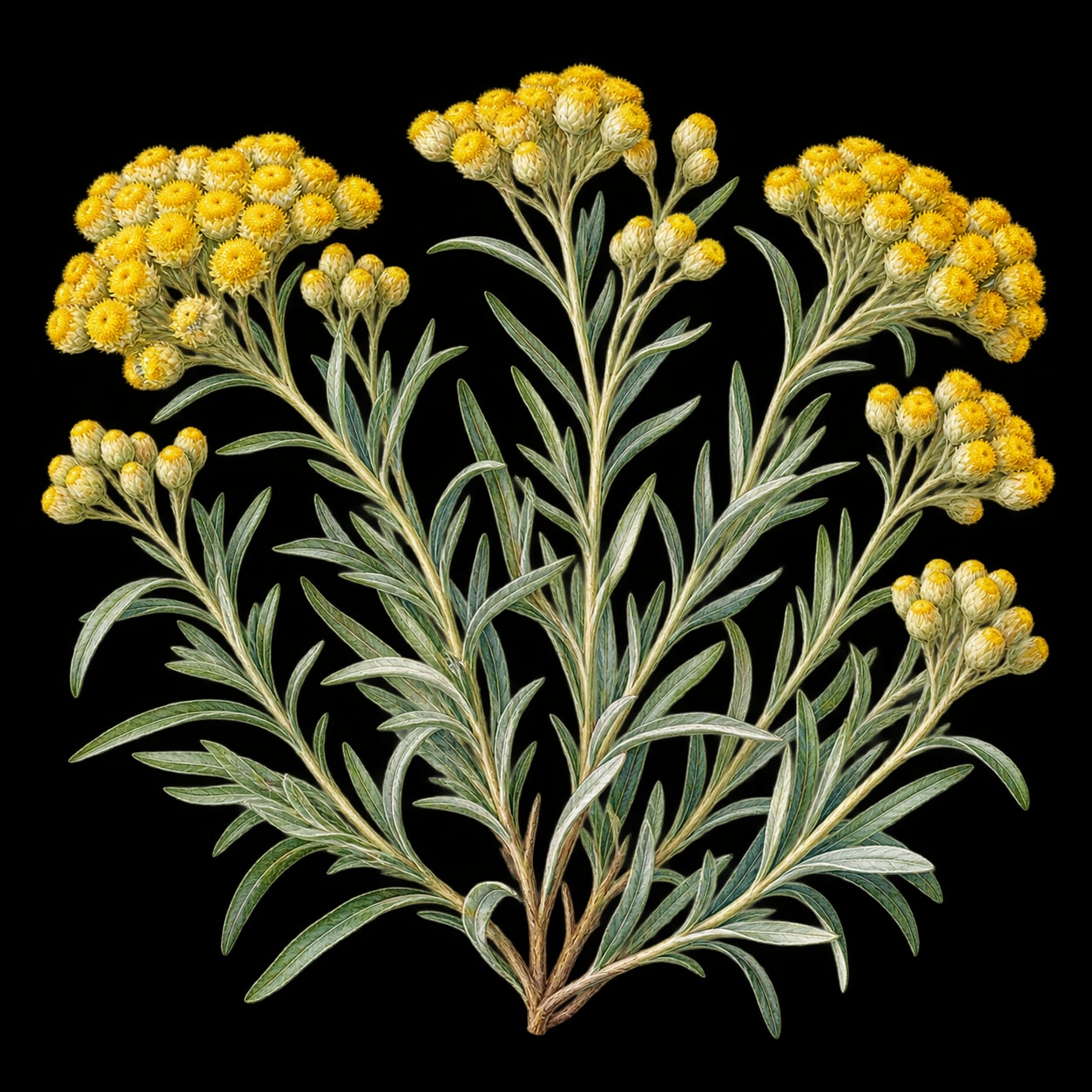
Helichrysum: skin inflammation, healing, and post-injury care
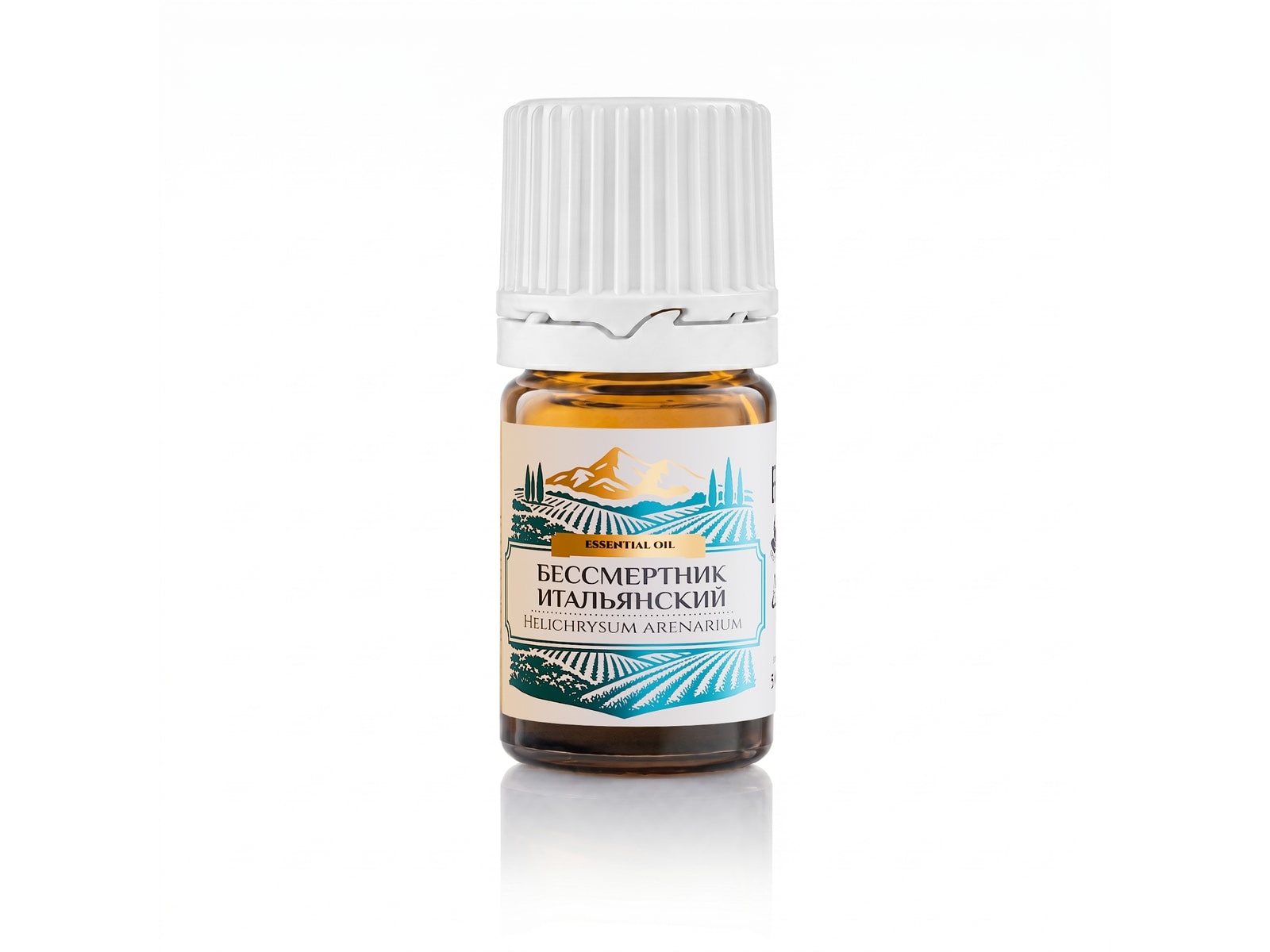
Italian helichrysum is a characteristic oil in restorative aromatherapy. It is chosen for local care of intact skin after bruising, softening formulas and gentle massage. Its warm notes of hay, dry herbs and honey differ noticeably from fresh lavender and citrus oils.
Anti-inflammatory potential
In a study of four commercial essential oils Helichrysum italicum and their fractions, the inflammatory response of macrophages and antimicrobial activity were evaluated. The results depended on the composition: both major components and minor constituents had an impact. This helps explain the interest in helichrysum for skin irritation and recovery, without reducing its action solely to one neryl acetate. [1]
Care after bruises
In aromatherapy tradition, helichrysum is used in blends for areas with bruises and a sensation of local tension. The oil is diluted and applied gently, without intensive massage of fresh injuries. If pain is severe, movement is limited, or bruises appear without an obvious cause, the condition must be assessed, not increased oil quantity.
Skin, collagen, and elastin
In the laboratory study, the oil inhibited collagenase and elastase activity—enzymes involved in the degradation of skin structural proteins. This is a specific direction of cosmetic research. Individual main components acted differently: neryl acetate, nerol, and linalool did not reproduce the results of the whole oil under the tested conditions, whereas α-pinene and limonene showed activity. [2]
Helichrysum is included in gentle cosmetic formulations for skin that requires softening and delicate care. Its herbaceous-spicy aroma pairs well with a delicate massage base; the mixture composition is tailored to the skin's sensitivity and condition.
Emotional recovery
Dry warm scent is ideal for relaxation after a stressful day. With lavender it becomes lighter, with sandalwood it becomes deeper, and with mandarin it becomes softer and brighter. For evening hand massage, a subtle aromatic intensity is sufficient.
Blending suggestions
Lavender maintains a gentle herbal tone; cypress emphasizes dryness; geranium adds a floral center. Mandarin lightens the honeyed-grain profile, sandalwood makes it deeper.
Research in detail
Collagenase and elastase: enzymatic model
In the 2019 study, the oil Helichrysum italicum inhibited collagenase and elastase activity in laboratory tests. Neryl acetate, nerol, and linalool individually did not reproduce this result under the tested conditions, while α-pinene and limonene showed activity. The study explains the interest in cosmetic formulations containing helichrysum; direct measurement of wrinkle smoothing in humans was not conducted. [2]
Large and small components work together
In a 2021 study, four commercial helichrysum oils and isolated fractions were compared. Antimicrobial activity and inflammatory markers in macrophages were evaluated. The authors linked differences in effects to the combination of components and the possible contribution of substances present in small amounts. Therefore, the chemical profile is more informative than simply searching for one 'active percentage'. [1]
How to use
Examples for adults. Quantities are given for the entire bottle; for one application, take a small portion of the mixture. These are aromatic therapy routines, not medicinal dosages.
- Simple blend for local massage: 1 drop of Italian helichrysum oil in 10 ml of jojoba. Mix in a clean bottle. Apply a small amount of the prepared blend to the shoulders or upper back and spread with gentle massage movements.
- Gentle evening blend: 1 drop of Italian helichrysum oil + 1 drop of true lavender essential oil in 20 ml of jojoba. Mix; use a small amount to gently massage the forearms or shoulders.
- Scenting without a diffuser: 1 drop on a paper towel or aromastone. Hold at a comfortable distance from the face, without touching the skin with the oil; several ordinary breaths are sufficient to assess the scent.
- “Warm Herbs” blend: Italian helichrysum oil — 1 drop; sweet orange oil — 1 drop; jojoba — 20 ml. Combine in a clean, dry bottle and mix. Use a small amount of the prepared blend to gently massage an adult’s shoulders or forearms, away from the face.
Precautions
Dilute in a carrier oil before applying to skin. Do not ingest or apply to mucous membranes; stop use if irritation occurs.
What to combine with this care
- “Provence” lavender essential oil — Aromatic combination
- Mandarin essential oil — Aromatic combination
- White sandalwood essential oil BIO — Aromatic combination
- Jojoba oil — Base for the oil recipes above
- Essential oil of sweet orange
Sources
- Linking the antimicrobial and anti-inflammatory effects of immortelle essential oil with its chemical composition - The interplay between the major and minor constituents.
- In Vitro Anticollagenase and Antielastase Activities of Essential Oil of Helichrysum italicum subsp. italicum (Roth) G. Don.
- Immortelle oil: major and minor constituents, 2021
- Helichrysum oil, collagenase and elastase in vitro, 2019