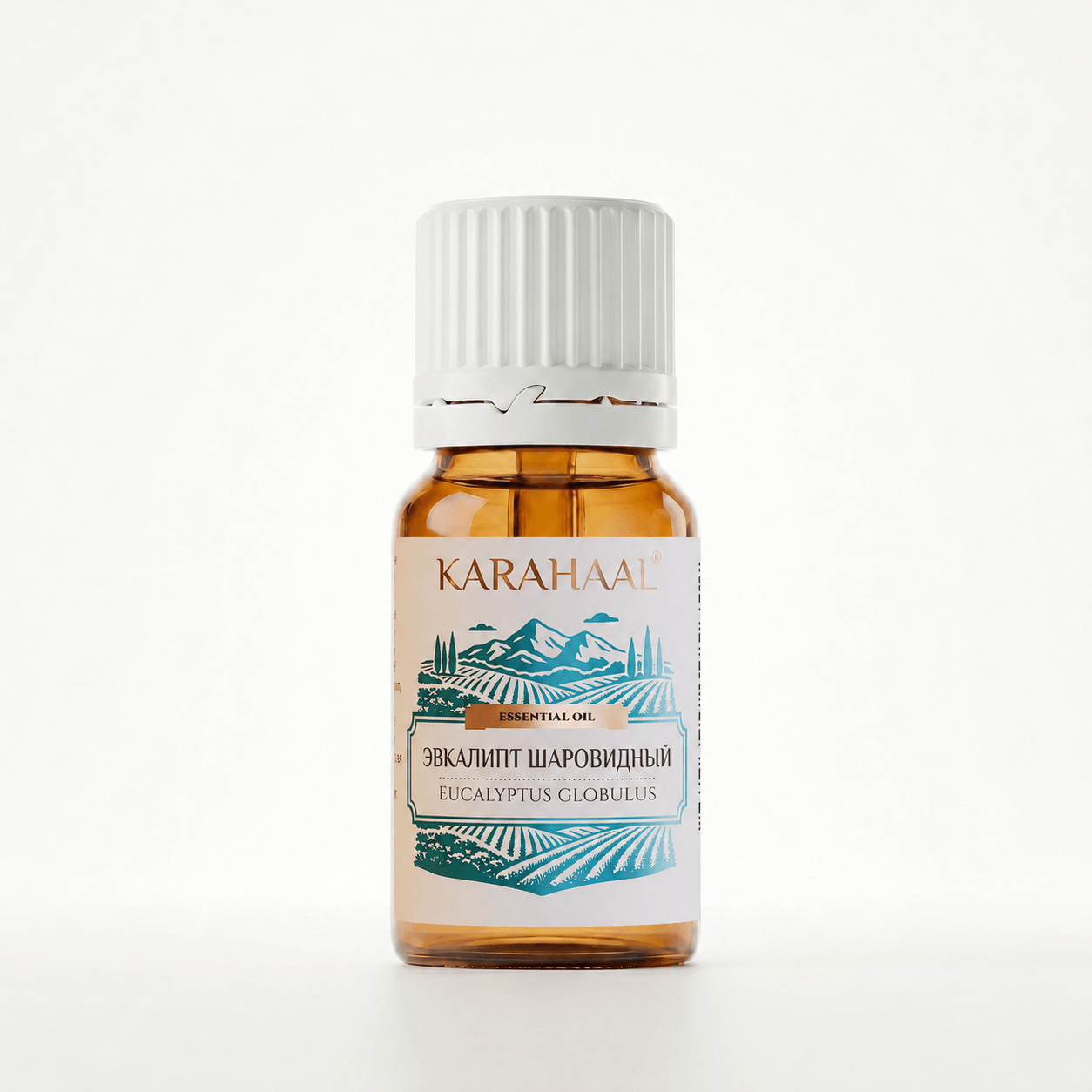
Blue gum eucalyptus: cough, mucus, and muscle pain
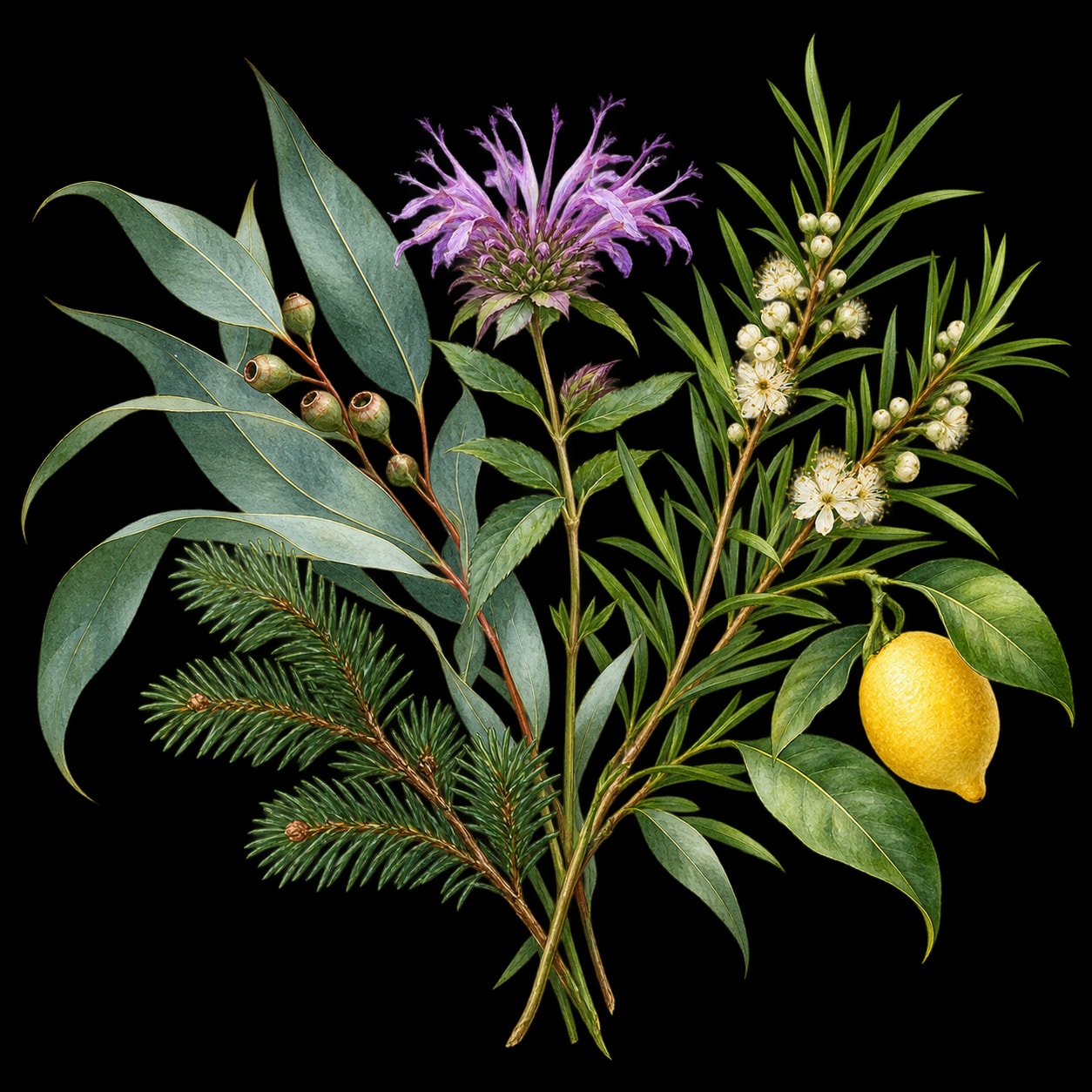
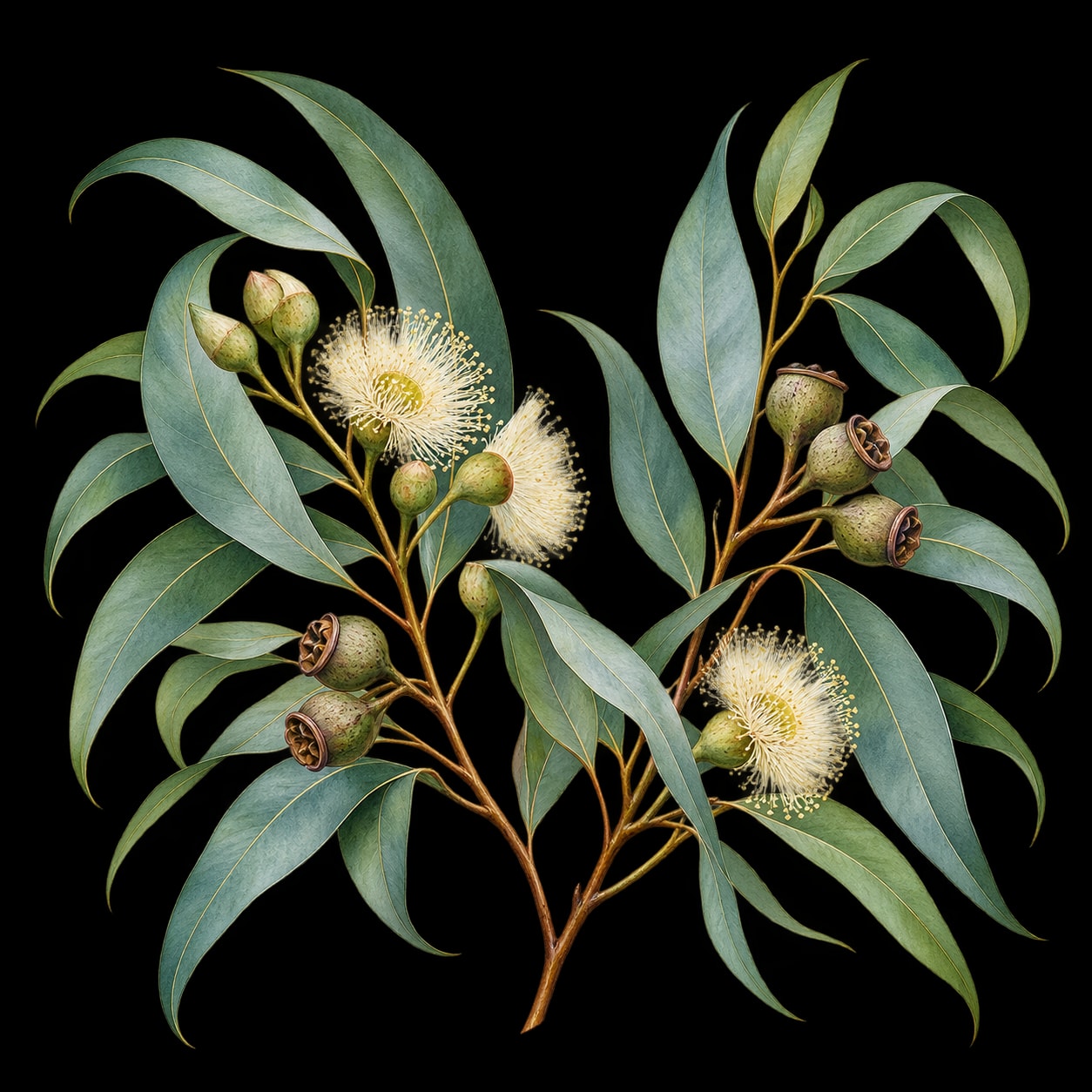
Essential oil Eucalyptus globulus is obtained from leaf material. This is one of the most recognizable oils in respiratory therapy: penetrating, cool, camphoraceous, with a dry green-wood background. Its therapeutic profile is closely linked to 1,8-cineole, also known as eucalyptol.
Therapeutic properties
Cough during a cold and expectoration of phlegm
In the European monograph on eucalyptus oils, the essential oil is considered a traditional remedy for easing cough during cold-related illnesses. In aromatherapy, it is included in inhalation blends and diluted topical applications on the chest and back, especially when an intense fresh respiratory aroma is desired. [1]
Cineole is interesting not only for its fresh scent. Its effect on mucus production and respiratory tract inflammatory processes was studied. In a trial with 242 patients, a standardized oral cineole preparation reduced symptoms of acute bronchitis, including cough frequency. This result relates to the pharmaceutical form of cineole; essential oil in a bottle is not to be ingested internally. [2]
Anti-inflammatory and mucolytic action
In human nasal tissue studies, 1,8-cineole reduced the number of mucus-filled goblet cells and altered MUC2 gene expression—associated with mucus secretion. The authors also observed suppression of NF-κB activity, one of the regulators of inflammatory response. This reveals the mechanism by which cineole-containing essential oils show promise in conditions with excessive mucus. [3]
Muscle pain and recovery care
Muscle pain — another traditional indication mentioned in the monograph on eucalyptus oil. For this application, diluted rubs and massage blends are suitable. Eucalyptus is combined with lavender for a softer composition or with fir for a strong coniferous-balsamic character. [1]
In clinical practice after knee surgery, the inhalation of eucalyptus during rehabilitation was studied. In the essential oil group, pain assessment was lower than in the control group. However, the study did not show a convincing change in all measured inflammatory markers. It supports a separate analgesic effect of aromatic stimulation, without conflating subjective pain with biochemical indicators. [4]
Aromatherapeutic use
The eucalyptus scent is chosen when a clear, cool composition without floral sweetness is needed. It is well suited for a short transition after a hot environment and mental fatigue. The intensity can be easily adjusted by quantity: an overly sharp scent irritates and interferes with the feeling of free breathing for which it is used.
For daily use, start with inhaling the aroma or a gentle topical blend. Eucalyptus oil is not intended for nasal application. In cases of bronchospasm tendency, intense inhalation may not be suitable.
Blending suggestions
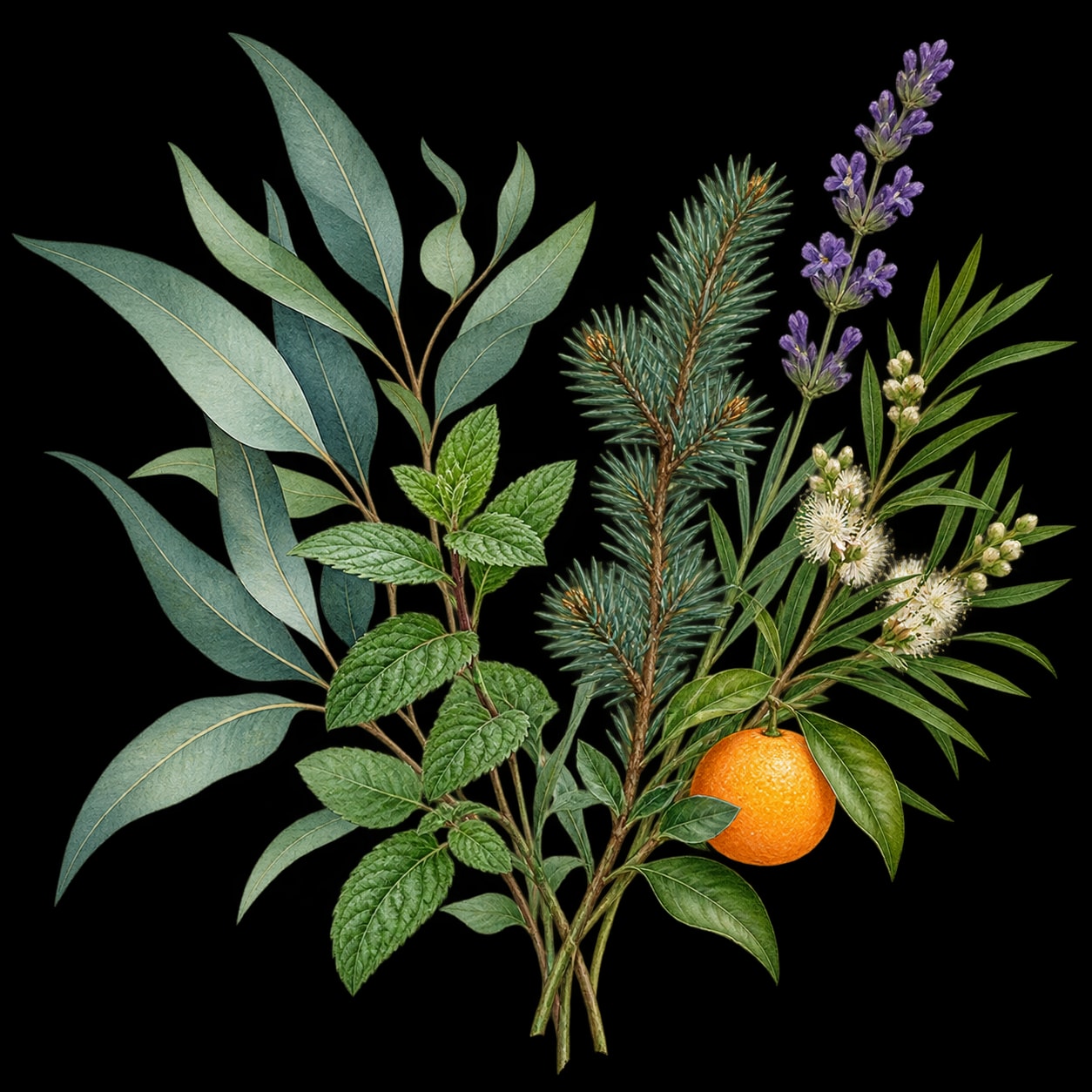
Fir adds a soft resinous base; myrtle continues the respiratory direction with a more delicate herbaceous aroma. Lavender softens the camphor sharpness. Lemon lightens the composition, while Atlas cedar adds a dry woody depth.
Research in detail
1,8-Cineole and cough — clinical study 2013
In a multicenter double-blind study, 242 people with acute bronchitis participated. Oral standardized cineole and placebo were compared. On day four, the cineole group showed a greater reduction in overall symptom severity; particularly notable was the difference in cough attack frequency. [2]
Mucus tissue study — human tissue research, 2015
Sudhoff and co-authors used human nasal epithelial cell cultures, in which inflammatory stimulation was modeled. Upon exposure to 1,8-cineole, the number of goblet cells filled with mucus decreased, the expression of the MUC2 gene reduced, and the activity of NF-κB — one of the regulators of the inflammatory response — weakened. [3]
Inhalation and pain perception — Jun and co-authors, 2013
After knee joint endoprostheses, patients were divided into a group receiving eucalyptus inhalation and a control group using almond oil. The treatment was administered alongside rehabilitation procedures. Pain assessments were lower in the eucalyptus group; changes in individual blood pressure indicators also differed. However, no significant differences in C-reactive protein levels or white blood cell counts were observed. [4]
How to use
Examples for adults. Quantities are given for the entire bottle; for one application, take a small portion of the mixture. These are aromatic therapy routines, not medicinal dosages.
- Simple blend for local massage: 1 drop of blue gum eucalyptus oil in 10 ml of jojoba. Mix in a clean bottle. Apply a small amount of the prepared blend to the shoulders or upper back and spread with gentle massage movements.
- Fresh daytime blend: 1 drop of blue gum eucalyptus oil + 1 drop of true lavender essential oil in 20 ml of jojoba. Mix; use a small amount to gently massage the forearms or shoulders.
- Scenting without a diffuser: 1 drop on a paper towel or aromastone. Hold at a comfortable distance from the face, without touching the skin with the oil; several ordinary breaths are sufficient to assess the scent.
- “Forest Freshness” blend: blue gum eucalyptus oil — 1 drop; Scots pine oil — 1 drop; jojoba — 20 ml. Combine in a clean, dry bottle and mix. Use a small amount of the prepared blend to gently massage an adult’s shoulders or forearms, away from the face.
Precautions
Do not ingest, put drops in the nose or apply the concentrate to skin or mucous membranes. Do not use near the face of young children: cineole-rich oils may cause dangerous respiratory reactions. The examples are intended for adults. For asthma, a tendency to bronchospasm or coughing triggered by scents, choose the method of use with a specialist. Inhalation does not require boiling water or deep, forced breathing.
What to combine with this care
- “Provence” lavender essential oil — Aromatic combination
- Essential oil of Cypress — Aromatic combination
- Lemon essential oil — Aromatic combination
- Jojoba oil — Base for the oil recipes above
- Essential oil of common pine
Sources
- EMA. Eucalypti aetheroleum — herbal monograph and assessment.
- Fischer J., Dethlefsen U. Efficacy of cineole in patients suffering from acute bronchitis: a placebo-controlled double-blind trial. Cough. 2013;9:25.
- Sudhoff H. et al. 1,8-Cineol Reduces Mucus-Production in a Novel Human Ex Vivo Model of Late Rhinosinusitis. PLOS ONE. 2015;10:e0133040.
- Jun Y.S. et al. Effect of eucalyptus oil inhalation on pain and inflammatory responses after total knee replacement: a randomized clinical trial. 2013:502727.