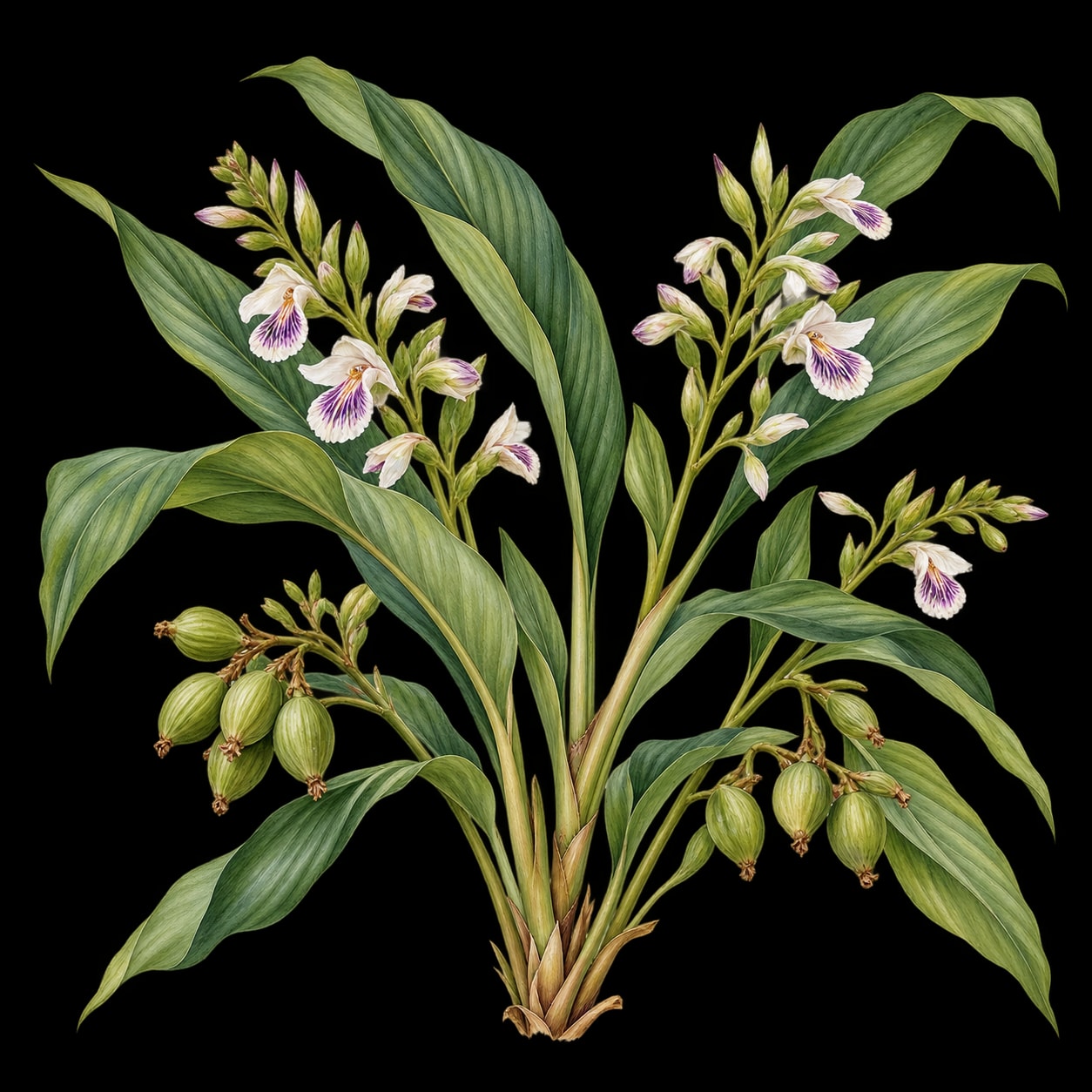
Cardamom: digestive comfort and fresh spiciness
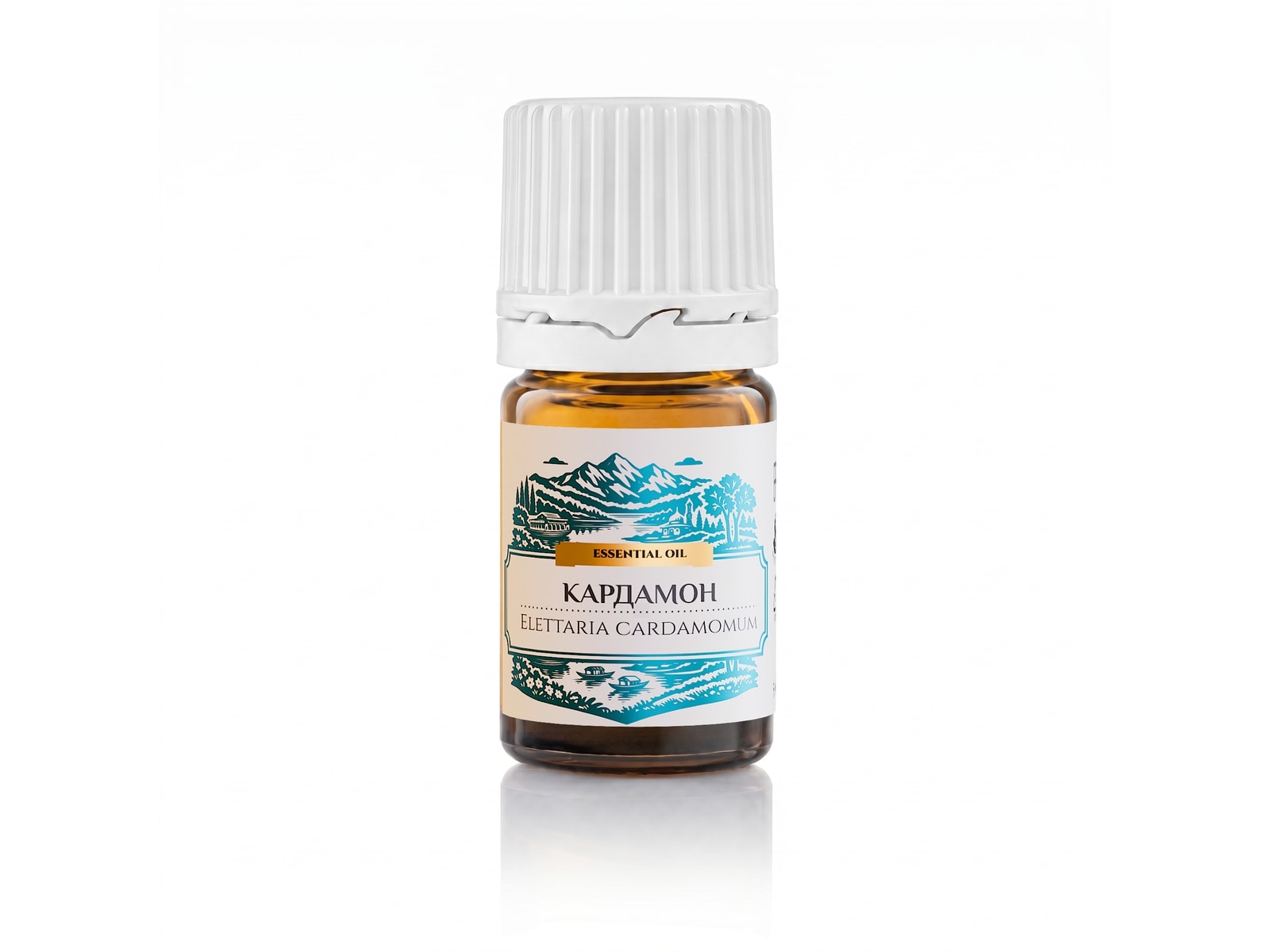
Cardamom is chosen when a warm, spicy aroma without heavy sharpness is desired. Its scent combines a slightly sweet depth with cineole freshness. In aromatherapy tradition, it is primarily associated with digestive spasms, a feeling of heaviness, and nausea.
Nausea: data on the blend
In a clinical study on postoperative nausea, a mixture of cardamom, ginger, and two types of mint was evaluated. The group receiving this composition showed improved outcomes compared to the control. The effect of the entire mixture was studied; cardamom contributed a warm, fresh, spicy note to it. [1]
For personal aromatic testing, cardamom is suitable due to its moderate freshness. If the scent intensifies nausea, it should be removed; persistent symptoms require investigation of the underlying cause.
Gastrointestinal properties
In an experimental study, cardamom essential oil and other cardamom fractions demonstrated a protective response in models of gastric mucosa damage. The effect depended on the fraction studied and the experimental conditions. The study reveals the gastroprotective potential of the plant. [2]
In external aromatherapy, cardamom is traditionally used in gentle blends for the abdomen when there is a familiar, mild tension. For shoulder massage, it provides a warm, fresh accent and blends well with lavender.
Emotional tone
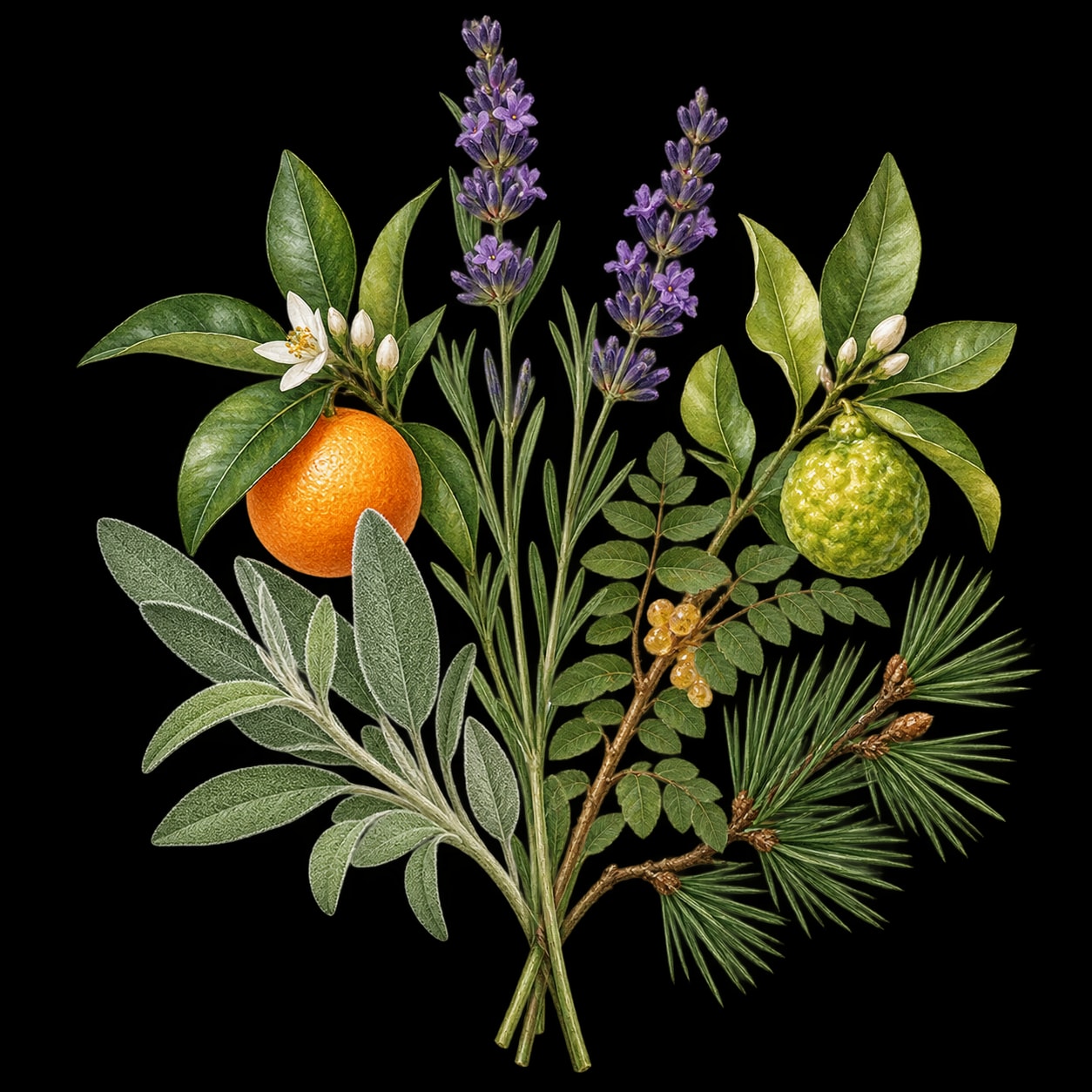
Cardamom is suitable for daytime blends when feeling of lethargy and monotony is present. Orange makes it warmer, mandarin softer, cedar drier. Sandal creates a more tranquil evening backdrop while preserving the spicy heart.
Blending suggestions
Orange and mandarin emphasize the warm sweetness, lavender makes the blend softer. Sandalwood adds depth, cedar adds a dry woody structure.
Research in detail
Mucosal protection in experimental models
In an experimental study, cardamom essential oil, methanolic extract of fruits, and other fractions were compared. In models of gastric mucosal injury, a protective response was observed, depending on the fraction composition and experimental conditions. For self-care, essential oil is used aromatically and externally. [2]
How to use
Examples for adults. Quantities are given for the entire bottle; for one application, take a small portion of the mixture. These are aromatic therapy routines, not medicinal dosages.
- Simple blend for local massage: 1 drop of cardamom oil in 10 ml of jojoba. Mix in a clean bottle. Apply a small amount of the prepared blend to the shoulders or upper back and spread with gentle massage movements.
- Fresh daytime blend: 1 drop of cardamom oil + 1 drop of true lavender essential oil in 20 ml of jojoba. Mix; use a small amount to gently massage the forearms or shoulders.
- Scenting without a diffuser: 1 drop on a paper towel or aromastone. Hold at a comfortable distance from the face, without touching the skin with the oil; several ordinary breaths are sufficient to assess the scent.
- “Bright Spice” blend: cardamom oil — 1 drop; sweet orange oil — 1 drop; jojoba — 20 ml. Combine in a clean, dry bottle and mix. Use a small amount of the prepared blend to gently massage an adult’s shoulders or forearms, away from the face.
Precautions
Dilute in a carrier oil before applying to skin. Do not ingest or apply to mucous membranes; stop use if irritation occurs.
What to combine with this care
- “Provence” lavender essential oil — Aromatic combination
- Essential oil of sweet orange — Aromatic combination
- Mandarin essential oil — Aromatic combination
- Jojoba oil — Base for the oil recipes above