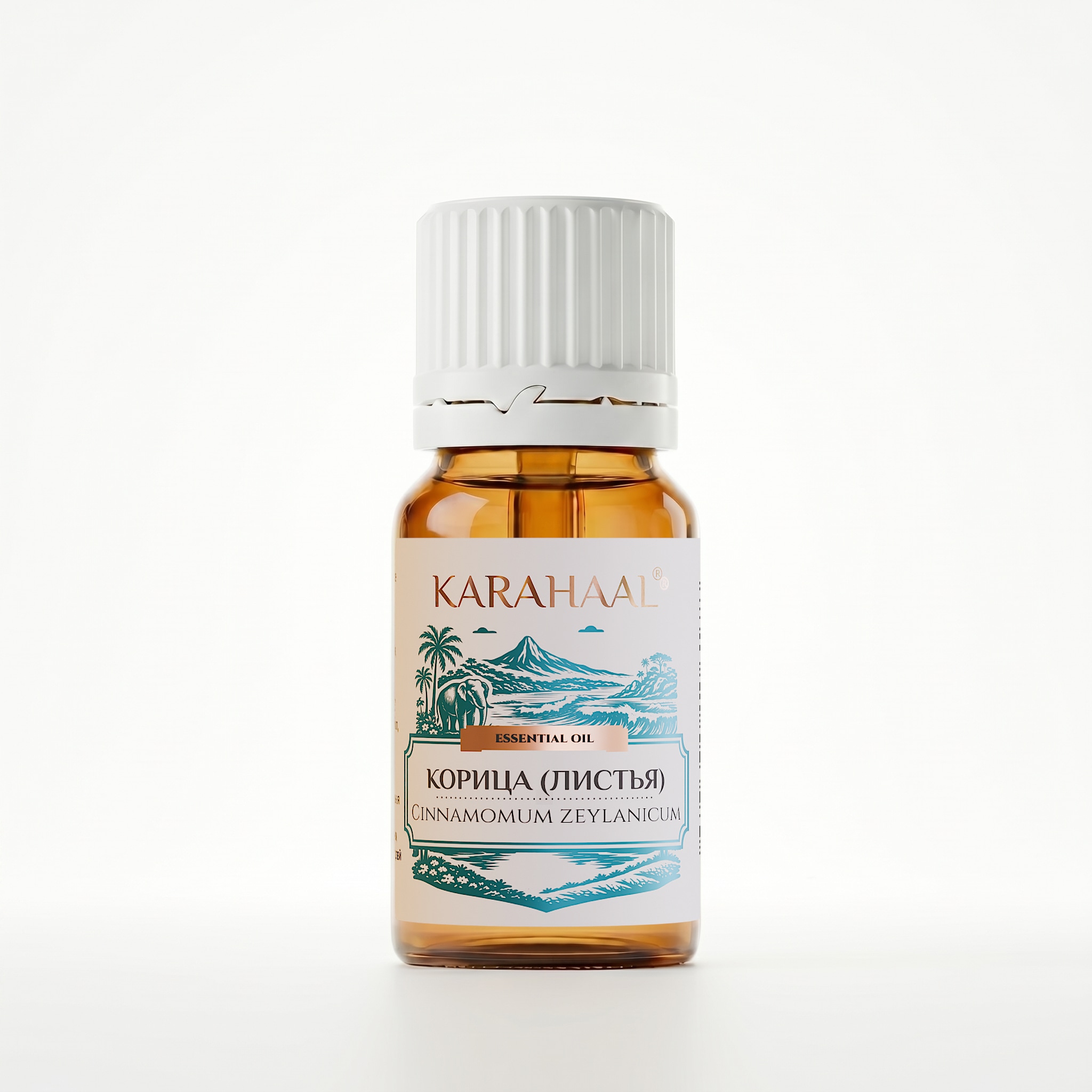
Cinnamon leaves: eugenol and antifungal potential
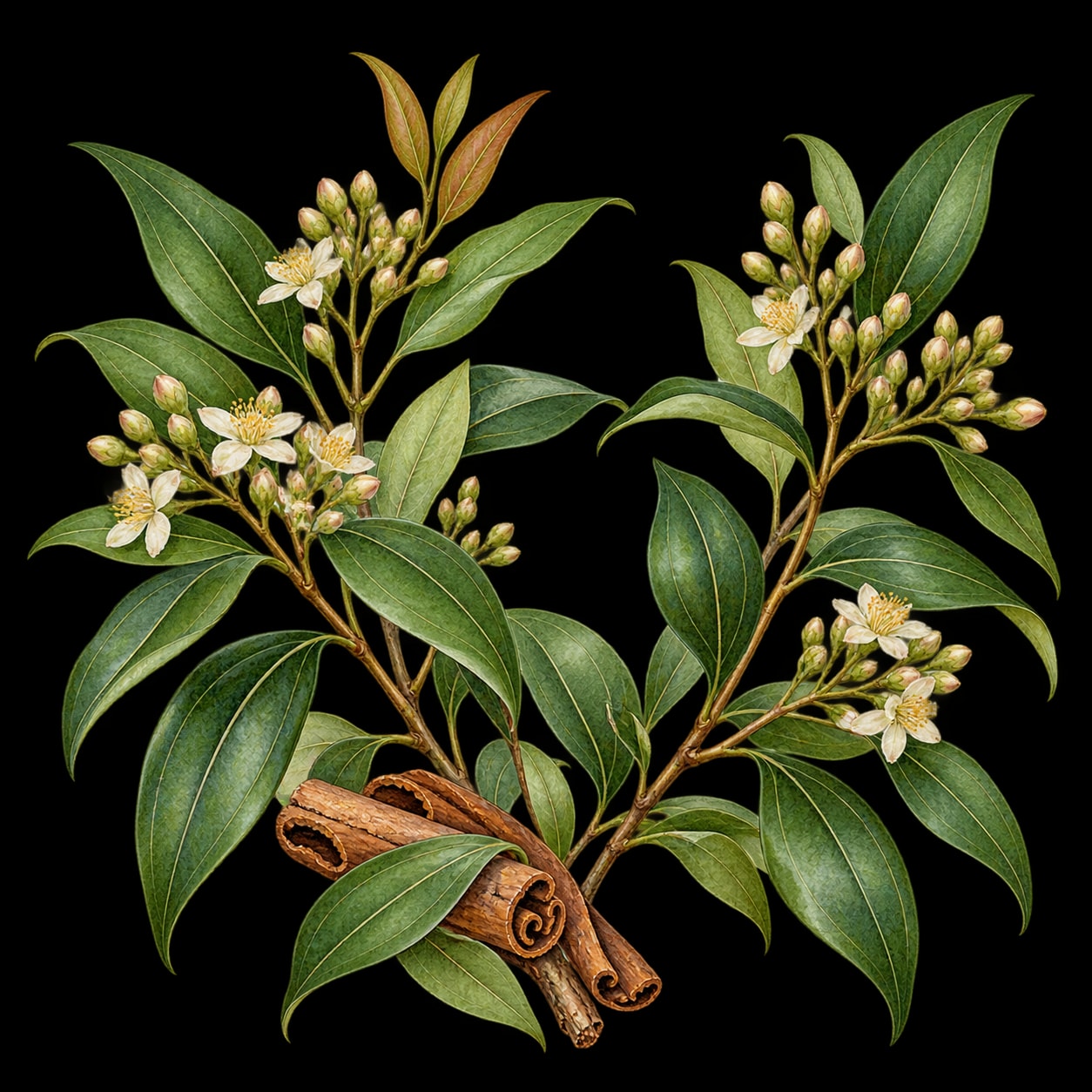
Cinnamon leaf oil has a spicy, warm, and slightly woody scent. Its aroma is closer to cloves than to the sweet scent of bark. The reason is eugenol, a key component of the leaf volatile fraction and a well-studied biologically active substance.
Antimicrobial action
Eugenol is being studied as a potential antifungal component. In studies involving this compound and clove oil, inhibition of Candida, Aspergillus, and dermatophytes was observed. Researchers found damage to fungal membranes and a reduction in ergosterol—a substance essential for their normal structure. This specific mechanism explains the interest in eugenol-containing oils in the development of antifungal agents. [1]
For the skin, leaf cinnamon oil is used in professionally calculated formulations. Concentrated oil may irritate skin and mucous membranes: precise dosage, even distribution in the carrier, and individual tolerance are essential.
Leaves and bark: different materials
In bark oil, cinnamaldehyde is typically found; in leaf oil, it is eugenol. Therefore, the choice of plant part is important both for composition and for acceptable concentration. Cinnamon leaf oil can add depth to a blend without a strong candy-like character of the bark, but remains a strong concentrate.
Emotional sphere
A warm spicy note is ideal for a sense of comfort and energy during cold seasons. With orange it sounds open, with cedar it becomes drier, and with sandalwood and vanilla it becomes rounder. In aromatic blends, cinnamon acts as a subtle accent: a few dominant spicy notes quickly make the scent heavy. It's convenient to start getting acquainted with it using a single blotter.
Blending suggestions
Sweet orange softens the spiciness; cedar makes it drier; sandalwood and vanilla soften it; patchouli adds a deep base. For the skin, such combinations require professional formulation.
How to use
Examples for adults. Quantities are given for the entire bottle; for one application, take a small portion of the mixture. These are aromatic therapy routines, not medicinal dosages.
- Material for individually tailored professional blends. Do not apply concentrate to skin, mucous membranes, or damaged areas; do not ingest. No home therapeutic regimen is recommended with this product.
Precautions
Do not apply the concentrate to skin, use on mucous membranes or ingest. For sensitive or damaged skin, avoid self-formulated blends. Home recipes with this oil are not suggested for children or during pregnancy or breastfeeding.
What to combine with this care
- Essential oil of sweet orange — Aromatic combination
- White sandalwood essential oil BIO — Aromatic combination
- Patchouli essential oil — Aromatic combination