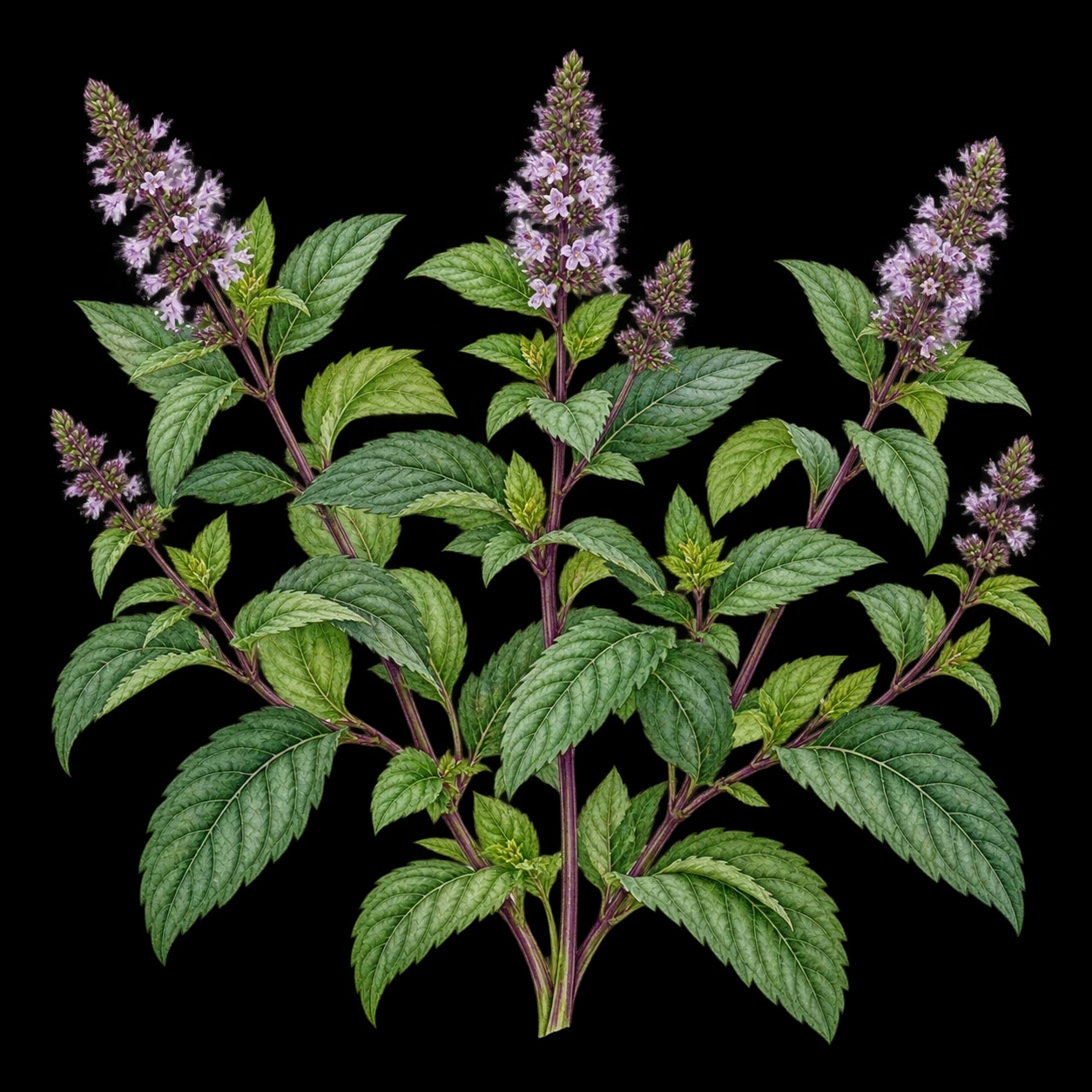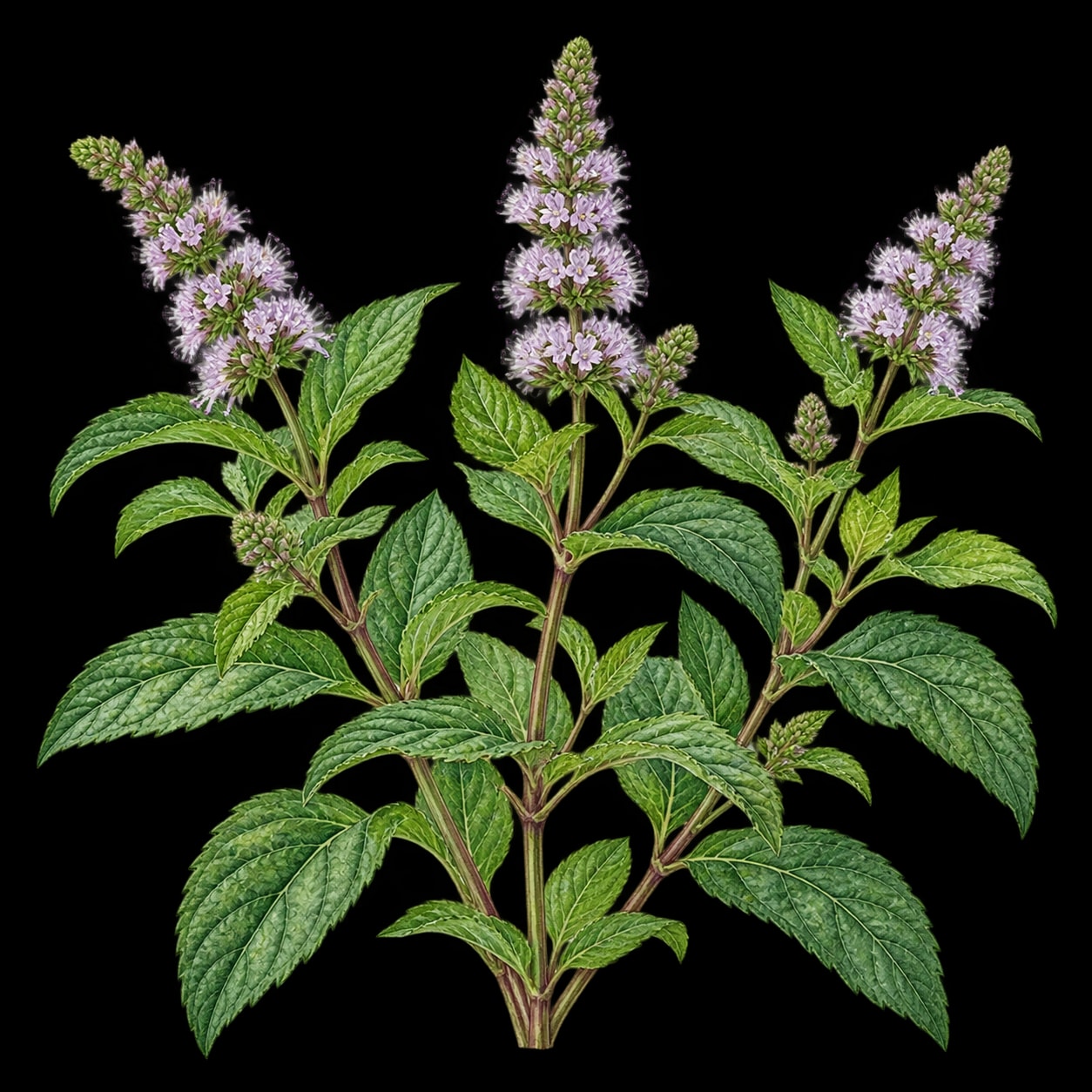
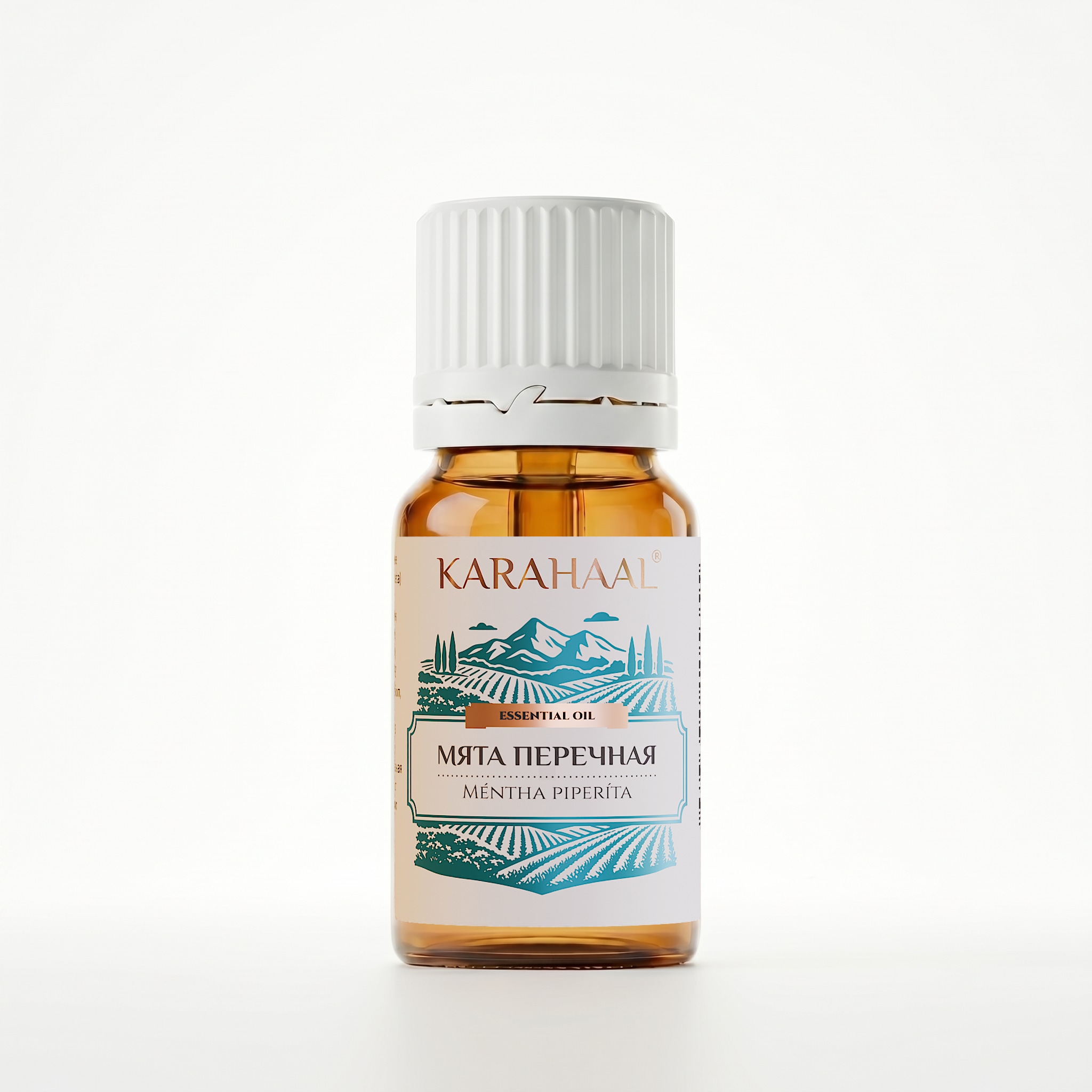
Peppermint: tension headaches, spasms, and localized cooling
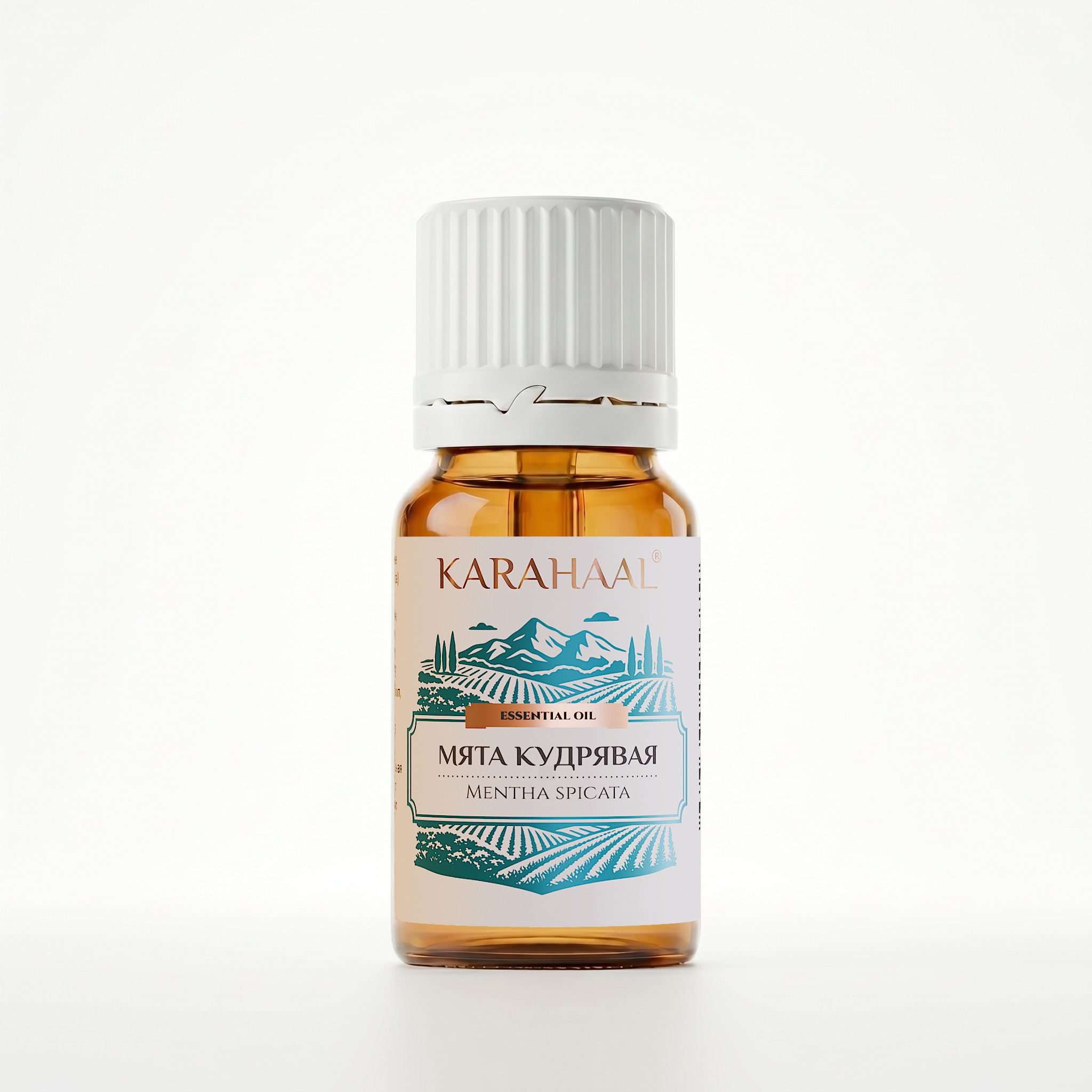
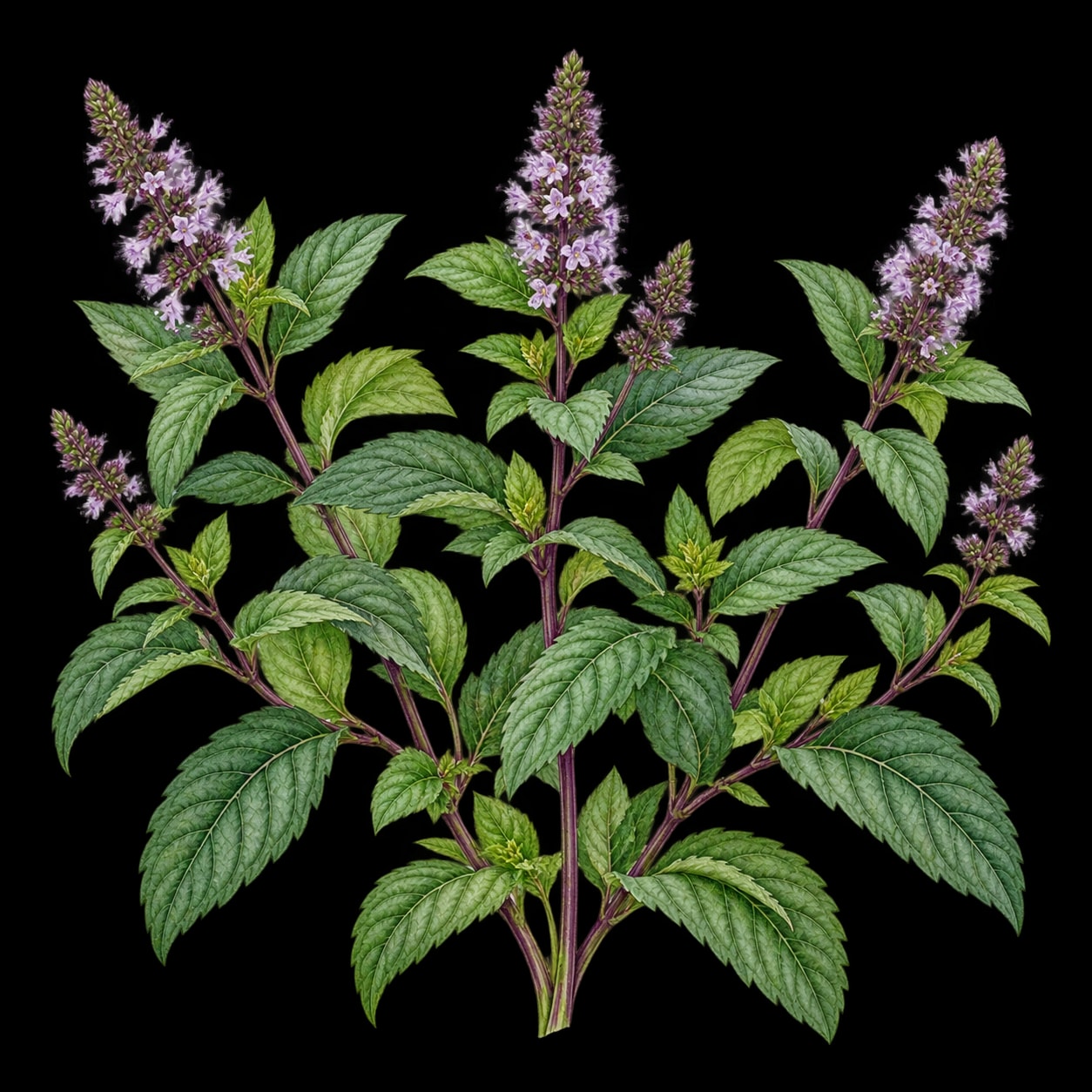
Peppermint essential oil is one of the most extensively studied oils for local relief of discomfort. It is chosen for refreshing massage blends, alertness, and aromatherapy support during feelings of nausea. Its fresh menthol profile quickly emerges and requires only a moderate amount.
Tension headache
In a randomized study with 41 patients, 164 episodes of headaches were studied. An external preparation containing 10% peppermint oil in ethanol reduced pain intensity compared to a placebo; effects were observed as early as 15 minutes. This is a specific clinical result of a particular formulation. The study is not a recommendation for self-preparation of an alcoholic topical remedy for temples: eyes and sensitive skin require special caution. [1]
Gastrointestinal spasms
The European monograph considers mint-based preparations in relation to minor gastrointestinal spasms, bloating, and pain, including irritable bowel syndrome. For internal use, specifically formulated products should be used. It is not recommended to add retail concentrate to water or to fill capsules with it yourself. [2]
Muscle comfort
The menthol cooling makes the oil convenient for local massage after physical exertion. A small amount of mint can be combined with lavender in a carrier oil: lavender softens the aroma, while mint provides a clear fresh accent. The sensation should remain pleasant, without burning or excessive cold.
Alertness and aromatic support
Peppermint oil is suitable for short daytime blends with lemon or orange. When experiencing nausea, first assess a weak scent: individual reaction is more important than the desire to make the aroma stronger. During reflux and bile duct disorders, it is especially important not to generalize traditional gastrointestinal indications to self-administered oil intake.
Blending suggestions
Orange adds softness and lemon adds brightness. Lavender rounds out the cooling note, rosemary enhances the daytime freshness, and cypress makes the blend drier.
Research in detail
External remedy for tension headaches
In a cross-over study involving 41 adult participants, 164 episodes of tension headaches were evaluated. A specially formulated alcoholic peppermint oil preparation reduced pain intensity compared to a placebo; comparisons were also made with paracetamol. Only externally applied forms specifically intended for self-use with instructions should be used for personal application. [1]
How to use
Examples for adults. Quantities are given for the entire bottle; for one application, take a small portion of the mixture. These are aromatic therapy routines, not medicinal dosages.
- Simple massage blend: 1 drop of peppermint essential oil per 10 ml of jojoba oil. Mix in a clean bottle. Apply a small amount to shoulders; do not apply to face or temples.
- Fresh daytime blend: 1 drop of peppermint oil + 1 drop of true lavender essential oil in 20 ml of jojoba. Mix; use a small amount to gently massage the forearms or shoulders.
- Scenting without a diffuser: 1 drop on a paper towel or aromastone. Hold at a comfortable distance from the face, without touching the skin with the oil; several ordinary breaths are sufficient to assess the scent.
- “Minty Citrus” blend: peppermint oil — 1 drop; sweet orange oil — 1 drop; jojoba — 20 ml. Combine in a clean, dry bottle and mix. Use a small amount of the prepared blend to gently massage an adult’s shoulders or forearms, away from the face.
Precautions
Dilute in a carrier oil before applying to skin. Do not ingest or apply to mucous membranes; stop use if irritation occurs. Do not apply mint-cineole or camphor blends close to the face or nose; tolerance of the aroma is particularly important for sensitive airways.
What to combine with this care
- “Provence” lavender essential oil — Aromatic combination
- Essential oil of sweet orange — Aromatic combination
- Essential oil of Cypress — Aromatic combination
- Jojoba oil — Base for the oil recipes above