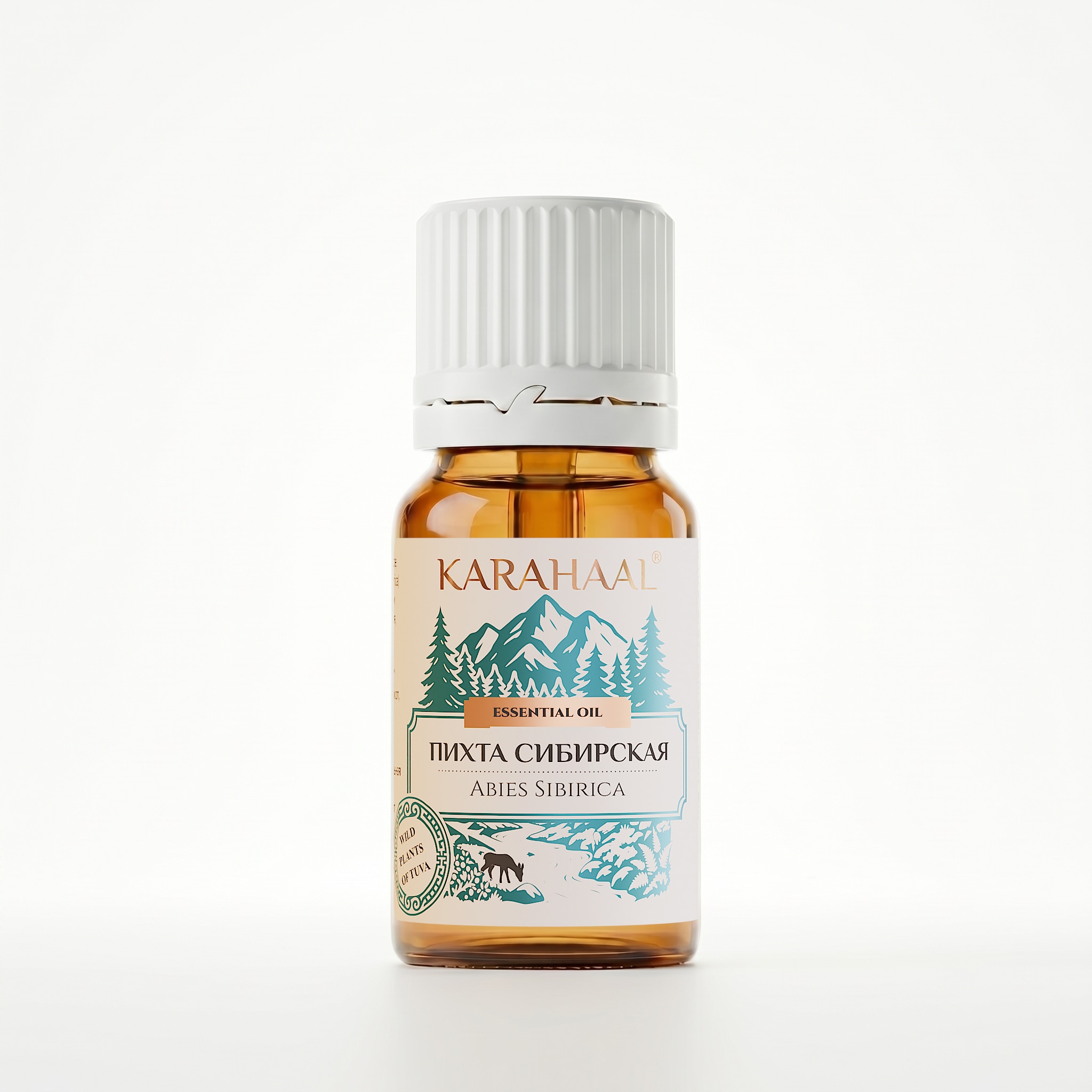
Siberian fir: breathing, muscles, and recovery from stress
Siberian fir is one of the main coniferous essential oils in respiratory and musculoskeletal therapy. It is used during cold season, in rubs for muscle tension, and in blends for relaxation after mental exertion. The properties of fir are linked to its rich volatile fraction: bornyl acetate, camphene, pinenes, and other terpenes. The oil has its own research history — from microbiological experiments to studies on human condition after screen work.
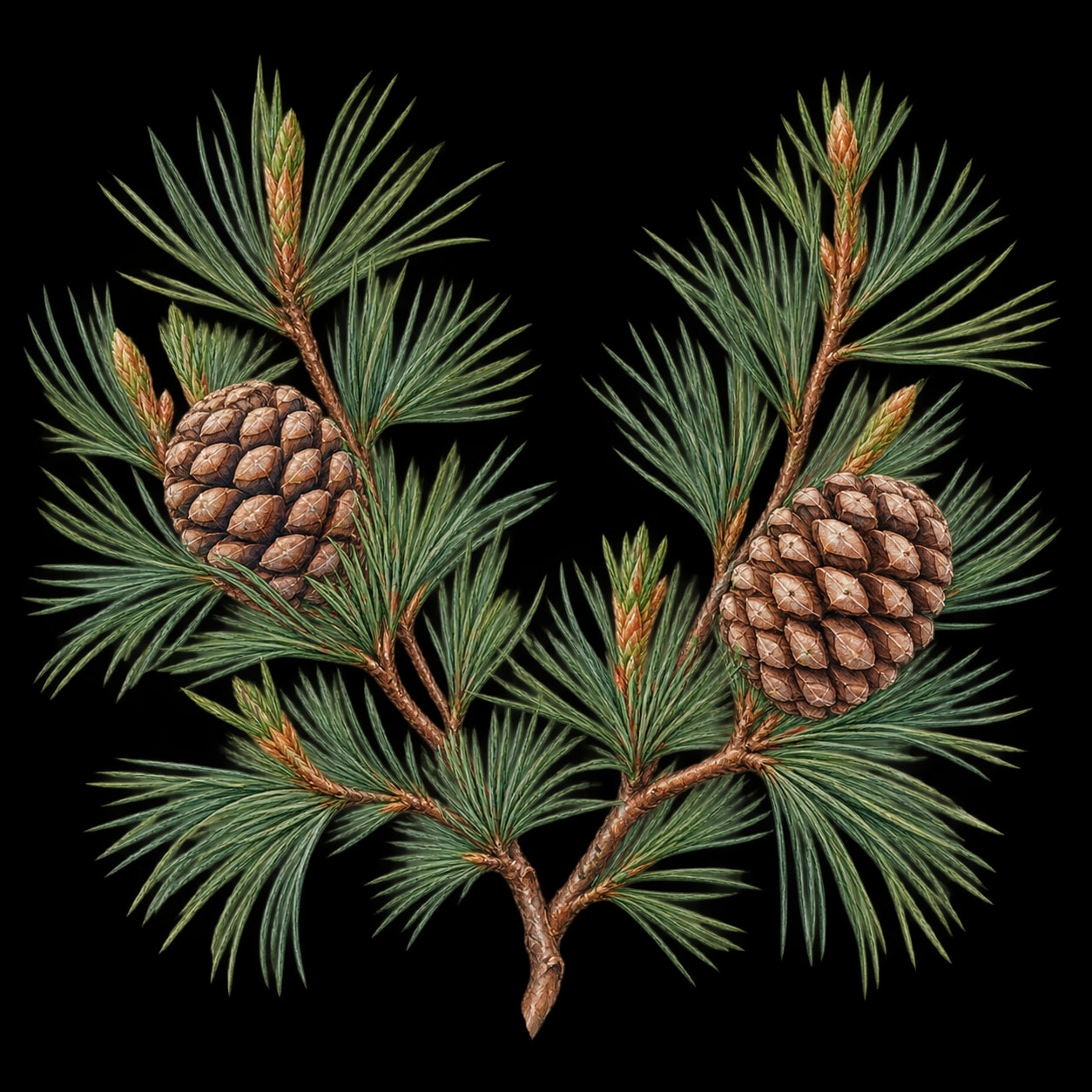
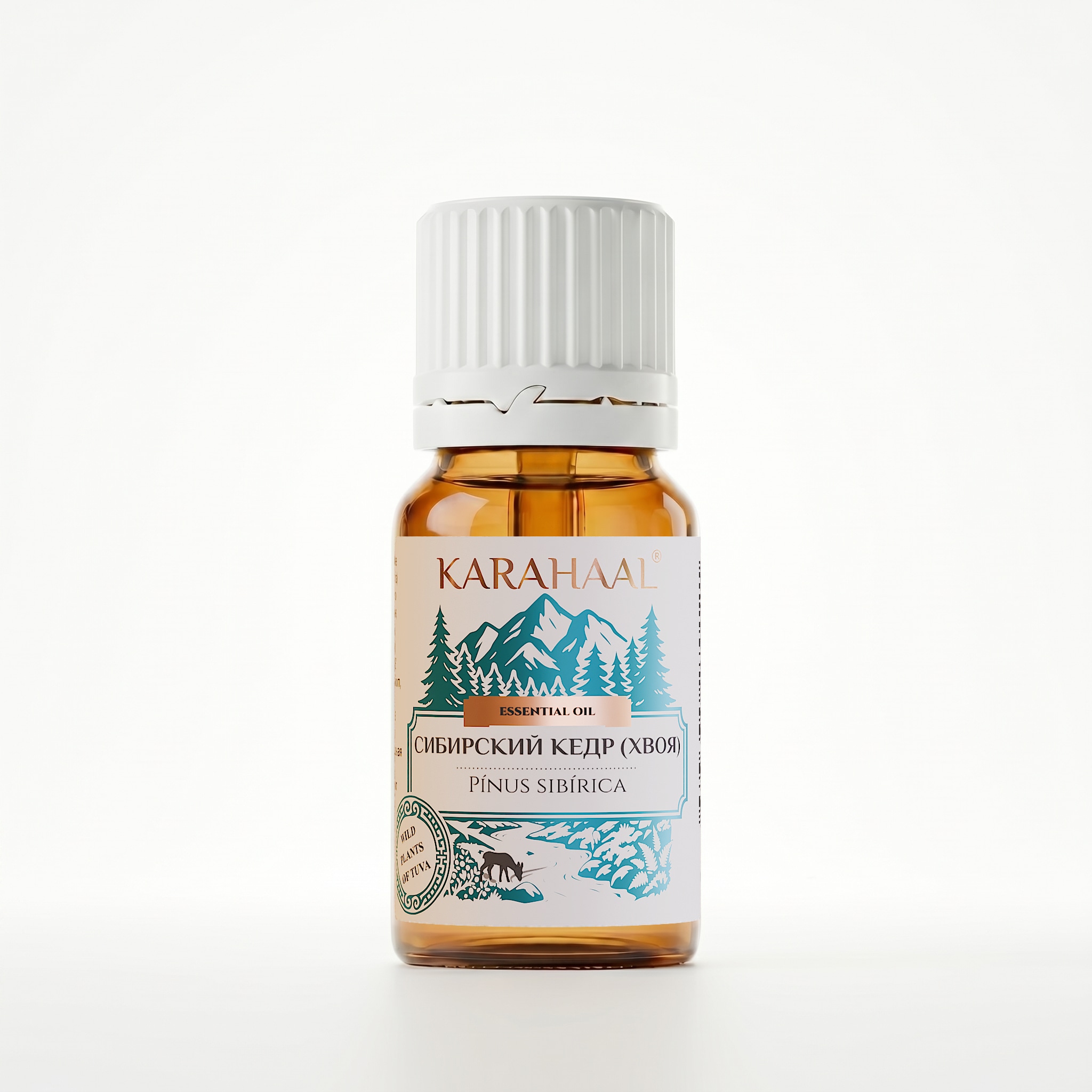
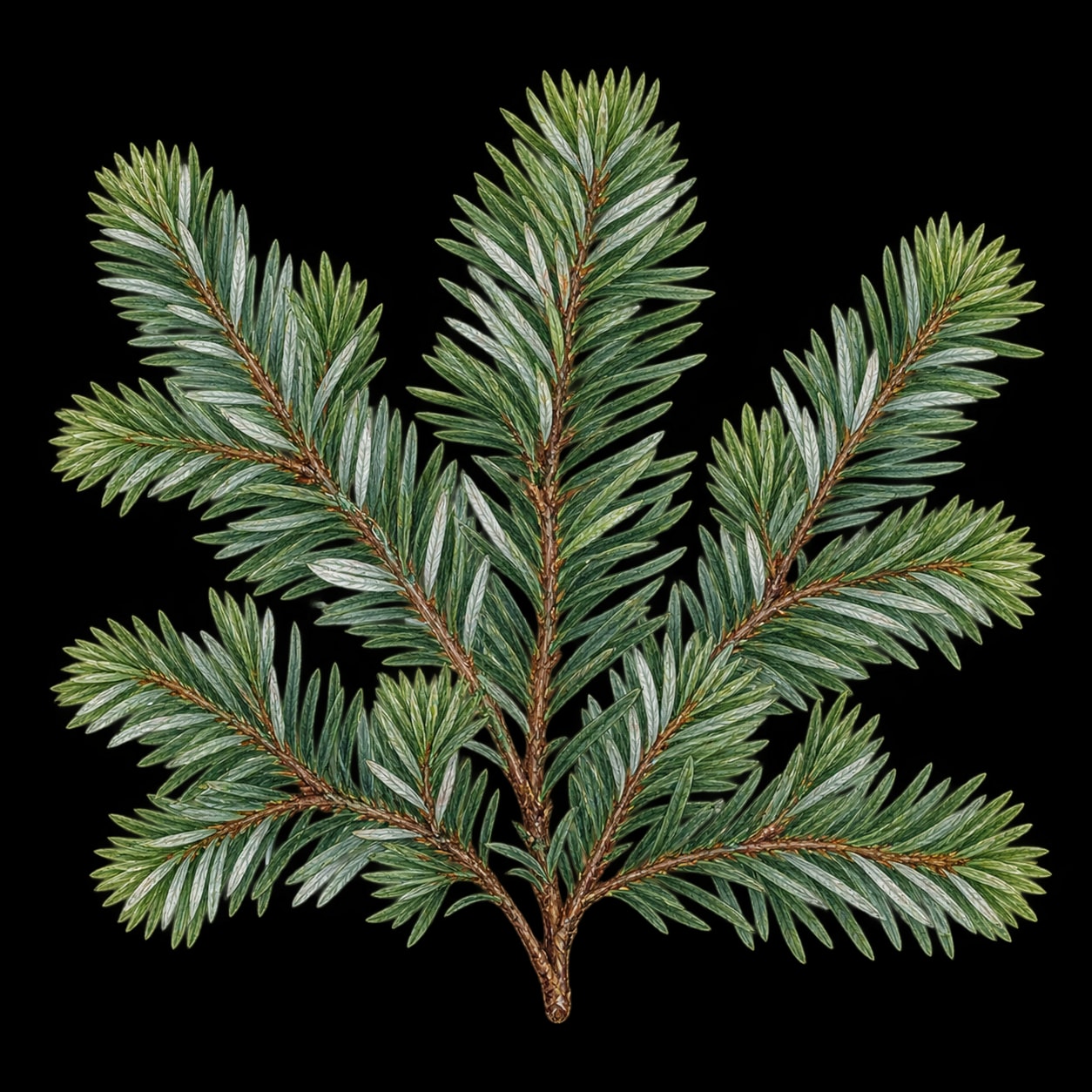
We produce KARAHAAL fir oil by steam-distilling the needle-bearing sprigs of Abies sibirica ourselves. It is the aromatic fraction of the needles and young twigs, distinct from both conifer bath extract and raw resin. Water, steam and plant material yield a concentrated oil with a characteristic forest scent and resinous, balsamic notes.
Therapeutic properties and applications
Respiratory system: cold, nasal congestion, cough
Aromatherapy literature describes fir oil as expectorant, mucolytic and antispasmodic. It is included in supportive care for a runny or blocked nose and cough with hard-to-clear mucus, through cold aroma inhalation and diluted chest or back rubs. These uses also appear in the KARAHAAL monograph. The coniferous scent particularly suits those who prefer balsamic freshness to a pronounced menthol chill. [1]
In the laboratory study by Chen and colleagues, bornyl acetate reduced the production of pro-inflammatory cytokines and the intensity of inflammatory response in an experimental model. The authors linked the results to regulation of NF-κB and MAPK — intracellular signaling pathways that transmit inflammatory signals. The study reveals the mechanism of action of one of the characteristic components of fir. [2]
Muscles and joints: tension, pain, stiffness
In aromatherapy practice, fir is used in analgesic and relaxing massage blends for muscle tension, spasms, feelings of stiffness, and discomfort after physical exertion. Guidelines also describe its supportive use for rheumatic and joint complaints. For home care, the most intuitive format is a mixture with a carrier oil for the shoulders, lower back, or calves. [1]
Here it is useful to combine fir with lavender (narrow-leafed): this results in a less sharp aroma and a composition suitable for a calm massage of tense areas. Fir with Atlas cedar provides a drier, woodsy variant, while with marjoram it gives a warm herbaceous-coniferous note. In cases of acute injury, hot swollen joints, or severe pain, the area should not be rubbed until the cause is determined.
Antimicrobial activity
Siberian fir essential oil exhibits antimicrobial activity, demonstrated in laboratory studies. Efremov and colleagues investigated the essential oils and individual fractions of Siberian fir and Siberian pine. In the experiments, growth inhibition of several tested microorganisms was observed; the intensity and nature of the effect depended on the strain and composition of the fraction. Among the tested organisms were Staphylococcus aureus, Escherichia coli, and Candida albicans. Pseudomonas aeruginosa proved to be resistant under the conditions of this study. [3]
Fir is studied in the development of cleansing, deodorizing, and cosmetic formulations. In household skincare, essential oil is used in diluted form, and for aromatization, a comfortable intensity of fresh coniferous aroma is selected.
Nervous system: relaxation after mental workload
Fir is interesting due to the combination of a fresh, freshly harvested aroma with a relaxing effect after intense work. Matsubara and co-authors studied the essential oil Abies sibirica both during and after screen-based tasks. During the recovery period, participants inhaling the aroma showed increased intervals between heartbeats and theta activity on EEG. The authors interpreted these changes as a reduction in excitation levels after workload. No such effect was observed during the actual task execution. [4]
A separate study by the same research group focused on bornyl acetate: at low exposure, signs of vegetative relaxation were observed after screen-based work without deterioration in task performance. For fir, this represents a meaningful connection between chemical composition and the theme of recovery from stress. [5]
In aromatherapeutic practice, fir scent is selected during nervous overexertion, feelings of exhaustion, and difficulty shifting from work to rest. The coniferous freshness can maintain a sense of clarity and openness, while the balsamic component makes the composition less sharp. With orange it is perceived as lighter and warmer, with lavender — calmer, and with vetiver — deeper and more lasting. These emotional images help in selecting a pleasant composition; they do not require assigning the same effect to one scent for all people.
Antioxidant and anti-hypoxic research directions
For whole fir oil and its fractions, interactions with free radicals were studied in a chemical test. In a separate experimental study, Gulyaev and co-authors evaluated the effect of fractions on models of oxygen deficiency. Results depended on their composition. The studies reveal various pharmacological potentials of fir. [3] [6]
How we obtain fir essential oil
KARAHAAL fir oil is distilled by us. We source the plant material in Tuva, using needle-bearing sprigs, mainly from logging sites. Freshness and distillation time matter to us: we choose the duration carefully with the composition of the resulting oil in mind.
We particularly value winter-harvested material. In our experience, the oil made from it develops its aroma more fully. This is one of the characteristics of fir that we have observed through our own distilling work.
Quality is assessed organoleptically and visually: attention is paid to the aroma and appearance of the oil. The component composition is evaluated by chromatogram.
Blending suggestions
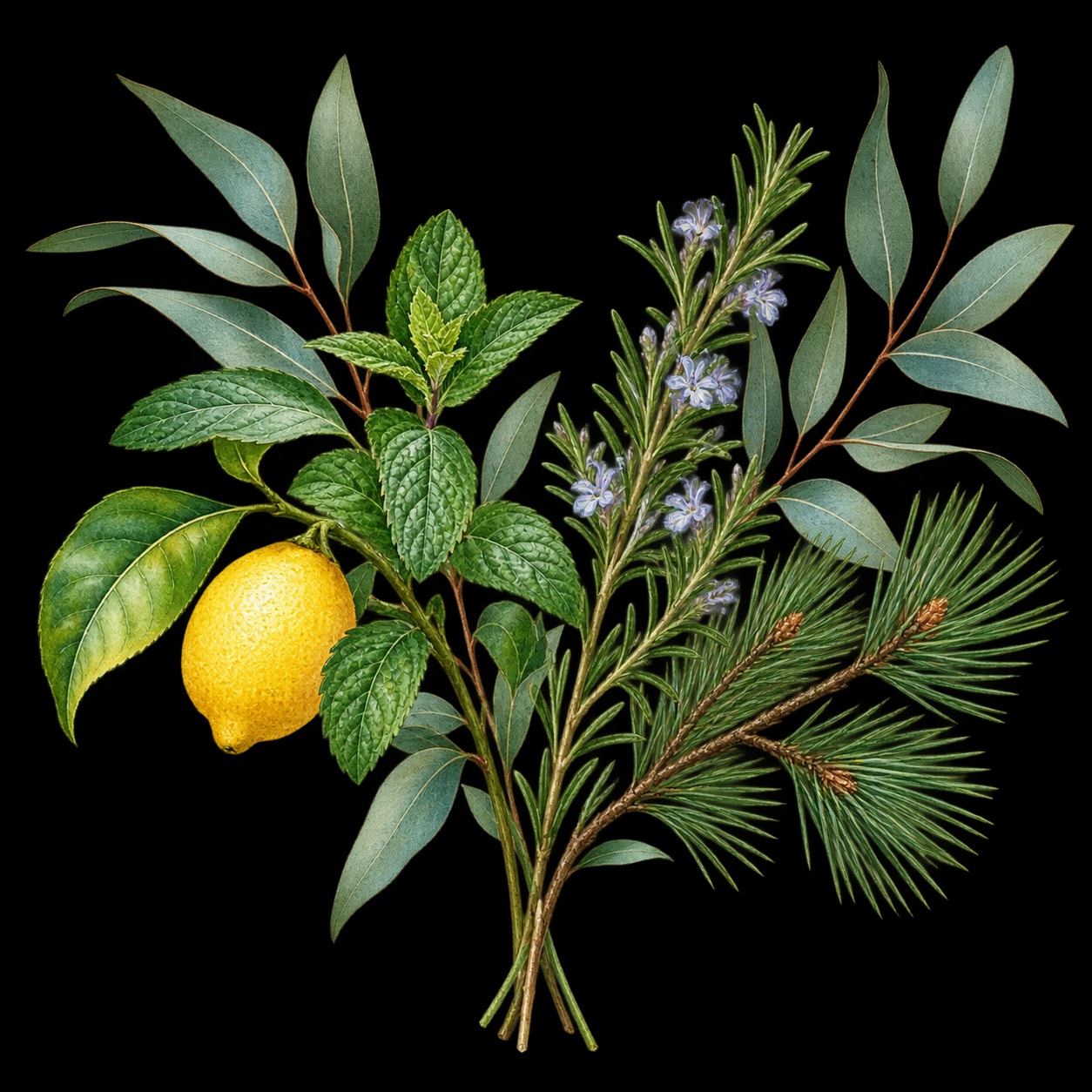
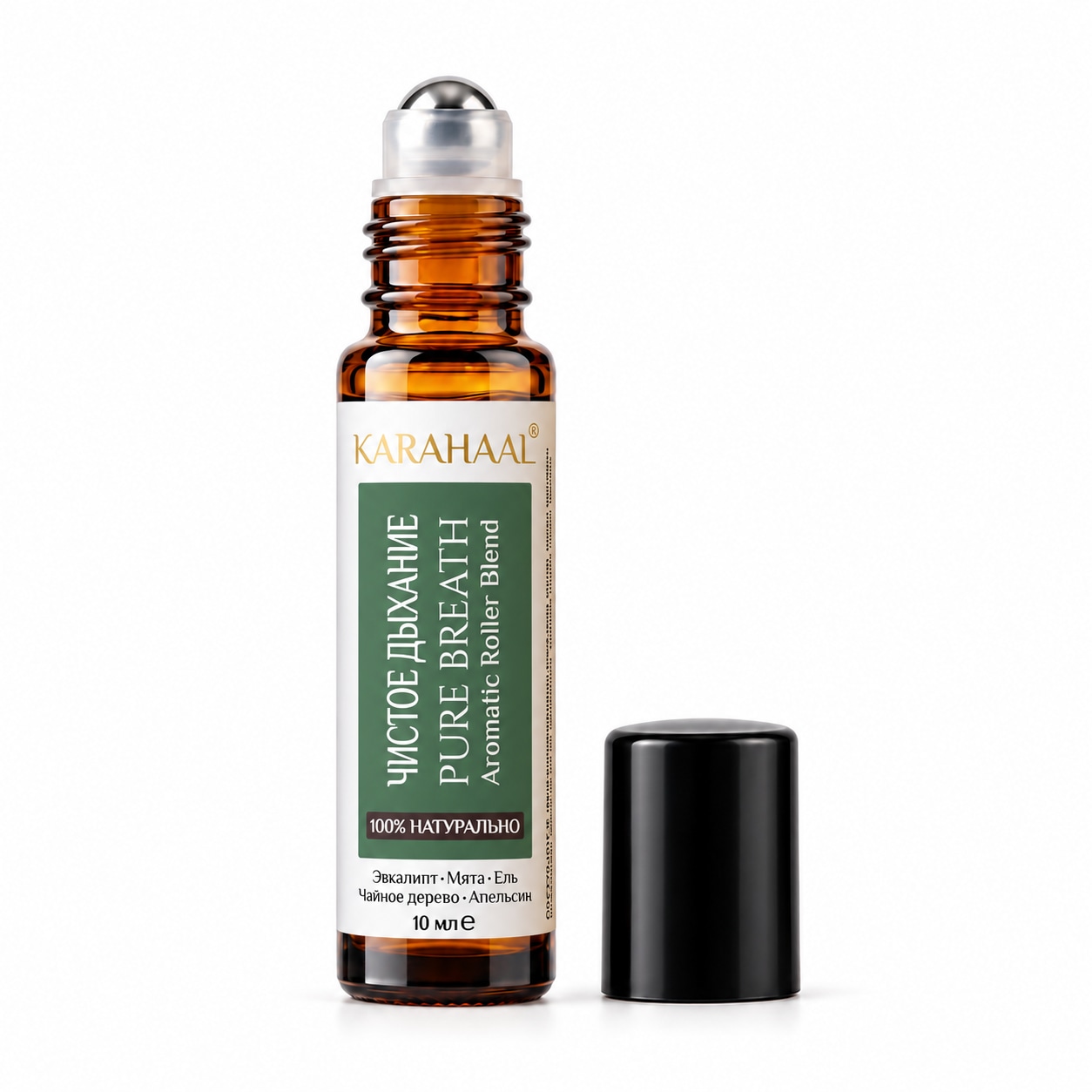
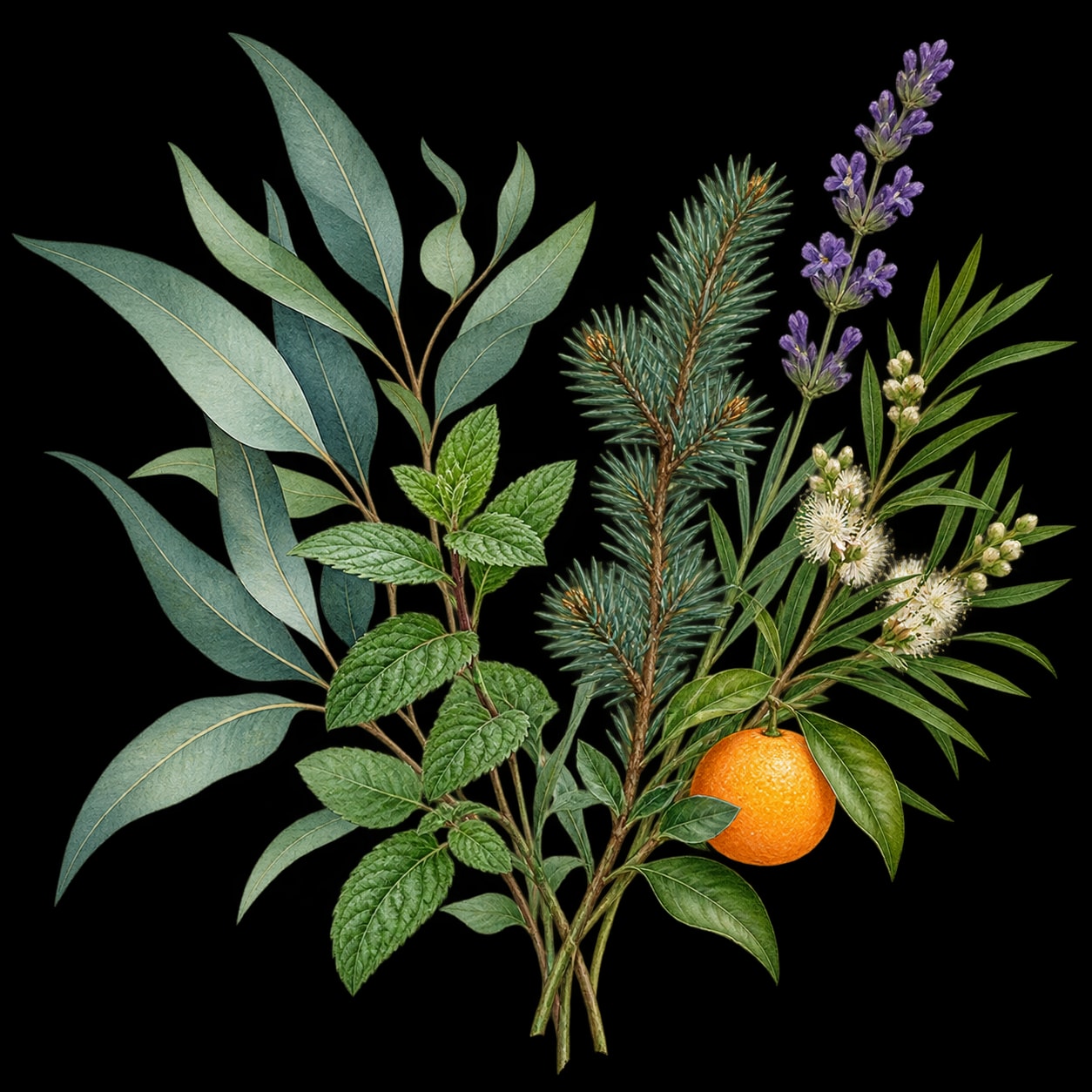
Narrow-leafed lavender softens the coniferous sharpness and is suitable for an evening massage blend. Sweet orange adds a warm fruity note; lemon makes the beginning brighter and drier. Myrtle continues the fresh herbaceous-balsamic theme in the aromas for breathing. Cypress enhances the green woody character, Atlas cedar makes the base denser. Vetiver is introduced gradually: its earthy-rooted scent quickly changes the character of the light coniferous blend.
How to use
Authoritative examples for adults based on aromatherapeutic application methods and recommendations for dilution. The composition is indicated for the entire base volume; for one application, a small portion of the final mixture is taken. [7]
- For tense shoulders and back: Siberian fir — 2 drops; lavender (narrow-leafed) — 1 drop; jojoba oil — 15 ml. Mix in a bottle. Apply a small amount of the prepared mixture to intact skin on shoulders, upper back, or calves and gently massage. This yields approximately 1% essential oils; accuracy depends on drop size.
- Gentle rubbing of the back during cold season: Siberian fir essential oil — 1 drop; jojoba or almond oil — 10 ml. Mix and apply thinly to a small area on the upper part of the back. This aromatherapy care is suitable for adults who enjoy a coniferous scent; the mixture is not applied under the nose, to mucous membranes, or to the face.
- Evening blend "Fir and Orange": Siberian fir — 1 drop; sweet orange — 1 drop; jojoba oil — 10 ml. Mix in a bottle. Use a small amount for massage on forearms or shoulders after a long day. Orange makes the coniferous aroma warmer and softer.
- Inhale the aroma cold: Apply 1 drop of fir to an aromatherapy stone or a paper towel. Position it at a distance where the scent remains mild; breathe normally, without deep or forceful inhalations. Remove the aroma source when it is no longer needed. For a diffuser, start with 1–2 drops, taking into account the instructions and the room size.
Precautions
For external use only after dilution; do not ingest, put drops in the nose or apply to mucous membranes. Do not use to treat a fresh burn or open wound. For asthma, a tendency to bronchospasm or reactions to conifer aromas, inhalation requires individual consultation. The blends given are intended for adults; use for children or during pregnancy is selected separately. Keep the bottle tightly closed and away from light and heat: oxidised conifer oil increases the risk of skin sensitisation. Stop use if burning, irritation or coughing occurs.
What to combine with this care
- “Provence” lavender essential oil — Aromatic combination
- Essential oil of sweet orange — Aromatic combination
- Vetiver essential oil — Aromatic combination
- Jojoba oil — Base for the oil recipes above
Sources
- KARAHAAL. Monograph Abies sibirica, catalog 2023, p. 33–35. Traditional aromatherapeutic use and description of the raw material.
- Chen N. et al. Inhibition of lung inflammatory responses by bornyl acetate is correlated with regulation of myeloperoxidase activity. 2014.
- Efremov A.A., Zykova I.D. and co-authors. Antimicrobial and antioxidant activity of individual fractions Pinus sibirica and Abies sibirica. Plant Raw Material Chemistry. 2020;4:203–210.
- Matsubara E. et al. The essential oil of Abies sibirica reduces arousal levels after visual display terminal work. Flavour and Fragrance Journal. 2011;26:204–210.
- Bornyl acetate inhalation after display work, 2011
- Gulyaev D.K. and co-authors. Antihypoxic activity of fractions of Siberian fir essential oil. Plant Raw Materials Chemistry. 2020;4:273–280.
- Plant Therapy. Fir Needle Essential Oil: Abies sibirica, description of application and dilution methods.
- Yang L. et al. Bornyl acetate suppresses ox-LDL-induced attachment of THP-1 monocytes to endothelial cells. 2018.