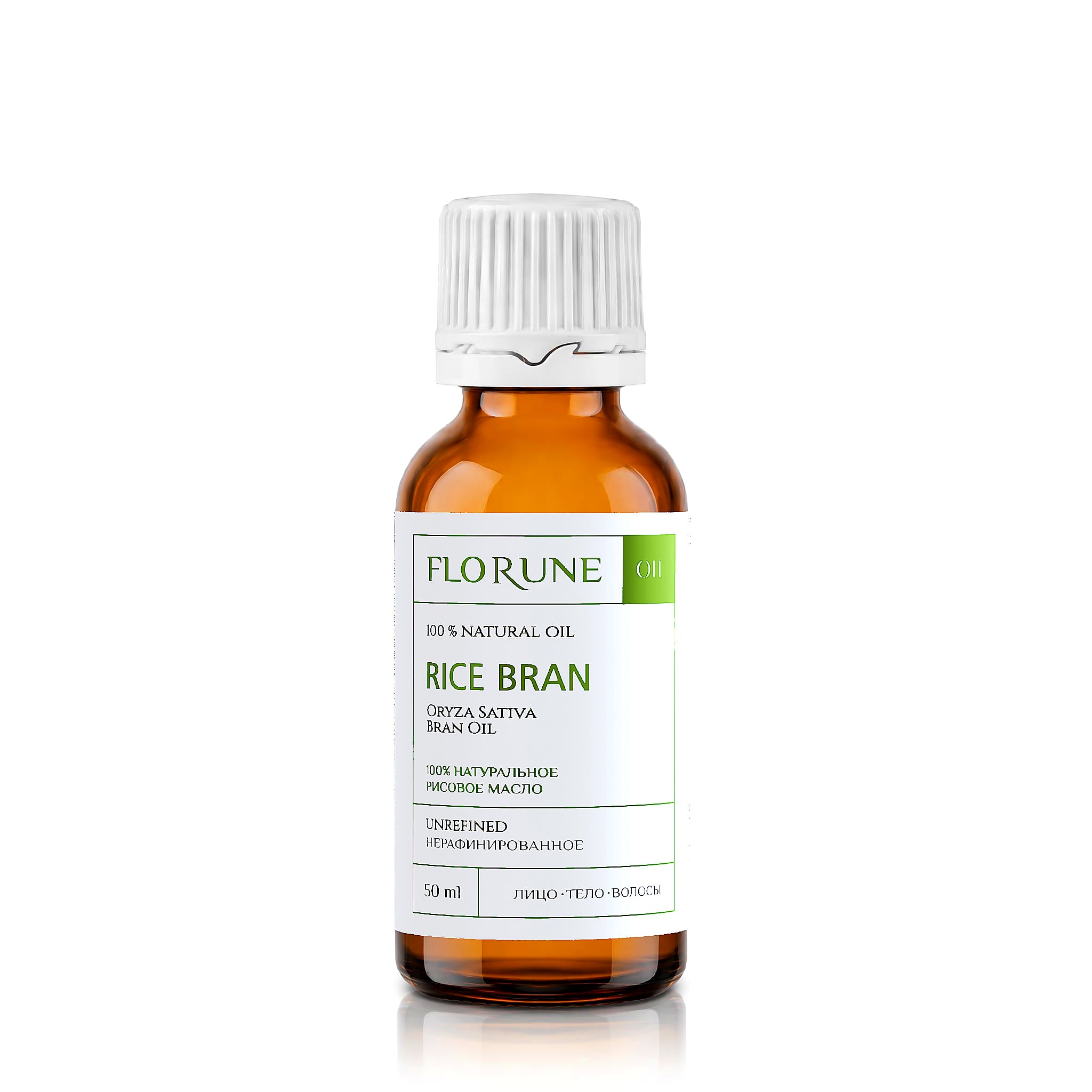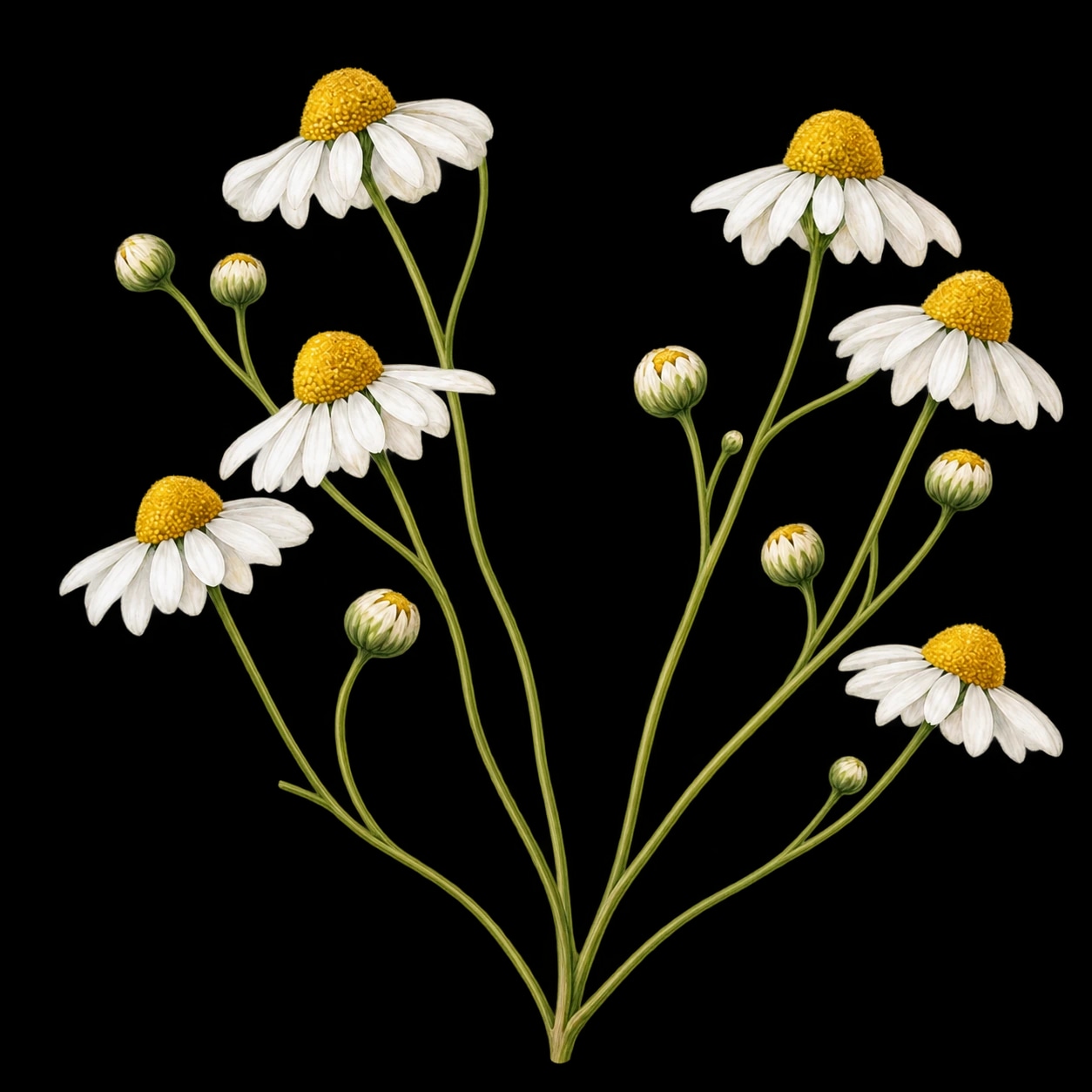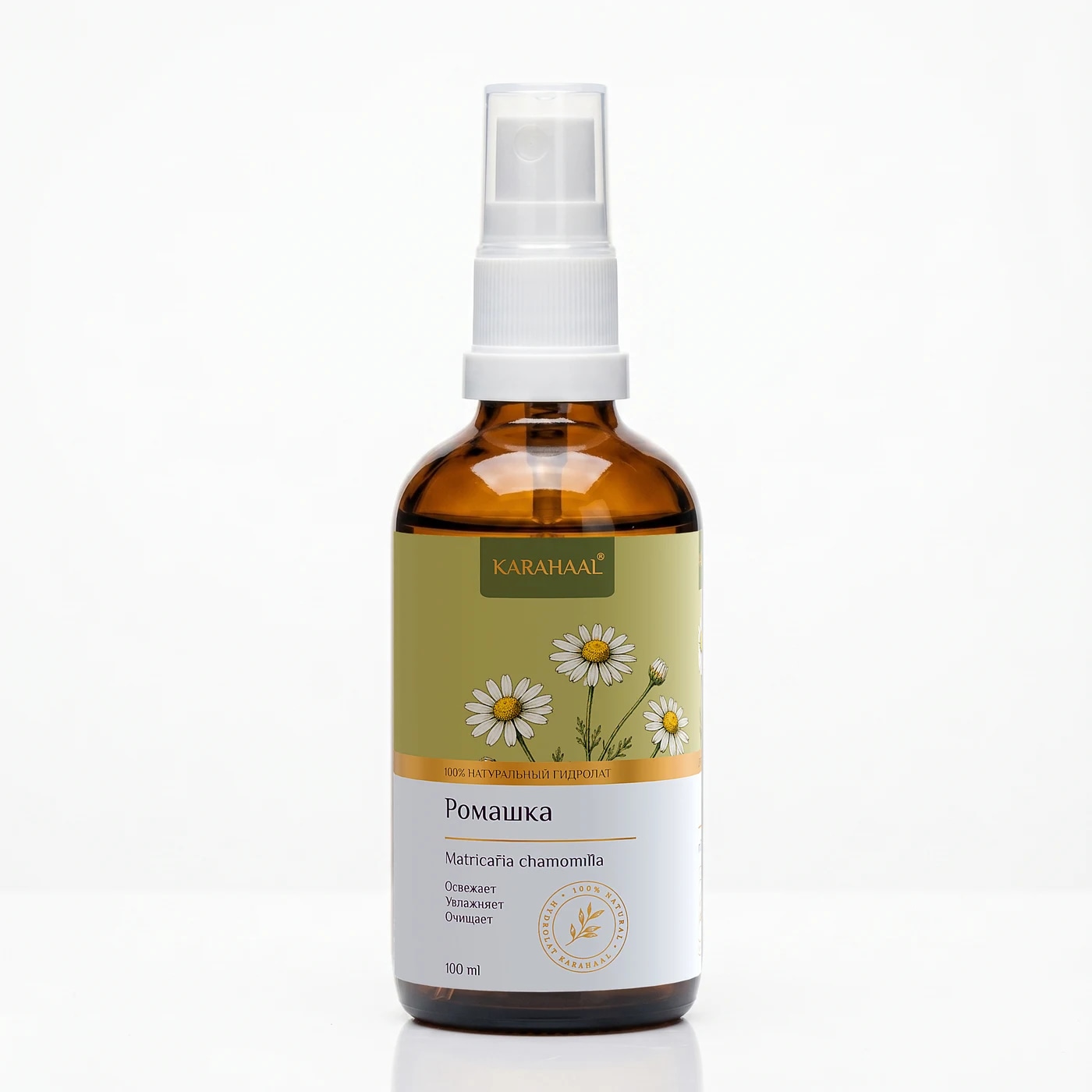
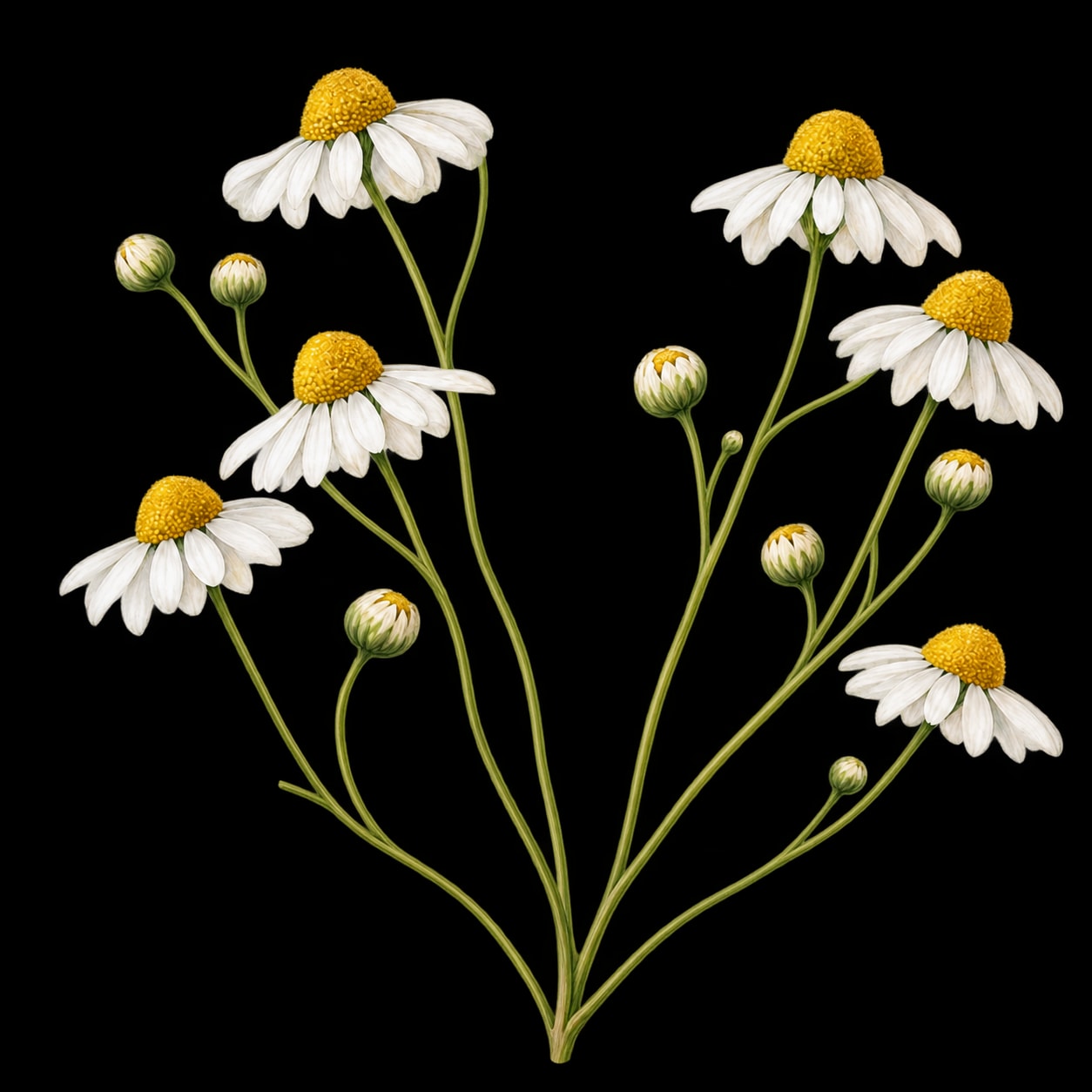
Chamomile: skin inflammation, itching, and gentle healing
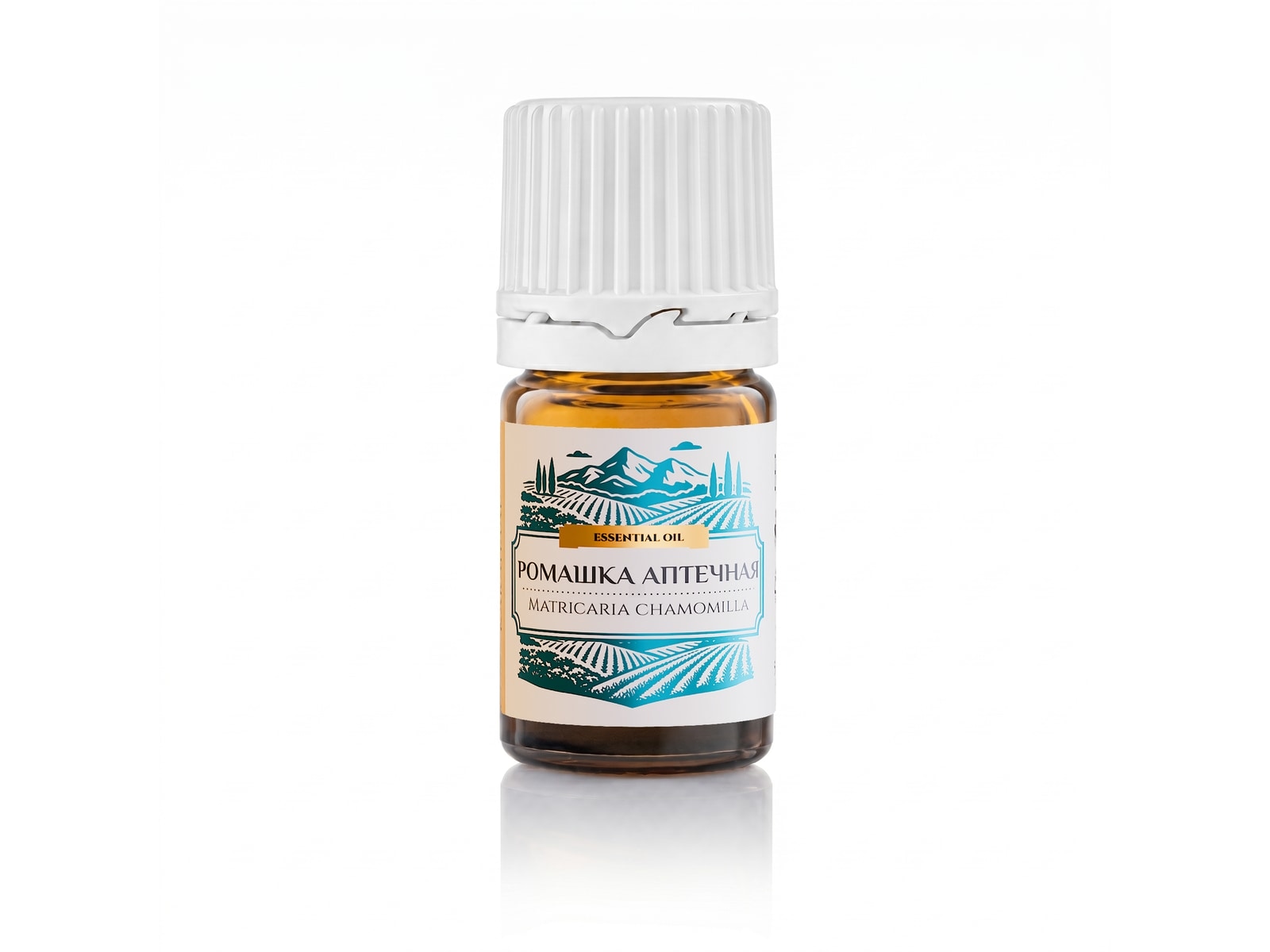
Chamomile, or German chamomile, is selected for skin care and calming restorative blends. Its deep herbaceous-floral profile differs from that of the lighter Roman chamomile; the chemistry of these oils also varies.
Anti-inflammatory direction
For α-bisabolol, a reduction in pro-inflammatory signals in cells and the intensity of experimental skin inflammation has been shown. In another study, chamazulene suppressed the production of leukotriene B4 — a mediator involved in the recruitment of inflammatory cells. These are two specific molecular bases for the therapeutic interest in chamomile profiles. [1] [2]
Irritation, itching, and recovery care
In aromatherapy practice, German chamomile is used in blends for skin prone to irritation, dryness, and itching. A suitable carrier and a small amount of oil are more important here than a strong aroma. The concentrate is not applied to fresh wounds, burns, or highly inflamed areas.
When allergic to plants of the Asteraceae family, chamomile should be evaluated with particular care. Its natural origin and anti-inflammatory potential do not exclude an individual contact reaction.
Spasms and muscle comfort
Chamomile traditionally belongs to relaxing blends used for muscle and digestive tension. For adult home care, this is a gentle massage of a small area with a diluted composition; new or severe pain requires investigation of the cause.
Emotional sphere
A warm herbal scent is suitable for calm relaxation after irritation and overload. Lavender makes it easier, mandarin makes it softer and warmer, sandalwood deepens it. Helichrysum supports the dry herbal direction of the recovery blend, geranium adds a floral center.
Blending suggestions
Lavender lightens the deep herbaceous note, mandarin adds warmth. Geranium reveals the floral heart, sandal extends the soft base, helichrysum enhances the dry herbaceous character.
Research in detail
Bisabolol in models of skin inflammation
In laboratory studies of individual α-bisabolol, a reduction in inflammatory signals, swelling, and the intensity of skin reactions was observed. The study reveals the properties of this component and its potential for cosmetic and topical formulations. [1]
Chamazulene and leukotriene B4
In experiments with neutrophilic granulocytes, chamazulene suppressed the production of leukotriene B4 — one of the inflammatory mediators. Researchers compared it with matricin and obtained different results. This demonstrates how a specific molecule and the transformations during raw material processing are linked to the research potential of chamomile. [2]
How to use
Examples for adults. Quantities are given for the entire bottle; for one application, take a small portion of the mixture. These are aromatic therapy routines, not medicinal dosages.
- Simple blend for local massage: 1 drop of German chamomile oil in 10 ml of jojoba. Mix in a clean bottle. Apply a small amount of the prepared blend to the shoulders or upper back and spread with gentle massage movements.
- Gentle evening blend: 1 drop of German chamomile oil + 1 drop of true lavender essential oil in 20 ml of jojoba. Mix; use a small amount to gently massage the forearms or shoulders.
- Scenting without a diffuser: 1 drop on a paper towel or aromastone. Hold at a comfortable distance from the face, without touching the skin with the oil; several ordinary breaths are sufficient to assess the scent.
- “Chamomile Evening” blend: German chamomile oil — 1 drop; sweet orange oil — 1 drop; jojoba — 20 ml. Combine in a clean, dry bottle and mix. Use a small amount of the prepared blend to gently massage an adult’s shoulders or forearms, away from the face.
Precautions
Dilute in a carrier oil before applying to skin. Do not ingest or apply to mucous membranes; stop use if irritation occurs. For German chamomile, also consider possible drug interactions and allergies to the daisy family.
What to combine with this care
- “Provence” lavender essential oil — Aromatic combination
- Mandarin essential oil — Aromatic combination
- White sandalwood essential oil BIO — Aromatic combination
- Jojoba oil — Base for the oil recipes above
- Essential oil of sweet orange