
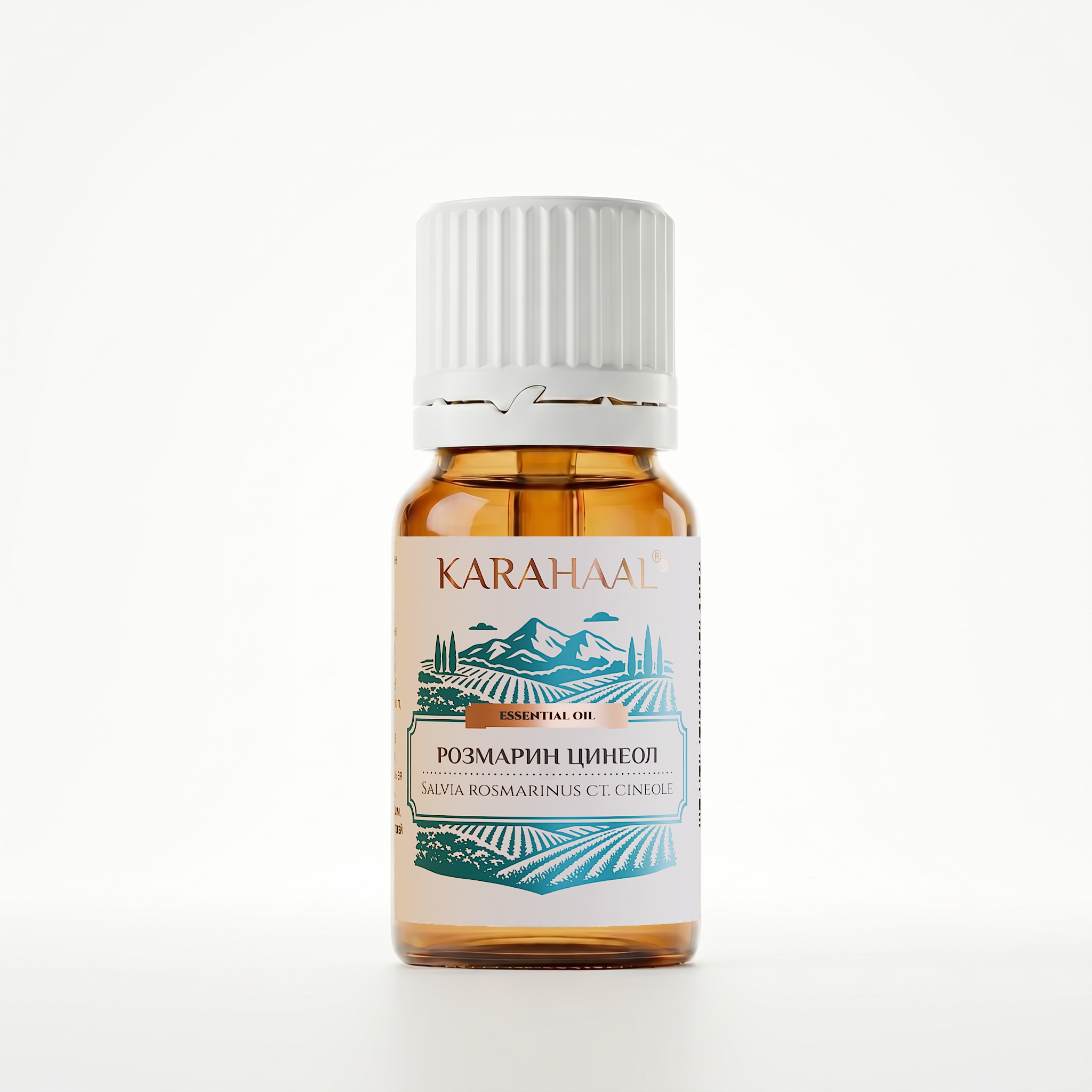
Cineole rosemary: attention, muscles and scalp
Cineole rosemary is selected for an active day and recovery after exertion. Its aroma is fresh, herbaceous-coniferous, with distinct cineole and camphor notes. It fits well into compositions for work-related focus, shoulder massage, and scalp care.
Memory and alertness: studies in humans
In a study with 144 volunteers, the aroma of rosemary improved certain memory quality indicators and maintained subjective alertness. At the same time, the speed of some responses deteriorated. This is a comprehensive picture of the effect: the oil may influence different aspects of mental performance in a non-uniform manner. [1]
For daytime blends, rosemary is combined with lemon or cypress. Intensity should remain comfortable; a strong scent does not mean more productive work.
Muscle and joint discomfort
The European evaluation report considers traditional topical use of rosemary essential oil for mild muscle and joint pain and in relation to peripheral circulation. In home aromatherapy, this area can be conveniently implemented through a diluted massage mixture for tired shoulders, back, or legs. [2]
Skin of the scalp and hair growth
In a study with 100 participants suffering from androgenetic alopecia, a special rosemary-based preparation was compared to minoxidil 2%. After six months, hair count increased in both groups; after three months, no significant results were observed. When experiencing hair loss, it is important to determine the cause with a dermatologist. Essential oil concentrate is not applied directly to the scalp. [3]
Respiratory freshness
Cineole profile gives a feeling of clear, fresh air and is suitable for seasonal aromatic blends for adults. Sharp inhalations are excluded in cases of bronchospasm. For evening massage, lavender softens the active character of rosemary; for daytime care, cedar and black pepper create a drier base.
Blending suggestions
Lemon makes the aroma lighter and brighter, lavender softens the camphoraceous notes. Cypress and cedar emphasize the dry coniferous aspect; black pepper adds a warm spicy accent.
Research in detail
Cognitive tests: 144 volunteers
In a 2003 study, participants performed tasks with rosemary, lavender, or no scent. In the rosemary group, certain memory quality indicators improved, while some responses became slower. Participants also rated alertness and mood. Different aspects of mental performance reacted differently to the aroma. [1]
Skin of the scalp: six-month comparative trial
For six months, 100 participants with androgenetic alopecia used a special rosemary-based topical preparation or minoxidil 2%. After three months, no significant increase in hair count was observed, but after six months, an increase was noted in both groups. Ready-made topical preparations with a defined method of application were studied. [3]
How to use
Examples for adults. Quantities are given for the entire bottle; for one application, take a small portion of the mixture. These are aromatic therapy routines, not medicinal dosages.
- Simple blend for local massage: 1 drop of rosemary oil, cineole chemotype in 10 ml of jojoba. Mix in a clean bottle. Apply a small amount of the prepared blend to the shoulders or upper back and spread with gentle massage movements.
- Fresh daytime blend: 1 drop of rosemary oil, cineole chemotype + 1 drop of true lavender essential oil in 20 ml of jojoba. Mix; use a small amount to gently massage the forearms or shoulders.
- Scenting without a diffuser: 1 drop on a paper towel or aromastone. Hold at a comfortable distance from the face, without touching the skin with the oil; several ordinary breaths are sufficient to assess the scent.
- “Daytime Forest” blend: rosemary oil, cineole chemotype — 1 drop; Scots pine oil — 1 drop; jojoba — 20 ml. Combine in a clean, dry bottle and mix. Use a small amount of the prepared blend to gently massage an adult’s shoulders or forearms, away from the face.
Precautions
Dilute in a carrier oil before applying to skin. Do not ingest or apply to mucous membranes; stop use if irritation occurs. Do not apply mint-cineole or camphor blends close to the face or nose; tolerance of the aroma is particularly important for sensitive airways. Store tightly closed, away from heat and light: oxidised oil is more likely to cause skin reactions.
Frequently Asked Questions
Will any rosemary work for one recipe?
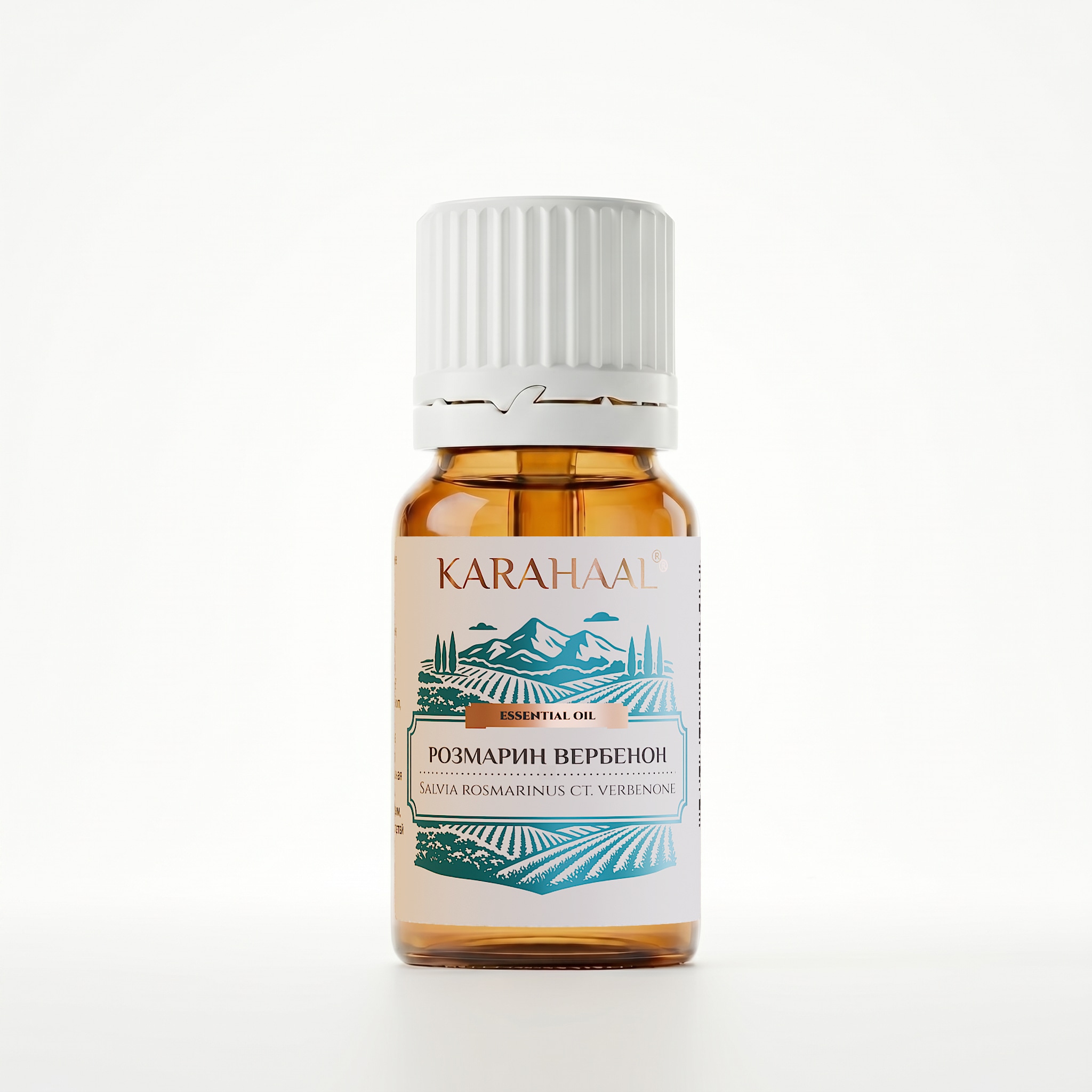
Chemotypes differ in composition. Cineole and verbenone variants are selected separately; the recipe depends on the specific material.
What to combine with this care
- “Provence” lavender essential oil — Aromatic combination
- Essential oil of Cypress — Aromatic combination
- Lemon essential oil — Aromatic combination
- Jojoba oil — Base for the oil recipes above
- Essential oil of common pine
Sources
- Aromas of rosemary and lavender essential oils differentially affect cognition and mood in healthy adults.
- EMA: rosemary, assessment report
- Rosemary oil vs minoxidil 2% for the treatment of androgenetic alopecia: a randomized comparative trial.
- Rosemary and lavender aroma, cognition and mood, 2003
- Rosemary preparation versus minoxidil 2%, 2015