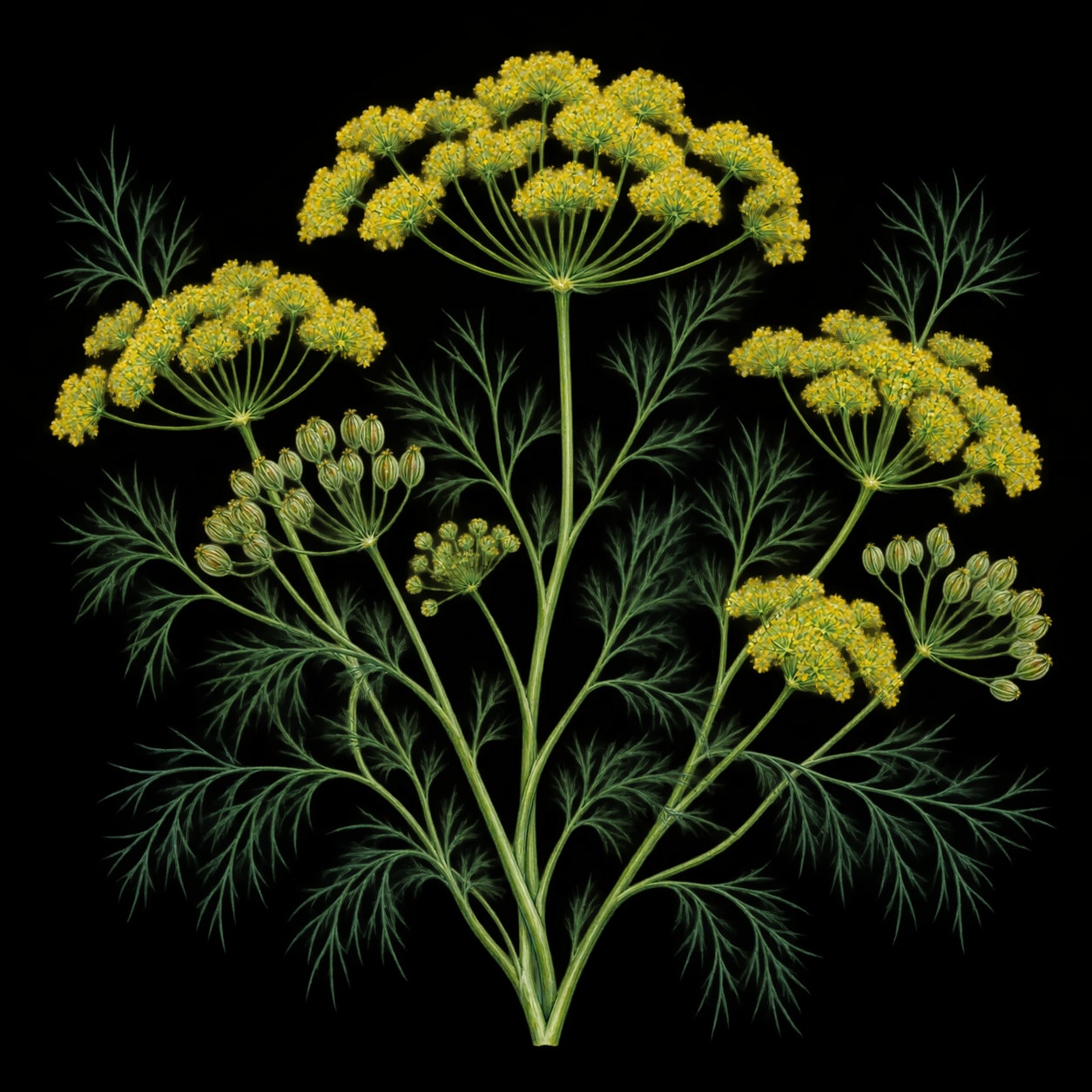
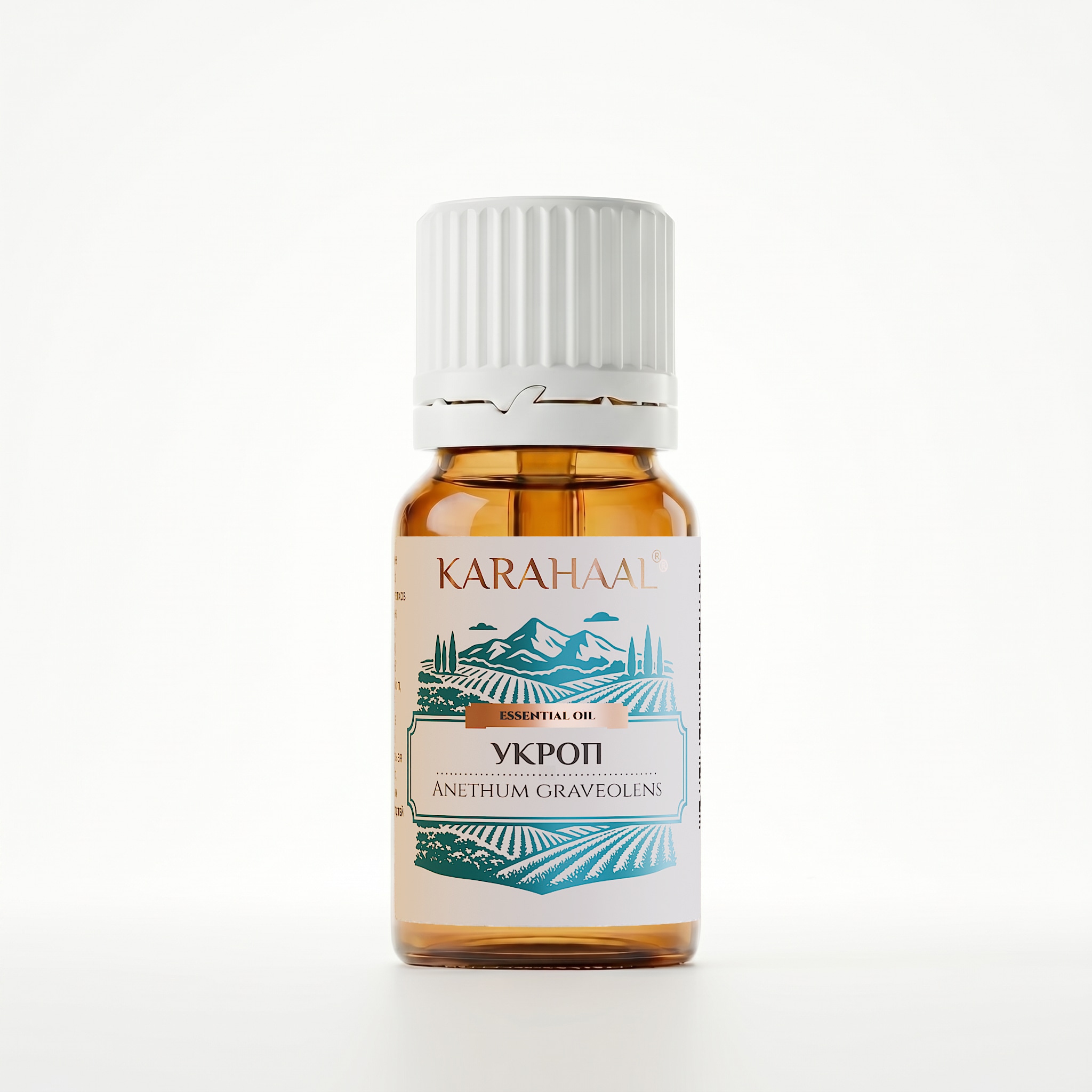
Dill: digestive comfort and antifungal potential
Dill seed oil differs from the smell of fresh dill: it is drier, warmer and spicier. In aromatherapy, it is used in blends for feelings of bloating and abdominal tension, and as a gentle spicy note in relaxing massage blends.
Spasms and the sensation of distension
Dill's traditional use for digestion relates to the plant's carminative and antispasmodic properties. In external aromatherapy, this means a gentle abdominal massage with a well-diluted blend for adults. Use a small amount and gentle movements; do not massage if pain is sharp, new or worsening.
Antifungal action: what happens to the cell
In the study of Anethum graveolens seed oil on Candida albicans, cell membrane damage and a reduction in ergosterol content — one of its key components — were observed. At the same time, mitochondrial function changed and reactive oxygen species accumulated. The addition of an antioxidant weakened part of the response, helping to clarify the mechanism. [1]
This makes dill essential oil interesting for developing antifungal formulations. But laboratory concentration and contact with cell cultures cannot be replicated by simply applying a drop to the skin; the oil is not used on mucous membranes for home treatment of candidiasis.
Relaxing spicy composition
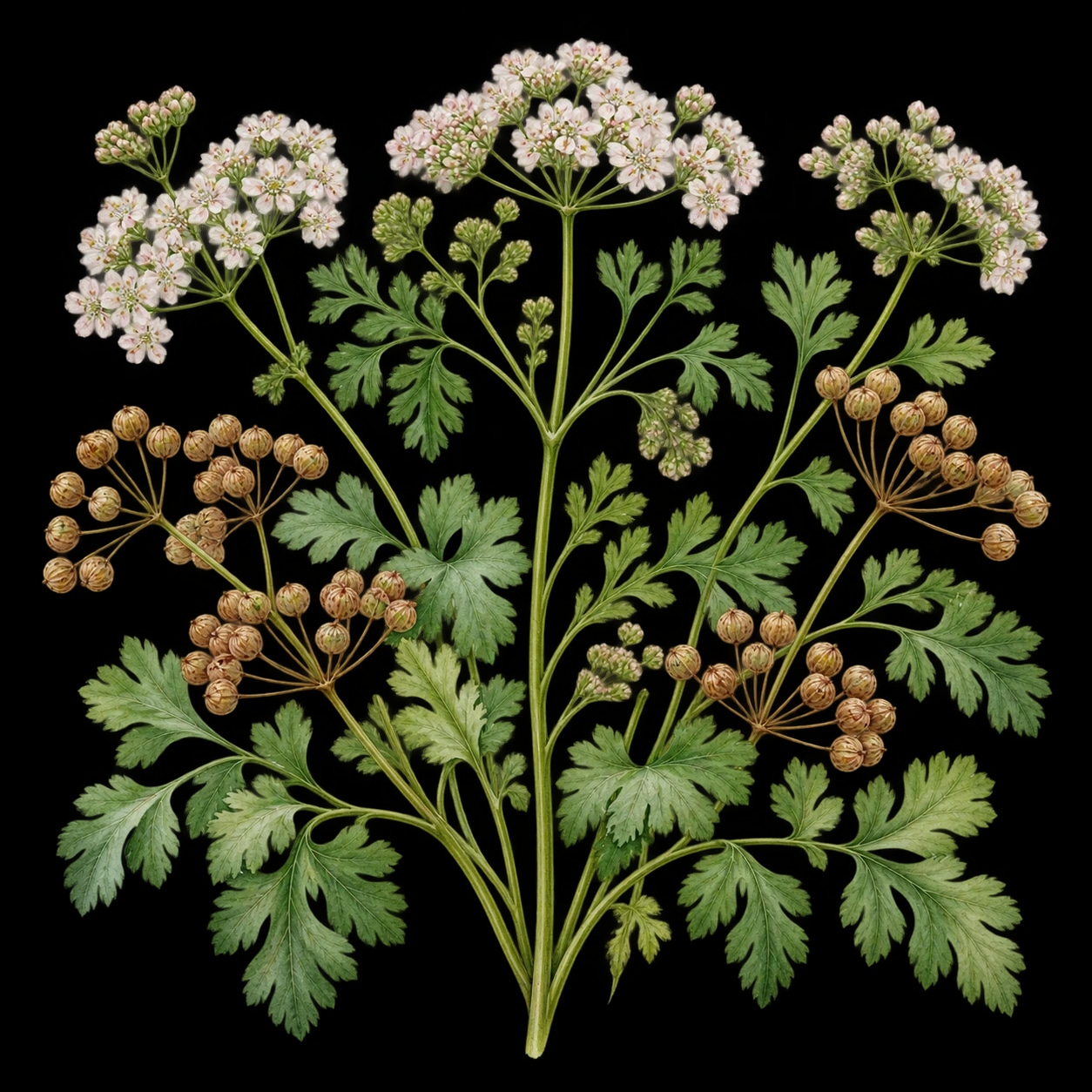
The dry seed note pairs well with mandarin and lavender. This blend suits those who enjoy warm herbal aromas without fennel's pronounced sweetness. Coriander rounds out the blend, cardamom adds freshness, and cedar provides a calm woody base.
For evening massage, a subtle scent is sufficient. Dill should not overpower the entire blend: in a small amount, it adds warmth and character, remaining comfortable for breathing.
Blending suggestions
Mandarin lightens the spicy seed note, while lavender softens the aroma. Coriander adds a rounded, warm note, cardamom adds freshness, and cedar provides a dry base.
Research in detail
Membrane and mitochondria Candida albicans
In the laboratory study by Chen and co-authors, Anethum graveolens seed oil damaged Candida albicans membranes and reduced ergosterol content. Mitochondrial function changed and reactive oxygen species accumulated. The addition of an antioxidant weakened part of the response, helping researchers clarify its mechanism of action on fungal cell structures. [1]
How to use
Original formulations for adults with a small amount of aromatic component. Mix in a dry, clean bottle; the listed composition refers to the entire bottle, and a small portion is taken per use. Drop amounts are approximate.
- Spicy abdominal blend: dill seed oil — 1 drop; jojoba — 10 ml. Combine in a bottle; gently spread a small amount over the abdomen for familiar feelings of fullness, without deep pressure. The blend is for adults; unusual or increasing pain requires investigation.
- Gentle lavender blend: dill seed oil — 1 drop; true lavender — 1 drop; jojoba — 20 ml. Use a small amount for a gentle massage of the abdomen or lower back. This is an aromatherapy example, not a substitute for a medicinal dill preparation.
Precautions
Dilute in a carrier oil before applying to skin. Do not ingest or apply to mucous membranes; stop use if irritation occurs. Store tightly closed, away from heat and light: oxidised oil is more likely to cause skin reactions.
What to combine with this care
- “Provence” lavender essential oil — Aromatic combination
- Mandarin essential oil — Aromatic combination
- Cardamom essential oil — Aromatic combination