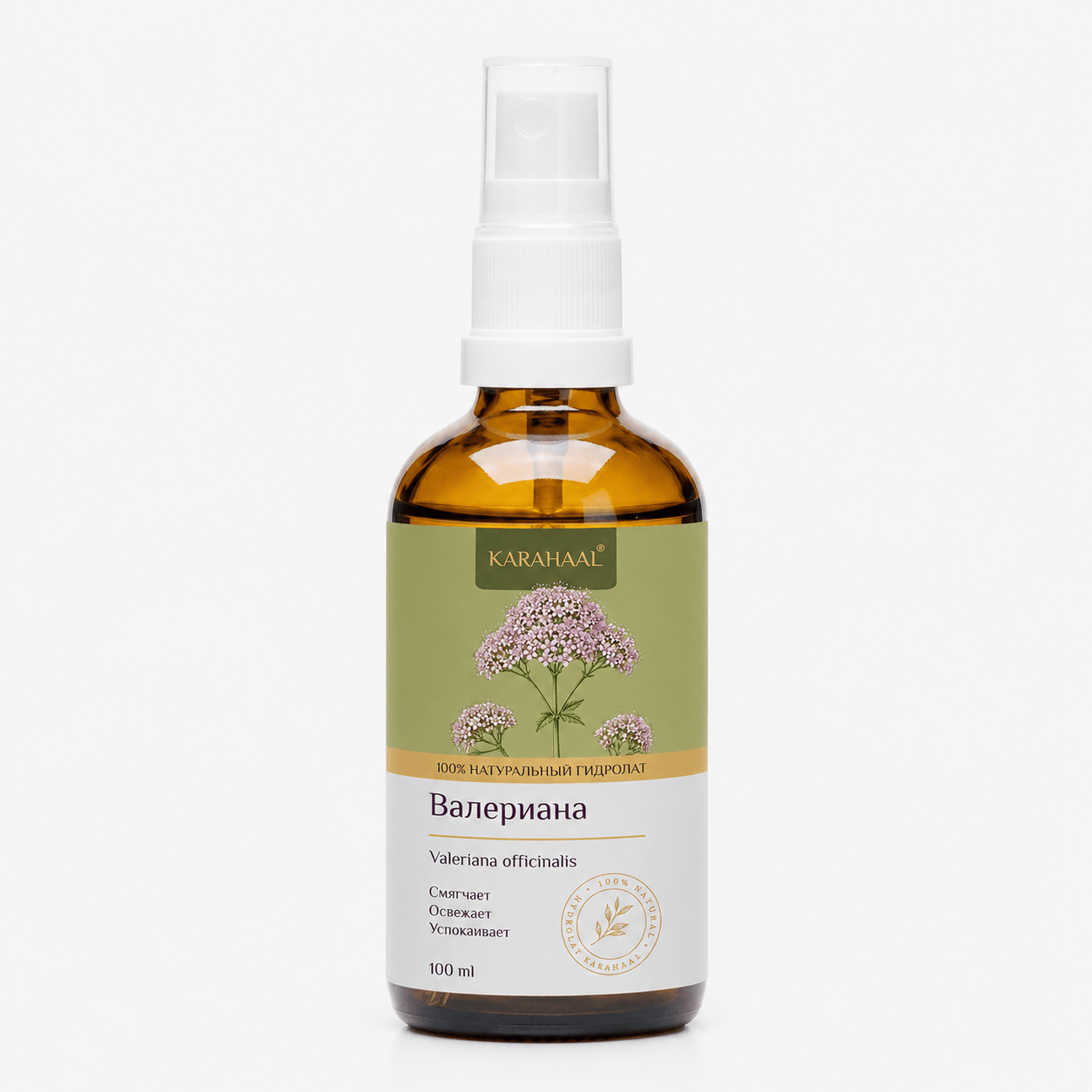
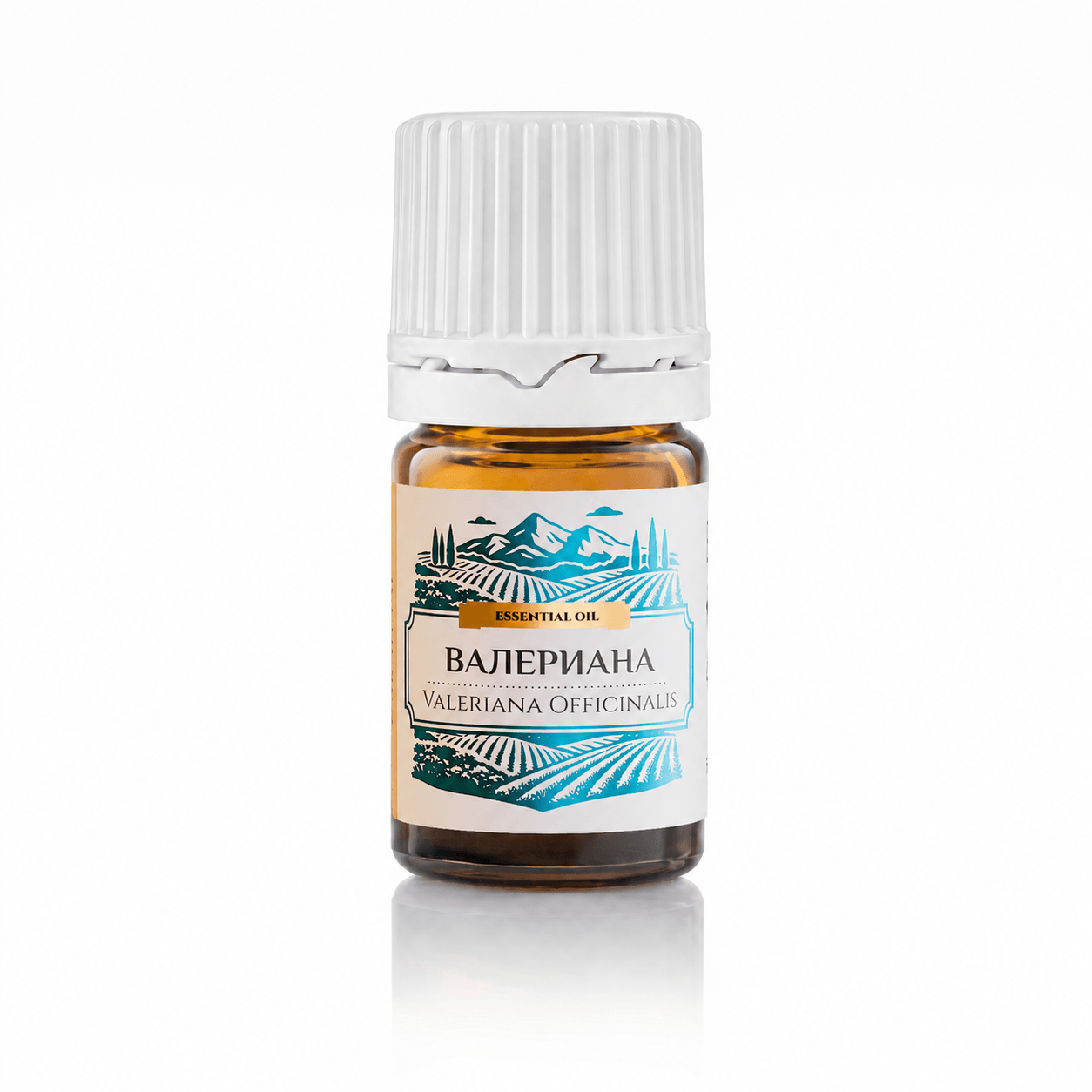
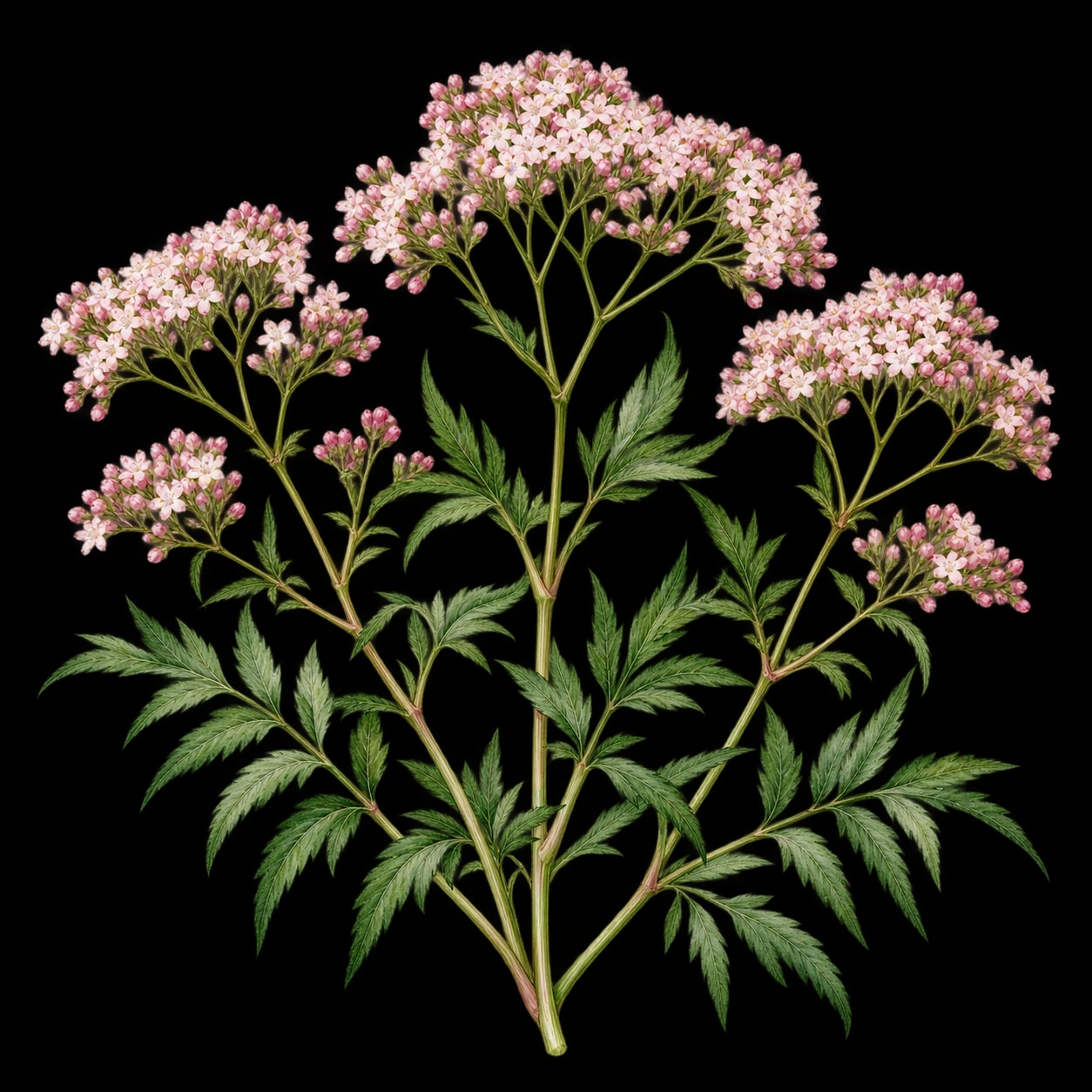
Valerian: sleep, nervous tension, and spasmolytic action
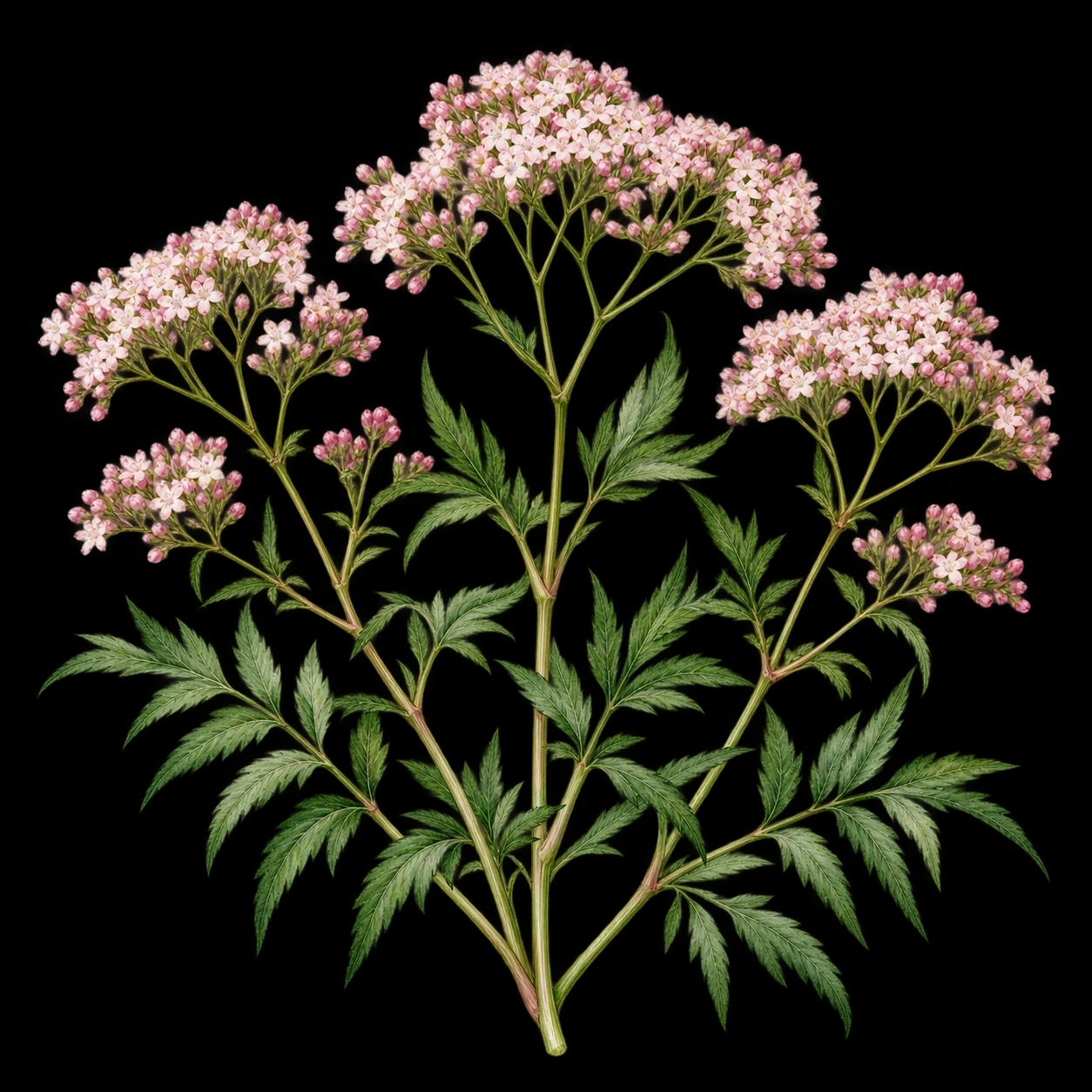
Valerian essential oil Valeriana officinalis is obtained from the underground parts of the plant. Its primary area of application is the nervous system: difficulty switching to rest, internal tension, anxiety before sleep. The root, earthy aroma is recognizable and very intense; in a blend, a small amount of emphasis is sufficient to make valerian deeper and softer.
Therapeutic properties
Calming effect and sleep
The European monograph classifies valerian essential oil preparations as traditional plant-based remedies for alleviating mild nervous tension and promoting sleep. This is a substantive area of application, grounded in long-standing practice rather than merely pleasant aroma. In aromatherapy, valerian is selected for evening blends when fatigue combines with excitement and it is difficult for a person to calm down. [1]
Studies reveal several possible mechanisms of valerian's sedative action. In an experimental study by Komori and colleagues, inhaling the oil affected sleep parameters, with the response depending on preserved olfaction. Changes in GABA transaminase activity are linked to the inhibitory regulation of nervous tissue. In cellular experiments with the whole oil, a reduction in neural network activity was also observed. [2] [3]
Studies were conducted on people using valerian essential oil and acupressure. Positive results were observed in sleep duration and continuity; in another trial, improvement was noted even with acupressure without oil. Therefore, the format of a comprehensive evening care routine is practically justified: gentle massage, a small concentration of oil, a calm atmosphere. Details of both studies are provided below. [4] [5]
Spasmolytic potential
Valerian is traditionally included in relaxing aromatherapy blends for nervous tension and sensations of cramping. In experiments on isolated tissue, one of its constituents, valeranone, reduced contractions of intestinal smooth muscle. The researchers linked this to a direct effect on the muscle tissue. [6]
Recovery after mental workload
Bornyl acetate, found in valerian essential oils, was studied in humans after prolonged screen work. Mild exposure showed signs of relaxation without deterioration in task performance. Together with data on the whole oil, this study explains the interest in valerian during evening fatigue. [7]
In aromatherapeutic practice, the character of valerian is described as drawing attention inward and helping to slow down. It is best suited for those who enjoy root-like, earthy, and balsamic scents. Lavender facilitates transition to nighttime rest, mandarin softens the heavy root note, sandalwood adds a balanced woody depth. This oil is for a calm day's end; saturating the air with it to a persistent smell is not necessary.
Blending suggestions
Lavender lightens the root aroma. Mandarin or sweet orange adds a soft fruity top note. Sandalwood extends the balsamic character, vetiver enhances the earthy depth; with vetiver, it's best to start with a barely noticeable accent.
Research in detail
Inhaling valerian essential oil and sleep recording — Komori and co-authors, 2006
In an experimental study by Japanese researchers, the aroma of valerian oil influenced sleep parameters and EEG indicators. The response depended on preserved olfaction. Additionally, a reduction in GABA transaminase activity — an enzyme involved in the breakdown of the inhibitory neurotransmitter GABA — was recorded. [2]
Valerian combined with acupressure — Chen and colleagues, 2012
In a randomized study, 85 patients from the intensive care unit participated: 41 received a procedure with valerian oil, 44 received standard care. Researchers combined the oil with stimulation at specific points, assessed nighttime sleep through observation and actigraphy, and used the Stanford Sleepiness Scale in the morning. They also analyzed heart rate variability before and after the procedure. [4]
Comparison of massage with oil versus without it — Bagheri-Nesami and co-authors, 2015
In a study of 90 patients with acute coronary syndrome, participants were divided into three groups: acupuncture with valerian essential oil, acupuncture without oil, and control stimulation on adjacent points. Sleep was assessed using a specific questionnaire. Both main groups showed improvement compared to the control group; however, a statistically significant advantage of the oil over acupuncture without it was not confirmed. [5]
Valeranone and smooth muscle relaxation — Hazelhoff and colleagues, 1982
Valeranone, a component of valerian essential oil, was studied alongside other compounds of valerian. In experimental tests and experiments with isolated tissues, it reduced contractions of smooth muscle in the intestine. The authors hypothesized a direct effect on muscle tissue. [6]
Valerian essential oil and neuronal network activity — Cornara and co-authors, 2020
In the laboratory study, the oils Valeriana officinalis, Valeriana jatamansi, and Nardostachys jatamansi were compared. Botanical identification and chemical analysis were supplemented by measurements of acetylcholinesterase activity and recording of electrical signals from neuronal cultures. [3]
Bornyl acetate: from composition to the sensation of relaxation
A separate 2011 study investigated inhalation of bornyl acetate after prolonged screen work. The authors assessed physiological arousal, subjective feelings and task performance. At a low exposure intensity, they observed signs of reduced arousal without impaired task performance. [7]
How to use
Examples for adults. Quantities are given for the entire bottle; for one application, take a small portion of the mixture. These are aromatic therapy routines, not medicinal dosages.
- Simple blend for local massage: 1 drop of valerian oil in 10 ml of jojoba. Mix in a clean bottle. Apply a small amount of the prepared blend to the shoulders or upper back and spread with gentle massage movements.
- Evening blend: 1 drop of valerian + 1 drop of narrow-leaf lavender per 20 ml of jojoba. Mix and use a small amount for gentle massage of the shoulders. Lavender softens the root note of valerian.
- Scenting without a diffuser: 1 drop on a paper towel or aromastone. Hold at a comfortable distance from the face, without touching the skin with the oil; several ordinary breaths are sufficient to assess the scent.
- “Warm Evening” blend: valerian oil — 1 drop; mandarin oil — 1 drop; jojoba — 20 ml. Combine in a clean, dry bottle and mix. Use a small amount of the prepared blend to gently massage an adult’s shoulders or forearms, away from the face.
Precautions
Dilute before applying to skin; do not ingest or apply to mucous membranes. Use relaxing blends at times when you will not need to drive or operate machinery. When taking sedatives, during pregnancy or when choosing a product for a child, agree on the method of use individually. Do not use an aroma that causes nausea, headache or marked drowsiness.
Frequently Asked Questions
Why does valerian smell so unusual?
In the oil, the root volatile fraction is revealed: earthy, balsamic, and camphoraceous notes. When blended with lavender or mandarin, it is perceived more gently.
Can it be used only in a diffuser?
Weak massage blends and aromatherapy sessions on an aromatherapy stone are also suitable. A local aroma does not require a diffuser.
What to combine with this care
- “Provence” lavender essential oil — Aromatic combination
- Essential oil of Roman chamomile — Aromatic combination
- Mandarin essential oil — Aromatic combination
- Jojoba oil — Base for the oil recipes above
Sources
- EMA. Valeriana officinalis L., aetheroleum: European Union herbal monograph.
- Komori T. et al. The sleep-enhancing effect of valerian inhalation and sleep-shortening effect of lemon inhalation. Chemical Senses. 2006;31:731–737.
- Cornara L. et al. Comparative and Functional Screening of Three Species Traditionally used as Antidepressants. Plants. 2020;9:994.
- Chen J.-H. et al. The effectiveness of valerian acupressure on the sleep of ICU patients: a randomized clinical trial. International Journal of Nursing Studies. 2012;49:913–920.
- Bagheri-Nesami M. et al. Effect of acupressure with valerian oil 2.5% on the quality and quantity of sleep in patients with acute coronary syndrome in a cardiac intensive care unit. J Tradit Complement Med. 2015;5:241–247.
- Hazelhoff, Malingré, Meijer. Valerian compounds: experimental study of spasmolytic action, 1982;257:274–287.
- Bornyl acetate inhalation and relaxation after visual display terminal work. Biomedical Research. 2011;32:151–157.