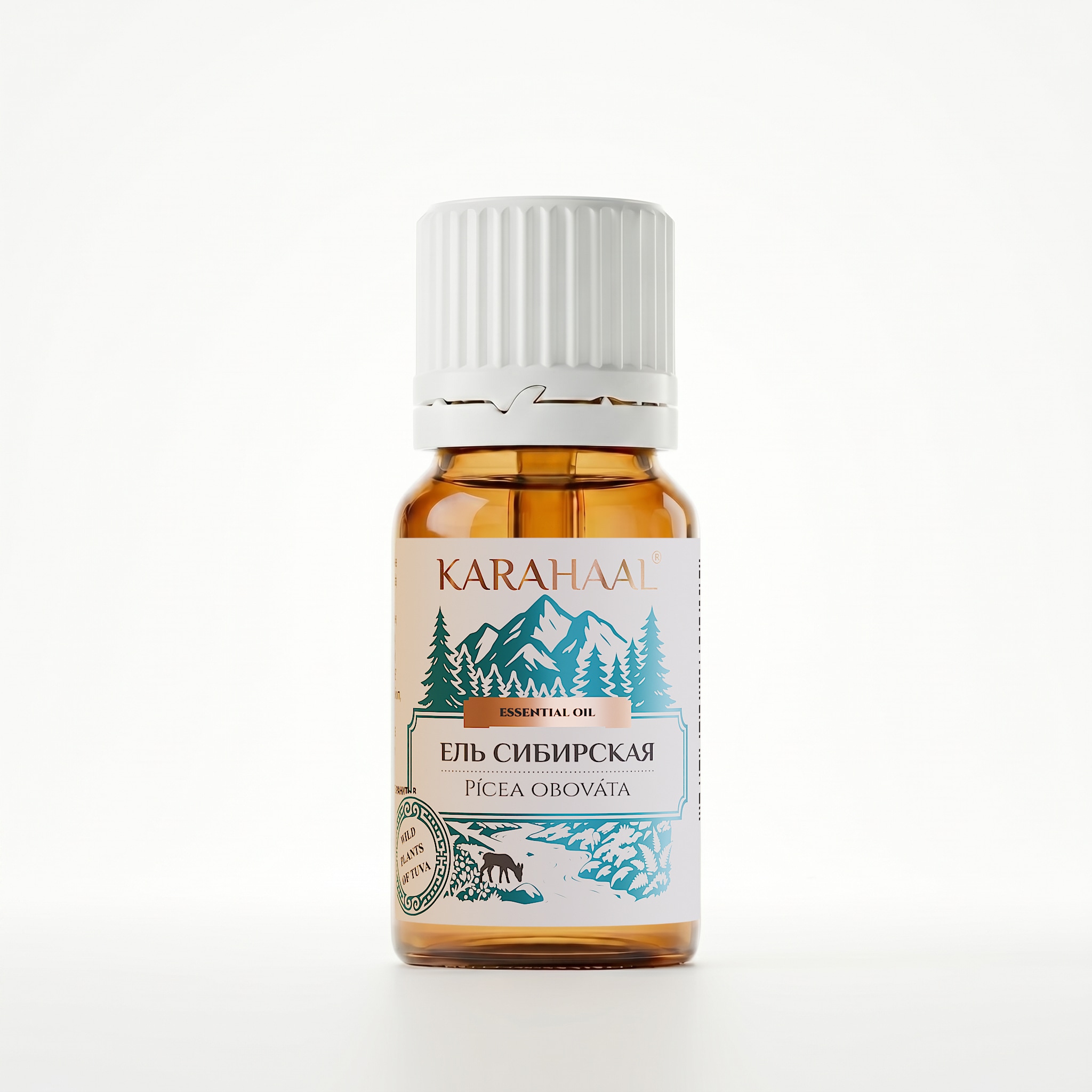
Spruce: respiratory comfort and relaxation of tired muscles
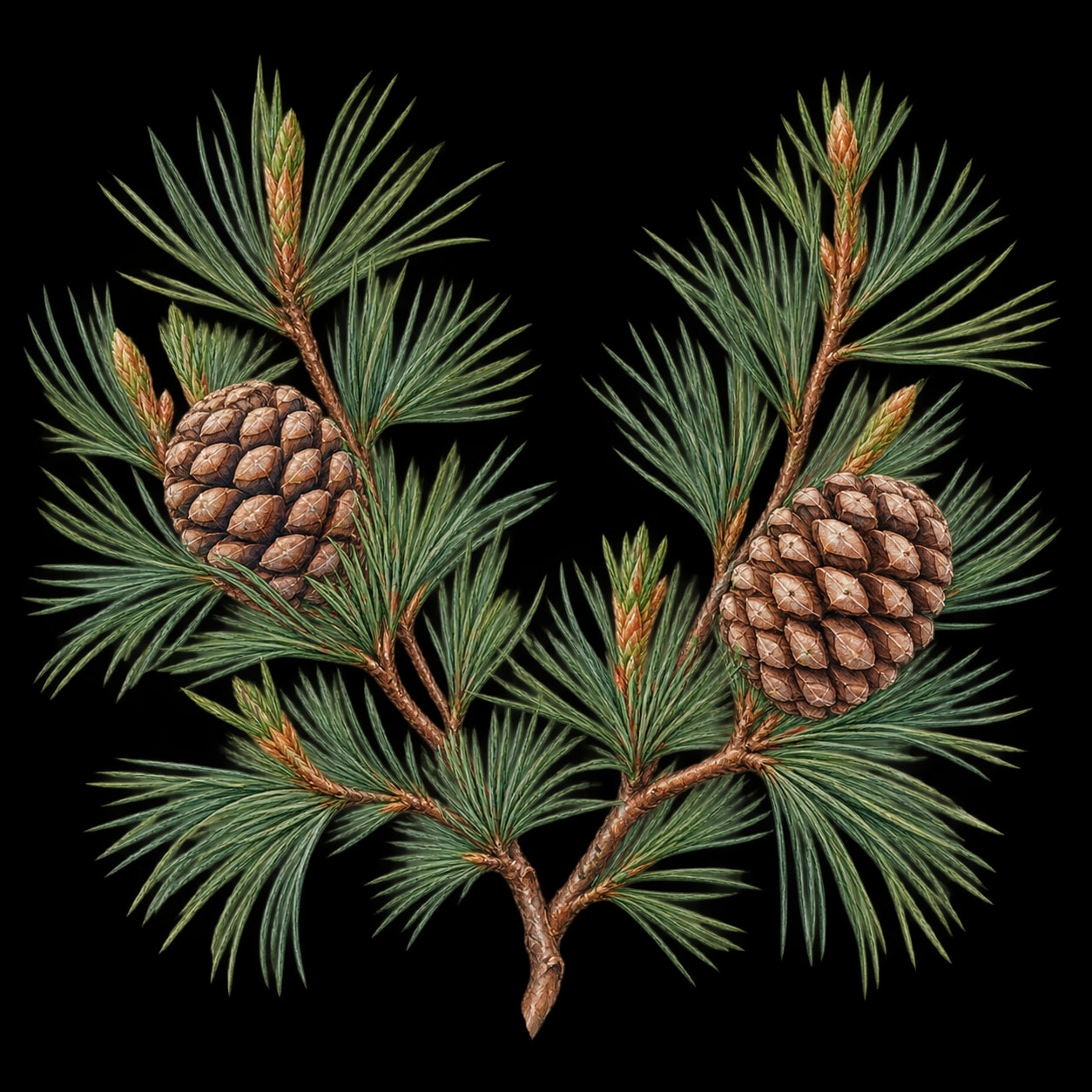
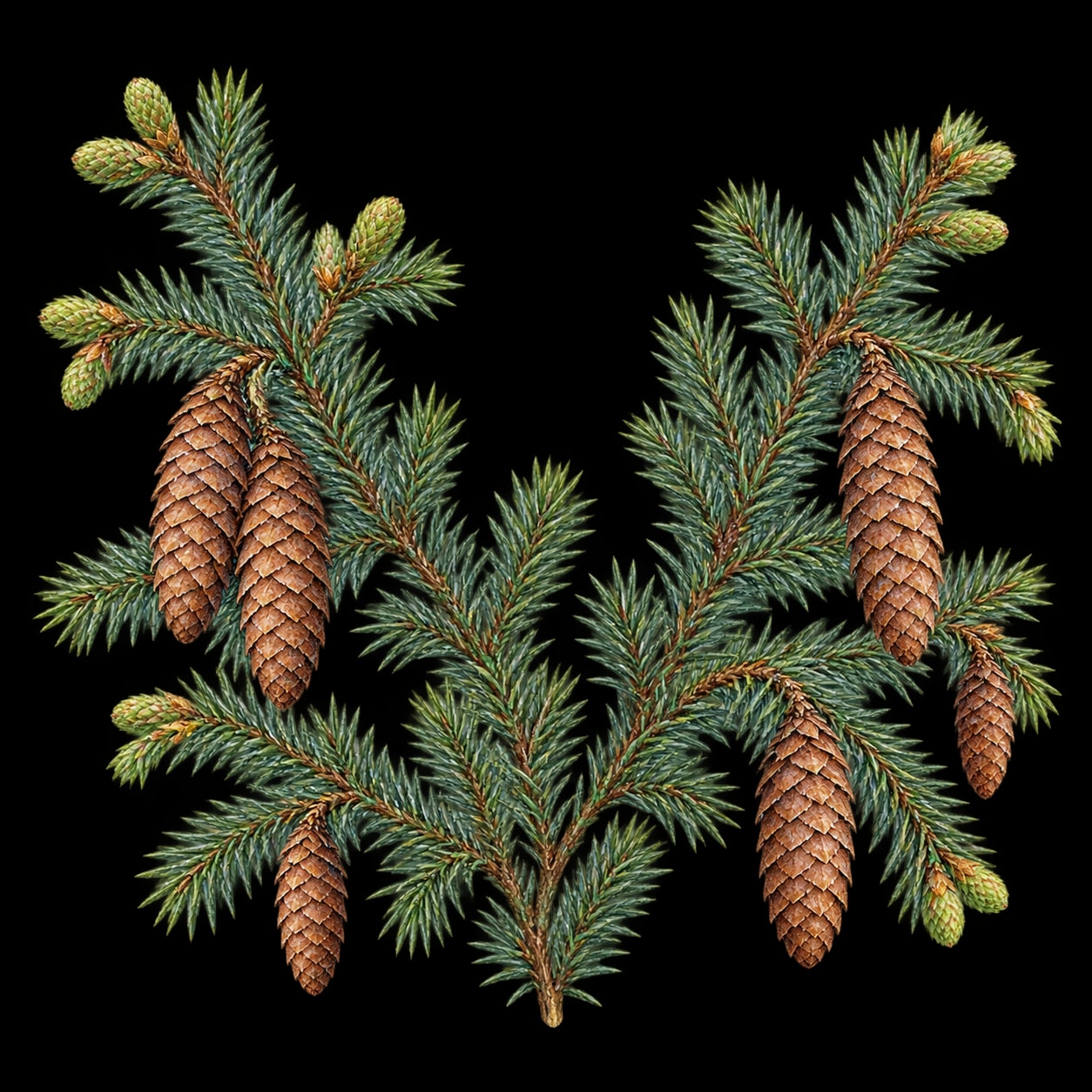
Siberian spruce essential oil Picea obovata offers a fresh green-coniferous aroma with a soft balsamic undertone. It is chosen for seasonal blends and for calm massage after a physically or emotionally taxing day.
Expectorant action
In the monograph KARAHAAL spruce is described in relation to its mucolytic and expectorant use. In aromatherapy tradition this supports conditions of viscous secretions and the sensation of respiratory heaviness. For adults, a weak cold test and a diluted mixture for the upper back are suitable. [1]
Muscle stiffness and pain after exertion
Anti-inflammatory, analgesic, and spasmolytic properties are also reflected in the monograph. Practically, spruce is conveniently included in blends for shoulders, back, or legs: its scent is sufficiently fresh, but typically does not produce a menthol-like cooling sharpness. Lavender makes the composition more relaxing, mandarin adds warmth.
Emotional recovery
Spruce aroma is suitable for the feeling of space and calm. It complements a slow massage well and helps create a forest composition without a complex perfumery blend. Vetiver adds depth, cedar provides a stable woody base, and Cypress adds a dry freshness.
Why spruce oils differ
The coniferous profile varies among spruce species depending on the season and growing conditions. For comparison, in a study of European spruce Picea abies seasonal changes in pinene content were observed. The study helps understand the natural variability of spruce aromas. [2]
For everyday selection it is important to perceive the oil as a whole: a fresh start, a resinous continuation, and a comfortable intensity. Increasing the amount for a stronger therapeutic effect is not required; when respiratory tract irritation occurs, the aromatic test is discontinued.
Blending suggestions
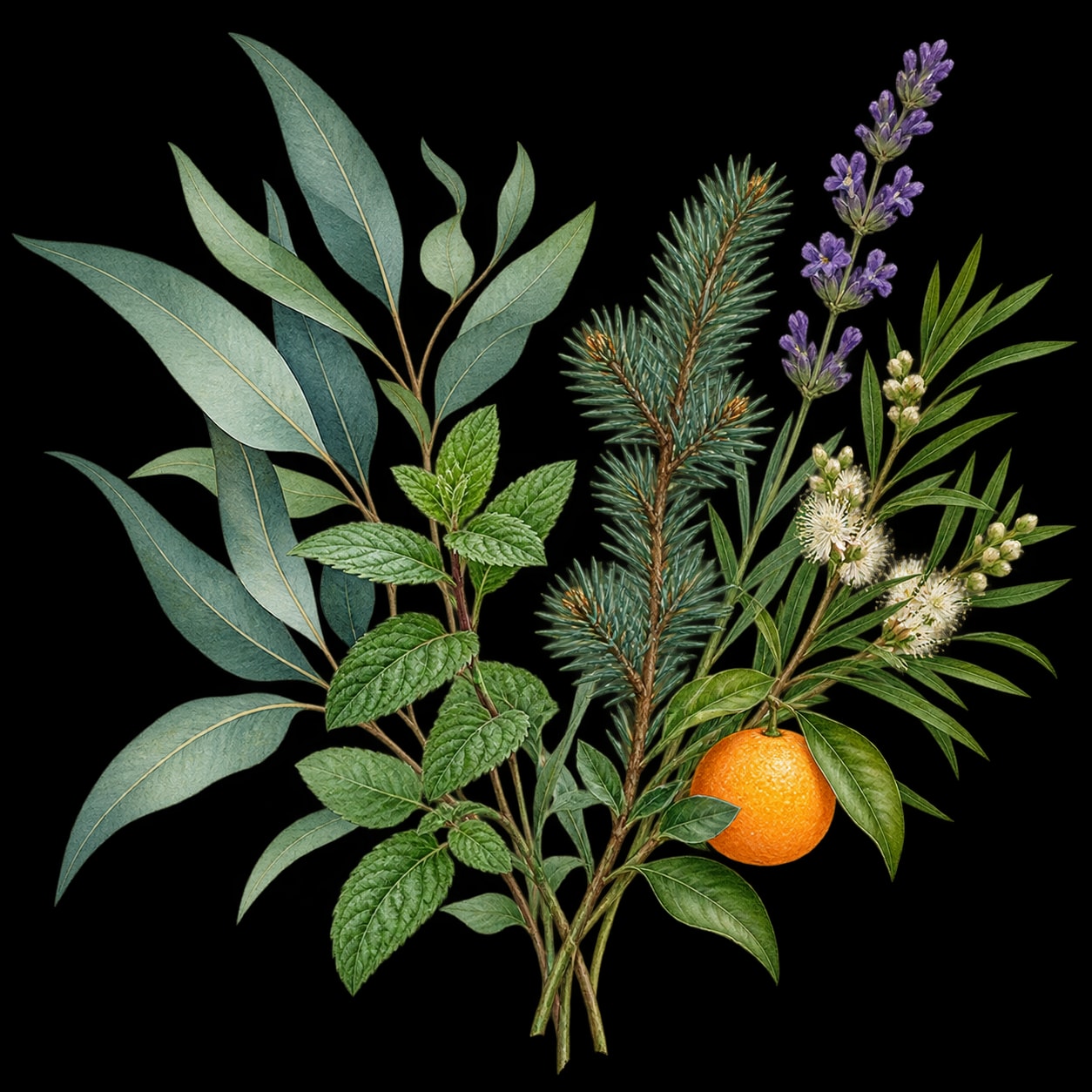
Lavender softens the green freshness, mandarin adds a gentle fruity warmth. Cypress emphasizes dryness, cedar and vetiver extend the woody base.
Research in detail
Seasonality of coniferous profile
In a comparative example with European spruce Picea abies the needles of 15 trees from three habitats were studied over the season. The ratios of α- and β-pinene, as well as the spatial forms of α-pinene, changed together with growing conditions, including temperature. [2]
How to use
Examples for adults. Quantities are given for the entire bottle; for one application, take a small portion of the mixture. These are aromatic therapy routines, not medicinal dosages.
- Material for individually tailored professional blends. Do not apply concentrate to skin, mucous membranes, or damaged areas; do not ingest. No home therapeutic regimen is recommended with this product.
Precautions
Dilute in a carrier oil before applying to skin. Do not ingest or apply to mucous membranes; stop use if irritation occurs. Store tightly closed, away from heat and light: oxidised oil is more likely to cause skin reactions.
What to combine with this care
- “Provence” lavender essential oil — Aromatic combination
- Mandarin essential oil — Aromatic combination
- Vetiver essential oil — Aromatic combination
Sources
- Catalog KARAHAAL: Spruce.
- Changes in the pinene content of spruce needle oil Picea abies throughout the season. 2021.