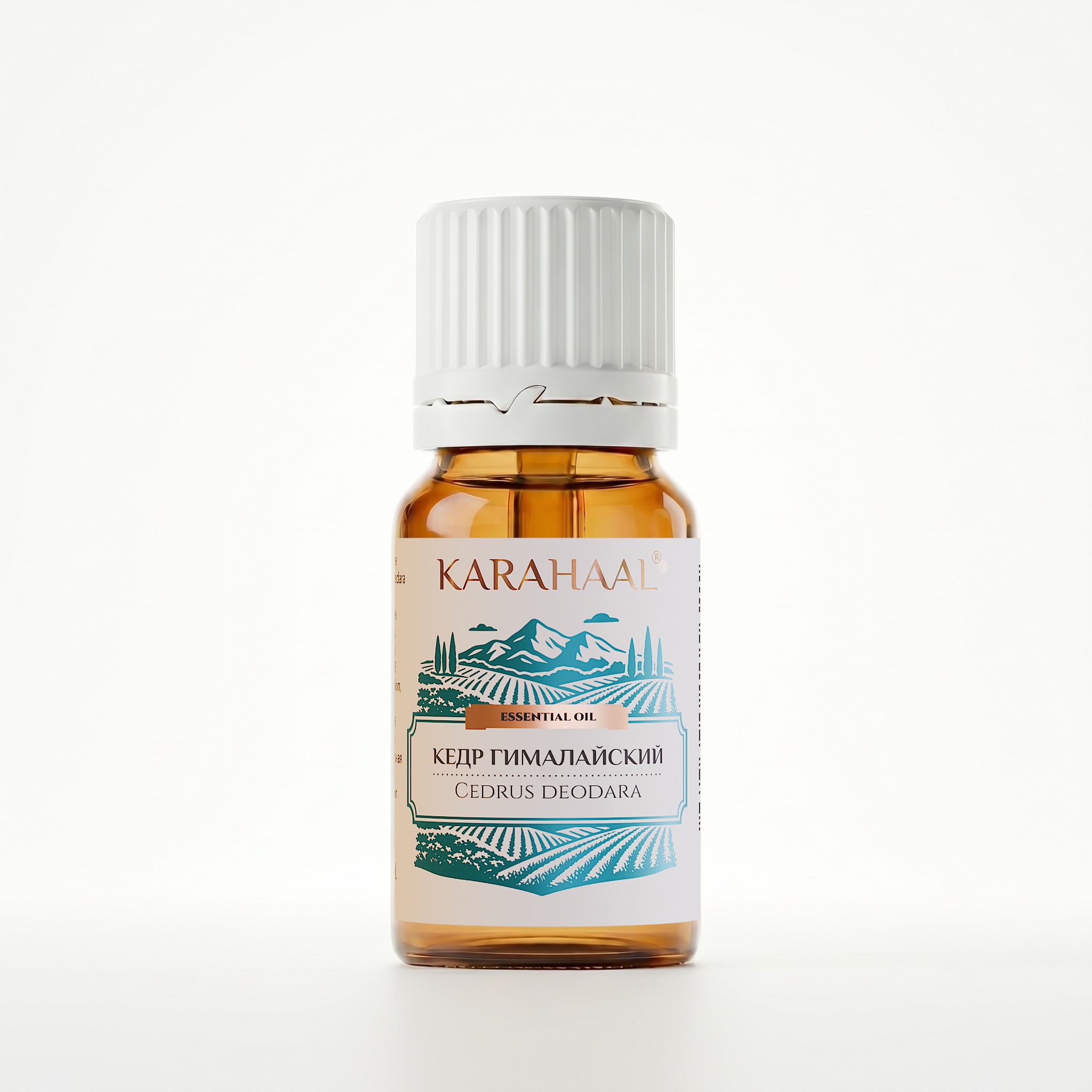
Himalayan cedar: inflammation, muscles, and wooden serenity
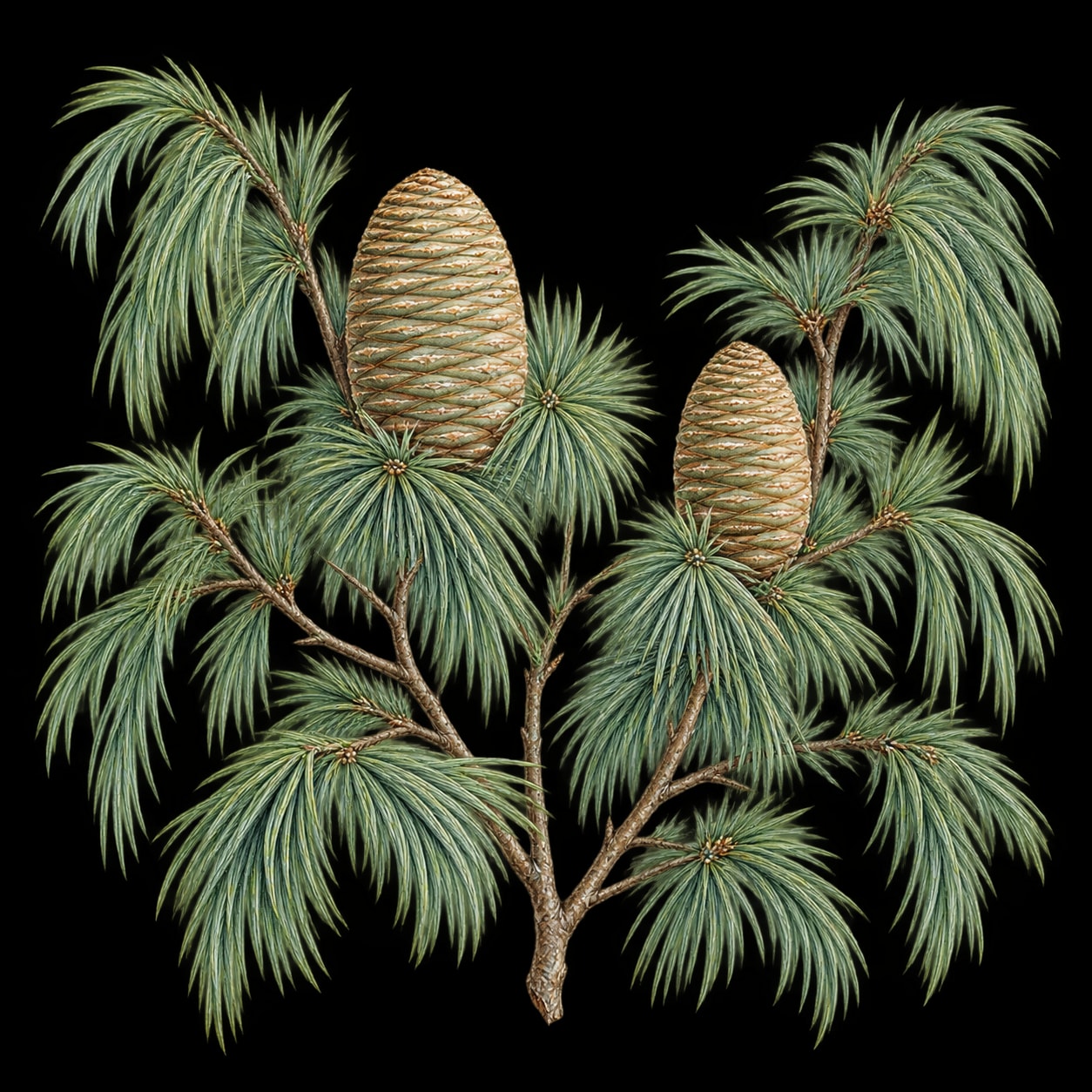
Himalayan cedar Cedrus deodara provides a dry warm wood aroma. It is chosen for restorative massage, evening emotional unloading, and compositions that require a long base without sweet resinousness.
Anti-inflammatory and analgesic action
In an experimental study, Himalayan cedar wood oil, obtained by steam distillation, reduced inflammatory swelling and pain responses. The authors evaluated several phases of inflammation and different types of sensitivity. [1]
For daily aromatherapeutic care, Himalayan cedar is used externally in a diluted massage blend. The concentration is adjusted according to the composition of the blend and the skin's sensitivity.
Massage after exercise
In aromatherapy, Himalayan cedar is used for tired muscles and a feeling of stiffness. It is suitable for shoulders, back, and legs, especially when mint's coolness is unpleasant. Lavender softens the dry character, orange adds lightness, and sandalwood makes the composition more rounded.
Emotional stability
The slow woody resonance complements recovery after overexertion. Cedar can give the composition a sense of cohesion without turning it into a sharp invigorating aroma. Patchouli enhances the balsamic depth, vetiver adds the dry root note.
How it differs from Siberian cedar
Himalayan cedar belongs to the genus Cedrus. Siberian cedars belong to Pinus and produce other oils, especially when using needles and cones. Therefore, the wood-based massage profile Cedrus deodara and fresh coniferous aromatherapy from Siberian cedar pine are different options.
Blending suggestions
Lavender rounds out the dry woody note, orange adds brightness. Sandalwood creates a soft base, patchouli adds balsamic depth, vetiver adds rootiness.
Research in detail
Anti-inflammatory and analgesic potential
In an experimental study, cedar wood oil Cedrus deodara reduced inflammation and pain responses. The study was conducted with controlled oral administration. In everyday aromatherapy, cedar wood is applied externally in diluted massage blends. [1]
How to use
Examples for adults. Quantities are given for the entire bottle; for one application, take a small portion of the mixture. These are aromatic therapy routines, not medicinal dosages.
- Simple blend for local massage: 1 drop of Himalayan cedarwood oil in 10 ml of jojoba. Mix in a clean bottle. Apply a small amount of the prepared blend to the shoulders or upper back and spread with gentle massage movements.
- Fresh daytime blend: 1 drop of Himalayan cedarwood oil + 1 drop of true lavender essential oil in 20 ml of jojoba. Mix; use a small amount to gently massage the forearms or shoulders.
- Scenting without a diffuser: 1 drop on a paper towel or aromastone. Hold at a comfortable distance from the face, without touching the skin with the oil; several ordinary breaths are sufficient to assess the scent.
- “Woody Cardamom” blend: Himalayan cedarwood oil — 1 drop; cardamom oil — 1 drop; jojoba — 20 ml. Combine in a clean, dry bottle and mix. Use a small amount of the prepared blend to gently massage an adult’s shoulders or forearms, away from the face.
Precautions
Dilute in a carrier oil before applying to skin. Do not ingest or apply to mucous membranes; stop use if irritation occurs.
What to combine with this care
- “Provence” lavender essential oil — Aromatic combination
- Essential oil of sweet orange — Aromatic combination
- White sandalwood essential oil BIO — Aromatic combination
- Jojoba oil — Base for the oil recipes above
- Cardamom essential oil