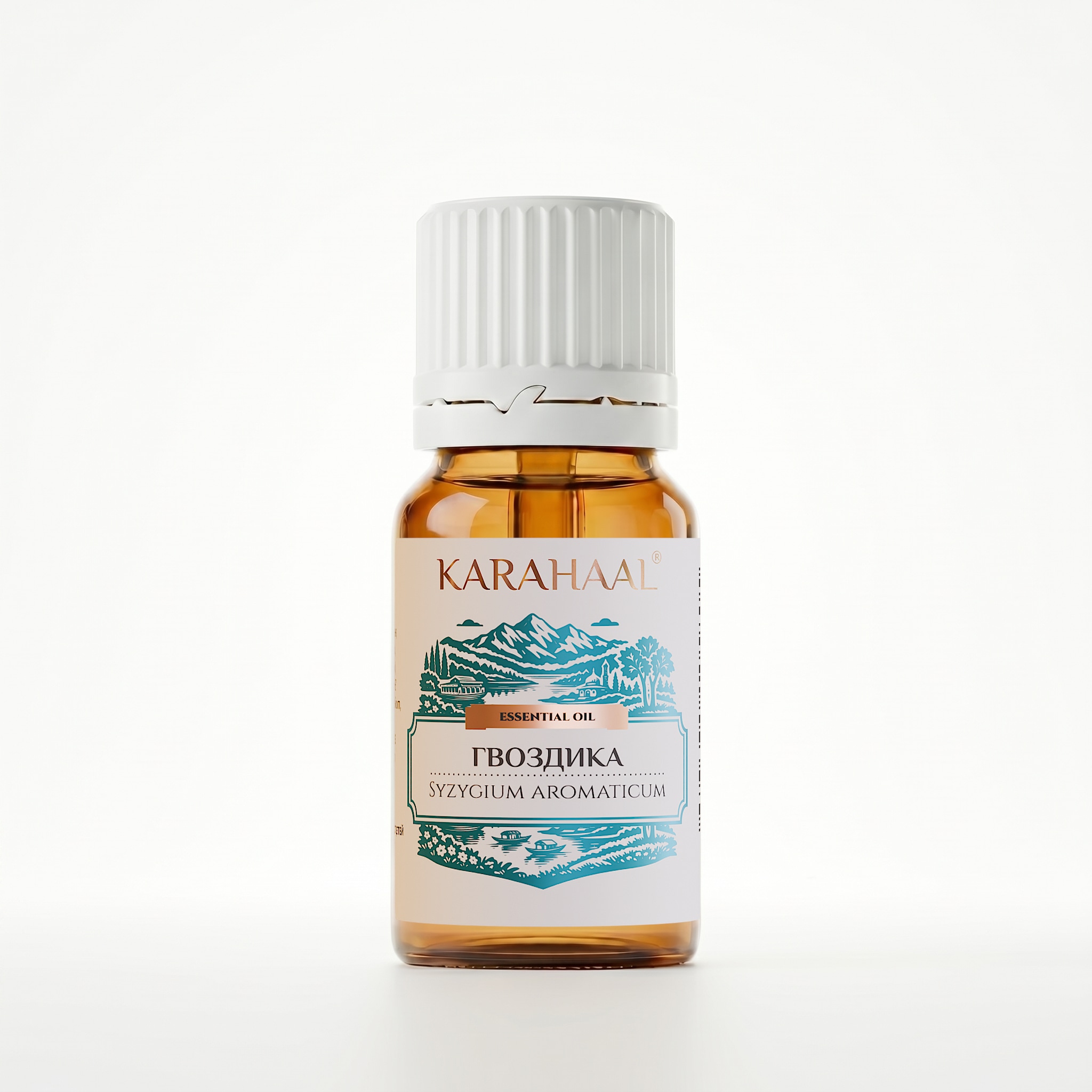
Clove: eugenol, toothache, and antifungal potential
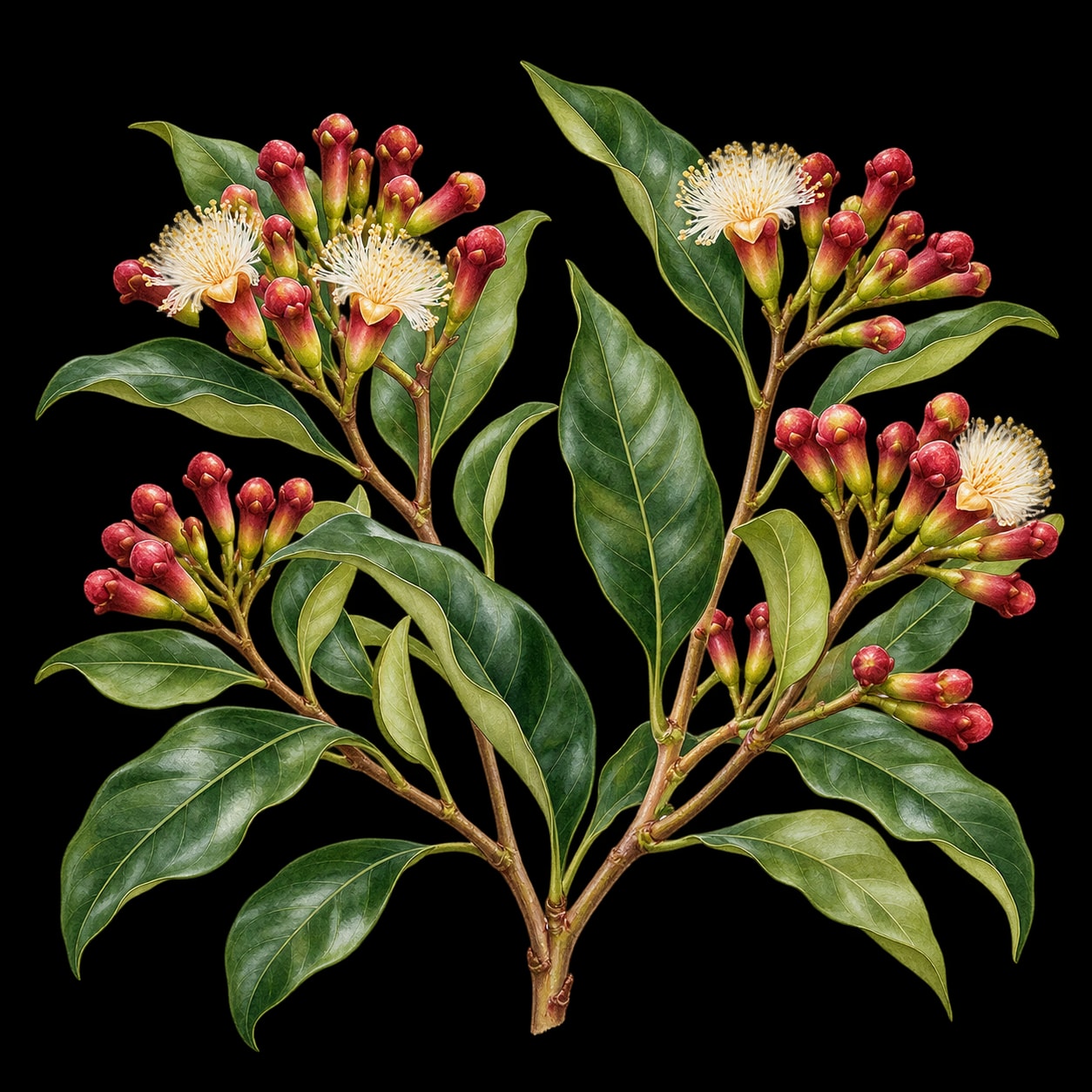
Clove essential oil is recognized by its warm spice, slightly sweet woody note, and characteristic dental association. Its therapeutic interest is primarily linked to eugenol and its pronounced activity against microorganisms.
Analgesic dental application
The EMA monograph describes traditional medicinal forms of clove bud oil for temporary relief of toothache due to carious cavities and minor oral and throat inflammations. This confirms the historical specialization of clove. [1]
Retail aromatic concentrate is not a ready-made dental treatment. For tooth pain, the cause must be addressed by a dentist; applying undiluted oil directly to the gums may damage the mucous membrane.
Antifungal action
In a study of whole clove oil and eugenol, activity against Candida, Aspergillus, and dermatophytes was found. Researchers observed membrane damage, reduced ergosterol content, and inhibition of Candida hyphal tube formation—structures associated with fungal morphological changes. [2]
These results explain the interest in developing topical antifungal products. A formula with established tolerability is needed for skin and nails; test concentrations are not a home remedy.
Warm aromatic compositions
In aromatherapy, clove is used in small amounts in warming spicy blends. Orange and mandarin make it milder, sandalwood deeper, cedar drier. The scent should remain comfortable: skin and mucous membrane irritation is not a desired effect.
For individuals with sensitive skin, during pregnancy, in children, and when taking medications that affect blood clotting, self-prepared concentrated mixtures with clove are not recommended.
Blending suggestions
Orange and mandarin soften the pungency, cedar adds dryness, sandalwood rounds out the base. Vanilla creates a sweet balsamic note in a compatible perfumery formula.
Research in detail
Eugenol and fungal membrane
In a laboratory study, clove oil and eugenol were tested against Candida, Aspergillus, and dermatophytes. Membrane damage, reduced ergosterol content, and inhibition of Candida hyphal tube formation were observed. These results reveal the mechanisms of antifungal activity and are interesting for the development of topical products. [2]
How to use
Examples for adults. Quantities are given for the entire bottle; for one application, take a small portion of the mixture. These are aromatic therapy routines, not medicinal dosages.
- Material for individually tailored professional blends. Do not apply concentrate to skin, mucous membranes, or damaged areas; do not ingest. No home therapeutic regimen is recommended with this product.
Precautions
Dilute in a carrier oil before applying to skin. Do not ingest or apply to mucous membranes; stop use if irritation occurs. Eugenol may irritate the skin and affect blood clotting. Do not make your own blends when taking anticoagulants, if you have a clotting disorder or before surgery. Do not put drops into a painful tooth or ear, or onto the gums.
What to combine with this care
- Essential oil of sweet orange — Aromatic combination
- Mandarin essential oil — Aromatic combination
- White sandalwood essential oil BIO — Aromatic combination