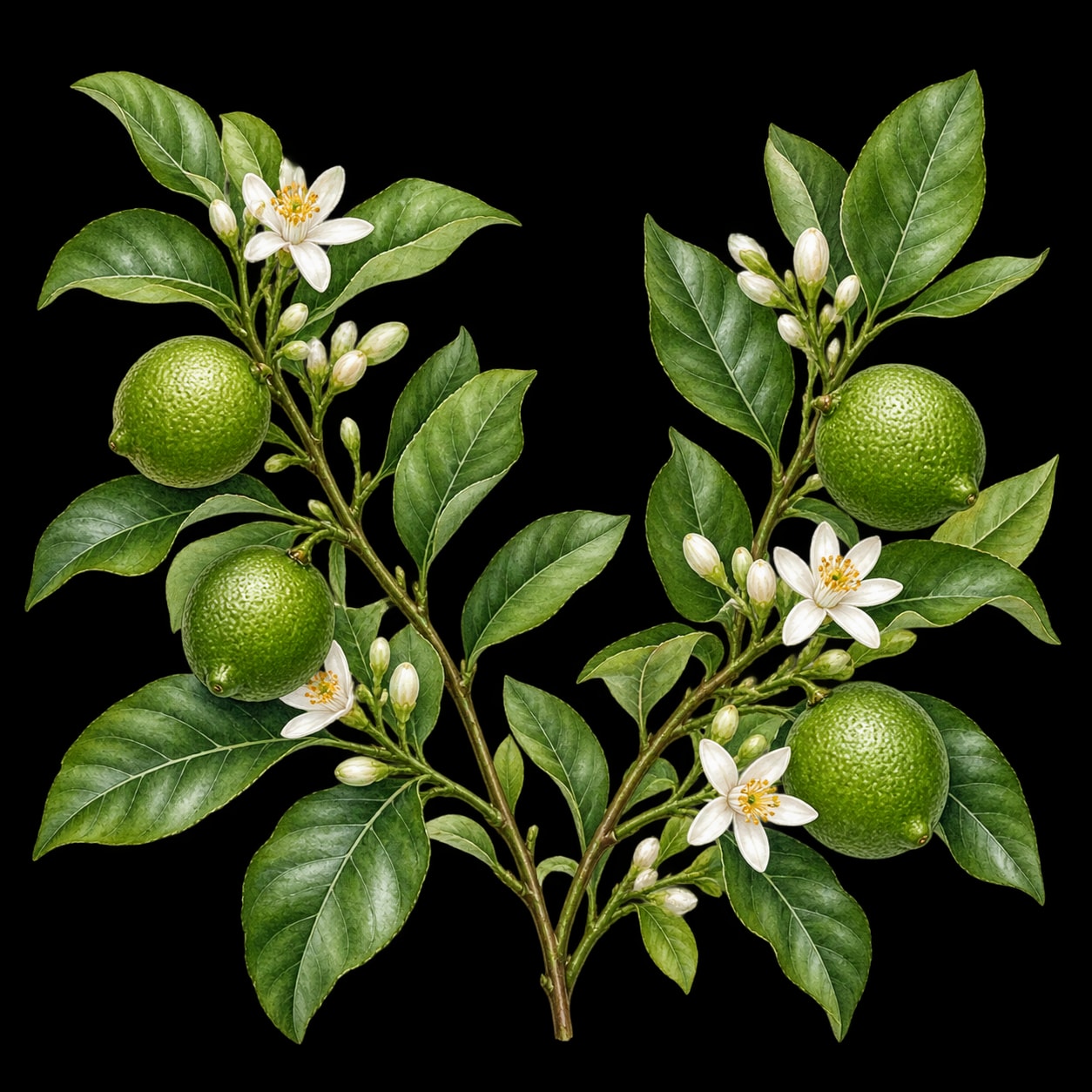
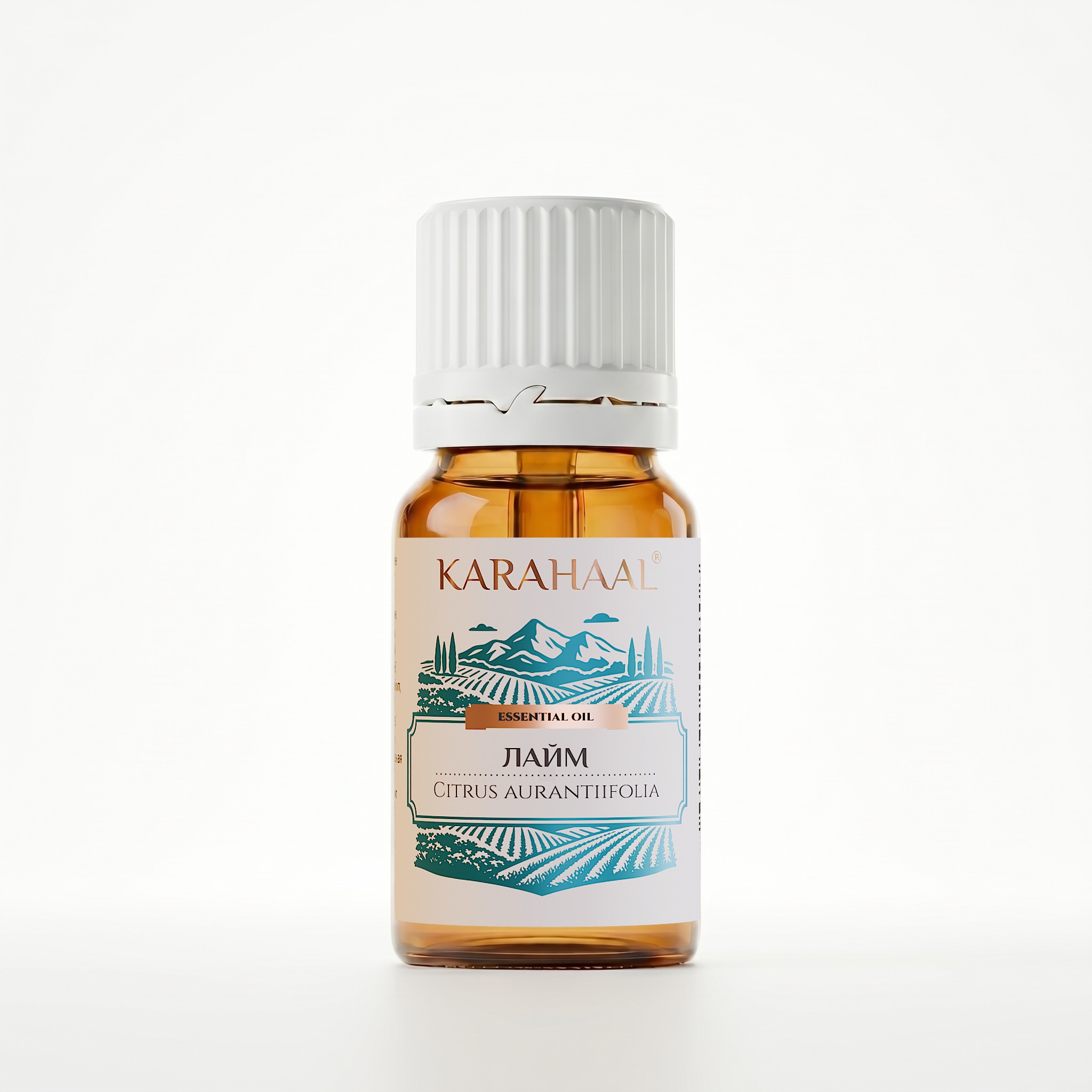
Lime: a stimulating citrus and exploration of metabolic processes
Lime delivers a fresh citrus freshness with a sharp green edge. In aromatherapy, it is chosen for a feeling of alertness and lightness, especially when a vibrant scent is desired without a sweet orange undertone. It opens up well in daytime compositions and in body aromatic care.
Antioxidant potential
In studies with Citrus aurantifolia essential oil, the ability to neutralize free radicals in DPPH and ABTS chemical tests was examined. The results showed antioxidant activity of the volatile fraction. This area is important for researching plant components and creating formulas protected against oxidation; the effect on the skin requires separate verification. [1]
Lipid metabolism: what scientists discovered
In an experimental model of disrupted lipid metabolism, lime essential oil was studied under controlled oral administration. Changes in cholesterol, triglycerides, and specific liver health markers were observed. For home care, aromatic and approved topical application methods are recommended. [1]
Aromatherapy and emotional emphasis
The practical strength of lime — a clear, energetic aroma. It is ideal for switching after monotonous work: the citrus start quickly captures attention, while its bitterness helps avoid cloyingness. Lavender makes the composition calmer, geranium gives it a rounder character, and cedar adds structure and dryness.
External application
For body care, lime is used in small amounts, preserving a pleasant freshness. The technology of production is important: pressed oil and distilled oil differ in phototoxicity. Until the specific method of obtaining this oil is confirmed, choose the aromatic format and do not apply the mixture to areas that will be exposed to sunlight.
Blending suggestions
Lavender softens the bright start; geranium adds floral fullness; cedar and sandal hold the citrus on a woody base; black pepper provides a dry spicy accent.
Research in detail
Research potential and pathway to introduction
In an experimental study with Citrus aurantifolia, essential oil from the rind and lipid metabolism indicators were evaluated. The study was conducted under controlled oral administration. Self-administration of essential oil concentrate orally is not recommended. [1]
How to use
Examples for adults. Quantities are given for the entire bottle; for one application, take a small portion of the mixture. These are aromatic therapy routines, not medicinal dosages.
- Aromatic pause: 1 drop on a paper towel or a suitable aromastone. Place at a comfortable distance, without direct contact of the oil with the skin; stop if the scent is unpleasant.
- A pairing without skin application: put 1 drop each of lime oil and narrow-leaved lavender oil on two separate scent strips. Hold them side by side at a comfortable distance and assess the balance. This is a blend test, not a method of continuous inhalation. For skin application, separately consider the extraction method and restrictions on ultraviolet exposure.
Precautions
Do not ingest or apply the concentrate to skin. Until the extraction method is clarified, do not apply to skin before sun exposure or using a tanning bed. Avoid the eyes and mucous membranes; store tightly closed in a cool, dark place.
What to combine with this care
- “Provence” lavender essential oil — Aromatic combination
- White sandalwood essential oil BIO — Aromatic combination
- Rose geranium essential oil — Aromatic combination