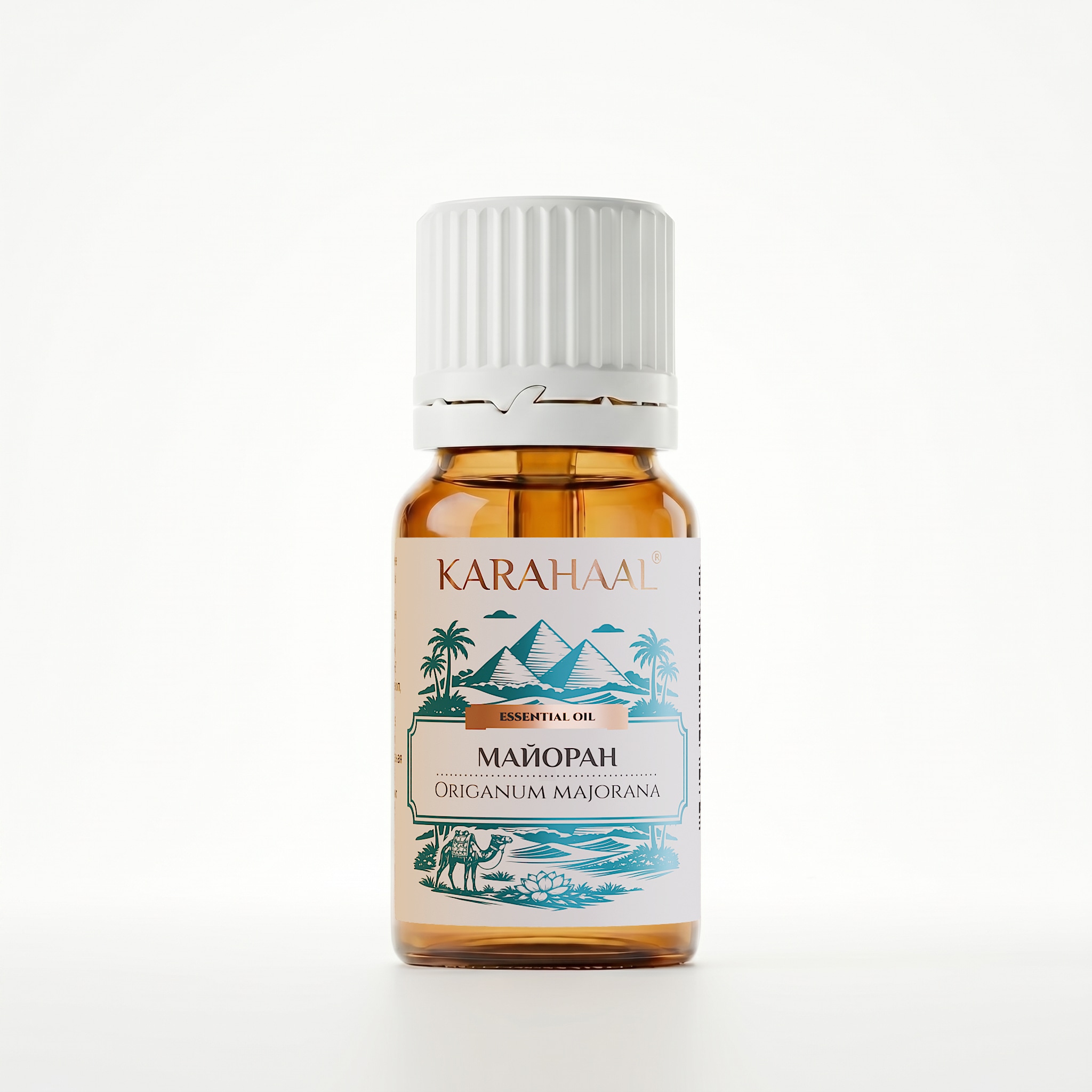
Marjoram: muscle relaxation and support during menstrual discomfort
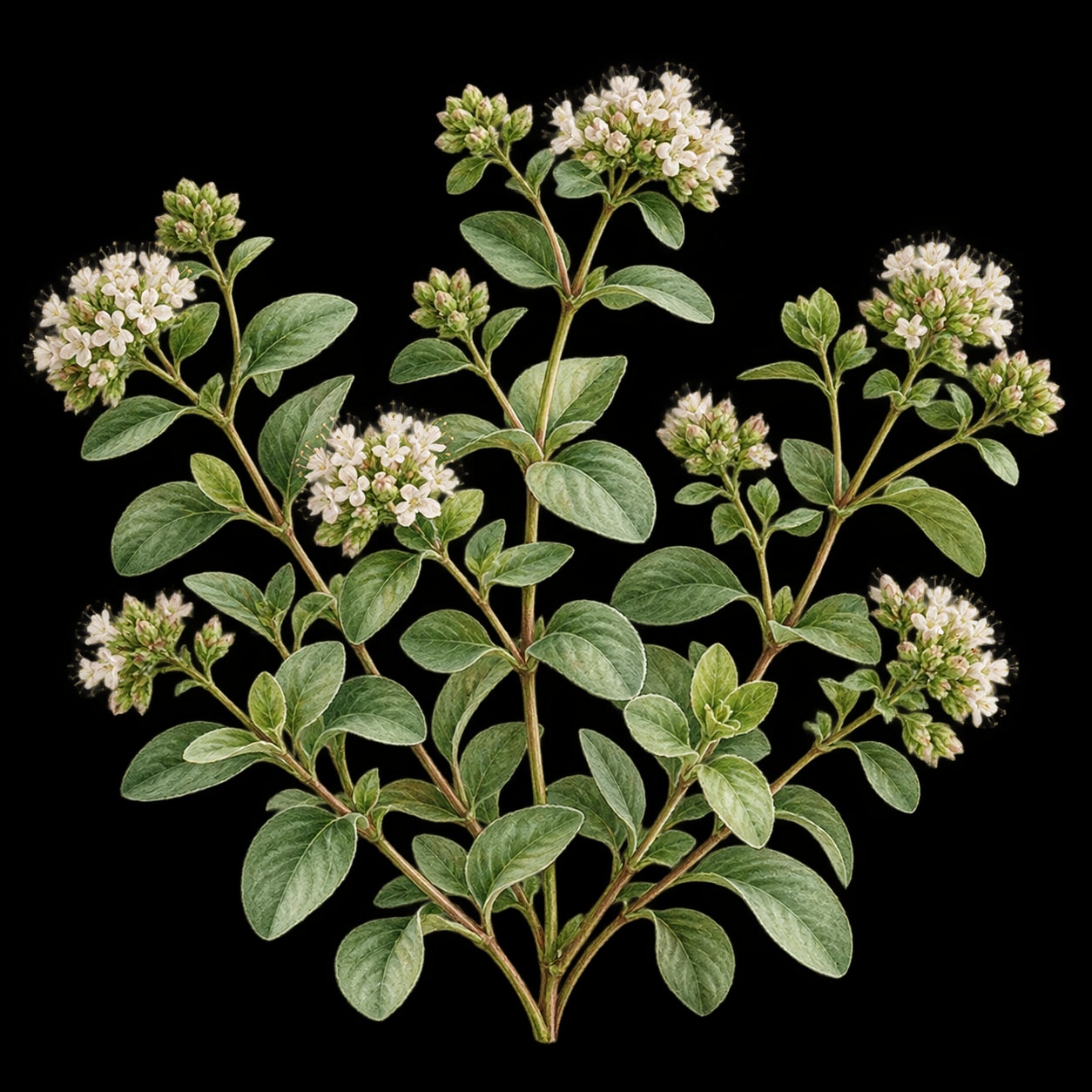
Marjoram is valued in aromatherapy for its spasmolytic and relaxing properties. Its warm herbaceous aroma is ideal for massaging tense shoulders, lower back, and muscles after physical exertion. The aroma is milder than that of phenolic oregano: instead of a sharp, burning intensity, it provides a dry, rounded warmth.
Massage and spastic pain
In aromatherapy, marjoram is used in blends for muscle stiffness and painful spasms. Here, a low concentration, an appropriate carrier oil, and gentle movements are important. For evening care, marjoram pairs well with lavender: the spicy and floral notes create a calm composition without heavy sweetness.
Clinical study on dysmenorrhea
A randomised study involved 48 women with primary dysmenorrhoea. Massage was performed with a cream containing lavender, clary sage and marjoram, or with a synthetically fragranced cream. Pain decreased in both groups; in the essential-oil group, its duration fell from 2.4 to 1.8 days. This supports aromatic massage as a complementary way to ease menstrual discomfort. Marjoram's individual contribution to the blend was not measured. [1]
Aroma chemistry
Terpinen-4-ol and sabinene hydrate create the characteristic gentle spiciness. Unlike carvacrol-rich oregano, marjoram is generally chosen for more delicate relaxing blends. It can link floral lavender, citrus orange and woody oils.
Emotional sphere
Marjoram is especially suitable in the evening when tension is felt simultaneously in the body and in the mind. Its warm scent can create a sense of protection and calm slowing down. Orange lightens the mixture, Roman chamomile makes it softer, cedar makes it drier and deeper. When experiencing a new, intense, or unusual menstrual pain, first determine its cause.
Blending suggestions
Lavender — for shoulders and evening relaxation; sweet orange — for a gentle warm blend; Roman chamomile — for a delicate herbaceous-floral character; cedar — for a calm woody base.
How to use
Examples for adults. Quantities are given for the entire bottle; for one application, take a small portion of the mixture. These are aromatic therapy routines, not medicinal dosages.
- Simple blend for local massage: 1 drop of marjoram oil in 10 ml of jojoba. Mix in a clean bottle. Apply a small amount of the prepared blend to the shoulders or upper back and spread with gentle massage movements.
- Gentle evening blend: 1 drop of marjoram oil + 1 drop of true lavender essential oil in 20 ml of jojoba. Mix; use a small amount to gently massage the forearms or shoulders.
- Scenting without a diffuser: 1 drop on a paper towel or aromastone. Hold at a comfortable distance from the face, without touching the skin with the oil; several ordinary breaths are sufficient to assess the scent.
- “Calm Herbs” blend: marjoram oil — 1 drop; clary sage oil — 1 drop; jojoba — 20 ml. Combine in a clean, dry bottle and mix. Use a small amount of the prepared blend to gently massage an adult’s shoulders or forearms, away from the face.
Precautions
Apply only in a carrier oil, avoiding mucous membranes and damaged skin. Do not ingest. During pregnancy or for unexplained abdominal pain, do not select therapeutic blends on your own.
What to combine with this care
- “Provence” lavender essential oil — Aromatic combination
- Essential oil of Roman chamomile — Aromatic combination
- Essential oil of sweet orange — Aromatic combination
- Jojoba oil — Base for the oil recipes above
- Clary sage essential oil