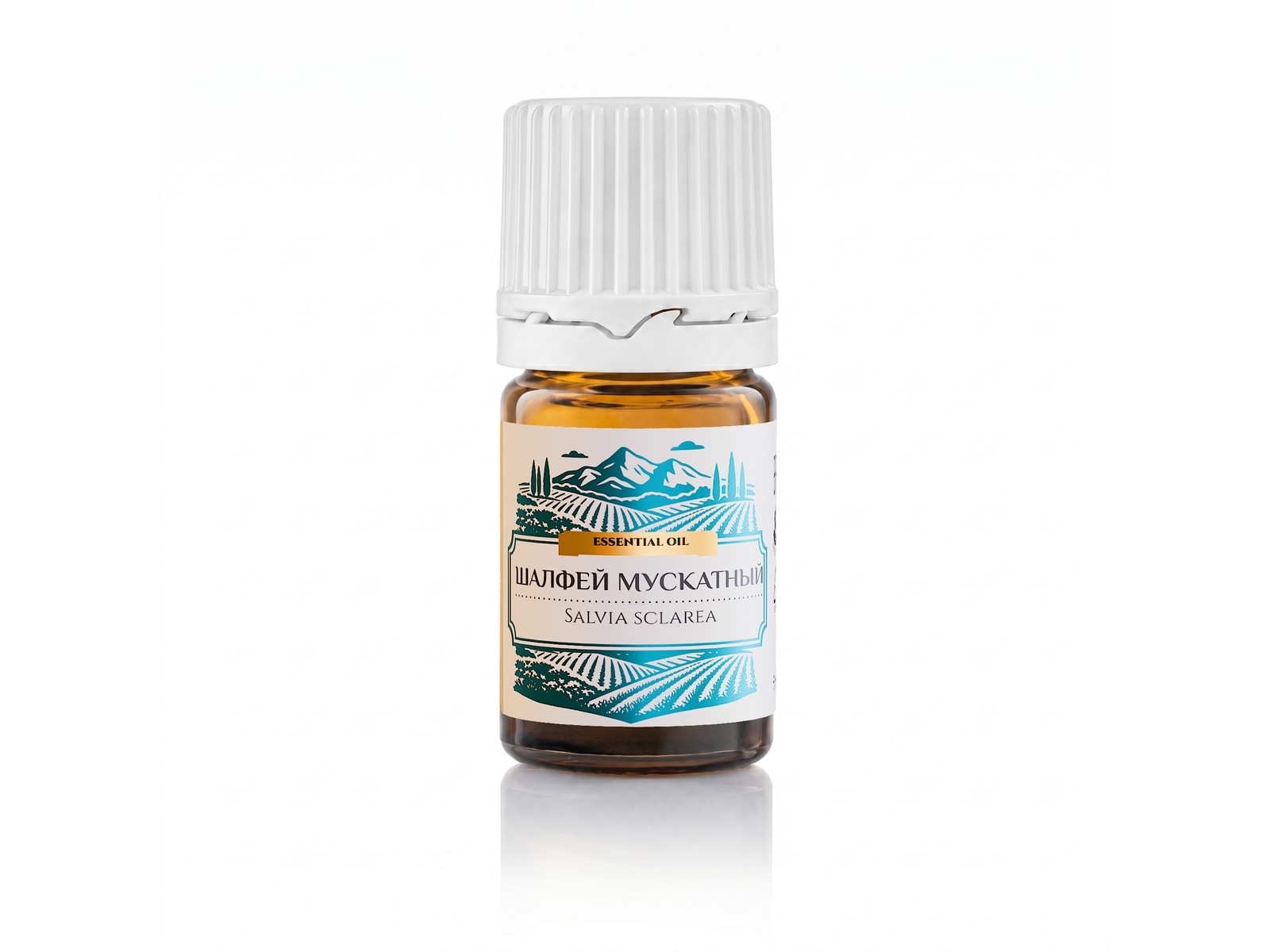
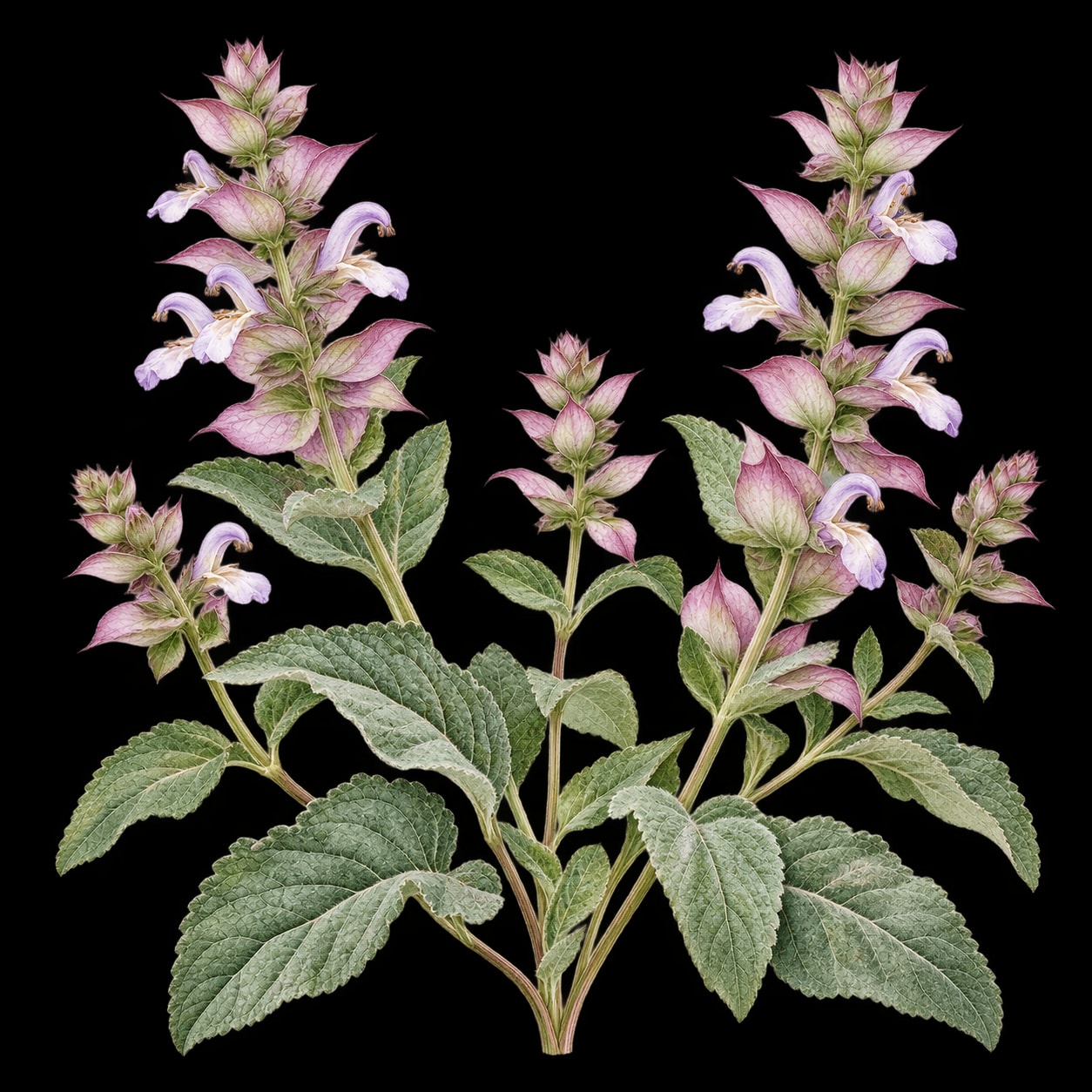
Clary sage essential oil: nervous system and female well-being
Salvia sclarea is a characteristic ingredient in relaxing aromatherapy. Its warm herbal scent combines floral softness, a light nutty note and a musky base. Unlike common sage, its profile is usually built around linalyl acetate and linalool.
Therapeutic properties
Stress, internal tension, and relaxation
Clary sage essential oil is used in aromatherapy when nervous tension is accompanied by difficulty relaxing the body. It is used in evening blends, massage mixtures for shoulders and back, and in gentle aromatic effects during rest.
In a small randomised study, inhaling the oil during a urodynamic examination was associated with changes in blood pressure and breathing consistent with relaxation. The study compared sage, lavender and a control scent: the physiological responses to the different oils were not the same. [1]
Menstrual cramps and abdominal massage
Spasmolytic properties — one of the reasons for the popularity of clary sage in women's massage blends. In the study by Han and colleagues, a blend of lavender, clary sage, and rose Rosa centifolia in almond oil reduced menstrual pain more effectively than massage with a single base or no intervention. [2]
This data relates to the combination of oils and procedures, so the effect of the mixture is not attributed to a single clary sage. Practical format — gentle abdominal massage with diluted composition during a familiar menstrual discomfort. New, suddenly intensified, or unusual pain requires investigation of the cause.
Menopause period and emotional state
The oil was studied in 22 women going through menopause: after inhalation, levels of cortisol and serotonin in plasma changed. The results support interest in aromatic support for stress and emotional state fluctuations. The study measured short-term biomarkers; blood serotonin is not a direct measure of brain serotonin. [3]
Clary sage essential oil is a good choice for care that combines relaxation with a sense of bodily warmth and softness. It does not need to be presented as a remedy that 'normalizes all hormones': the oil has more specific and targeted areas of application.
Aromatherapeutic use
The warm herbal depth of clary sage is suitable for concluding a stressful day, a calm massage, and compositions where a milder menthol sharpness is desired. Bergamot adds lightness, geranium provides floral cohesion, lavender offers a more transparent evening tone. A strong musky note is not appreciated by everyone, so it is better to evaluate the oil in a diluted form or on an aromatic strip.
Blending suggestions
Lavender and clary sage provide a soft herbaceous-floral base. Geranium adds rose notes to it. Bergamot or mandarin lighten the intensity, while sandalwood adds a warm woody undertone.
Research in detail
Biomarkers in women during menopause — 2014
The study involved 22 women aged around fifty. After inhaling clary sage, researchers measured plasma blood parameters: cortisol concentration decreased, serotonin concentration increased. Participants were also distributed according to their predisposition to depressive symptoms using questionnaires. [3]
Reaction to a medical procedure — Seol and co-authors, 2013
In a double-blind randomized study, 34 women during urodynamical examination inhaled the aroma of clary sage, lavender, or a control almond oil. Blood pressure, pulse, breathing rate, and other parameters were measured. [1]
Massage mixture for dysmenorrhea — Han and co-authors, 2006
The study included 67 female students with pronounced menstrual cramps. Abdominal massage with a blend of lavender, clary sage, and Rosa centifolia in almond oil was compared to massage with only almond base and no intervention. In the aromatherapy group, pain decreased more significantly than in the other two groups. [2]
How to use
Examples for adults. Quantities are given for the entire bottle; for one application, take a small portion of the mixture. These are aromatic therapy routines, not medicinal dosages.
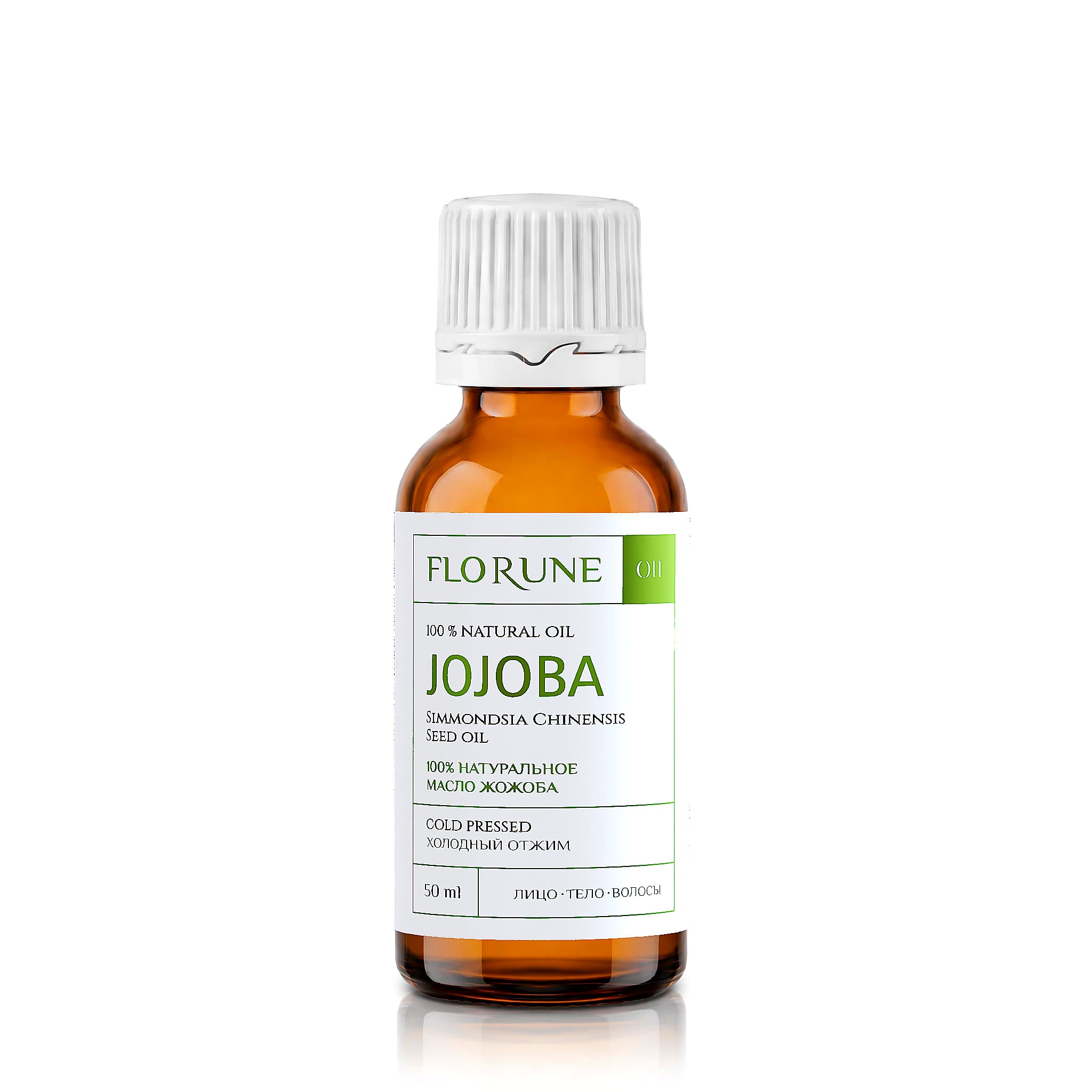
- Simple blend for local massage: 1 drop of clary sage oil in 10 ml of jojoba. Mix in a clean bottle. Apply a small amount of the prepared blend to the shoulders or upper back and spread with gentle massage movements.
- Gentle evening blend: 1 drop of clary sage oil + 1 drop of true lavender essential oil in 20 ml of jojoba. Mix; use a small amount to gently massage the forearms or shoulders.
- Scenting without a diffuser: 1 drop on a paper towel or aromastone. Hold at a comfortable distance from the face, without touching the skin with the oil; several ordinary breaths are sufficient to assess the scent.
- “Soft Floral Evening” blend: clary sage oil — 1 drop; rose geranium oil — 1 drop; jojoba — 20 ml. Combine in a clean, dry bottle and mix. Use a small amount of the prepared blend to gently massage an adult’s shoulders or forearms, away from the face.
Precautions
Dilute in a carrier oil before applying to skin. Do not ingest or apply to mucous membranes; stop use if irritation occurs.
What to combine with this care
- “Provence” lavender essential oil — Aromatic combination
- Mandarin essential oil — Aromatic combination
- White sandalwood essential oil BIO — Aromatic combination
- Jojoba oil — Base for the oil recipes above
- Rose geranium essential oil
Sources
- Seol G.H. et al. Randomized controlled trial for Salvia sclarea or Lavandula angustifolia: differential effects on blood pressure in female patients undergoing urodynamic examination. 2013.
- Han S.H. et al. Effect of aromatherapy on symptoms of dysmenorrhea in college students: a randomized placebo-controlled clinical trial. 2006.
- Changes in 5-hydroxytryptamine and cortisol plasma levels in menopausal women after inhalation of clary sage oil. 2014.