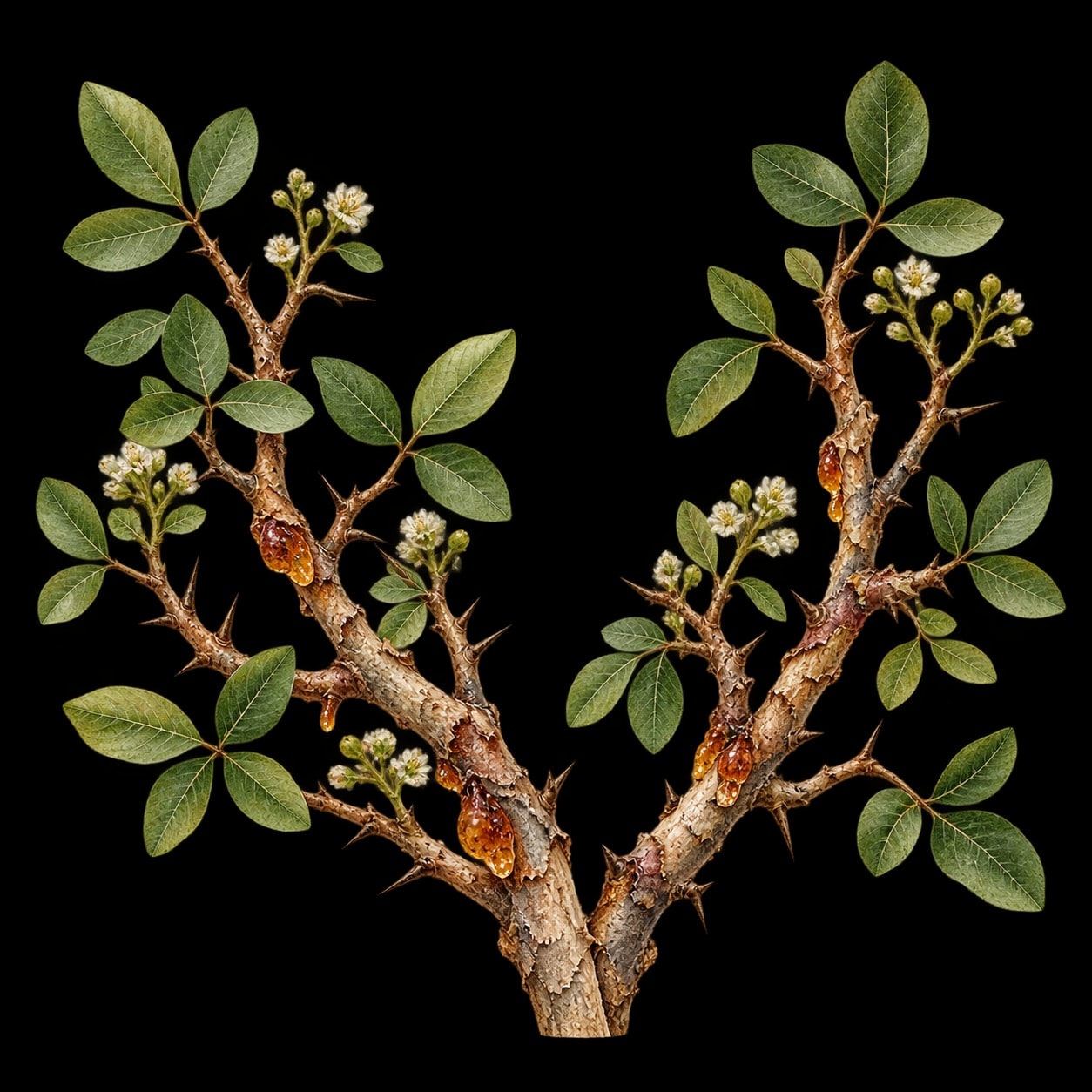
Myrrh: protective care, antimicrobial potential, and resinous depth
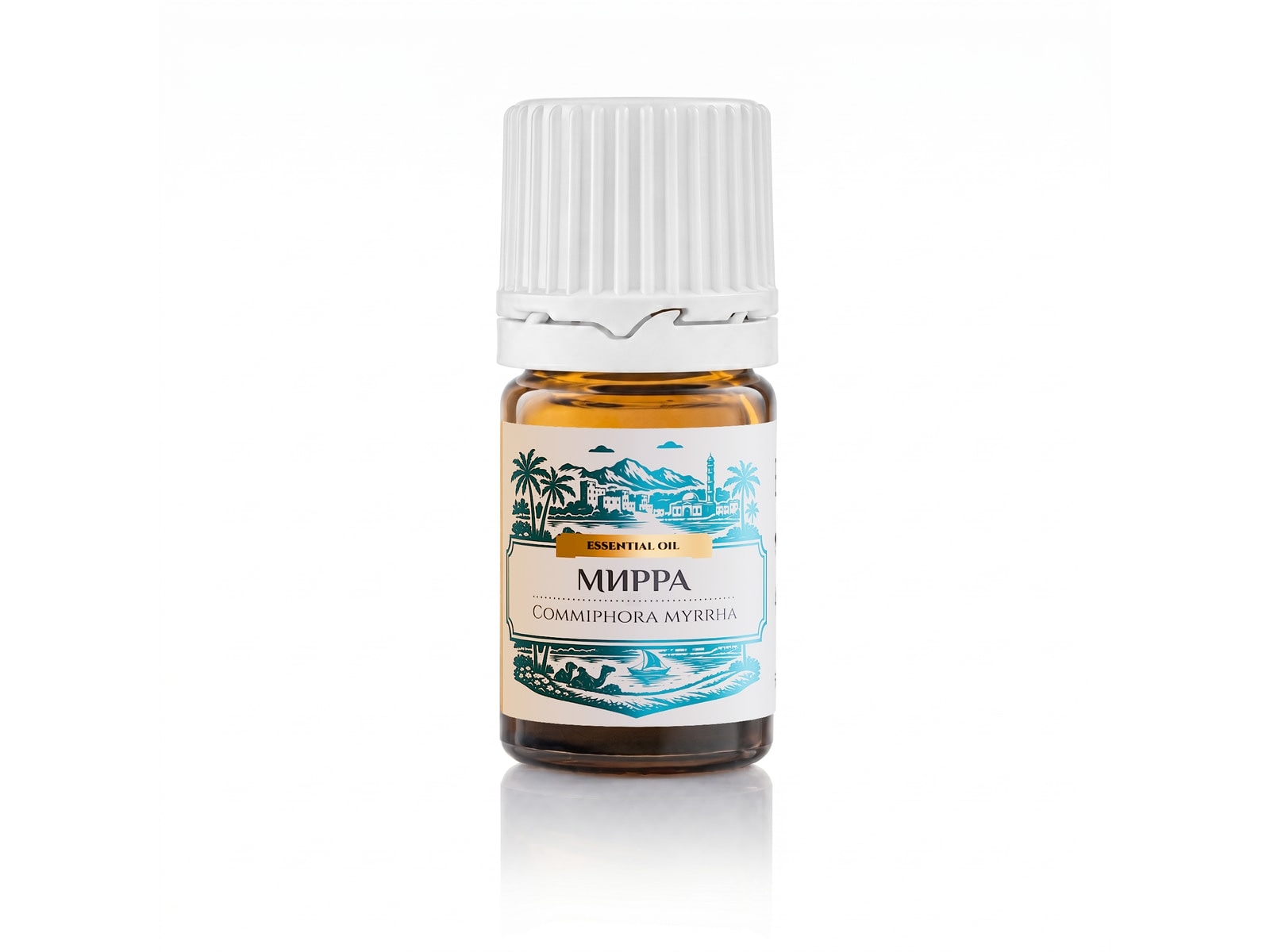
Myrrh is valued in aromatherapy for dry skin, the need for gentle restorative care, and emotional exhaustion. Its rich aroma combines woody dryness, warm resin, and a barely perceptible bitterness. It fits well in evening blends for hands and body.
Antimicrobial action
In laboratory studies of oils from various Commiphora species, microbial growth was suppressed. When combined with Boswellia oils, certain pairs exhibited enhanced synergistic effects. The intensity of the effect depended on the botanical species, chemical profile, and component ratio. [1]
Lipid protection of the skin
In a cosmetic formula study, Commiphora myrrha essential oil reduced squalene oxidation — a substance present in sebum. The authors evaluated the response to controlled irradiation and the ability to neutralize singlet oxygen. For aromatherapy skincare, myrrh is introduced into diluted mixtures that require a strong enveloping aroma. Such care complements daily sun protection. [2]
Tradition of mucous membrane care
Preparations of myrrh resin have a long history of use in treating minor oral inflammations; this application is addressed in the European monograph. It refers to specific pharmaceutical forms of resin. Essential oil in the mouth and home rinsing with floating drops of oil do not replicate this form. [3]
Emotional recovery
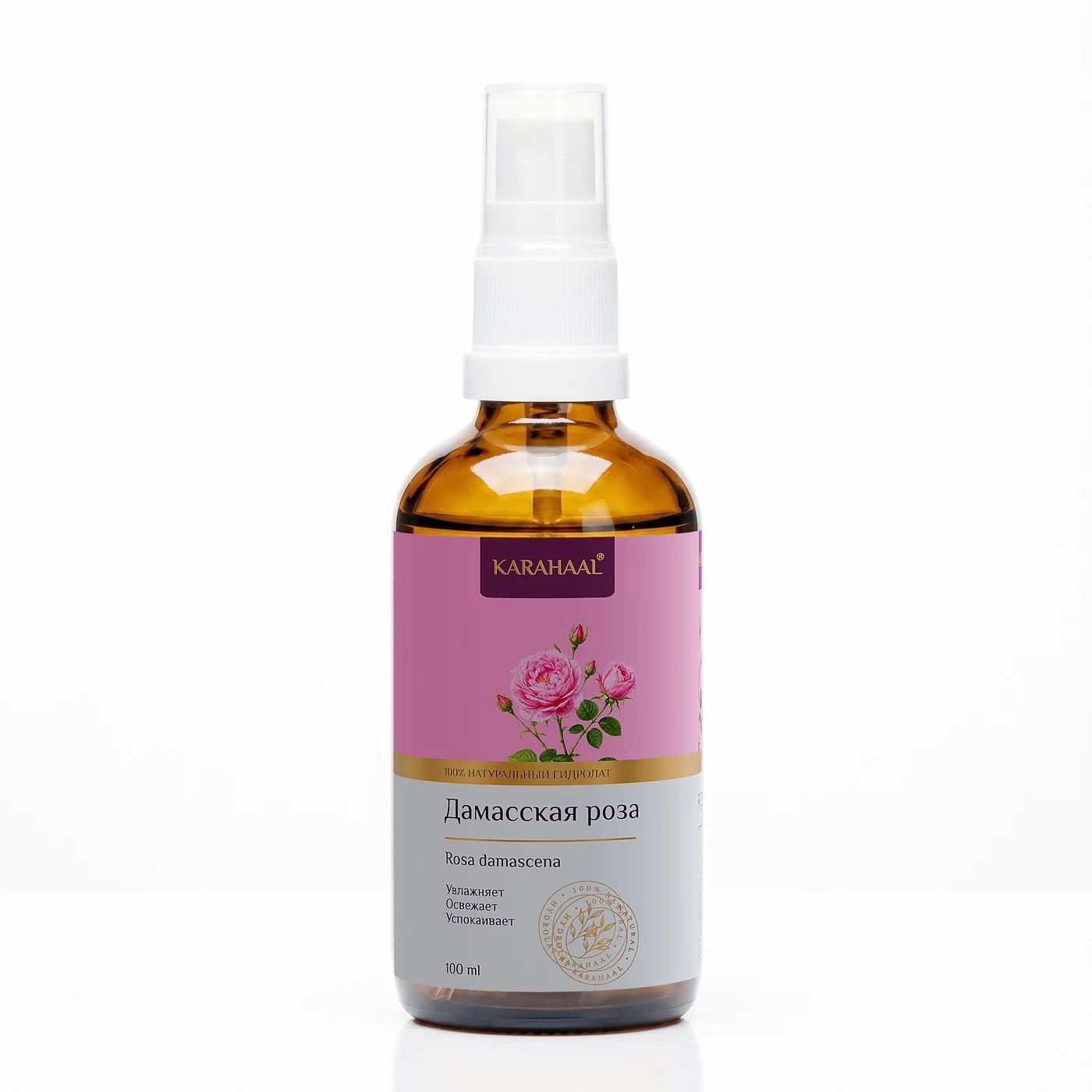
Myrrh is suitable for those seeking a deep, calm aroma without strong sweetness. In evening relaxation blends, it adds duration and a sense of inner calm. Rose softens and warms it, sandalwood enhances the even, woody tone, and orange adds lightness and eases the resinous density.
Blending suggestions
Sandalwood extends the soft woody note; rose reveals the warm floral aspect; orange lightens the resinous character. Frankincense provides a lighter resinous accord, while patchouli adds earthy depth.
Research in detail
Protection of skin lipids in the experiment
In a laboratory study of cosmetic formulations, Commiphora myrrha essential oil reduced squalene oxidation and demonstrated the ability to neutralize singlet oxygen. The study focuses on antioxidant properties in a specific model. For UV protection, a separate sunscreen product with the specified SPF is used. [2]
Myrrh and frankincense: interaction of components
In studies involving several species of Commiphora and Boswellia, essential oils were tested individually and in combinations against microorganisms. Some combinations showed additive or synergistic effects. The authors specifically determined the chemical profiles of the samples. The study explains the interest in combinations of resinous essential oils, but its results pertain to laboratory testing and specific plant species. [1]
How to use
Examples for adults. Quantities are given for the entire bottle; for one application, take a small portion of the mixture. These are aromatic therapy routines, not medicinal dosages.
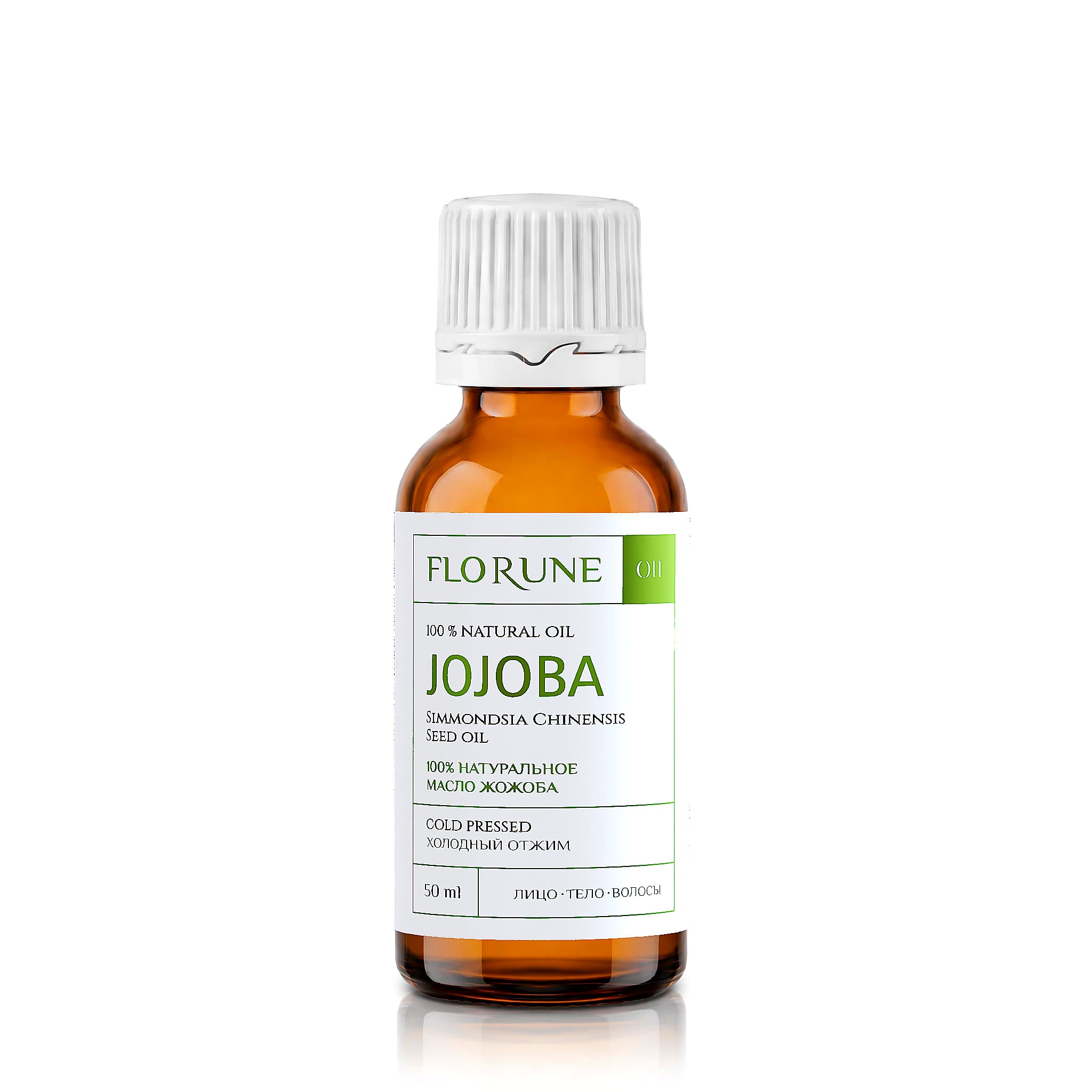
- Simple blend for local massage: 1 drop of myrrh oil in 10 ml of jojoba. Mix in a clean bottle. Apply a small amount of the prepared blend to the shoulders or upper back and spread with gentle massage movements.
- Gentle evening blend: 1 drop of myrrh oil + 1 drop of true lavender essential oil in 20 ml of jojoba. Mix; use a small amount to gently massage the forearms or shoulders.
- Scenting without a diffuser: 1 drop on a paper towel or aromastone. Hold at a comfortable distance from the face, without touching the skin with the oil; several ordinary breaths are sufficient to assess the scent.
Precautions
Dilute in a carrier oil before applying to skin. Do not ingest or apply to mucous membranes; stop use if irritation occurs. During pregnancy, do not formulate therapeutic blends containing myrrh on your own.
What to combine with this care
- Essential oil of sweet orange — Aromatic combination
- White sandalwood essential oil BIO — Aromatic combination
- Patchouli essential oil — Aromatic combination
- Jojoba oil — Base for the oil recipes above
Sources
- The additive and synergistic antimicrobial effects of select frankincense and myrrh oils--a combination from the pharaonic pharmacopoeia.
- Protection against singlet oxygen, the main actor of sebum squalene peroxidation during sun exposure, using Commiphora myrrha essential oil.
- EMA: myrrh, estimated report